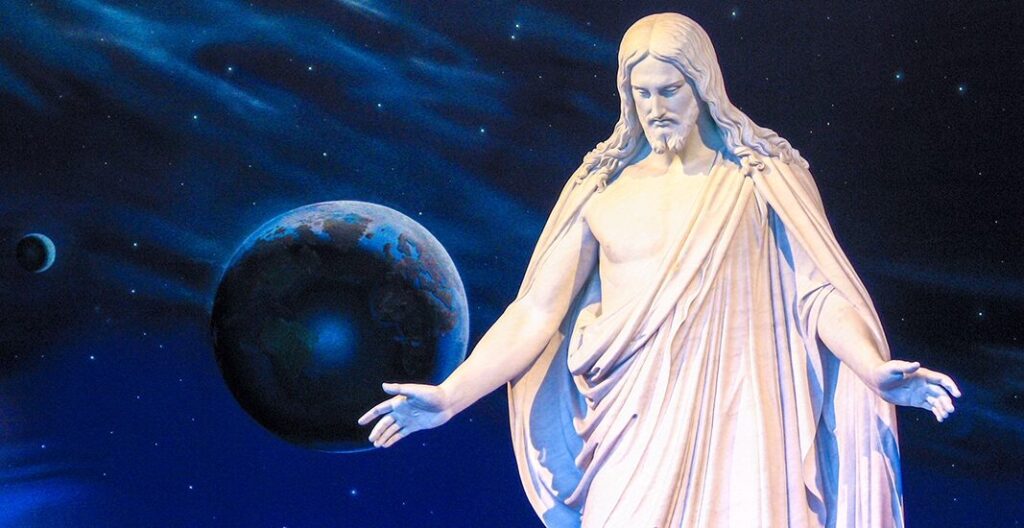

You are reading a working draft of The Palace of Thundering Gods, a living history project built through scholarly collaboration. Please click here to help improve this chapter.
I. Introduction
American religion has become more diverse, more global, and more politically polarized. Christianity has declined. Evangelical and non-denominational churches have muscled out mainline denominations to redefine the nature of American Protestantism, a tradition claiming roughly four in ten Americans. One in five Americans identify with a Catholic Church caught between domestic and global currents. Although still small in overall number, non-Christian traditions—Muslims, Hindus, Buddhists, and others—have proliferated. Meanwhile, “the nones”—those expressing no religious preference—have exploded in number, claiming more than one quarter of all Americans.
But the nature, too, of American religion is in flux. New religious communities have emerged and grown by adapting to new social realities. Meanwhile, Americans, both religious and not, have debated the role of religion in public life. Global technologies have reshaped how Americans understand and experience religion, further fueling polarization. Religion in the New Age has driven both hate and compassion. It has been shaped by both global developments and local politics. It ignited the streets through social movements and thundered in the courts through legal battles. Religion remains at the center of cultural and political conflict, a source for dialogue, and a lived presence in the everyday reality of millions of Americans.
II. Beyond “Protestant, Catholic, Jew”
Amidst crises and backlashes, many religious groups have grown considerably in the recent past. In some ways, the most notable growth in an American religious group comes from a group that is really neither religious nor a group. The so-called “nones,” or religiously unaffiliated, make up a sizeable and influential part of the religious landscape in the United States. That isn’t to say that other religious groups have not seen important growth in recent years. Mormonism, the largest religious tradition born in the United States, has expanded and transformed dramatically in recent years. African-heritage and South Asian religious traditions likewise have blossomed recently in the United States. And religious dialogue and interfaith initiatives also became more prominent. New technologies enabled many of these changes while also challenging some time-honored traditions.
Nones
In 1993, about 9% of Americans identified as not having any religious affiliation. By the early 2020s, that number ballooned to nearly 30% of all American adults. Among younger Americans, the proportions are even higher. Millennials and Generation Z have become the least religiously affiliated generations in modern American history.1
Nones are not necessarily atheists or agnostics, although those groups have certainly grown—comprising more than ten percent of the population—and, for a time, became more vocal. A new generation of fundamentalist atheists gained considerable popularity in the early twentieth century, as a raft of best-selling books encouraged atheists to be proud and forceful in their unbelief. Richard Dawkins’s The God Delusion was the most commercially successful book about atheism produced in the period, Sam Harris’s The End of Faith also spent 30 weeks on the New York Times bestseller list, and work by Christopher Hitchens and Daniel Dennett defended atheism as more moral or scientific than religious belief.2 The “New Atheism,” however, had largely declined in prominence by the second decade of the twenty-first century, subsumed, perhaps, by Christian nationalism on the right and multicultural tolerance on the left.


The bulk of American “nones,” however, do not identify as atheists or agnostics. Many, if they don’t believe in God, believe in a spiritual power. They describe themselves as “spiritual but not religious” and may even engage in prayer or celebrate religious holidays while rejecting organized religion.3
The rise of the “nones” has several causes. First, since the 1960s, Americans have reported a generally eroding trust in all forms of institutional authority, including churches, government, corporations, media, and more.4 This decline has sped up in recent years. Scandals within religious institutions, including most notably sex scandals and abuse revelations, have furthered this mistrust. Many Americans now see religious bodies as irrelevant to their daily lives and rife with corruption or greed.5
Changing patterns in the American family have also fueled these trends. Americans now marry later, divorce more frequently, and live farther away from family. This mobility strains long-term congregational involvement and limits generational religious practice among families. For many Americans in the past, religious identity was inherited and formed an important aspect of family identity. Today, Americans are more likely to see it as a matter of individual choice.
Immigration and globalization have also exposed Americans to more religious traditions. This increased interaction with other faiths has caused some to question the narrow religious worlds of their parents. Some respond by embracing religious pluralism, borrowing elements of spiritual practice from a host of different traditions. Others simply disengage from religion altogether.
Political polarization also plays a key role. For many Americans who came of age after the rise of the religious right, “religion” seemed less about community, faith, or belief than about a peculiarly partisan form of culture war around issues such as abortion and gay rights. Younger people have tended to be more liberal than older Americans—although the maturation of Generation Z has challenged this assumption— and, rejecting these politics, many younger Americans rejected organized religion altogether. The mainline denominations, declining in demographic strength, have attempted to maintain the adherence of younger generations, and movements such as Deconstructed Christianity and the Exvangelical movement have attempted to retain elements of Christian practice while spurning the seemingly dominant political conservatism of American evangelicalism.6
.jpg)
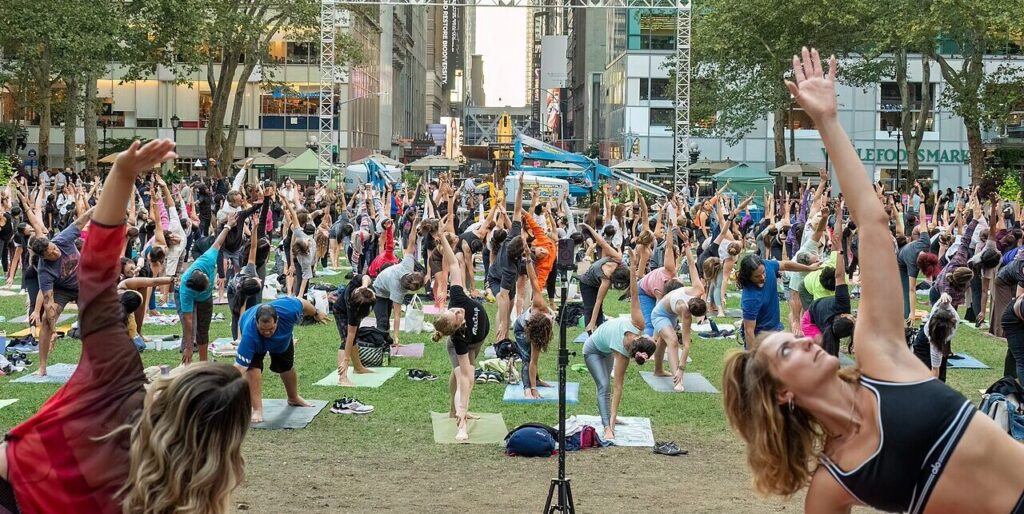
At the same time, the rise of the “nones” does not always mean a less spiritual America. Many Americans search for meaning through yoga, meditation, social activism, volunteer work, personal wellness, or psychology and self-help. Others have turned to New Age spirituality or astrology, tarot, and other practices once described as the occult. These practices have boomed among many Americans. While large numbers of Americans have joined the “nones,” they still constitute a minority of the population. And overall religious decline masks shifting dynamics. Within the larger mass of American religious adherents, specific religious communities have gained and lost ground.
Mormonism
In the last few decades, few American religious communities have grown and globalized more dramatically than the Church of Jesus Christ of Latter-day Saints. The recent history of the Church in the United States has been marked by two connected trends: first, the expansion of the Church in the rest of the world, and the consequent reform of church practice and procedure to accommodate non-American norms; second, a grapple with polarization and controversy over issues of gender that dominated American politics.
By 2024, of the world’s 17 million Mormons, approximately nine million lived outside the United States. In the twenty-first century, Church leadership began altering Church policies and procedures to facilitate this international expansion. Those decisions also transformed American Mormon life through bureaucratic consolidation called “correlation.”7 Correlation meant that by the twenty-first century, Mormons took it for granted that in any house of worship around the world the same art hung on the walls, worshipers wore American business dress, American hymns would be sung from the official hymnbook, and local leadership used a common manual.8
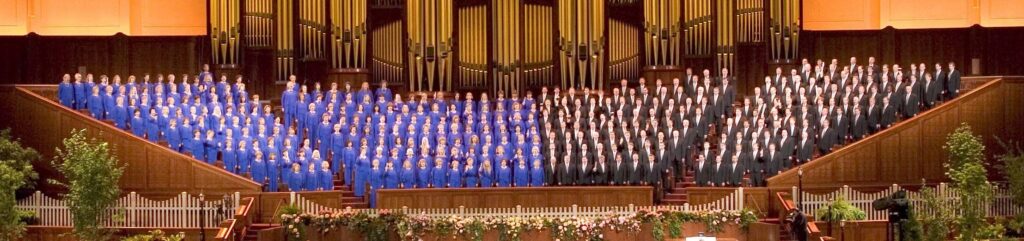
Russell M. Nelson became president of the Church in 2018, accelerating reform by announcing a new hymnbook with diverse music, severing the Church’s relationship with the Boy Scouts of America, shortening the length of regular Sunday worship services, simplifying local organization, and appointing non-Americans to positions of high responsibility.
The Church has shifted from a primarily regional, Western subculture toward a denomination like other Christian groups. The Church demanded less time and resources from its members in 2024 than it had fifty years prior, but it also offered a less comprehensive community.
This bureaucratic consolidation also solidified the authority of its male priestly hierarchy. In 1995, the Church’s highest leadership issued a document entitled “The Family: A Proclamation to the World,” which affirmed complementarian gender roles and the heterosexual nuclear family.
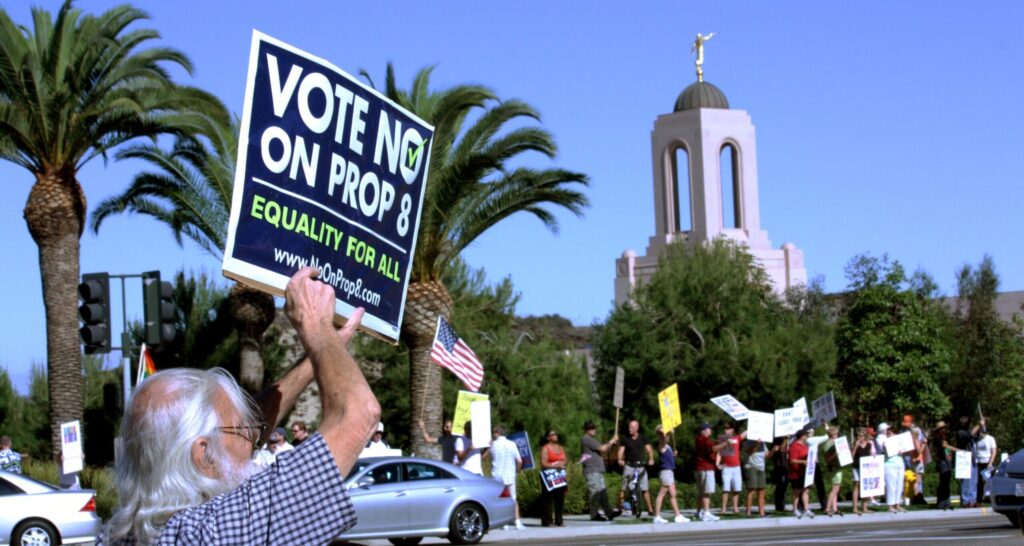

In 2008, the Church threw organizational and financial weight behind the California ballot initiative Proposition 8, which opposed same-sex marriage in the state. But some things changed quickly. By 2015, the Church was working on a Utah state law that simultaneously offered nondiscrimination protections for LGBTQ+ citizens and preserved the Church’s ability to prohibit same-sex marriage among its own employees and members on the campus of Church-owned Brigham Young University. Church leaders’ firmness in rejecting same-sex marriage led to a 2015 policy deeming same-sex marriage grounds for excommunication and forbidding children in such families from baptism—though young Mormons are normally baptized at age eight; this policy was eventually reversed in 2019.9
The controversies surrounding same-sex marriage were mirrored in other debates over gender By the early twenty-first century, Church leadership no longer taught that women should not work outside the home or counseled its members to avoid birth control—both positions commonly taught until the 1980s; however, the Church continued to maintain that women could not be ordained to priestly office, which excluded them from the most important leadership positions. In the early 2010s, a movement among Mormon women, called Ordain Women, gained national publicity, and one of its leaders was excommunicated in 2014. By the early twenty-first century, Mormons in the United States identified as politically conservative and members of the Republican Party by a near two-to-one margin, largely due to the Republican Party’s position on issues of gender.10
But those positions on gender also contributed to the Church’s loss of younger members at a higher rate than in previous generations.11 Thus, in the twenty-first century, the Church’s efforts to retain members overseas were matched with a struggle to retain young people in the nation where the religion was born. Like many Christian religions, the Church faced a future largely based in the global South where they frequently competed with another rapidly growing religious movement.
Pentecostalism
In 1993, Marion Gordon “Pat” Robertson, the prominent charismatic televangelist, gave a speech to a gathering of religious broadcasters. “We cannot continue to see this nation sink into oblivion,” he lamented, noting that “every index of national health is in decline.” A one-time candidate for the Republican presidential nomination, Robertson went on to lambast then-President Bill Clinton for a series of perceived offenses. Instead of “compelling the Armed Forces to accept homosexuals into their ranks,” for instance, Robertson insisted that the President should “take a stand against the ungodly lifestyle that destroys all it touches.” Robertson was absolutely convinced that religious conservatives could take matters into their own hands and redirect the trajectory of society.12
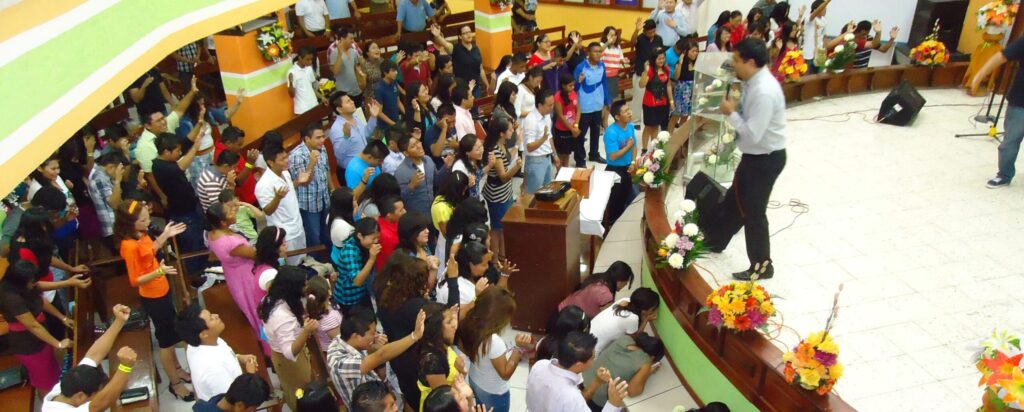
Robertson by no means spoke for all Pentecostals. But his Southern Baptist roots and Pentecostal blossoming reveal how American Pentecostalism had made inroads against more established American religious traditions. In addition to formal Pentecostal denominations such as the Church of God in Christ and the Assemblies of God, Pentecostal-style emphases were part and parcel of many loosely affiliated religious networks, such as the Vineyard USA and other “third wave” evangelical groups. At the same time, numerous charismatic individuals remained connected to the Catholic Church and to well-established Protestant bodies including Methodist and Lutheran churches.
Media outlets, including Robertson’s Christian Broadcasting Network, the Trinity Broadcasting Network, Charisma Media, and Daystar, all spread Pentecostal cultural influence. Taken together, these various institutions and organizations exposed countless Americans to the Pentecostal-charismatic tradition, especially in relation to divine healing, “spiritual warfare,” exuberant worship, and prophetic proclamations regarding current events.13
The diversity of Pentecostal expressions of religiosity highlighted how the movement prioritized religious experiences over rigid doctrine. Proponents of the prosperity gospel, for instance, combined Pentecostal themes with New Thought-style teachings regarding the power of positivity. The result was a brand of Pentecostal religiosity that thrived through consumer and therapeutic ethos.14 “Something is going to break in the heavenlies,” the prominent televangelist Paula White-Cain promised her million-plus followers on X (formerly known as Twitter) in June of 2024. White-Cain exclaimed, “Your want is going to change to prosperity! I declare it by the prophetic anointing!”15
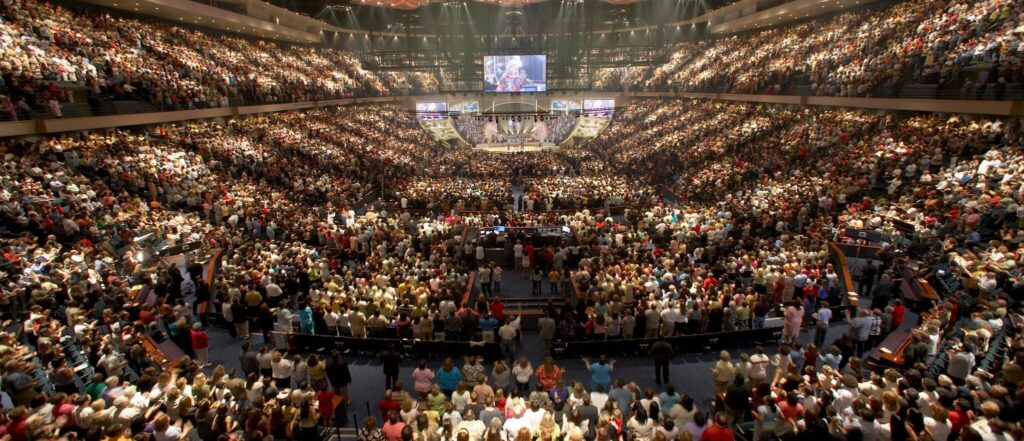

A minority of believers, meanwhile, argued for the compatibility of Pentecostal-charismatic Christianity with various left-leaning social justice causes, challenging many adherents’ participation in the Religious Right since the 1970s.16 At the same time, high-profile individuals tied to the apostolic and prophetic movement, like C. Peter Wagner and Cindy Jacobs, cultivated robust theories of Christian-initiated social change, championing spirit-empowered individuals who could promote conservative visions of family life and social order.17
Adherents also participated in myriad global networks, contributing to the explosive expansion of Pentecostal-charismatic religiosity in the Global South.18 American Pentecostals and charismatics functioned as far more than just missionaries, however. When the faithful gathered in Jerusalem in support of the state of Israel, for example, North Americans increasingly represented just one contingent among many from around the globe.19 Believers from other parts of the world also established ministries in the United States, as was the case when Rory and Wendy Alec decided to expand GOD TV in 2003 following its initial launch in Britain. Similarly, churches such as the Nigeria-based Redeemed Christian Church of God (RCCG) sent out their own missionaries to the United States to counteract perceived failures in North American Christianity. In the words of the RCCS minister Samuel Sorinmade, “The United States has become very slack, so God is making us bring worship and praise to them.”20

Other Africans had different messages for the United States, and religious growth in the New Age was not confined to Christianity. Various religious traditions experienced growth and revival in America at the turn of the twenty-first century, including African-heritage religions and South Asian religious traditions.
African-heritage Religions
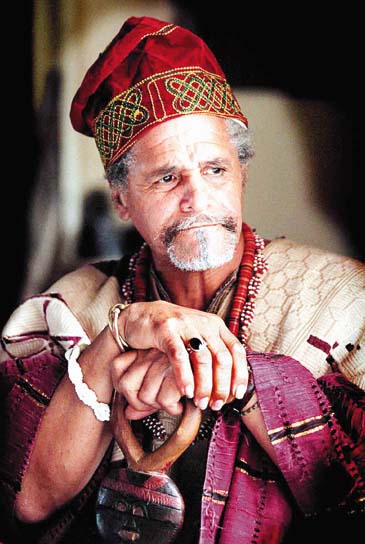
African-heritage religions, which are non-Abrahamic and originate from Africa, are extensively practiced in the United States.21 The two religious lineages African Americans primarily practice are Orisa / Ifá traditions and Hoodoo. Orisa / Ifá traditions include Isese/Ifá and Lucumí, also known as Santeria. These religions derive from the Yoruba people from what is now Nigeria and parts of Benin and Togo. Within Orisa traditions, there is one god, called Olódùmarè, and a collective of 401 deities known as Orisa. These Orisa govern particular areas of life and the natural elements and assist people in navigating life’s difficulties. For example, the Orisa Ọṣun is associated with the river, yellow, love, fertility, and beauty, and is also a fierce protector of her devotees.
Enslaved Africans brought what they remembered of these Orisa from their homelands, but enslavers suppressed African-heritage religions. Enslaved Africans were forced to hide many of their religious beliefs. In the twentieth century, however, many African Americans no longer wanted their Orisa associated with Catholic saints, and so they traveled directly to West Africa to learn from priests and priestesses. This tradition is called Isese. Today, there are many temples, also called iles, around the country where devotees gather to honor the Orisa through dance, song, and ritual. In Atlanta, Georgia, for example, at one of the longest-running women-led iles, Ile Ori African Cultural Center, participants gather on the first Sunday of each month, dressed in their finest African-inspired garb, and dance to drums, sing in Yoruba, offer food and money at the elaborate altar, and share knowledge about the characteristics and stories associated with the Orisa.22

In recent years, there has also been a surge of African Americans expressing interest in Hoodoo, an amalgamation of what African Americans remembered from their African homeland, some Christian and occult practices, and Indigenous plant medicine. Devotees of Hoodoo honor their blood-related ancestors as well as African American figures who contributed to the tradition and Black people’s liberation, such as Zora Neale Hurston. Through prayers and petitions, requests are made to the ancestors, who are believed to be able to alter events on a physical plane. Plants, bones, and personal concerns such as hair, nails, and dead skin are used in rituals to produce the desired result. For example, rose is used to call in romantic love, chamomile produces luck, bones are used in divination, and personal concerns signal to whom the work is directed. Hoodoo was used for protection, manifestation, justice, and healing for a people living under chattel slavery, Jim Crow South, and enduring racial inequality.23
In the twenty-first century, social media and YouTube have allowed practitioners to share rituals and best practices, offer spiritual services like tarot divination, and create online and offline communities. Many books for practitioners have been written, including Tayannah Lee McQuillar’s Rootwork and, more recently, Mawiyah Kai EL-Jamah Bomani’s Conjuring the Calabash and Juju Bae’s The Book of Juju. Practitioners also gather at conferences such as the Detroit Hoodoo Festival and the 9 Minds Annual Hoodoo Conference.24
Buddhism
In 1990, The Tricycle Foundation registered itself as a non-profit, publishing its first issue of the Buddhist magazine Tricycle in 1991.25 Helen Tworkov credited white Buddhists for the creation of American Buddhism, while writing that Asian Americans had “not figured prominently in the development of something called American Buddhism.”26 Asian-American Buddhists, who made up two-thirds of Buddhists in America and had built crucial American Buddhist infrastructure, immediately protested.27
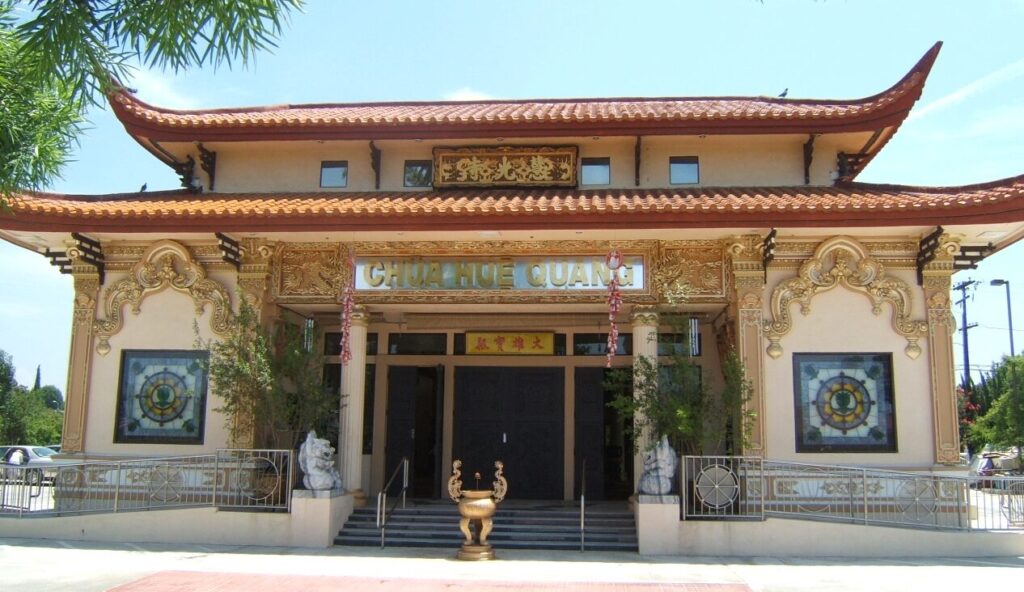

A few years later, in 1994, bell hooks contributed to a Tricycle special issue on diversity and race and criticized the type of cultural imperialism that privileges white Buddhist practice as more authentic and “American” while neglecting not only Asian American Buddhists, but also Black Buddhists.28 These two articles set the tone for some of the critical issues facing American Buddhism from the 1990s to the present day.29
Asian American, Black, and LGBTQ+ Buddhists have been at the forefront of these changes.30 Their trailblazing work led to a growth of publications bridging Buddhist philosophy and practice with queer and racial theory. For example, the 1990s saw the publication of multiple anthologies by LGBTQ+ Buddhists.31 Efforts to increase inclusion created refuge sanghas, like the East Bay Meditation Center in 2007, which includes the Alphabet Sangha for queer practitioners.32 The first publicly transgender Buddhist teacher, Caitriona Reed, published an article on her experience in 1998, and the first anthology of transgender and nonbinary Buddhist writings was published in 2019.33
As a result of several sexual abuse scandals in the 1980s, many communities actively sought to combat abuse and incorporated survivor-oriented practice.34 Buddhists have also increased their engagement with the intersection between class, race, gender, and sexuality.35 Some communities have experienced a conservative reactionary response. This has resulted in the formation of far-right white communities—mainly operating online—who object to such initiatives and who attempt to reclaim a masculine Buddhist past.36
On May 4, 2021, a diverse group of Buddhist clergy representing different lineages, ethnicities, and races gathered in Los Angeles at the Higashi Honganji Buddhist Temple for the May We Gather ceremony. Organized by Dr. Funie Hsu, Chenxing Han, and Rev. Dr. Duncan Ryūken Williams, the event commemorated the 49th day after the death of the victims of a mass shooting in Atlanta, Georgia that killed eight people, six of whom were Asian American women, including Korean Buddhist Yong Ae Yu. The act represented the culmination of widespread anti-Asian racism during the COVID-19 pandemic. The ceremony, along with the three-year commemorative pilgrimage held on March 16, 2024, utilized rituals to memorialize the victims of racism and to heal from this history.37
In his pronouncement of intentions at the start of the ceremony, Duncan Ryūken Williams proclaimed that the “lineage of hurt” felt by Asian Americans was connected to that of African Americans, including George Floyd. In doing so, Williams forged connections between Asian Americans and other communities, calling on Buddhists to “join together to repair the racial karma of this nation, because our destinies and freedoms are intertwined.”38
With these comments, Williams referred to the murder of George Floyd by Minneapolis police officer Derek Chauvin on May 25, 2020. After a video of the incident went viral, a surge of Black Lives Matter protests emerged throughout the country. Among Buddhists, it resulted in a renewed commitment to racial justice.39
Interfaith Initiatives
The Black Lives Matter protests drew more than just Buddhists. Religious leaders from virtually every religious tradition in the United States joined millions of Americans in the street to promote racial justice. Religion has been at the center of various recent initiatives to promote peace and dialogue.
At the turn of the twenty-first century, a new movement emerged among religiously inclined liberals that aimed at healing social divisions through the pursuit of cooperation among people of different religious traditions. This phenomenon, often called the “interfaith movement,” spread through nonprofit organizations, city-wide interreligious councils, grassroots initiatives led by community members, and institutional programming in universities and other public institutions.
Between the late 1980s and the early 2000s, the number of interfaith councils in the United States went from a scant two dozen to over one thousand: a forty-fold increase in thirty years.40 With this proliferation, Americans learned new ways to engage religious difference and to imagine a nation marked by harmonious pluralism. These initiatives built on Christian liberalism, which had roots in the late nineteenth century.41 In the late twentieth century, these long-lasting trends met an increasingly optimistic outlook at the end of the Cold War and a growing effervescence regarding the social promise of the internet.42 Civil society was hailed as a vital changemaking force for good in American society, thus spurring a growing number of religious progressives into action.
Increasingly larger networks of interfaith organizing spread across the country, galvanized by a few long-standing initiatives such as the New York City-Based Temple of Understanding.43 In November 1988, the first gathering of the newly established North American Interfaith Network took place in Wichita, Kansas, and brought together nearly 250 participants of 12 different religious traditions.44 In 1993, Chicago’s faith communities organized a massive centennial celebration of the 1893 Parliament. The 1993 Parliament gathered about 8,000 attendees and Dalai Lama as a distinguished guest.45 In the same years, a new grassroots interfaith network, called the United Religions Initiative, took shape in the Bay Area, inspired by the world-uniting vision of Episcopalian Bishop William E. Swing, who was set on creating a religion-based equivalent of the United Nations.46 In 2002, Hindu activist and religion scholar Eboo Patel officially founded Interfaith Youth Core, which aimed to spread interfaith education across U.S. college campuses.47
Despite some unavoidable organizational conflict, many organizers saw these developments as signs of a radical evolution in human global consciousness. “We have entered the Interspiritual Age, the Second Axial Age. Interspiritual Community is an essential, defining reality of this age. The unfolding and expanding of this community will gradually dissipate the fears collected over the millennia, and it will reveal the precious gift of interspiritual wisdom,” argued George Cairns and Brother Wayne Teasdale, the editors of a collected volume on the 1993 Parliament.48
Weak affiliation with organized religious communities, however, was also part of the emerging challenges and limitations of the movement. Nested outside of the financial infrastructure of large religious communities, many interfaith organizations struggled to fundraise, and even large networks like the Parliament of the Worlds’ Religions nearly collapsed.49 At the local level, initiatives remained largely run by individual volunteers, meaning they often reflected the priorities of systemically privileged groups, especially the white upper-middle class who had time and resources for such activities.50 Critiques of the movement emphasize the overall ineffectiveness of the movement because of its elitism and naively optimistic vision of religion.51 By the mid-2010s, the movement was both well-established across the United States but also struggling to assert itself in an increasingly polarized religious and political landscape.
Digital Religion
A deeper shift in the very medium of religion itself undergirded nearly all of this growth—from Mormonism’s global outreach to Pentecostal broadcasting to Buddhist communities organizing online to interfaith networks coordinating across cities and continents.
To some extent, the COVID-19 pandemic helped catalyze the development of the phenomenon known as digital religion. The scope of digital religion is vast and diverse, encompassing a wide array of online religious communities, forums, and virtual sacred spaces.52 These digital environments can include virtual churches, temples, and other religious sites where individuals can gather, worship, and engage in spiritual practices regardless of their physical locations. Digital religion has, in turn, given rise to virtual rituals and ceremonies, allowing participants to engage in religious observances and rites through digital means.53 Importantly, the concept of digital religion is not confined to established or institutionalized religions but extends to new religious movements, emerging spiritual practices, and novel forms of religiosity shaped by digital technology. This expansive scope ultimately reflects the dynamic and evolving relationship between religion and technology.54
A key conceptual framework within the study of digital religion is the distinction between “religion online” and “online religion.”55 Religion online typically refers to the transfer of traditional religious content and practices to digital platforms, such as live-streaming religious services or providing access to sacred texts through mobile apps. In contrast, online religion encompasses new forms of emergent religious expression and community that are uniquely enabled and shaped by digital technologies, including seemingly secular ideas that explore themes of transcendence and ultimate meaning. Examples include online communities centered around the concept of the technological singularity, which envisions a future where artificial intelligence surpasses human intelligence.56 Other manifestations include virtual reality experiences designed to simulate mystical or out-of-body states, and techno-spiritual movements that blend transhumanist philosophy with religious concepts of salvation and eternal life through technological means.57
The field of digital religion continues to evolve rapidly, mirroring the dynamic nature of both technological advancements and religious practices in the contemporary world. As digital technologies become increasingly integrated into everyday life, the boundaries between online and offline religious experiences are becoming increasingly blurred.58 This convergence presents both opportunities and challenges for religious institutions, individual practitioners, and researchers.59
III. Sexuality
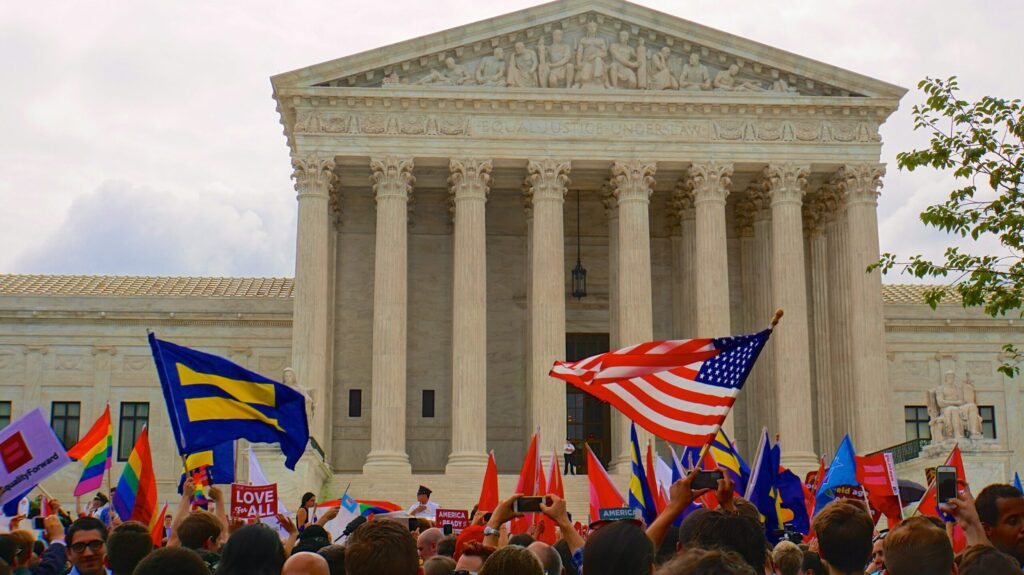
The battles over sexuality ignited in the late twentieth century and spilled over into the twenty-first. In 2015, the United States Supreme Court ruled that the fundamental right to marry included same-sex couples in the Obergefell v Hodges decision. Religion has always been at the center of the same-sex marriage debate, and religious attitudes on the subject have shifted drastically. In 2007, only 37% of religiously affiliated people in the U.S. supported same-sex marriage. By 2018, this number had ballooned to 67% in favor, making same-sex marriage the fastest-moving socio-religious issue that social science has ever measured.60
_-_26_June_2015.jpg)
Even before this shift, efforts to secure legislative recognition of sexual and gender minorities featured coalitions of religious leaders, including four state ballot measures on same-sex marriage in 2012. For example, Maryland’s marriage equality law was upheld through support from evangelical leaders, led by Reverend Delman Coates, Bishop Donte Hickman, and Sister Jeannie Gramick.61
As religious attitudes and support for legal protection for same-sex marriages has grown, so too has support for same-sex bylaws among significant mainline Protestant denominations. In July 2005, the United Church of Christ (UCC) became the first mainline Protestant denomination to support marriage equality and allow for its ministers to officiate same-sex weddings when its General Synod passed the “Equal Marriage for All” resolution. In the years since, the Evangelical Lutheran Church in America (2009), the Presbyterian Church USA (2015), the Episcopal Church (2015), and the United Methodist Church (2024) have each made similar changes to their denominational bylaws. Also during this time, these same denominations allowed for the ordination of qualified individuals regardless of sexual orientation or gender identity—with the exception of the UCC, which allowed for the ordination of gay ministers much earlier, becoming the first major Protestant denomination in the U.S. to ordain an openly gay minister in 1972.
Rising acceptance of queer people has led to some surprising developments. Some queer religious people began to shape a rising conservatism within the LGBT community. For example, the Catholic author and political commentator Andrew Sullivan and the Log Cabin Republicans began articulating a vision of queer-affirming conservatism. Similarly, the openly gay billionaire Peter Thiel has used his wealth and influence to support a host of conservative and libertarian causes.62
In the twenty-first century, the conservative Christian agenda in the United States has centered on the rhetoric of “the family.” The institutions spawned by the Religious Right in the 1970s and 1980s continue to shape American religious life. By the 2000s, Focus on the Family had its own publishing house and the organization received so much mail that it warranted its own zip code.63 Each person who sent a letter would then automatically begin receiving newsletters and copies of Focus on the Family with James C. Dobson magazine each month.64 Simultaneously, Dobson frequently appeared on Fox News commenting on culture and presidential politics, highlighting his relationship with the Republican Party and melding his vision for the family and the country into national policy-making.
Through the many books and broadcasts promoted by Focus, the organization influenced how its audience and their families behaved in schools, at work, and, by the beginning of the twenty-first century, at the voting booth. Using its literature on child-rearing, marriage, retirement, and the like, Focus helped nurture conservative American evangelicalism.
In 2009, Dobson stepped down from his position at Focus on the Family. Jim Daly, a sixteen-year veteran of the organization, became CEO. Although Daly offers occasional commentary on Fox News, he does not carry the public political weight that Dobson once did.65 By the 2020s, Focus’s membership had dramatically decreased because it had failed to connect with younger evangelicals; and the availability of various religious, political, parenting, and marriage advice online led to a decrease in Focus’s prominence.
Conflict around the family has frequently been taken to court. From same-sex marriage to reproductive rights, conservative Christian plaintiffs have opposed rights in the name of religious freedom. In Burwell v. Hobby Lobby (2014), the Court ruled that the privately held, for-profit corporation was exempt from covering certain contraceptives for its thousands of women employees. In her dissenting opinion, Justice Ruth Bader Ginsburg wrote that “the exercise of religion is characteristic of natural persons, not artificial legal entities.” A few years later, a baker in Lakewood, Colorado, asked to be exempt from non-discrimination laws in the name of the First Amendment. In Masterpiece Cakeshop v. Colorado Civil Rights Commission (2018), the U.S. Supreme Court granted bakery owner Jack Phillips the right to refuse to design a wedding cake for a same-sex couple.
Crises of sexuality exposed in the late twentieth century continued to haunt the twenty-first. Beginning in January 2002, the Boston Globe’s “Spotlight” reports demonstrated how church leadership enabled abusers to evade prosecution. The first Spotlight report detailed the case of a single notorious priest, John J. Geoghan, who had targeted young boys for three decades across six parishes. Over 130 victims had come forward to testify that Geoghan—who had been laicized by the time he stood trial in 2002—had sexually abused them as children.66 The U.S. Conference of Catholic Bishops put in place the Charter for the Protection of Children and Young People—commonly known as the Dallas Charter. Issued in June 2002, the Charter established procedures for handling reports of abuse, mandated safe environment training for church personnel who work with minors, and created a National Review Board of Catholic laity to annually evaluate the Charter’s implementation.67 The John Jay Report—a study commissioned by the board published in 2004—found allegations of sexual abuse against 4,392 priests between 1950 and 2002 (about four percent of priests active during this period).68
In 2016, Pennsylvania Attorney General Josh Shapiro convened a grand jury to investigate clergy sexual abuse in six of the state’s eight dioceses. The grand jury released its report in August 2018 and found that over the course of 70 years, bishops and other church leaders had covered up the abuse of more than 1,000 victims by over 300 priests. Certain states temporarily suspended statutes of limitations for the reporting of sex crimes, giving victims the opportunity to file lawsuits against the church. The largest such suit was settled in October 2024, when the Archdiocese of Los Angeles agreed to pay nearly $880 million to 1,353 victims.69
Globally, reckonings with clerical abuse have unfolded in Ireland, Australia, New Zealand, Germany, Belgium, France, the Philippines, Argentina, Chile, Mexico, and beyond. In Canada and the United States, survivors and descendants of church-run residential schools for Indigenous children have testified to the multiple forms of violence they endured at the hands of church officials. In a gesture of recognition of the global scope of the crisis, in February 2019 Pope Francis convened a global summit on The Protection of Minors in the Church at the Vatican. The meeting was followed by the release of Vos Estis Lux Mundi, a document in which Francis established universal norms for the prevention and reporting of sexual abuse against minors and other vulnerable people.70
IV. Religious Nationalism
For many Americans, the Catholic sexual abuse crisis shattered public trust in religious authority. Yet even as mistrust in religious authority rose, new forms of religious nationalism created new conflicts in American life. In many ways, American religion became both less common and more visible. For much of the twentieth century, Americans invoked a shared national faith. In the twenty-first century, these invocations grew sharper and coincided with assertions of the sacredness of American military power and authority. An ascending change in American evangelicalism—what scholars call Christian nationalism—embodied these trends and twice carried Donald Trump into the White House. Yet dissent continued from many corners, including the descendants of the first Americans who continue to challenge assumptions of what constitutes American religion.
9/11 and Islamophobia
Arguably the biggest crisis of the New Age was the deadly attacks carried out by 19 members of Al-Qaeda at the World Trade Center on September 11, 2001. In the years and decades following, the prevailing rhetoric was that all Muslims were responsible for 9/11, that they were susceptible to violence and terrorism, and that Islam as a religion promoted violence. These beliefs encompass what academics, governments, and rights activists have termed Islamophobia.
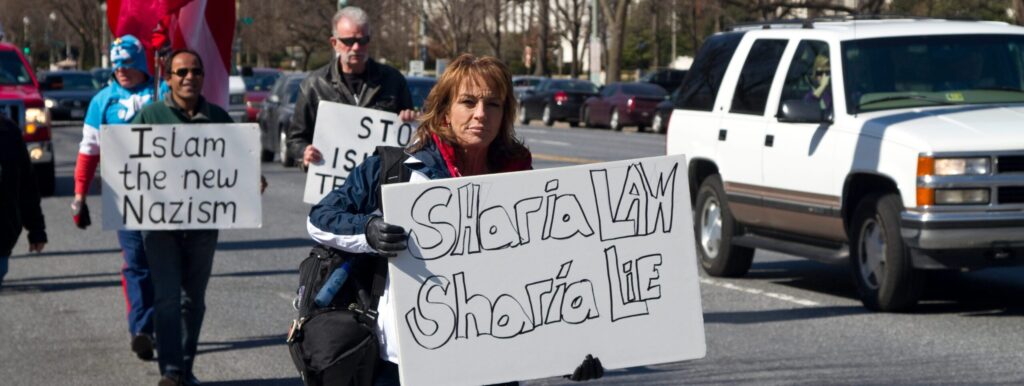
Islamophobia (or anti-Muslim racism) is prejudice, hatred, and/or fear of Muslims or those perceived to be Muslim. It relies on racist stereotypes and dangerous tropes, and often manifests in the forms of hate speech, discriminatory policies, and violence. While there are instances of Islamophobia throughout American history, anti-Muslim racism intensified following 9/11. Muslims and those perceived to be Muslim experienced harassment, surveillance, hate crimes, discrimination, and deadly violence. Since 9/11, Islamophobic sentiments in society and government policies have severely impacted the civil and human rights of Muslims in America and around the world.
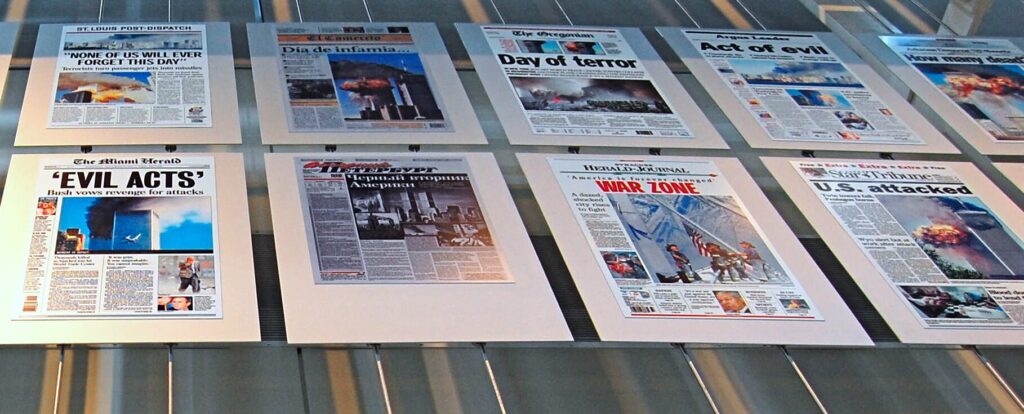

Addressing Congress and the nation on September 20, 2001, President Bush stated, “Our war on terror begins with al Qaeda, but it does not end there. It will not end until every terrorist group of global reach has been found, stopped, and defeated.”71 This language amplified Islamophobia as it conflated Muslim identity and Islam with terrorism, and constructed a narrative that framed all Muslims as potential terrorists and Islam as a source of terrorism. Brown University’s Costs of War project estimates that nearly one million people have died in the post-9/11 wars due to direct war violence.72 Along with military operations, the War on Terror involved secret CIA black sites and the military prison at Guantanamo Bay, where American authorities exclusively detained and tortured Muslim boys and men. In 2009, former Vice President Dick Cheney described those imprisoned at Guantanamo as “the worst of the worst.”73 In total, the prison held 780 Muslim boys and men, the vast majority of whom were either innocent or illegally detained without charge or trial.74
.jpg)
Domestically, the War on Terror involved counterterrorism measures that disproportionately targeted Muslims. The Patriot Act gave law enforcement surveillance powers that were used to target Muslim Americans and their places of worship. Additionally, the post-9/11 period witnessed a significant increase in hate crimes targeting Muslims and those perceived to be Muslims, including Sikhs and South Asians. Thus, between 2000 and 2009 the percentage of hate crime incidents directed toward Muslims increased by over 500%.”75
In American politics, Islamophobia has been promoted by both Democrats and Republicans.76 In 2016, Islamophobia reached new levels with the presidential campaign of Donald Trump. Days after his inauguration, President Trump signed an Executive Order banning individuals from several Muslim-majority countries, delivering on his campaign promise for a “total and complete shutdown of Muslims entering the United States.”77
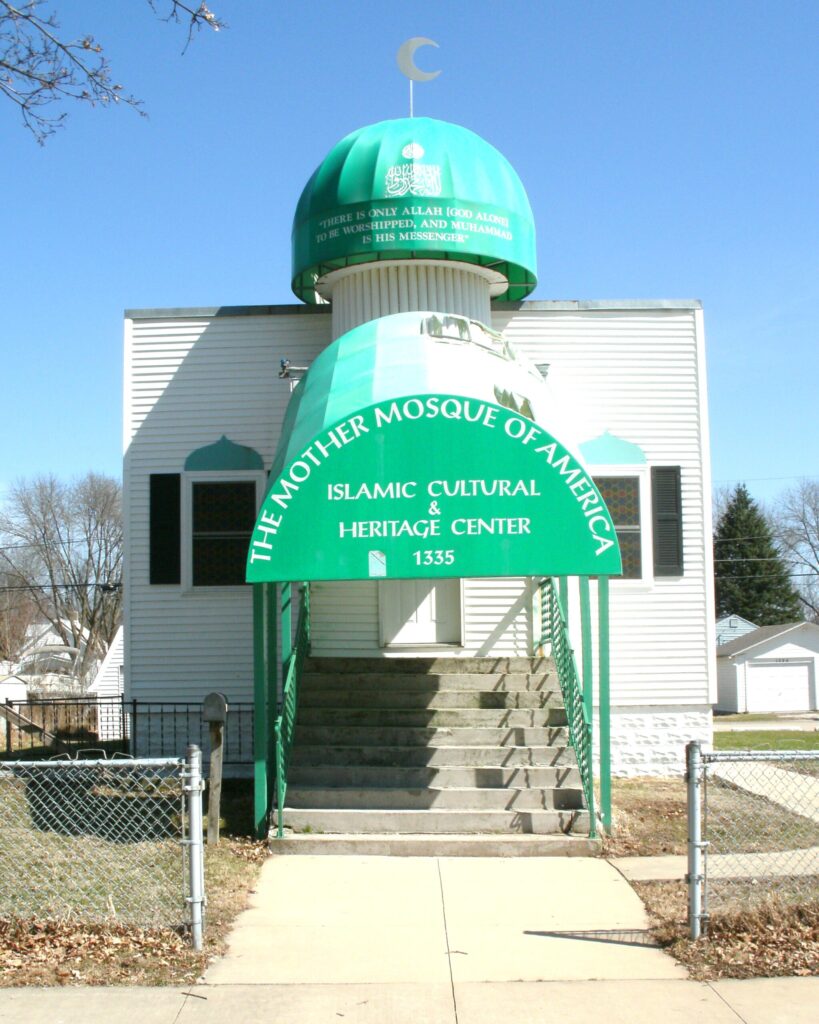

While legitimizing hate crimes, this period also saw a growth of activism amongst the American Muslim public. Much of this work was animated by students, including those who participated in the encampment movement spawned by protests against Israel’s invasion of Gaza after the October 7, 2023, attacks from Hamas. Israel’s actions both galvanized American Muslims and split Jewish Americans, as younger Jewish Americans increasingly oppose the actions of Israel, epitomized by the fact that many pro-Gaza encampments included Jewish students who held seders and celebrated Passover.78 Recent years have also seen a surge in American Muslims running for public office, and in 2026, the first Muslim Mayor of New York City, Zohran Mamdani, took office.
American Civil Religion
9/11 opened a new chapter in the national narrative of the United States. Prior to World War II, American civil religion communicated national values of freedom, liberty, and civic virtue and laid claims for the nation’s exceptional place in history as authored by god. However, following World War II, the Cold War introduced a new, militaristic nationalism to American civil religion.79
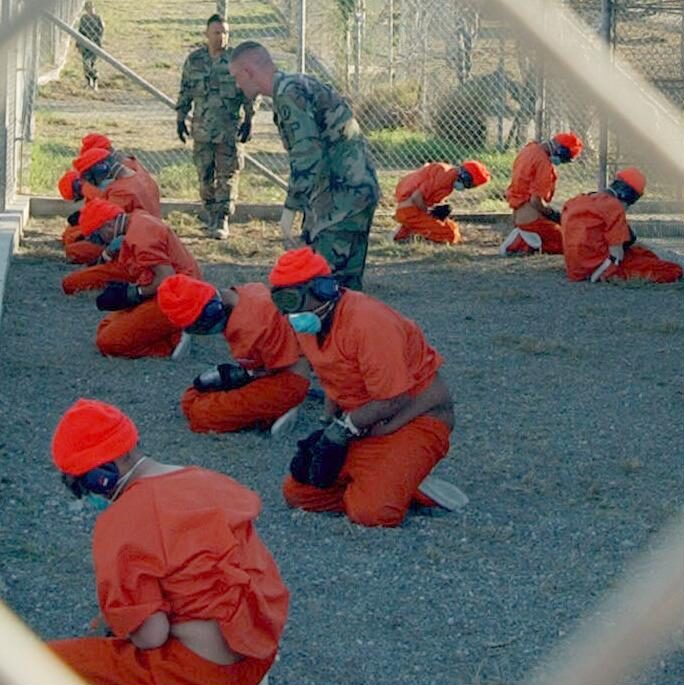

Prior to 9/11, President George W. Bush promoted a “Compassionate Conservatism” that reflected a more traditional American civil religion. However, following the attacks, Bush reinterpreted the religious nationalism of the Cold War to frame a narrative for the War on Terror. In his speech on the evening of September 11, 2001, Bush declared that those who plotted and executed the attacks were “enemies of freedom” and that the United States would “make no distinction between the terrorists who committed these acts and those who harbor them.” Bush would continually interpret the War on Terror through the post-WWII lens of American religious nationalism as he compared 9/11 to Pearl Harbor and cast Islamic terrorists as “successors to Fascists, to Nazis, to Communists, and other totalitarians of the 20th century,” and promised that this twenty-first-century war would end in “victory for the cause of freedom and liberty.”80
The result was a “holy war” that targeted majority Muslim nations and led to many civilian deaths. Between 2001 and 2020, the United States would execute military action in Afghanistan, Iraq, Kenya, Libya, Mali, Nigeria, Pakistan, Somalia, Syria, and Yemen, totaling 363,939 civilian deaths in these nations.81 This shift to religious nationalism in the United States would not end with President Bush, nor would it be limited to the War on Terror.
Donald Trump and American Christian Nationalism
The election of Donald Trump in 2016 marked a new phase in the history of American religion. If the divorced actor Ronald Reagan strained the expectations of personal piety advocated by evangelical Christians, Donald Trump smashed them. Trump almost never attended church, struggled to speak about the Bible, had earlier supported the right to abortion, was in his third marriage, and had decades of sexually explicit commentary and public actions. Despite this, he won the overwhelming support of white evangelical Protestants, conservative Catholics, Latter-day Saints, and other religious conservatives. He likely won a greater share of the evangelical vote than any candidate in American history.
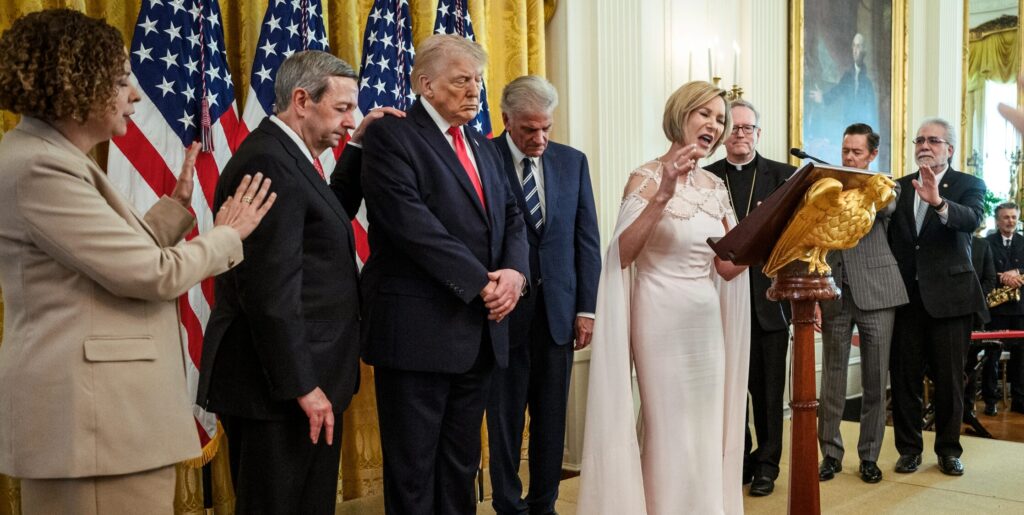

Trump’s appeal had less to do with his personal faith and more to do with his promises. For example, as he campaigned in 2016, he promised to appoint judges who would overturn Roe v Wade. He did just that, and all three of his appointed justices—Neil Gorsuch, Brett Kavanaugh, and Amy Coney Barrett—joined the majority in Dobbs v. Jackson Women’s Health Organization, which ended the federal constitutional right to abortion.
President Trump’s first term came to an end amidst the rise of a new public health crisis. The COVID-19 pandemic presented a huge global challenge, with a high death toll and extreme economic and social impacts. Religious responses to the crisis ranged from refusal to wear masks, vaccinate, and shut down religious services during lockdown, to adapting religious rituals, organizing soup kitchens and other mutual aid initiatives, and otherwise responding to the needs of communities by religious communities and institutions. More and more people were laid off or worked from home, K-12 schools shifted to online learning, colleges and universities sent students home, and frontline workers risked their lives through long shifts at hospitals, supermarkets, and public transportation. Religious institutions had to adjust as well: services were conducted online and fellowship almost completely disappeared. As more and more people were infected with the virus, lost loved ones, became isolated, and struggled to afford rent and food, religious leaders and communities provided much-needed support. Religious communities offered food distribution, attended to the sick, supported vulnerable communities, and offered night shelters to the unhoused.
Conservative religion transformed itself during the Trump years. Commentators spoke less and less of the “religious right” and more and more about “Christian nationalism,” a vaguely defined term that nevertheless captured a new aggressive form of American religious warfare. Abandoning a narrow slate of culture war issues—abortion, gay marriage—Christian nationalists now worked more broadly to impose themselves upon the political and cultural life of the nation. Armed with invented histories of a Christian founding peddled by historian-activists such as David Barton, they dismissed the separation of church and state as a myth. President Trump’s Religious Liberty Commission, for instance, explicitly advocated for “Building Bridges Between Church and State.”82 Some embraced specific Christian nationalist theologies, such as the New Apostolic Reformation’s Seven Mountain Mandate, which urged Christians to exercise “dominion” over the nation. Others were far less systematic in their thinking, but Christian nationalists of all stripes fully blurred the lines between nationalist politics and religious identity.
For many conservative believers, nationalist politics had become the primary measure of religious commitment. Support for Christian curricula in public schools, taxpayer funding for private religious schools, blocking the construction of Islamic centers, abortion bans, restrictions on transgender rights, and punitive immigration laws became the defining expressions of religious commitment.83 Donald Trump lost his 2020 reelection campaign yet refused to allow a peaceful transfer of power. After denying the results of the election, Donald Trump encouraged his supporters to take matters into their own hands.
_(retouched).jpg)
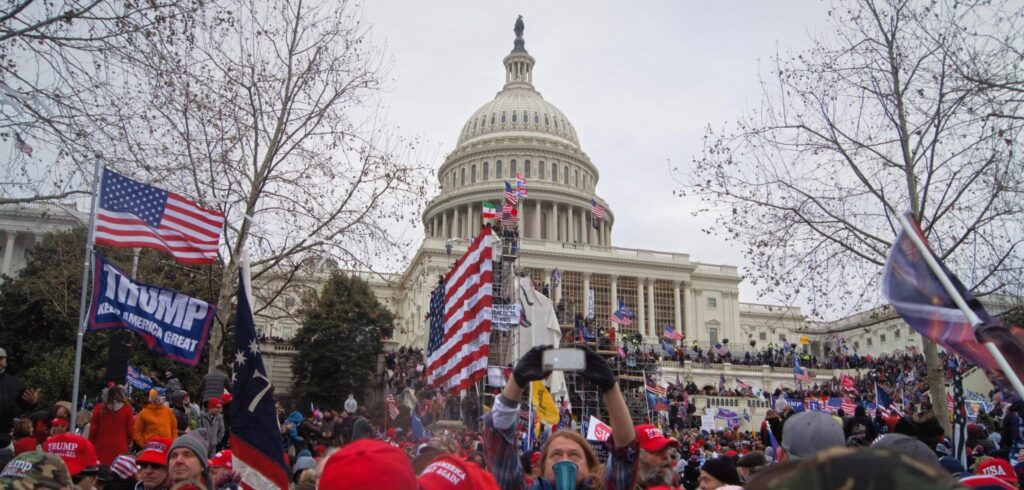
On January 6, 2021, as Congress convened to certify the 2020 election results for president-elect, supporters of President Trump stormed the U.S. Capitol in an attempted coup d’état. Five people died in the events, hundreds were injured, and $2.7 million in property damage occurred.
Among the many religious symbols and references of the day stood Jacob Chansley—better known as the QAnon Shaman—who was “playing Indian,” outfitted in a headdress made of buffalo horns, coyote fur, face paint, feathers, and beads, and beating a fake drum.84 As Cherokee scholar Joseph Pierce wrote at the time, this was “an image of violent appropriation—a warning and a reminder. White supremacists like [Chansley] pose as Indians in order to create an image of themselves as inseparable from the land itself.”85 As cultural and religious appropriation of Native traditions continued, so did Indigenous resistance to appropriation and ongoing attacks on Native land.
Indigenous Spiritual Activism
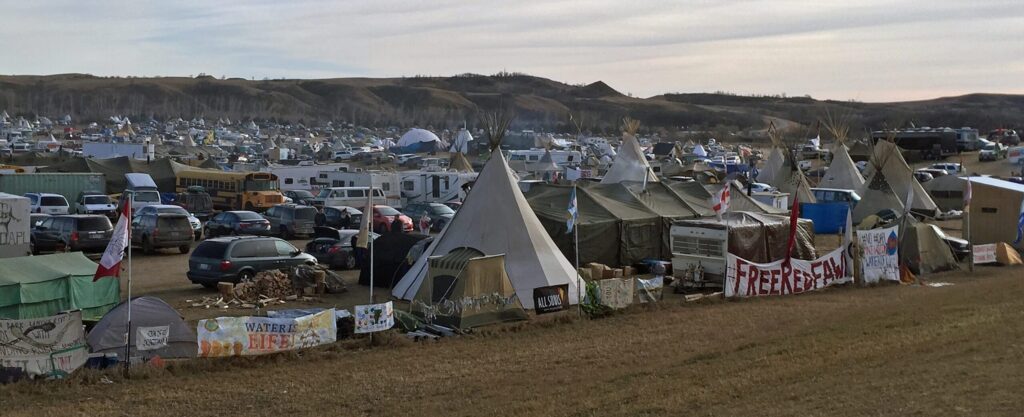
In April 2016, Lakota elder LaDonna Brave Bull Allard posted a video to Facebook asking people to join her at her family’s land at Standing Rock to help protect the water and the land from a proposed pipeline.86 A handful of people formed a camp soon after with a small water ceremony, and some offered prayers.87 Within months, the Sacred Stone Camp would grow to thousands. After the original route for the 1172-mile Dakota Access Pipeline was roundly rejected by the people of Bismarck due to fears of water contamination, the route was moved closer to Standing Rock and nearby Lake Oahe.88
.jpg)
The rerouted pipeline would traverse lands promised to the Lakota by the 1868 Fort Laramie Treaty, including 380 federally protected archeological, historical, and sacred sites.89 Brave Bull Allard described this confrontation as not only a fight to protect Native American rights and sovereignty, but also for collective survival, saying, “We are fighting for our rights as the Indigenous peoples of this land; we are fighting for our liberation, and the liberation of Unci Maka, Mother Earth. We want every last oil and gas pipe removed from her body. We want healing. We want clean water. We want to determine our own future.”90
The Sacred Stone Camp dedicated itself to holding ceremonies around the clock.91 Indigenous peoples from across the Americas, the Pacific, Asia, and beyond gathered at the camp to collectively honor these ethical truths and pray for the water’s healing.92 Although the pipeline was eventually completed, the religious work produced through months of ceremony affirmed the sovereignty of the lands themselves and the sacred commitments made by a new generation of Indigenous stewards.93
Conflicts over sacred Indigenous lands have led to court cases centered on religious freedom. The case of Apache Stronghold v. United States (2024) centered on sacred land in Arizona. According to Apache belief, Chí’chil Biłdagoteel (known in English as Oak Flat) is where Ga’an—guardians or messengers between Apache peoples and the Creator, Usen—reside.
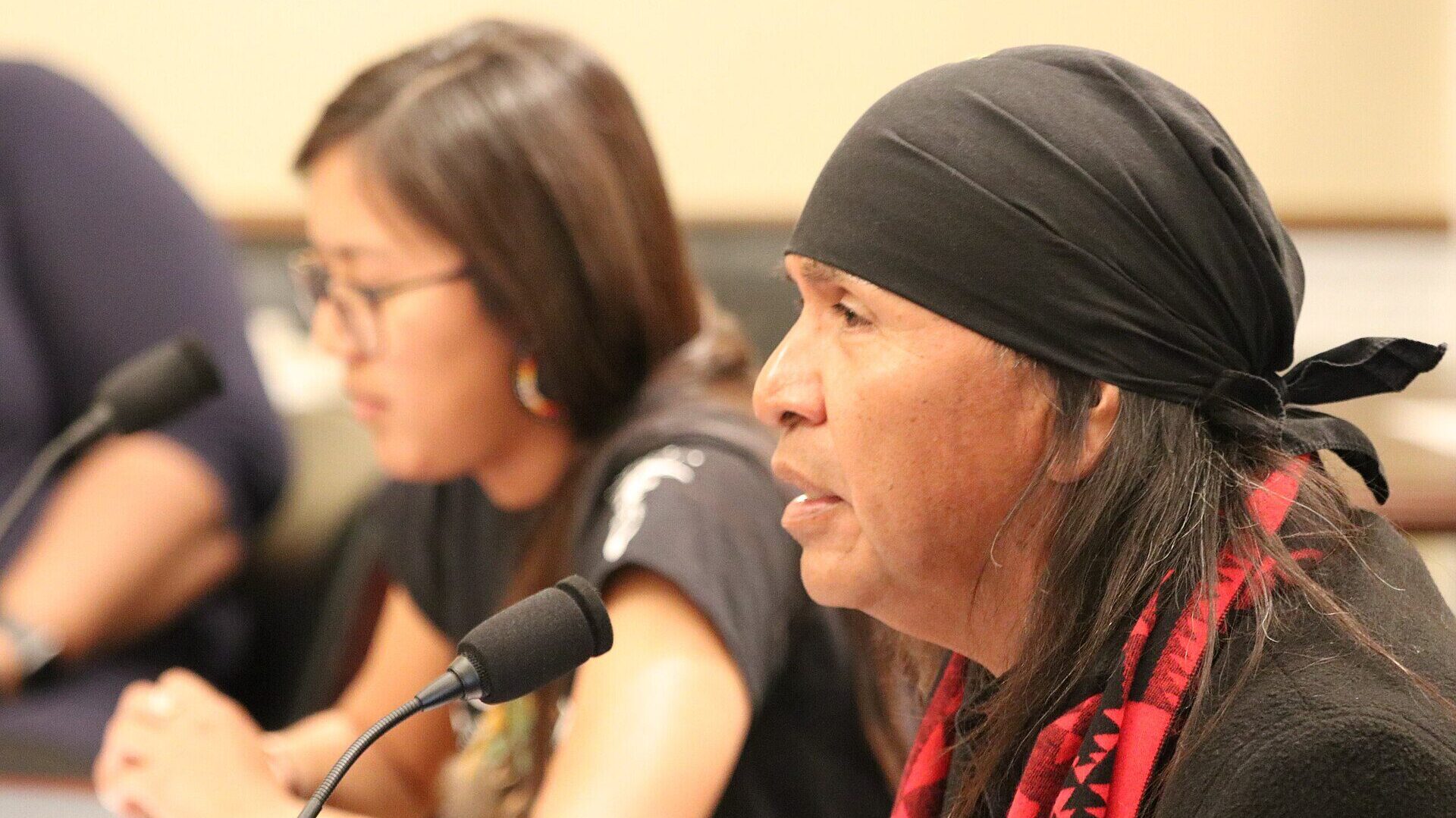

Since 2014, a proposed copper mine has threatened to permanently alter the area.94 Apache Stronghold, a grassroots organization, challenged the proposed mining plan in court, arguing that destroying their sacred sites would infringe on their free exercise of religion.95 Despite recognizing the land’s spiritual value to the Apache peoples, the court ruled in favor of its economic value to American peoples. The Supreme Court refused to hear their case. Justice Neil Gorsuch, in a dissenting opinion, referred to this refusal as “a grave mistake.”96
Despite these conflicts and backlash, Native American religion has also recently experienced growth and revival, with earlier activism leading to the legislation of the Native American Language Act (NALA) and the Native American Grave Repatriation Act (NAGPRA). These have helped revitalize Native languages and return bodily remains and sacred materials housed in museums or archives to their tribes. These were a product of on-the-ground efforts from activists invested in Indigenous self-determination and sovereignty who advocated for reconnecting people and future generations with traditional language, medicine, spirituality, food, and more.
V. Conclusion
The story of American religion is a roller coaster of reinvention. Indigenous traditions, African religions, Christianity, Judaism, Islam, Buddhism, Hinduism, Sikhism, Mormonism, and other faith traditions have collided and competed in the United States. They have divided amongst themselves, innovated new traditions, adapted to new worlds, and rolled their way across the American landscape. Recent history exposes that kinetic world of American religion. By many measures, contemporary Americans are individually less religious than those from previous generations, and yet religion is no less a part of American public life today than in years past. One therefore cannot make sense of American life without first understanding American religion. From the Indigenous traditions of the land’s first peoples to the spiritual cacophony of the twenty-first century, religion has thundered across the American landscape. It remains for us only to listen, and to understand.
VI. Reference Material
This chapter was edited by Dana Lloyd with content contributions from Natalie Avalos, Matthew Bowman, Sarah Dees, Seth Dowland, Marcelitte Failla, Amanda Furiasse, Jon Garcia, Travis B. Hill, Dana Lloyd, Joseph L. Locke, Adeana McNicholl, David J. Neumann, Mónica Isabel Rey, Faatimah Shamim, Mobashra Tazamal, Valeria Vergani, Joseph Williams, and Ben Wright
Recommended Reading
- Kate Bowler, Blessed: A History of the American Prosperity Gospel (Oxford University Press, 2013).
- Anthea Butler, White Evangelical Racism: The Politics of Morality in America (University of North Carolina Press, 2021).
- James Brooke-Smith, Accelerate!: A History of the 1990s (The History Press, 2022).
- Yvonne Chireau, Black Magic: Religion and the African American Conjuring Tradition (University of California Press, 2006).
- Brad Christerson and Richard Flory, The Rise of Network Christianity: How Independent Leaders Are Changing the Religious Landscape (Oxford University Press, 2017).
- Darren Dochuk, Anointed with Oil: How Christianity and Crude Made Modern America (Basic Books, 2019).
- Lisa Duggan, The Twilight of Equality? Neoliberalism, Cultural Politics, and the Attack on Democracy (Beacon Press, 2003).
- John Fahy and Jan-Jonathan Bock, eds., The Interfaith Movement: Mobilising Religious Diversity in the 21st Century (Routledge, 2019).
- Robert C. Fuller, Spiritual, but Not Religious: Understanding Unchurched America (Oxford University Press, 2001).
- Ann Gleig, American Dharma: Buddhism beyond Modernity (Yale University Press, 2019).
- Dan Gilgoff, The Jesus Machine: How James Dobson, Focus on the Family, and Evangelical America Are Winning the Culture Wars (St. Martin’s Griffin, 2008).
- Sarah Barringer Gordon, The Spirit of the Law: Religious Voices and the Constitution in Modern America (Harvard University Press, 2010).
- R. Marie Griffith, Moral Combat: How Sex Divided American Christians and Fractured American Politics (Basic Books, 2017).
- Tim Hutchings, Creating Church Online: Ritual, Community and New Media (Routledge, 2017).
- David Mislin, Saving Faith: Making Religious Pluralism an American Value at the Dawn of the Secular Age (Cornell University Press, 2015).
- Scott Mitchell, The Making of American Buddhism (Oxford University Press, 2023).
- Benjamin E. Park, American Zion: A New History of Mormonism (Liveright, 2024).
- Robert D. Putnam and David E. Campbell, American Grace: How Religion Divides and Unites Us (Simon & Schuster, 2010).
- Jana Reiss, The Next Mormons: How Millennials Are Changing the LDS Church (Oxford University Press, 2019).
- Andrew L. Whitehead and Samuel L. Perry, Taking America Back for God: Christian Nationalism in the United States (Oxford University Press, 2020).
- Daniel Vaca, Evangelicals Incorporated: Books and the Business of Religion in America (Harvard University Press, 2019).
- Neil J. Young, Coming Out Republican: A History of the Gay Right (University of Chicago Press, 2024).
Notes
- Pew Research Center, “How U.S. Religious Composition Has Changed in Recent Decades,” in Modeling the Future of Religion in America (Washington, DC: Pew Research Center, September 13, 2022). ↩︎
- Sam Harris, The End of Faith: Religion, Terror, and the Future of Reason (W. W. Norton, 2004); Richard Dawkins, The God Delusion (Houghton Mifflin, 2006); Christopher Hitchens, God Is Not Great: How Religion Poisons Everything (Twelve, 2007); and Daniel C. Dennett, Breaking the Spell: Religion as a Natural Phenomenon (Viking, 2006). ↩︎
- Robert C. Fuller, Spiritual, but not Religious Understanding Unchurched America (Oxford, 2001). ↩︎
- Robert D. Putnam, Bowling Alone: The Collapse and Revival of American Community (Simon & Schuster, 2000). ↩︎
- Robert D. Putnam and David E. Campbell, American Grace: How Religion Divides and Unites Us (Simon & Schuster, 2010). ↩︎
- Kathryn Post, “Church for nones: The anti-dogma spiritual collectives emerging across the US,” Christian Century 141, no. 2 (2024): 17-18; Blake Chastain, Exvangelical and Beyond: How American Christianity Went Radical and the Movement That’s Fighting Back (Tarcher, 2024). ↩︎
- Matthew Bowman, The Mormon People: The Making of an American Faith (Random House, 2012), 184-216; Gregory Prince and William Robert Wright, David O. McKay and the Rise of Modern Mormonism (University of Utah Press, 2005), 139-159. ↩︎
- Philip Jenkins, “Letting Go: Exploring Mormon Growth in Africa,” Journal of Mormon History 35, no. 2 (2009): 1–25. ↩︎
- Neil J. Young, “Mormons and Same-Sex Marriage: From ERA to Prop 8,” in Patrick Q. Mason and John G. Turner, eds., Out of Obscurity: Mormonism Since 1945 (Oxford University Press, 2016), 144-173. ↩︎
- David E. Campbell, John C. Green, and Quin Monson, Seeking the Promised Land: Mormons and American Politics (Cambridge University Press, 2014), 77-103. ↩︎
- Jana Reiss, The Next Mormons: How Millennials are Changing the LDS Church (Oxford University Press, 2019), 172-174. ↩︎
- Pat Robertson, “Religious Broadcasters Must Be Salt and Light,” National Religious Broadcasters Convention, Tampa, FL, February 16, 1993, https://www.patrobertson.com/speeches/ReligiousBroadcastersSaltand%20Light.asp. ↩︎
- For a helpful overview of the history of the pentecostal movement in the United States and its relationship to charismatic groups, see R.G. Robins, Pentecostalism in America (Praeger, 2010). ↩︎
- See Kate Bowler, Blessed: A History of the American Prosperity Gospel (Oxford University Press, 2013). ↩︎
- Paula White-Cain [@Paula_White], “Something Is Going to Break in the Heavenlies. CAN YOU BELIEVE WITH ME?? Your Want Is Going to Change to Prosperity! I Declare It by the Prophetic Anointing!,” x.com, June 8, 2024, https://x.com/Paula_White/status/1799415363471655419. ↩︎
- See Robins, Pentecostalism in America, 108–19. ↩︎
- See Brad Christerson and Richard Flory, The Rise of Network Christianity: How Independent Leaders Are Changing the Religious Landscape (Oxford University Press, 2017), 74–104. ↩︎
- See Allan Anderson, An Introduction to Pentecostalism: Global Charismatic Christianity, 2nd ed. (Cambridge University Press, 2013). ↩︎
- See Donald M. Lewis, A Short History of Christian Zionism: From the Reformation to the Twenty-First Century (IVP Academic, 2021), 316–43. ↩︎
- Quoted in Julia Lieblich and Tom McCann, “Africans Now Missionaries to U.S.,” Chicago Tribune, June 21, 2002. ↩︎
- Dr. Dianne Stewart coined the term African-heritage religions. These traditions are also referred to as African-traditional and African-derived religions. ↩︎
- “Home,” ileoriafricancc, https://www.ileori.com. ↩︎
- Yvonne Chireau, Black Magic: Religion and the African American Conjuring Tradition (University of California Press, 2006), 1-34. ↩︎
- Tayannah Lee McQuillar, Rootwork: Using the Folk Magick of Black America for Love, Money, and Success (Simon & Schuster, 2003); Mawiyah Kai El-Jamah Bomani, Conjuring the Calabash: Empowering Women with Hoodoo Spells & Magick, First edition (Llewellyn Worldwide ltd, 2023); Juju Bae, The Book of Juju: African Spirituality for Healing, Liberation, and Self-Discovery (Sterling Ethos, 2024); “Detroit Hoodoo Festival – Michigan’s Annual Hoodoo Festival,” https://detroithoodoofestival.com/; “The 9 Minds | Instagram, Facebook, TikTok,” Linktree, https://linktr.ee/the9minds. ↩︎
- Tricycle, “About,” https://tricycle.org/about/. ↩︎
- Helen Tworkov, “Many is More” Tricycle: The Buddhist Review, winter 1991, https://tricycle.org/magazine/many-more/; Chenxing Han, Be the Refuge: Raising the Voices of Asian American Buddhists (North Atlantic Books, 2021), 21. ↩︎
- Based on the Pew Forum research study published in 2012, a revision of the much-criticized 2008 report, which undercounted Asian-American Buddhists due to the survey only being conducted in English and Spanish and not including Hawai’i. See Pew Research Center, “Asian Americans: A Mosaic of Faiths,” Washington, DC, July 19, 2012. https://www.pewresearch.org/wp-content/uploads/sites/7/2012/07/Asian-Americans-religion-full-report.pdf and Han, Be the Refuge, 8, 285–286 n. 8 and 10. See also Scott Mitchell, The Making of American Buddhism (Oxford University Press, 2023). ↩︎
- bell hooks, “Waking Up to Racism,” Tricycle: The Buddhist Review, Fall 1994; Han, Be the Refuge, 11. ↩︎
- On the recent turn in American Buddhist practice see Ann Gleig, American Dharma: Buddhism beyond Modernity (Yale University Press, 2019). ↩︎
- Sheridan Adams, Mushim Ikeda-Nash, Jeff Kitzes, Margarita Loinaz, Choyin Rangdrol, Jessica Tan, and Larry Yang, eds., Making the Invisible Visible: Healing Racism in our Buddhist Communities (self-published, 2000). On critiques of white supremacy within Buddhist communities see Adams et al. Making the Invisible Visible; Gleig, American Dharma; Han, Be the Refuge; Adeana McNicholl, “Buddhism and Race in the United States,” Religion Compass 15, no. 8 (2021): 1–13; George Yancy and Emily McRae, eds., Buddhism and Whiteness: Critical Reflections (Lexington Books, 2019). ↩︎
- Winston Leyland, ed., Queer Dharma: Voices of Gay Buddhists Vol. 1 (Gay Sunshine Press, 1998); Winston Leyland, ed., Queer Dharma: Voices of Gay Buddhists Vol. 2 (Gay Sunshine Press, 2000). ↩︎
- Ann Gleig, “Queering Buddhism or Buddhist De-Queering?: Reflecting on Differences Amongst Western LGBTQI Buddhists and the Limits of Liberal Convert Buddhism,” Theology & Sexuality 18, no.3 (2012): 198–214; Amy Langenberg, “Gender and Sexuality in American Buddhism,” in The Oxford Handbook of American Buddhism, eds., Ann Gleig and Scott Mitchell (Oxford University Press, 2024), 74–91. ↩︎
- Langenberg, “Gender and Sexuality in American Buddhism,” 86; Caitriona Reed, “Coming Out Whole,” Inquiring Mind 14, no. 2 (1998); Kevin Manders and Elizabeth Marston, eds., Transcending: Trans Buddhist Voices (North Atlantic Books, 2019). ↩︎
- “Sex, Scandal, and the Shadow of the Roshi” in Gleig, American Dharma, 84–110; Langenberg, “Gender and Sexuality in American Buddhism,” 87–89. ↩︎
- Zenju Earthlyn Manuel, The Way of Tenderness: Awakening through Race, Sexuality, and Gender (Wisdom Publications, 2015); Vesely-Flad, Black Buddhists and the Black Radical Tradition; Jacoby Ballard, A Queer Dharma: Yoga and Meditations for Liberation (North Atlantic Books, 2021); Amy Langenberg, “Gender and Sexuality in American Buddhism,” in The Oxford Handbook of American Buddhism, eds., Ann Gleig and Scott Mitchell (Oxford University Press, 2024), 74–91. ↩︎
- Ann Gleig and Brenna Artinger, “#BuddhistCultureWars: BuddhaBros, Alt-Right Dharma, and Snowflake Sanghas,” Journal of Global Buddhism, 22, no.1 (2021): 19–48; McNicholl, “Buddhism and Race in the United States.” ↩︎
- Mihiri Tillakaratne, “‘May We Gather’ Buddhist Memorial Ceremony Offers Asian American Community Space to Heal,” Lion’s Roar, May 5, 2021. ↩︎
- “May We Gather: A National Buddhist Memorial Ceremony for Asian American Ancestors,” 2021; “May We Gather: A National Buddhist Pilgrimage for Asian American Ancestors,” March 16, 2024.. ↩︎
- “Buddhist Justice Reporter: The George Floyd Trials,”; Ward, America’s Racial Karma; Yetunde and Giles, Black & Buddhist; Some of the projects published in 2020 had already been in production when George Floyd was killed and the incident was incorporated into the final product. ↩︎
- John Fahy and Jan-Jonathan Bock, eds., The Interfaith Movement: Mobilising Religious Diversity in the 21st Century (Routledge, 2019), 2. ↩︎
- David Mislin, Saving Faith: Making Religious Pluralism an American Value at the Dawn of the Secular Age (Cornell University Press, 2015). ↩︎
- Fred Turner, From Counterculture to Cyberculture: Stewart Brand, the Whole Earth Network, and the Rise of Digital Utopianism (University of Chicago Press, 2010); James Brooke-Smith, Accelerate!: A History of the 1990s (The History Press, 2022). ↩︎
- Juliet Hollister, Living My Dream: The Remarkable Story of the Temple of Understanding (CreateSpace Independent Publishing Platform, 2010). ↩︎
- “North American Interfaith Network (NAIN),” https://hwpi.harvard.edu/pluralismarchive/north-american-interfaith-network-nain. ↩︎
- Abe Masao, “A Report on the 1993 Parliament of World’s Religions,” The Eastern Buddhist 26, no. 2 (1993): 73–75; Katherine Marshall, “The Parliament of the World’s Religions: 1893 and 1993,” Georgetown University Berkley Center for Religion, Peace & World Affairs. ↩︎
- William E. Swing, A Bishop’s Quest, First Edition (Xoxox Press, 2015). ↩︎
- Eboo Patel and Cassie Meyer, “Building Religious Pluralism: The Interfaith Youth Core Approach,” International Journal of Curriculum and Instruction 7, no. 1 (2010): 167–72. ↩︎
- Wayne Teasdale and George F. Cairns, eds., The Community of Religions: Voices and Images of the Parliament of the World’s Religions (Continuum, 1996), 13. ↩︎
- Parliament of the World’s Religions, “SAVE THE PARLIAMENT,” 2013, https://us1.campaign-archive.com/?u=15d4f7de1064a5171ce87bc0e&id=f30df6ab9c. ↩︎
- C. Melissa Snarr, “Elaborating Faith,” Journal of Religious Ethics 45, no. 2 (2017): 255–77. ↩︎
- Russell T. McCutcheon, “The Economics of Spiritual Luxury: The Glittering Lobby and the World’s Parliament of Religions,” in Critics Not Caretakers: Redefining the Public Study of Religion (State University of New York Press, 2001). ↩︎
- Tim Hutchings, Creating Church Online: Ritual, Community and New Media (Routledge, 2017). ↩︎
- Lorne L. Dawson and Douglas E. Cowan, eds., Religion Online: Finding Faith on the Internet (Routledge, 2004). ↩︎
- Adam Possamai and Murray Lee, Handbook of Digital Religion (Edward Elgar Publishing, 2019). ↩︎
- Christopher Helland, “Online-Religion/Religion-Online and Virtual Communitas,” in Religion on the Internet: Research Prospects and Promises, eds. Jeffrey K. Hadden and Douglas E. Cowan (JAI Press/Elsevier Science, 2000), 205-223: “Religion-online provides information about religion, while online-religion provides a location for participating in religious activity” (205). ↩︎
- Oliver Krueger, “Gnosis in Cyberspace? Body, Mind and Progress in Posthumanism,” Journal of Evolution and Technology 14, no. 2 (2005): 55-67. ↩︎
- Robert M. Geraci, Virtually Sacred: Myth and Meaning in World of Warcraft and Second Life (Oxford University Press, 2014). ↩︎
- Heidi A. Campbell and Giulia Evolvi, “Contextualizing Current Digital Religion Research on Emerging Technologies,” Human Behavior and Emerging Technologies 2, no. 1 (2020): 5-17. ↩︎
- Campbell and Evolvi, “Contextualizing Current Digital Religion Research on Emerging Technologies.” ↩︎
- Ryan P. Burge, “Religion and Support for Gay Marriage,” Religion in Public: Exploring the Mix of Sacred and Secular, December 11, 2018. ↩︎
- William N. Eskridge, Jr., “American Religion and the Marriage Debate,” Yale University Press, August 25, 2020. ↩︎
- Neil J. Young, Coming Out Republican: A History of the Gay Right (University of Chicago Press 2024); Lisa Duggan, The Twilight of Equality? Neoliberalism, Cultural Politics, and the Attack on Democracy (Beacon Press 2003); Jasbir K. Puar, Terrorist Assemblages: Homonationalism in Queer Times (Duke University Press 2007). ↩︎
- Dan Gilgoff, The Jesus Machine: How James Dobson, Focus on the Family, and Evangelical America Are Winning the Culture Wars (St. Martin’s Griffin, 2008), 39, 168. ↩︎
- Robert Waterman McChesney, The Political Economy of Media: Enduring Issues, Emerging Dilemmas (Monthly Review Press, 2008), 428–30. ↩︎
- “Jim Daly—Focus on the Family,” http://www.focusonthefamily.com/about_us/profiles/jim_daly.aspx. ↩︎
- Matt Carroll, Sacha Pfeiffer, and Michael Rezendes, “Church allowed abuse by priest for years,” The Boston Globe, January 6, 2002. ↩︎
- United States Conference of Catholic Bishops, “Charter for the Protection of Children and Young People,” Washington, DC (2002). The charter was revised in 2005, 2011, and 2018. ↩︎
- “The Nature and Scoop of Sexual Abuse of Minors by Catholic Priests and Deacons in the United States, 1950-2002,” The John Jay College of Criminal Justice in the City of New York, February 2004 (June 2004). ↩︎
- Ruth Graham and Orlando Mayorquín, “Archdiocese of Los Angeles Agrees to Pay $880 Million to Settle Sex Abuse Claims,” New York Times, October 16, 2024. The 2024 settlement was on top of the then-record setting $660 million the archdiocese had agreed to pay 508 victims in 2007. ↩︎
- Francis, “Vos Estis Lux Mundi,” Apostolic Letter Issued Motu Proprio, May 7, 2019. ↩︎
- George W. Bush “Address to a Joint Session of Congress and the American People,” Speech, September 20, 2001, The White House Archives, https://georgewbush-whitehouse.archives.gov/news/releases/2001/09/20010920-8.html. ↩︎
- Watson Institute for International and Public Affairs, “Costs of War,” The Costs of War, https://watson.brown.edu/costsofwar/. ↩︎
- The Associated Press, “Cheney: Gitmo holds the worst of the worst,” NBC News, June 1, 2009, https://www.nbcnews.com/id/wbna31052241. ↩︎
- The Bridge Initiative, “Guantanamo Bay Data Project,” November 4, 2020, https://bridge.georgetown.edu/research/guantanamo-bay-data-project/. ↩︎
- Watson Institute for International and Public Affairs, “Racial Profiling and Islamophobia,” The Costs of War, September 2023, https://watson.brown.edu/costsofwar/costs/social/rights/profiling. ↩︎
- Cristina Marcos, “Tlaib: There’s Islamophobia in the Democratic Party,” The Hill, November 3, 2019, https://thehill.com/homenews/house/433522-tlaib-theres-islamophobia-in-the-democratic-party/. Hannah Allam and Talal Ansari, “State and Local Republican Officials Have Been Bashing Muslims. We Counted.” ↩︎
- Donald J. Trump, “Executive Order Protecting the Nation from Foreign Terrorist Entry into the United States,” The White House, January 27, 2017, https://bridge.georgetown.edu/research-publications/reports/the-muslim-and-african-bans/. ↩︎
- Ella Daniel and Paloma Chapa, “UNM encampment stands in solidarity with Palestine, other universities,” Daily Lobo, April 30, 2024; Viet Thanh Nguyen and Karen Tongson, “USC: This is a teachable moment,” Daily Trojan, April 26, 2024; Emily Chen and Joyce Zhang, “‘Solidarity materialized’: A look into the art and community born out of the ‘Gaza Solidarity Encampment’,” Columbia Spectator, April 28, 2024; Kristin Merrilees, “Revolutionary film collective cinemóvil nyc shows ‘Columbia Revolt’ and ‘Between Two Crossings’ at ‘Gaza Solidarity Encampment’,” Columbia Spectator, April 28, 2024. Gabriella Gregor Splaver, “In Focus: 120 Hours into the ‘Gaza Solidarity Encampment’,” Columbia Spectator, April 23, 2024. See also Oren Kroll-Zeldin, Unsettled: Jews and the Movement for Justice in Palestine (NYU Press, 2024); Peter Beinart, Being Jewish After the Destruction of Gaza: A Reckoning (Knopf, 2025); and Marjorie N. Feld, The Threshold of Dissent: A History of American Jewish Critics of Zionism (NYU Press, 2024). ↩︎
- Ryan T. O’Leary, “The freedom narrative and the War on Terror: Civil-religious idolatry for the 9/11 generation,” Peace & Change: A Journal of Peace Research 48 (July 24, 2023): 298-312. ↩︎
- George W. Bush, “Speech on National Security,” (Speech, Charleston, SC, December 11, 2001); George W. Bush, “State of the Union Address,” (Speech, Washington, DC, February 2, 2005); George W. Bush, “President Bush Addresses American Legion National Convention,” (Speech, Salt Lake City, UT, August 31, 2006). ↩︎
- Cost of War project, Watson Institute, Brown University. ↩︎
- Religious Liberty Commission, Draft Report (June 2026). ↩︎
- Andrew L. Whitehead and Samuel L. Perry, Taking America Back for God: Christian Nationalism in the United States (Oxford University Press, 2020). ↩︎
- Philip Deloria, Playing Indian (Yale University Press, 1998). ↩︎
- Josep Pierce, “The Capitol Rioter Dressed Up as a Native American Is Part of a Long Cultural History of ‘Playing Indian.’ We Ignore it at Our Peril” 2021. ↩︎
- Mikki Halpin, “Standing Rock Sioux Tribe Historian LaDonna Brave Bull Allard on DAPL Protests and Seventh Generation Activists,” Teen Vogue, April 26, 2017. ↩︎
- Halpin, “Standing Rock Sioux Tribe Historian.” ↩︎
- ABC (American Broadcasting Company) News, “Why a Previously Proposed Route for The Dakota Access Pipeline Was Rejected,” November 3, 2016. ↩︎
- Chief Edward John, Expert Member of the U.N. Permanent Forum on Indigenous Issues, “Firsthand Observations of Conditions Surrounding the Dakota Access Pipeline (North Dakota, USA),” Nov. 1, 2016. ↩︎
- LaDonna Brave Bull Allard, “How Powerful Could We Be if We Agree to Stand Our Ground on Our Treaty Land,” Yes Magazine, February 4, 2017. ↩︎
- Brave Bull Allard, “How Powerful Could We Be.” ↩︎
- Halpin, “Standing Rock Sioux Tribe Historian.” ↩︎
- Halpin, “Standing Rock Sioux Tribe Historian.” ↩︎
- Anna V. Smith, (2022) “At Oak Flat, Courts and Politicians Fail Tribes,” High Country News, July 26, 2022. ↩︎
- Religious Freedom Restoration Act (1993), 42 U.S.C. §§ 2000bb-2000bb4. ↩︎
- Apache Stronghold v. United States, 605 U. S. ____ (2025), 2. ↩︎