

You are reading a working draft of The Palace of Thundering Gods, a living history project built through scholarly collaboration. Please click here to help improve this chapter.
I. Introduction
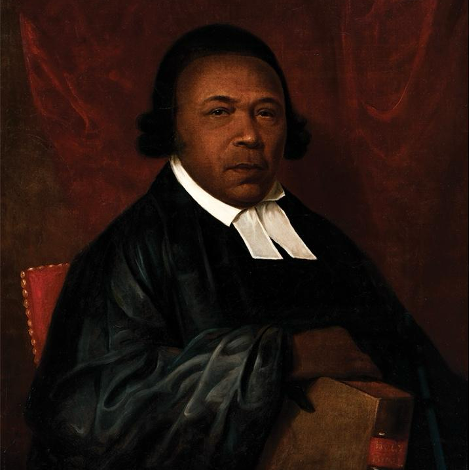
In 1808, the Reverend Absalom Jones celebrated the abolition of the Atlantic slave trade at St. Thomas African Episcopal Church in Philadelphia. God appeared on “behalf of oppressed and distressed nations, as the deliverer of the innocent.”1 Jones offered thanksgiving for a legal end of the transatlantic trade and called for the abolition of domestic slavery. He advocated that African Americans receive educational and missionary training so that they might further extend liberation and Christian faith. He prayed that “this highly favoured country may continue to afford a safe and peaceful retreat from the calamities of war and slavery.”2
Jones’ prayer was not answered, despite his community’s consistent actions to advance liberation. Over the next two decades, the young U.S. republic grew in power but not in peace. Violence and slavery extended across an increasingly connected and geographically expanding landscape. Jones spoke, however, to vital developments in American religion, including the dramatic growth of American churches and institutions linked to social causes. The fact that Jones’ sermon was printed and distributed “by the congregation” also signaled a revolutionary increase in print accessibility, providing new communication tools to religious and civic leaders, their communities, and individual readers.
The young republic swelled with nationalistic fervor but also saw streams of religious revival, organizing, and social agitation outside white Protestants’ designs for a benevolent empire. New waves of immigrants brought Catholic perspectives and practices. Nativist Protestants met them with violence. Some Indigenous communities saw the rise of prophets promoting unity and resistance while others embraced Protestant Christianity. Black Christians continued to oppose slavery and racism, sometimes seeking international alternatives in Haiti or Liberia, but the majority resisted expatriation and fought to make their home in the United States. Hawaiians and others encountered a newly ambitious American expansionism. Women played pivotal roles in all of these endeavors. New organizations and periodicals flooded the cultural and religious landscape with novel theologies, textual and anthropological interpretations, and social experiments.
II. Indigenous Revival and Resistance
In the same year as Absalom Jones’ celebration of the liberatory potential of American governance, Tenskwatawa, a Shawnee spiritual leader, offered no praise for the United States. He instead founded an Indigenous community that professed its own sovereignty, unity, and rejection of American practices. He and his followers established a community on the Wabash River called Prophet’s Town, just below the mouth of the Tippecanoe River, on Miami lands that the United States claimed as the Indiana Territory.
Tenskwatawa was born in 1775 and raised between the Ohio River and the Great Lakes amidst cycles of violence, migration, and settler deception. Many of his Shawnee ancestors and relatives migrated back and forth from their Ohio Valley homelands to live among various Native groups. Europeans established trading relationships, and some Indigenous people gained wealth and status through moments of exchange. But disease, dislocation, and violence led various prophets to reject European influences as early as the 1730s and instead to call for their communities to return to traditional customs.3 Decades of violence and encroachment resulted in seven major compromise treaties between a range of chiefs and the U.S. government between 1804 and 1807 that stripped land from Indigenous people, leading many to seek spiritual renewal and new modes of resistance.
At the end of 1804, in a time of despair and opportunity, Tenskwatawa saw a vision that he believed restored access to sacred power. Raised by his sister and failing to measure up to his older brother, Tecumseh, Tenskwatawa was considered a drunk and a braggart and nicknamed Lalawethika, meaning “the Rattle” or “Noisemaker.” But in his vision, the Master of Life showed him the consequences for sinful tribesmen and the promise of a land overflowing with game, fish, and crops if they corrected course. Renouncing alcohol and his transgressions, he adopted the name Tenskwatawa, “the Open Door” and committed to lead his people into paradise.4
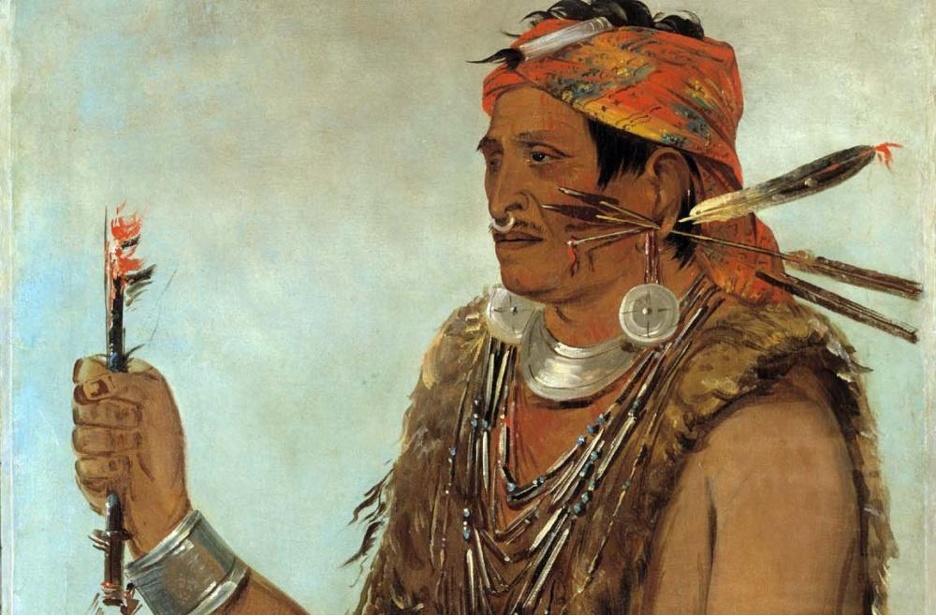
Drawing thousands of Native American pilgrims to join him, Tenskwatawa railed against American culture, most especially alcohol but also foreign food, dress, farm implements, hunting with guns, and keeping livestock and dogs. He instructed his followers to revitalize traditional technologies, foodways, and material culture. He had a complicated relationship to traditional rites as he favored some rituals and rejected wealth. But his decision to forbid medicine bags, other ceremonial dances, and many shamans, strained his support.
Tenskwatawa insisted that followers end intertribal violence and embrace a pan-Indian racial category utterly distinct from Europeans and Africans. While intertribal unity was a sensible military response to white American encroachments, many rejected Tenskwatawa’s teachings. Many were averse to his rejection of a traditional understandings of specific ethnic cultures among indigenous people, his denunciation of tribal leaders who compromised with American officials or missionaries, and eventually the witch hunt he launched among his followers.5 He also struggled to convince others to follow his calls to abandon children and other relatives with European ancestry, embrace monogamy, and destroy European tools that had enabled prosperous agricultural economies.6
Thousands flocked to Tenskwatawa’s villages, first in Ohio and after 1808 in the Indiana Territory. Meanwhile his brother, Tecumseh, traveled across the continent to build a proposed intertribal confederacy. After Tecumseh died at the Battle of Thames in October 1813 and the confederacy fell apart, Tenskwatawa spent a decade exiled in Canada. No longer claiming religious leadership, he sought to exert influence through his connections with British officials. Beginning in the mid-1820s, Tenskwatawa helped facilitate the American removal of Shawnees to Kansas, where he died unceremoniously in 1836.
Tenskwatawa and Tecumseh sought to promote Indigenous cultural autonomy and political independence. The United States responded with aggressive invasion. Despite never achieving support from the majority of Shawnees or uniting indigenous people across the Great Lakes and Ohio Valley, the brothers greatly alarmed American officials.7
By 1817, the American government moved Ohio’s major tribes, including the Ottawa, Shawnee, Seneca, and Wyandot, to reserves near the towns of their principal chiefs.8 These three largest tribes in Ohio – the Shawnee, Seneca, and Wyandot – responded in different ways to Christian missionaries. The Shawnee at Wapakoneta welcomed Quakers, who taught farming and industrial techniques. The Shawnee allowed the Quakers to establish a trade school, but they did not permit the Quakers to preach or establish a mission. While retaining their own religious traditions, their religious practice underwent a profound change as the tribe grew closer to the Good Grandmother, a more loving figure in their cosmology than the distant Great Spirit.9
The Seneca refused Christian missionaries from their reserve along the Lower Sandusky River, where they cultivated successful farms. Following the Gaiwiio, or “Good Word,” of Handsome Lake, a respected prophet among their fellow Haudenosaunee, they were willing to adopt the technology they associated with white people but refused their religion. Their prophet forbade them from drinking alcohol, practicing witchcraft, and divorcing, but the Seneca ignored his encouragements to simplify ancient rituals that he argued would frighten white people. They continued many older traditions, including the White Dog Sacrifice of mid-winter, where two spotless white dogs, one male and one female, were killed as an offering to the Great Spirit.10
Many of the Wyandot embraced the faith of missionaries. Those who converted to Christianity when the French claimed the Ohio Country became practicing Catholics and most of the tribe traveled to Detroit every Easter to attend mass. But at least half of the tribe converted to Methodism after John Stewart, a free man of African descent, arrived at the tribe’s Grand Reserve on the Upper Sandusky River in 1817. Stewart, originally from Virginia, was a dynamic preacher who won converts through his stirring words and his beautiful singing voice. Stewart was aided by a free Black interpreter, Jonathan Pointer, who was fluent in the nation’s language. The Wyandot appreciated the strict morality he taught, including the demand for faithfulness in marriage, total abstinence from alcohol, and an end to seeking revenge.11 The preacher faced questions from white authorities around his free status and opposition from young Wyondot leaders such as Mononcue and Two Logs, who initially considered it improper to entertain a Black preacher on assumptions of racial inferiority.12
Stewart contracted tuberculosis and another Methodist minister, James Finley, arrived at the Grand Reserve by 1822. Finley established a mission school, which taught Wyandot children religion as well as practical skills like reading, writing, arithmetic, carpentry, and animal husbandry. Finley built the Methodist Mission Church, a replica of which stands to this day, with funds provided by the U.S. government. Young Wyandot chiefs, like Mononcue and Between the Logs, became Christian ministers themselves. In 1822, Presbyterian missionaries opened a mission and school for the Ottawa in the Maumee River Valley. Dozens of Ottawa, Wyandot, Shawnee, and Munsee children, along with the children of local settlers, attended the school. While few converted to the Presbyterian faith, the Ottawa appreciated the efforts of the missionaries to translate the New Testament into their own language – and to protect them from local whiskey traders.13 Many credited their newfound faith with preventing the dissolution of their tribe, especially during their removal to the Kansas Territory in 1843. One of their first acts, after founding the town of Kansas City, Kansas, was to establish a Methodist church.14
Many Native American communities suffered from predatory compromise treaties with the U.S. government, such as the 1805 Treaty of Tellico that took Cherokee lands. By the early nineteenth century, private land ownership, European migration, and the enslavement of Africans in plantation agriculture resulted in economic stratification that privileged an emergent group of Cherokee elites. Some claimed status in connection to Protestant Christian missionaries. Muscogee leaders welcomed Moravian schools for the teaching of language and industrial skills but not religion, while a number of Cherokee embraced the Christian faith and saw the 1801-founded Moravian Spring Place Mission School in Northwest Georgia as vital to cultivating an educated class of leaders who could resist the encroachment on their lands and culture.
In 1817, the thirteen-year-old Cherokee student Gallegina Watie was invited to attend the Foreign Missionary School (FMS) in Cornwall, Connecticut. Born in the Cherokee nation, Watie was the oldest son of nine children of a prominent family and was educated at Spring Place Mission. On his way to Connecticut, Watie was introduced to Elias Boudinot, a New Jersey lawyer and former president of the Continental Congress, whose name the thirteen-year-old took in tribute. His namesake was a devout Presbyterian, supporter of women’s political inclusion, critic of slavery, and opponent of new proslavery western states. In 1816, he had also been a founder and first president of the American Bible Society (ABS) and published a book using speculative arguments built on Bible texts to argue that Native Americans were the “ten lost tribes” of Israel. He asserted that American mistreatment of Native Americans would subject the nation to the judgment of God, suggesting “Europeans” were “the original cause of their sufferings… in possession of their lands… enriched by their labors… a large proportion of their numbers perished in our wars and by our means.”15
The elder Boudinot’s work to advance religious societies and publications and his conjecture-stuffed warnings of God’s judgment against the early U.S. republic reveal a profound contradiction that the school the Cherokee student named after him sought to resolve. Efforts to “civilize” the “heathen” brought together the young nation’s political ideologies of exceptionalism and white supremacy. And even so, Boudinot and his Native American and global cohort of classmates possessed consequential agency over where they studied, whom they married, and what they advocated for their communities.
The school had been founded just a year prior by the American Board of Commissioners for Foreign Missions (ABCFM), the culmination of a movement among evangelically minded institutions to train Indigenous students as missionaries. This effort took off after Yale President and Congregationalist Minister Timothy Dwight met and sought educational opportunities for “Henry” Ōpūkahaʻia, a Hawaiian-born young man who arrived in New Haven in 1809. Six of the twelve students in the FMS’s inaugural class were Hawaiian, and Boudinot joined the next year as the enrollment doubled to twenty-four and included seven Indigenous North American pupils including Abanaki, Choctaw, and Cherokee students. The school came to include Chinese, Greek, Indian, Bengali, Javanese, Tahitian, and New Zealander students as well.16 The goal of the school was to send these young men back to their homelands to preach conversion to Christianity. Ōpūkahaʻia’s desired to do so, but he died of typhus in Connecticut in 1818, the year Boudinot arrived. The FMS’s very existence was shaped by the era’s evangelical thrust. New organizations and greater access to print linked religious efforts with the political ideologies and technological innovations that drove American imperialism.
Boudinot’s cousin John Ridge, whose father Major Ridge was a chief and leader of the Cherokee in the Red Stick War, followed him to Connecticut to study. While at FMS, Ridge fell in love with Sarah Northrup, a young white woman whose father was the school steward. Similarly, after Boudinot relocated back to Cherokee lands, he continued to romantically correspond with Harriet Gold, the daughter of a FMS founder and prominent white family in Cornwall. Both courtships caused public outrage and mob violence.
Ridge and Northrup fled to the Cherokee nation in 1824, and protests over Boudinot and Gold’s nuptials in 1826 eventually caused the school to close. Ridge and Boudinot became prominent advocates among the Cherokee, with Boudinot founding the Cherokee Phoenix in 1828 and serving as its editor until 1832. Their extended family, which had also enslaved African Americans, managed several plantations, but came to see the abandonment of their lands as essential for their survival after the election of Jackson in 1828 and the Indian Removal Act of 1830. Georgia’s confiscation of Cherokee lands and the Ridge family’s break with the majority of Cherokee eventually led to the Ridge family signing the Treaty of New Echota in 1835 and moving to present-day Missouri. The 1838 mass removal to Oklahoma, known as the Trail of Tears, brought Ridge’s rival John Ross into power. The new leaders called for the execution of the leaders of the Ridge-Boudinot family. Major Ridge, John Ridge, and Boudinot were stabbed to death by Ross supporters in 1839.
III. Reform
Organizations like the ABCFM and the ABS, founded in 1810 and 1816, were central to the Protestant efforts to save the world. Historians of the twentieth century recognized this era’s loose network of Protestant societies as the rise of the Benevolent Empire, which aimed to address social issues through voluntary efforts rooted in Christian principles.17 Evangelical Protestants founded their social reform institutions upon the belief that spreading Christianity would improve the United States and the world. Very few Protestants of the era interpreted the Bible’s apocalyptic literature as an invitation to political inactivity, awaiting a literal thousand-year period of Divine rule on the earth. More often, Protestants believed that active Christian reform efforts were integral to enacting God’s will.
The first American organization designed to extend Christian conversion around the globe was the 1810-founded ABCFM. Congregationalist seminarians in Massachusetts founded the society with the support of professors and prominent clergy backers to collect funds and commission missionaries to serve abroad and among Native Americans. Another society with shared aims, the United Foreign Mission Society (UFMS) was founded in New York in 1817 by the Presbyterian and Reformed Churches, which, by 1826, merged with the ABCFM. These missionary efforts were not merely linked to ideologies of continental expansion and republicanism, but also to an international imperial imagination that sought to extend American influence around the globe.18
Founded in 1816 and led by New Jersey statesman Boudinot, the American Bible Society (ABS) sought to spread the message of Christianity by translating, producing, and distributing the Bible. Before the United States mandated universal education in the mid-nineteenth century, the American Sunday School Union (ASSU) was founded in 1824 to establish Sunday schools and provide educational resources to rural and frontier areas without schools. However, efforts were not merely limited to explicitly religious concerns. Other organizations also aided people experiencing poverty, labored for the moral improvement of sailors, reformed prisons, lobbied to improve bankruptcy or labor laws, built orphanages, created schools for deaf students, suppressed gambling or dueling, promoted temperance (abstinence from alcoholic drink), fought for the abolition of slavery, and many other issues as well. This era saw the establishment of many more organizations that addressed these social concerns and others. These national societies built an extensive media infrastructure to help control the morality of the American public.19
The rapid development of these organizations tapped into a spirit of voluntarism fostered by republicanism and religious disestablishment. In contrast to European state-backed churches bolstered by tax revenues, the era witnessed a rising tide of national pride in institutions supported by numerous volunteers and multiple churches from a variety of denominations. These efforts were buoyed by the swelling conversionist themes and revivalist energies in nineteenth century American religious culture. Lyman Beecher, one of the most important preachers to support these Protestant sensibilities and organizations, decried what he feared was alarming moral decline, and he encouraged people of faith to put their energy toward institutions of social reform.20 American Protestants saw benevolent societies as both an answer to the dangers of a rapidly changing America and a way to positively embrace aspects of geographic expansion, economic and technological advances, and social change toward a redemptive and reforming vision and lasting influence.
In 1818, at the same time that the Cherokee Nation-born Boudinot started his studies at FMS in Connecticut, a Connecticut-born young Charles Grandison Finney left teaching to study law under Squire Wright in western New York. Very quickly, though, Finney became consumed by frequent scriptural references in his law books. Finney found himself engaging more deeply with the Bible and spiritual questions. He also became increasingly involved with the local Presbyterian Church and came to serve as the choir director.21 In 1821, while praying alone in the woods—not unlike other future preachers and prophets—Finney felt convicted of his sin, assured of God’s forgiveness, and called to preach. He dramatically relayed his urgent sense of religious vocation to a client of the law office later that day: “Deacon Barney, I have a retainer from the Lord Jesus Christ to plead his cause, and I cannot plead yours.”22 Rather than seeking what he felt were cost-prohibitive formal theological education in the nation’s expanding array of seminaries and divinity schools, he was tutored by his own pastor and granted a license to preach by his local Presbytery in 1823.
Finney disagreed with his mentor over the meanings of original sin and predestination, theological interpretations important to strict Calvinist Presbyterianism in that era. And indeed, Finney would eventually break with traditional Reformed thought. He honed his skills as a preacher and pastor while serving with the Female Missionary Society in Utica and gaining a reputation as a revivalist preacher in rural Jefferson County, blending the emotional intensity of Baptist and Methodist traditions while still appealing to Presbyterians more wary of emotional revivalism.23 Finney deviated from traditional liturgies and catechism in favor of “new measures” for evangelism such as long meetings, extemporaneous prayer, and emotionally charged appeals. One of his innovations was the use of the “anxious seat,” a designated chair or bench at the front of the congregation where individuals publicly demonstrated their conviction of sin and their desire to repent and seek salvation.
Despite his growing fame, Finney faced criticism for both his theology and his revival practices. Lyman Beecher rebuked his emphasis on free will. Hailed as the “father of modern revivalism,” he was criticized for emotionally charged appeals and “new measures” that critics derided as encouraging superficial and transient conversions. Some detractors likened his methods to theatrical performances, “mesmerism,” and Roman Catholicism. Finney also faced opposition for empowering women in his revivals by allowing them to organize and speak in public meetings. These controversies culminated in the New Lebanon Convention of 1827, where Presbyterians formally debated and scrutinized Finney’s methods and theological innovations.24
Finney’s most renowned revival took place in 1830–1831 in Rochester, New York, a rapidly growing city shaped by the Erie Canal. The population was a diverse mix of farmers, merchants, laborers, and artisans, all navigating the economic uncertainties and social upheavals brought on by industrialization and urbanization. Finney’s revival transcended denominational divisions, drawing over a thousand supposed converts. Many traveled more than 100 miles to hear his preaching, which spoke not only to individual spiritual needs but also to the collective moral concerns of Jacksonian society.25
Finney went on to preach in major urban centers, including Philadelphia, Wilmington, Providence, Boston, and Manhattan’s infamous Five Points neighborhood, where he notably converted a theater into a church. The social concerns most common in his preaching were linked to the issues at the core of American Protestants’ organizational efforts. He preached against the vices of alcohol and tobacco, urging converts to commit to temperance, abolitionism, and women’s rights, embodying his belief in the integration of personal holiness and societal reform.26 While ministering at the former Manhattan theater, that he converted into the Chatham Street Chapel, he denied holy communion to slaveholders, deeming them unrepentant sinners. Despite threats of mob violence, Finney offered the chapel in October 1833 for a meeting of the New York Anti-Slavery Society, a gesture that led to its destruction by arson. Yet Finney’s approach to spiritual renewal and social engagement prioritized revival preaching over political action, highlighting the tensions and limits of antebellum Protestants’ social reform.27
Finney supported women’s religious organizing and speaking, and he relied on their support. Despite near constant opposition, American women created new opportunities to exert leadership beyond the domestic sphere in the early republic. Many found opportunities to preach within certain Protestant denominations, mostly Baptist and Methodist, in the Northeast and Mid-Atlantic, and abroad in Canada and Great Britain. Both Black and white women explored new possibilities of public speaking and religious leadership. For Black women, the ever-present threat of slavery and racial violence curtailed the possibilities for those enslaved, impoverished, or mistreated because of their race.
Female preachers occupied a tenuous position in the pulpits of the early American republic. Able to gather large crowds and recognized for their speaking ability, many female preachers wrote of their successes in converting people and working with the male clergy of certain denominations. Dozens published memoirs, such as Freewill Baptist Nancy Towle’s, a white woman from New Hampshire, and other spiritual and theological writings, such as those by the famous Harriet Livermore, a white woman who spoke before Congress. Despite their widespread efforts as religious leaders, female preachers faced significant opposition from multiple quarters: their friends and families, denominational leadership, and, sometimes, even the law.
Women’s access to preaching and itinerancy benefited from the momentum of the era’s emphasis on individual conversion and revival, and women of the early nineteenth century enjoyed several educational advantages that their colonial mothers had not. Not only did they achieve higher literacy rates and greater access to Bibles, tracts, and religious literature through the mechanisms of evangelical print networks, but they also came to occupy new roles in religious gatherings with the growth of revivals and Sunday Schools. Camp meetings, revivals, and local worship services were spaces where female preachers, instead of only college-educated male clergy, were able to exhort more freely than they had previously been allowed.28 Their designator as lay preacher or itinerant, however, often meant they were not ordained or installed to serve as the stated pastors of local congregations.
Though hundreds of women preached and taught in the early part of the century, many of their appointments were unequal and impermanent. They also still faced opposition even in temporary roles and often had to advocate for their right to preach as they traveled to new locations, even when invited to preaching appointments. To defend their ministry vocations, female preachers often dedicated portions of their memoirs to explaining their calling to the ministry. When speaking or writing about their call to the ministry, many women preachers explained that they shied away from the call to preach for as long as they could, accepting it after years of contemplation, challenges to that calling, and encouragement from others that finally led them to the pulpit. Others, both female and male clergy, wrote newspaper articles or pamphlets arguing for the right of women to preach using Biblical figures as justification.
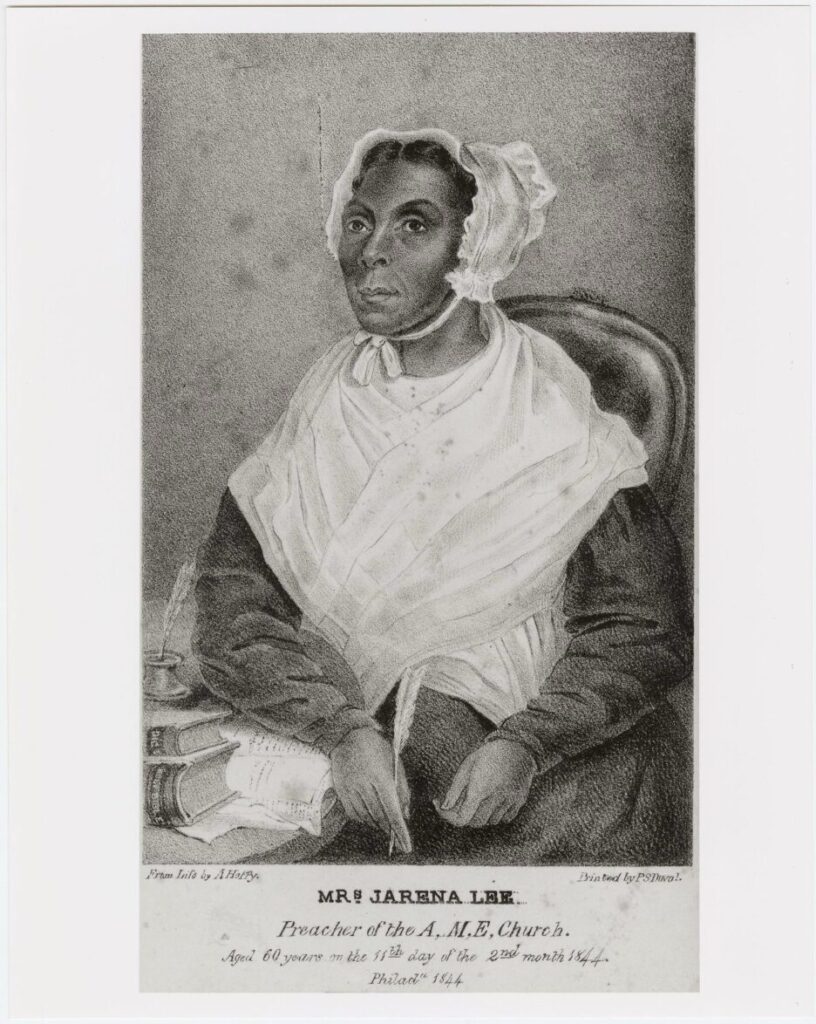

Both Black and white women sacrificed much to sustain their ministries, as they often had to travel long distances on foot or on horseback, board at the houses of church congregants or supporters, preach outside regardless of weather, and were often impoverished. Female preachers, however, viewed the cost of their bodily health as a worthy sacrifice to convert souls and bring people to the Lord. Black female preachers, such as Jarena Lee and Zilpha Elaw, faced a worse threat to their bodily safety: enslavement. Even though Lee and Elaw were born free, their ministries’ public visibility and presence in communities where slavery was still legal came with the risk of being sold into slavery. Yet, both women braved these dangers and traveled across vast preaching circuits in Virginia and Maryland where they faced increased danger. Southern society disapproved more strongly of women preaching and was more accepting of seizing Black people and condemning them to a life of enslavement.
IV. Families in Slavery and Freedom
The countless new organizations created by American Protestants struggled to respond to the existing dominant social institutions of the family and chattel slavery. Despite a broad range of early Americans who suggested that the Bible and the Christian faith inform society, they profoundly disagreed about what scripture and tradition meant for social ethics. Religious arguments amplified debates over the household, labor, and race.
The family operated as the foremost religious institution in antebellum America, a vehicle through which Americans actualized their ideas of citizenship, race, childhood, gender, and sexuality. Ministers explained that devotion to family life symbolized a greater commitment to the nation and to God. White Congregationalist minister Horace Bushnell argued, “Religion never thoroughly penetrates life, till it becomes domestic. Like that patriotic fire which makes a nation invincible, it never burns with inextinguishable devotion till it burns at the hearth.”29 Bushnell, like many white Americans, believed the religion of a nation was measured by the strength of the white Christian families who comprised it.
American Protestant views of the family reinforced the belief that monogamous, heteronormative marriage provided the only virtuous expression of sexuality and the essential foundation for a virtuous family. This view of marriage was not only normative in churches but also enshrined in American law and society, setting up subsequent debates over new religious movements’ that had different views on marriage and family structure. The Church of the Latter-Day Saints, first founded by Joseph Smith in 1830, claimed religious sanction for polygamous marriage, leading non-Mormons to deride the group as culturally backwards and unfit as citizens. When leader Brigham Young declared in 1852 that plural marriage was acceptable for members, a decades-long conflict ensued involving the U.S. government, legislators, everyday Americans, and the Church of Latter-Day Saints.30 As the antebellum period progressed, other groups that failed to embrace normative understandings of the family faced criticism—for example, the Oneida Community, whose leader, John Humphrey Noyes drew the ire of commenters as he advocated for complex marriage, where all women were wives to all men, and all men were husbands to all women in the community.31 Such religious movements were derided for not participating in or failing to meet standard American Protestant rubrics for sexuality, marriage, and family.
Domestic manuals, child-rearing guides, novels, and sermons penned across the nineteenth century offered white women and men tools for building families that served God and, most importantly, produced morally upstanding, racially pure citizens. In these accounts, the future of the nation rested on the small shoulders of white children. Whereas eighteenth-century theologians focused on children needing the rod of Christian discipline to address original sin, nineteenth-century Christian theologians represented children as dependent, fragile, and in need of instruction.32
Representations of the home in the seventeenth and early eighteenth-century emphasized male religious leadership, while early nineteenth-century discourse firmly planted the mother as the tender guide of her children’s character development.33 In The Mother’s Book (1831), for example, white abolitionist Lydia Maria Child argued that a mother’s actions directly shaped a child’s behavior. She argued that if a mother expressed “bad passions,” those negative qualities could easily slip into the child’s “soul,” just as “the imperceptible atmosphere he breathes enters into his lungs.”34 This hyperfocus on the responsibility of the mother in building the moral capacity of her children reveals how discussions about the family in antebellum America gendered caretaking and placed the responsibility of religious education of children onto women.
These portraits of white nuclear families in prescriptive texts obscured the reality of antebellum family life—the expansion of American land and American wealth in the antebellum U.S. relied upon the separation of families of color. The process of Indigenous dispossession, carried out by both white governmental agents and Christian citizens, forcibly separated African Americans and Indigenous Peoples from their families in the name of Christian benevolence. The 1819 Civilization Act exemplified this approach, and missionary organizations had founded at least thirty-eight Christian schools for Indigenous children by 1825, who were separated from their families for long periods of time to attend schools that demanded that Indigenous children give up the religious, cultural, and political traditions of their upbringings.35
The system of chattel slavery also subjected African American families to violence, whereby enslavers regularly sold enslaved people away from mothers, fathers, siblings, and extended kin for profit. Black abolitionist Frederick Douglass was separated from his mother as an enslaved child, and he condemned family separation as the epitome of the “cruelty and barbarity of the slave system.” Douglass argued that enslavers also used the practice as “a successful method of obliterating from the mind and heart of the slave, all just ideas of the sacredness of the family, as an institution.”36 The prevalence of familial separation within Black and Indigenous communities made clear that in the United States the right to family was designed exclusively for white American Christian citizens. Even so, these communities sustained old and developed new values and cultures around family and religion. Some enslaved people cultivated new forms of family. Others stole away to reunite. They defined the family on their own terms and out of their own experiences.37
Enslaved African American communities retained and cultivated African diasporic religious and social traditions outside of the normative white Protestant theologies. Mainstream white American Protestant culture promoted views of marriage and the family that privileged male mastery and white dominance. Many enslaved people created their own, rival frameworks. Women in enslaved communities were often vital in preserving cultural knowledge, rituals, and connections to their ancestors, one another, the Divine, and the earth.38 African traditions among enslaved women ranged from philosophical worldviews to practical medicinal technologies. This included Black women caregivers providing both spiritual support and abortifacient medicine to enslaved women who had been subject to sexual violence. These practices asserted human dignity, reproductive control, and community power that countered how the institution of slavery sought to dehumanize, exert bodily harm, and dispossess the enslaved of collective resources.39 Many of the religious traditions of African-descended enslaved people paid simultaneous attention to spiritual or ancestral presence as well as physical and material conditions.
White enslavers in the early nineteenth century found justification in Christian theologies that assumed gendered and racialized structures of mastery and submission. Against these efforts that increasingly used the Bible and religious instruction for social control, many of the enslaved found affirmations of human dignity and resources for liberation in within Christianity. Many Bible stories of God’s deliverance resonated with the enslaved, such as the narrative of Exodus that tells of the ancient Hebrew people liberated by God from enslavement in Egypt. Scriptures that claimed God’s justice for the oppressed informed the faith of African American Christians.40 African American theology and faith communities emerged in relationship to white Protestant churches and beyond them, developing what historian Albert Raboteau termed the “invisible institution.” These spaces and practices, especially among enslaved communities, included worship in homes or in the woods beyond the gaze of enslavers or white authorities. Some African Americans participated in the emphases on revival and affective religion common to Protestantism of the era, even as they developed or adapted culturally specific worship practices that included musical traditions, dance, raising of holy hands, shouting, and call-and-response preaching.41
Most Southern Black Christians worshipped in biracial congregations where enslavers and those enslaved worshipped alongside one another. This was true of Protestant and Catholic churches from the colonial era and well into the nineteenth century. Congregants both white and Black, celebrated their marriages at the same altar and baptisms at the same font or nearby body of water. But such shared spaces did not translate to civil equality. Eighteenth-century revivalism bolstered African American participation in new Baptist and Methodist connections. In the 1770s George Liele and his convert, David George, established all-Black Baptist churches in South Carolina and Georgia which remained even after the preachers fled to British colonies after the war.
Methodist leaders who denounced slavery and proclaimed spiritual equality also appealed to African American Christians such as Richard Allen, who had been born in Maryland and through his preaching convinced his enslaver to let him purchase his freedom. By 1788, Allen, fellow Free African Society founder Absalom Jones, and others literally walked out of Philadelphia’s largest Methodist Episcopal church, fed up with the racial inequalities they faced relegated to back pews or the balcony and expected to wait until all whites had been served before they could partake in the Lord’s Supper. When they and others sought to pray at the front rail they were commanded to leave by the white religious authorities. Allen reported being “dragged off of our knees” and “treated worse than heathens.”42 Such indignity led Jones to serve as founding pastor at St. Thomas African Episcopal Church. Allen organized an entirely Black-run Methodist church named Bethel. Allen and members worked tirelessly to purchase land and fend off legal attacks from white Methodists who attempted to claim rights of ownership or supervision. Similar efforts took place in Baltimore, and the emergent networks led to the formation of the African Methodist Episcopal Church in 1815 and Allen’s elevation as the denomination’s Bishop.43
In New York, James Varick and Christopher Rush, declined Allen’s desire for a unified denomination and created their own religious network called the African Methodist Episcopal Zion Church. Peter Williams, Jr. became the prominent pastor of St. Philip’s African Episcopal Church in New York. Black Episcopalians were not members of their own denominations, per se, and faced white discrimination on an institutional level, even as they grew in number in several Northern cities. Presbyterian and Congregational churches also remained within white denominational structures, even as a number of Black churches in these denominations were founded in the 1820s and headed up by a well-connected cohort of educated Black Presbyterian ministers.
Reception to Black clergy was mixed in the early nineteenth century, with enslavers and Southern authorities becoming particularly opposed to Black ministers and autonomous Black religious gatherings. Their opposition accelerated after 1830, due in part to the successes of Black religious and civic organizing and the distribution of print materials that criticized slavery. Proslavery repression sought to limit Black religious organizing and racial injustices in integrated churches often proved restrictive and stifling. Still, African Americans continued to participate in religious institutions and create spaces for vibrant, Black-empowering faith across the varied contexts of the early US. Many found deep meaning, ritual significance, languages of liberation, and practices of community in churches.
Even though the abolition of the transatlantic slave trade in 1808 was led by Black Christians and the work of tireless activists, enslavers in the Upper South also benefited from higher prices selling their human chattel to the cotton fields of the Deep South. This prompted more dislocation and family separations as well as the threat of kidnapping and enslavement. Slavery’s slow decline in the Northern states coincided with efforts to expand and strengthen proslavery power in the South.
The new national bodies created by the Episcopalians, Methodists, Presbyterians, and Baptists by the end of the War of 1812 all evaded moral clarity about slavery. When white Christians spoke up in favor of abolition, they were usually removed from positions of leadership. The very same Protestant bodies also harbored deep anti-Catholic sentiments, and American Catholics struggled to establish their own practices and institutions in the face of frequent persecution. Very few Catholics were willing to add an additional opportunity for confrontation by embracing abolitionist activity.
As white Christian churches offered no structural response to slavery, a number of American religious leaders pushed ideas of emigration and colonization. Paul Cuffee, a Black Quaker, worried that the United States might never offer freedom and dignity to Black people and organized an 1814 emigration plan relocating thirty-eight Black Americans to Sierra Leone, a British colony in West Africa that was founded in part by formerly enslaved people in the Americas who escaped to freedom during the American Revolution. Following the logic of an imperialist missionary impulse that undergirded the ABCFM and other mission organizations, religious leaders in the North and South founded the American Colonization Society (ACS). They hoped that their efforts would bring salvation to Africa, encourage manumissions, and eliminate free Black communities in the U.S. Many enslaved people were given colonization as their only path out of enslavement. Thousands emigrated, and eventually they founded Liberia as the first African republic. Nevertheless, the majority of Black Americans suspected African colonization was a racist scheme to rip them from the land they now called home in an attempted reversal of the transatlantic slave trade.44
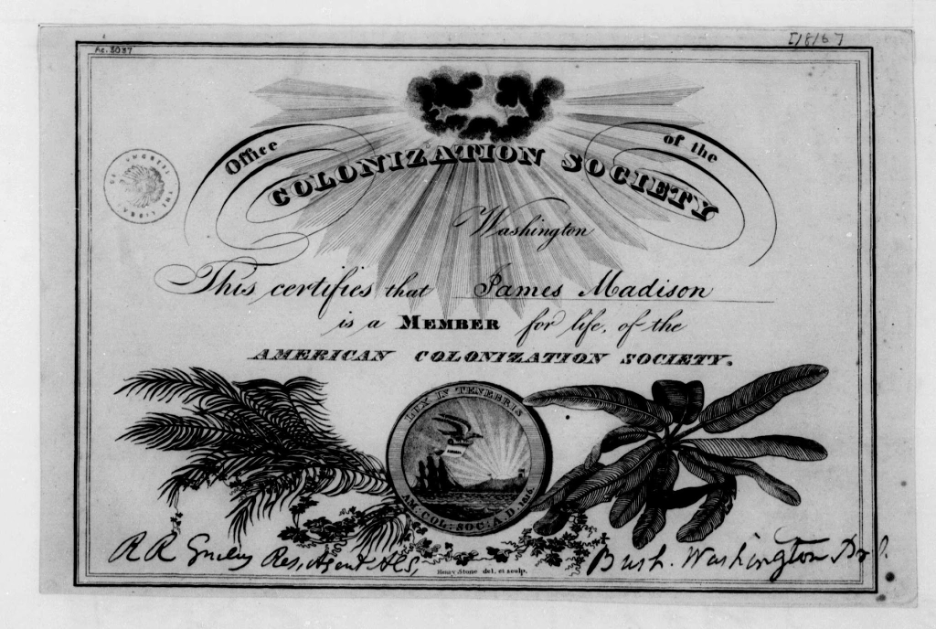

Churches provided key sites of Black Americans resistance to the ACS. In contrast, Black community organizers and church leaders supported Black-led emigration efforts that helped thousands of African Americans relocate to the Black republic of Haiti in the 1820s. In Boston, New York, Philadelphia, and Baltimore, Black church networks held public forums that inspired more abolitionist action. By 1827, African American clergy were at the forefront of founding Freedom’s Journal, the first African American edited newspaper and its successor publication, The Rights of All. Black Presbyterian Reverend Samuel Eli Cornish served as the principal editor of both and general agent. Religious notions of African American “chosenness” informed the paper’s rejection of colonization and efforts to link free African American communities in projects of Black empowerment.45
Agents of these papers included prominent Black pastors and community leaders. One of the paper’s agents, David Walker, had been born in North Carolina, but worked in Boston and connected to the organizing efforts of Black Methodists and Prince Hall Freemasons. Walker offered his own antislavery jeremiad, An Appeal to the Colored Citizens of the World in 1829. Attacking colonization, Walker justified slave insurrection as a means of God’s justice and called the Christianity of white Americans into question. Walker sent and smuggled copies of his work to cities of the South, including to a Black minister in Savannah and as far as New Orleans, stoking the outrage of white authorities and efforts in Southern states to further restrict Black education and religious services.46
Black-authored publications such as those edited by Rev. Cornish and written by Walker demanded that the nation reckon with slavery and racism. These efforts were supported by local religious and educational leaders like Black Baltimoreans Jacob Greener and William Watkins, who encouraged the white activist William Lloyd Garrison toward a more aggressive abolitionism. In 1831, Garrison’s abolitionist newspaper The Liberator condemned colonization and echoed Walker’s call that violent insurrection would enact God’s vengeance.
Hundreds of individual black congregations were formally organized by the time of the Civil War. While only the Methodist and northern Baptist remained fully independent of white oversight as separate denominations, all provided important structure to local Black communities, and helped organize Black advocacy against slavery and racism on a national level. Indeed, Black churches voiced strong opposition to slavery at a time when white-run churches, paralyzed by their affiliation with slaveholders, often remained indecisive or hostile to reform efforts.47
V. Conclusion
The early nineteenth century brought new optimism and new anxieties. Americans fretted over the sins of their society and sought to conquer them by creating religious networks and social reform organizations. The Second Great Awakening advanced northwards from camp meetings to the revivals in Upstate New York. This phase of revivalism provided more energy to the cause of social reform. Assaults on Indigenous communities continued and slavery expanded, dividing religious communities in dangerous ways. Novel methods of communication knit the nation together while also exposing its great divisions. Black Christians developed innovative methods to continue pressing for abolition, while white denominational bodies pushed to silence these critiques. Women took on increased importance as the incubators of religion in the family, while many also pushed for greater autonomy outside of it. Still, many Americans, especially white Americans, remained confident that God was guiding the fate of their nation.
VI. Reference Material
This chapter has been edited by Nathan Jérémie-Brink, with content contributions from Gary James Bergera, Kyle Bulthuis, Nathan Chang, Paul Finkelman, Caroline Greer, Daniel Gullotta, Mélena Laudig, Dylan Nelson, Lori Person-Baynard, Mary Stockwell, and Ben Wright
Recommended Reading
- Catherine Brekus, Strangers & Pilgrims: Female Preaching in America, 1740–1845 (University of North Carolina Press, 1998).
- Emily Conroy-Krutz, Christian Imperialism: Converting the World in the Early American Republic (Cornell University Press, 2015).
- Emily Conroy-Krutz, Missionary Diplomacy: Religion and Nineteenth-Century American Foreign Relations (Cornell University Press, 2024).
- John Demos, The Heathen School: A Story of Hope and Betrayal in the Age of the Early Republic (Alfred A. Knopf, 2014).
- Gregory Evans Dowd, A Spirited Resistance: The North American Indian Struggle for Unity, 1745–1815 (Johns Hopkins University Press, 1993).
- Kathleen DuVal, Native Nations: A Millennium in North America (Random House, 2024).
- Sonia Hazard, Empire of Print: Evangelical Power in an Age of Mass Media (Oxford University Press, 2025).
- Christine Leigh Heyrman, Southern Cross: The Beginnings of the Bible Belt (Alfred A. Knopf, 1997).
- Peter P. Hinks, To Awaken My Afflicted Brethren: David Walker and the Problem of Antebellum Slave Resistance (Penn State University Press, 1996).
- Paul E. Johnson, A Shopkeeper’s Millennium: Society and Revivals in Rochester, New York, 1815–1837 (Hill and Wang, 1978).
- Kathryn Gin Lum, Damned Nation: Hell in America from the Revolution to Reconstruction (Oxford University Press, 2014).
- Kathryn Gin Lum, Heathen: Religion and Race in American History (Harvard University Press, 2022).
- Richard S. Newman, Freedom’s Prophet: Bishop Richard Allen, the AME Church, and the Black Founding Fathers (New York University Press, 2008).
- Ousmane K. Power-Greene, Against Wind and Tide: The African American Struggle against the Colonization Movement (New York University Press, 2014).
- Mary Stockwell, The Other Trail of Tears: The Removal of the Ohio Tribes (Westholme, 2015).
- Stephen Warren, The Worlds the Shawnees Made: Migration and Violence in Early America (University of North Carolina Press, 2014).
- Alexis Wells-Oghoghomeh, The Souls of Womenfolk: The Religious Cultures of Enslaved Women in the Lower South (University of North Carolina Press, 2018).
- Ben Wright, Bonds of Salvation: How Christianity Inspired and Limited American Abolitionism (Louisiana State University Press, 2020).
Notes
- Absalom Jones, A Thanksgiving Sermon, Preached January 1, 1808, in St. Thomas’s, or the African Episcopal Church, Philadelphia, On Account of the Abolition of the African Slave Trade, On that Day by the Congress of the United States (Fry and Kammerer, 1808), reprinted in Early Negro Writing, 1760-1837, ed. Dorothy Porter Wesley (Black Classic Press, 1995), 337, 341. These are quotations from Acts 10:34, Acts 17:26, and Psalm 68:31. ↩︎
- Jones, A Thanksgiving Sermon, 341-342. ↩︎
- For more detailed descriptions of Shawnee trajectories in the eighteenth century, see R. David Edmunds, The Shawnee Prophet (University of Nebraska Press, 1983); Kathleen DuVal, Native Nations: A Millennium in North America. (Random House, 2024), 271-307; Stephen Warren, The Worlds the Shawnees Made: Migration and Violence in Early America (University of North Carolina Press, 2014). For the broader nativist response, see Gregory Evans Dowd, A Spirited Resistance: The North American Indian Struggle for Unity, 1745-1815 (Johns Hopkins University Press, 1993). ↩︎
- Edmunds, The Shawnee Prophet, 33-34; Dowd, A Spirited Resistance, 124-130. ↩︎
- Edmunds, The Shawnee Prophet, 34-41, 136-139; DuVal, Native Nations; Edmunds, The Shawnee Prophet, 42-47 and Dowd, A Spirited Resistance, 136-139. ↩︎
- DuVal, Native Nations, 320-322. On the centrality of women’s agricultural labor to Native economies in the Ohio Valley: Susan Sleeper-Smith, Indigenous Prosperity and American Conquest: Indian Women of the Ohio River Valley, 1690-1792 (University of North Carolina Press, 2018). ↩︎
- The end of this paragraph draws on Edmunds’ concluding assessment on pgs. 187-190. See also Mary Stockwell, The Other Trail of Tears: The Removal of the Ohio Tribes (Westholme, 2015), 9-12. ↩︎
- “The Treaty at the Foot of the Rapids, September 29, 1817,” Charles J. Kappler, editor, Indian Affairs: Laws and Treaties, II (Washington, D.C.: Government Printing Office, 1904), 145–155. ↩︎
- Henry Harvey was the son of the Quaker missionaries who lived among the Shawnee at Wapakoneta. He described their work in his History of the Shawnee Indians, from the Year 1681 to 1854, Inclusive (Ephraim Morgan & Sons, 1855); for changes in the Shawnee religion, see James Howard’s Shawnee: The Ceremonialism of a Native American Tribe and Its Background (Ohio University Press, 1981). ↩︎
- Anthony F. C. Wallace, The Death and Rebirth of the Seneca. (Alfred A. Knopf, 1970), 7–8, 297–298; Elizabeth Tooker, The Iroquois Ceremonial of Midwinter (Syracuse University Press, 1970), 118–123. ↩︎
- For the first biography of Stewart, see Joseph Mitchell’s The Missionary Pioneer, or a Brief Memoir of the Life, Labors, and Death of John Stewart (Man of Colour), Founder, under God, of the Mission Among the Wyandotts at Upper Sandusky (Printed by John C. Totten, 1827). ↩︎
- Mitchell, The Missionary Pioneer, 68. ↩︎
- Important sources on the Presbyterian mission at Ebenezer include “Reverend Isaac Van Tassel, Ebenezer Mission, Maumee, Ohio to the Presbyterian Synod of Pittsburgh, Pennsylvania, 1831,” Missionary Herald at Home and Abroad, Volume 27: 387–388 and Charles Sumner Van Tassel’s Story of the Maumee Valley, Toledo, and the Sandusky Region, Volume I (S.J. Clarke, 1929). ↩︎
- Reverend Finley chronicled his time among the Wyandot in the following works: Autobiography of Rev. James B. Finley; or, Pioneer Life in the West, ed. W. P. Strickland, D.D. (Jennings and Graham, 1853); History of the Wyandott Mission, at Upper Sandusky, Ohio Under the Direction of the Methodist Episcopal Church (J. F. Wright and L. Swormstedt, 1840); and Life Among the Indians, ed. D. W. Clark (Cranston & Curts, 1854). ↩︎
- Elias Boudinot, A star in the West: or, A humble attempt to discover the long lost ten tribes of Israel, preparatory to their return to their beloved city, Jerusalem (D. Fenton, S. Hutchinson and J. Dunham, 1816), 300. ↩︎
- John Demos, The Heathen School: A Story of Hope and Betrayal in the Age of the Early Republic (Alfred A. Knopf, 2014). ↩︎
- The first historian to coin the term “Benevolent Empire” was Gilbert H. Barnes, The Antislavery Impulse 1830-1844 (1933; reprinted, Harcourt, Brace & World, 1964). ↩︎
- Emily Conroy-Krutz, Christian Imperialism: Converting the World in the Early American Republic (Cornell University Press, 2015), 5. ↩︎
- Sonia Hazard, Empire of Print: Evangelical Power in an Age of Mass Media (Oxford University Press, 2025), 3. ↩︎
- Lyman Beecher, Autobiography, Correspondence, Etc., of Lyman Beecher, D.D., ed. Charles Beecher (Harper & Brothers, 1865), 262. ↩︎
- On the legacy of Finney, see William G. McLoughlin, Modern Revivalism: Charles Grandison Finney to Billy Graham, (Wipf and Stock, 2004); Nathan O. Hatch, The Democratization of American Christianity (Yale University Press, 1991), 211-212. ↩︎
- Garth M. Rosell and Richard A. G. Dupuis, eds., The Original Memoirs of Charles G. Finney (Zondervan, 2002), 20. For academic biographies, see Charles Hambrick-Stowe, Charles Finney and the Spirit of American Evangelicalism (Eerdmans, 1996), and Keith J. Hardman, Charles Grandison Finney, 1792–1875: Revivalist and Reformer (Syracuse University Press, 1987). ↩︎
- Marianne Perciaccante, Calling Down Fire: Charles Grandison Finney and Revivalism in Jefferson County, New York, 1800-1840 (State University of New York Press, 2003), 37-74. ↩︎
- James D. Bratt, “Religious Anti-Revivalism in Antebellum America,” Journal of the Early Republic 24, no. 1 (2004): 65–106; Hambrick-Stowe, Finney and the Spirit of American Evangelicalism, 66-75. ↩︎
- Paul E. Johnson, A Shopkeeper’s Millennium: Society and Revivals in Rochester, New York, 1815-1837 (Hill and Wang, 1978). ↩︎
- Hambrick-Stowe, Finney and the Spirit of American Evangelicalism, 145-150; Robert H. Abzug, Cosmos Crumbling: American Reform and the Religious Imagination (Oxford University Press, 1994), 64-75. ↩︎
- James H. Moorhead, “Social Reform and the Divided Conscience of Antebellum Protestantism,” Church History 48, no. 4 (1979): 416-430. ↩︎
- Nathan Hatch, The Democratization of American Christianity, especially chapters one and two. ↩︎
- Horace Bushnell, Christian Nurture, reprint (Charles Scribner & Co., No. 654 Broadway, 1871), 63. Colleen McDannell notes that the chapters of Christian Nurture were first penned between 1847 and 1861. See McDannell, The Christian Home in Victorian America, 1840-1900 (Indiana University Press, 1986), 159n40. ↩︎
- Sarah Barringer Gordon, The Mormon Question: Polygamy and Constitutional Conflict in Nineteenth-Century America (University of North Carolina Press, 2003). This exclusion reached a tumult following the antebellum period with the Supreme Court case Reynolds v. United States (1878) and the passage of the Edmunds Act in 1887, which worked to criminalize polygamy. See also W. Paul Reeve, Religion of a Different Color: Race and the Mormon Struggle for Whiteness (New York: Oxford University Press, 2015). ↩︎
- Lawrence Foster, Religion and Sexuality: The Shakers, the Mormons, and the Oneida Community (University of Illinois, 1984). ↩︎
- For discussions of these ideological shifts, see Growing Up in America: Children in Historical Perspective, edited by N. Ray Hiner and Joseph M. Hawes (University of Illinois Press, 1985), particularly the introduction to Part II: “Perfectible Children in an Imperfect World: Perspectives from Nineteenth Century America.” See also McDannell, The Christian Home in Victorian America and Karen Sánchez-Eppler, Dependent States: The Child’s Part in Nineteenth Century American Culture (University of Chicago Press, 2005). ↩︎
- Gerald F. Moran and Maris A. Vinovskis, Religion, Life, and the Life Course: Explorations in the Social History of Early America (University of Michigan Press, 1992), 134. ↩︎
- Lydia Maria Child, The Mother’s Book (Published by Carter and Hendee, 1831), 9. ↩︎
- David Wallace Adams, Education for Extinction: American Indians and the Boarding School Experience, 1875-1928, second edition (University Press of Kansas, 2020), 8-9. ↩︎
- Frederick Douglass, My Bondage and My Freedom (Miller, Orton & Mulligan, 1855), Documenting the American South, University Library, The University of North Carolina at Chapel Hill, 37-38. ↩︎
- Alexis Wells-Oghoghomeh, The Souls of Womenfolk: The Religious Cultures of Enslaved Women in the Lower South (University of North Carolina Press, 2021). For more on African American practices of family and marriage see Tera W. Hunter, Bound in Wedlock: Slave and Free Marriage in the Nineteenth Century (Harvard University Press, 2019) and Heather Andrea Williams, Help Me to Find My People: The African American Search for Family Lost in Slavery (University of North Carolina Press, 2012). ↩︎
- Renee K Harrison, Enslaved Women and the Art of Resistance in Antebellum America, (Basingstoke, Hampshire 2009), 30, 155. ↩︎
- See Wells-Oghoghomeh, The Souls of Womenfolk, chapters 2 and 3. ↩︎
- Eddie S. Glaude Jr., Exodus: Religion, Race, and Nation in Early Nineteenth Century Black America (University of Chicago Press, 2000); Cornel West, “The Prophetic Tradition in Afro-America,” in African American Religious Thought: An Anthology (Westminster John Knox Press, 2003). ↩︎
- Albert J. Raboteau, Slave Religion: The ‘Invisible Institution’ in the Antebellum South, updated edition (Oxford University Press, 2004). ↩︎
- Richard Allen, The Life, Experience, and Gospel Labours of the Rt. Rev. Richard Allen… (Martin & Boden, 1833), 14. ↩︎
- Richard Newman, Freedom’s Prophet: Bishop Richard Allen, the AME Church, and the Black Founding Fathers (New York University Press, 2008). ↩︎
- Ousmane K. Power-Greene, Against Wind and Tide: The African American Struggle against the Colonization Movement (New York University Press, 2014. ↩︎
- Benjamin Fagan, The Black Newspaper and the Chosen Nation (University of Georgia Press, 2016). ↩︎
- Peter P. Hinks, To Awaken My Afflicted Brethren: David Walker and the Problem of Antebellum Slave Resistance (Penn State University Press, 1996). ↩︎
- Ben Wright, Bonds of Salvation: How Christianity Inspired and Limited American Abolitionism (Louisiana State University Press, 2020). ↩︎