You are reading a working draft of The Palace of Thundering Gods, a living history project built through scholarly collaboration. Please click here to help improve this chapter.
I. Introduction
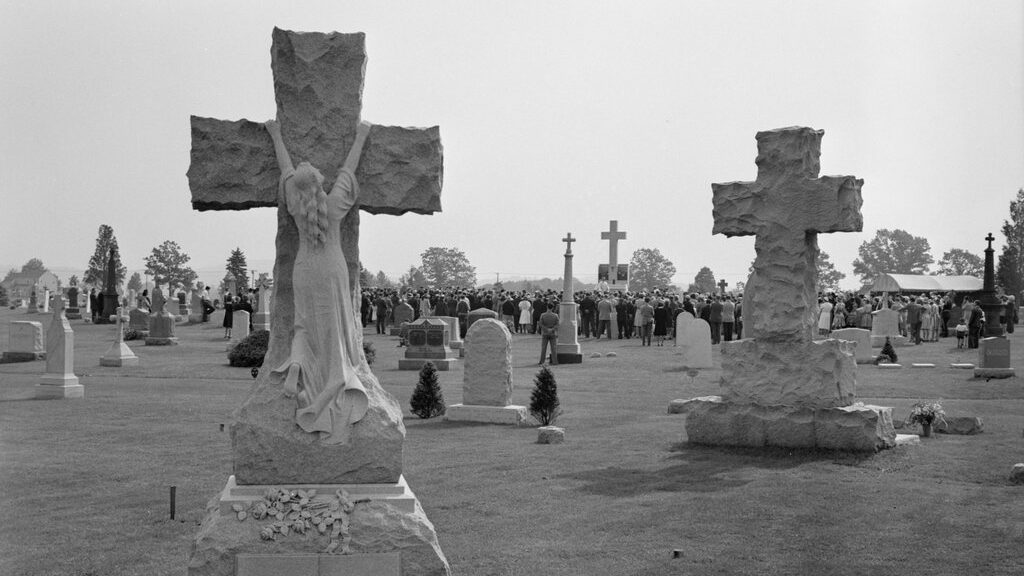
During the Great Depression in the 1930s, the World War II era of the 1940s, and the early Cold War in the 1950s, many Americans turned to religion to cope with the hardships they faced. Most religious leaders spoke with overtones of enduring faith throughout these times of uncertainty, and they offered religion as an antidote for an ailing nation. However, not all religions were accepted as legitimate expressions of Americanism. From 1931-1959, Catholics, Jews, Muslims, Buddhists, and Native American religions were marginalized and persecuted by majority Protestant Christians in the United States.
II. Depression
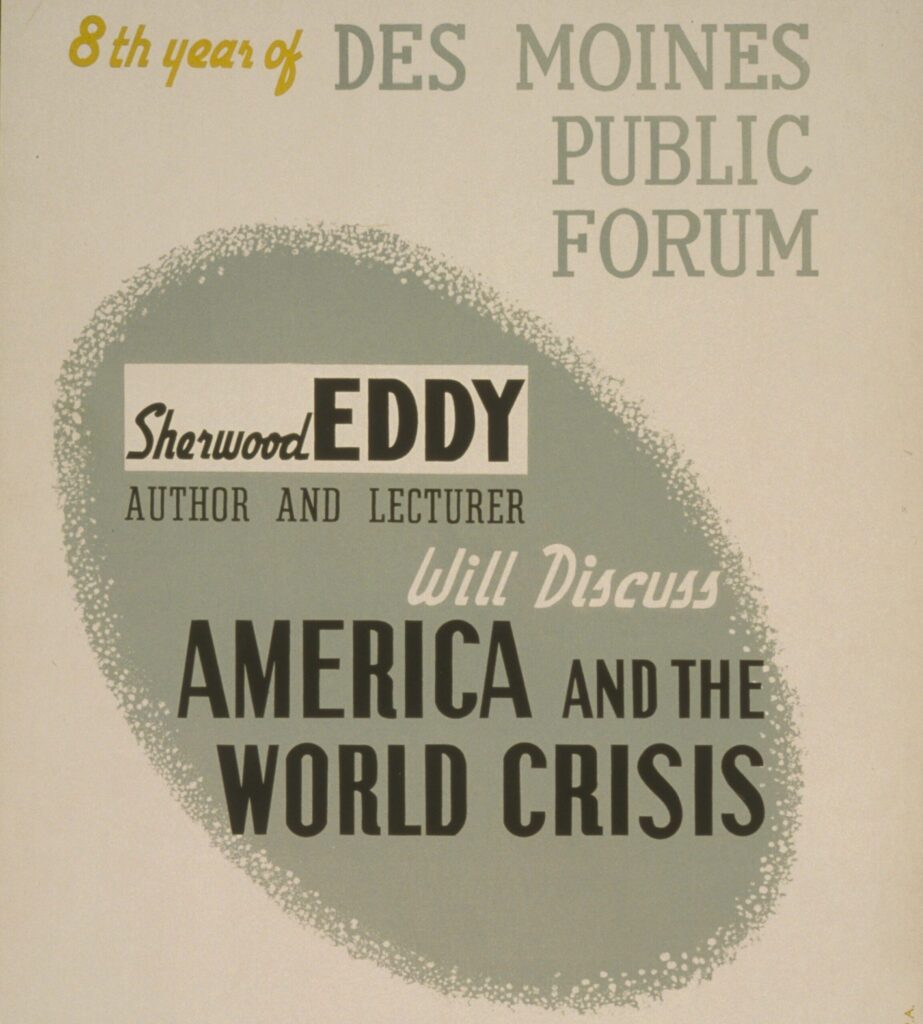
The 1929 stock market crash and subsequent Depression plunged Americans into despair. The Great Depression and the corresponding Dust Bowl, in particular, proved deadly. One pastor reported performing ten funerals in eleven days as American suffering deepened.1 Unsurprisingly, many turned to religious ideas and religious institutions for aid. By 1933, nearly a quarter of the U.S. population was unemployed.2 Families faced hunger and eviction. But many Christian activists took to the streets and countryside to provide relief for suffering Americans. Protestant ministers launched grassroots alternatives to the federal New Deal, such as cooperative farms in the Mississippi Delta, directed by former YMCA missionary Sherwood Eddy. Eddy spent years ministering to the poor in China and India, where he found it more effective to work with locals in fellowship rather than to impose one’s beliefs and customs upon them. After serving as a chaplain in World War I, Eddy developed a critique of capitalism and imperialism, which he argued precipitated strife and undermined the Kingdom of God on earth. He became an outspoken socialist, not of the atheistic Soviet kind, but a spiritual socialist who emphasized the Christian ethics of goodwill, peace, and social justice. Eddy recognized the plight of displaced tenant farmers who were ineligible for federal relief in the 1930s. His solution was radical, especially in the segregated South, as he established two interracial communes. The Delta Cooperative Farms, though short-lived, represented a challenge to American capitalism and American racism.3

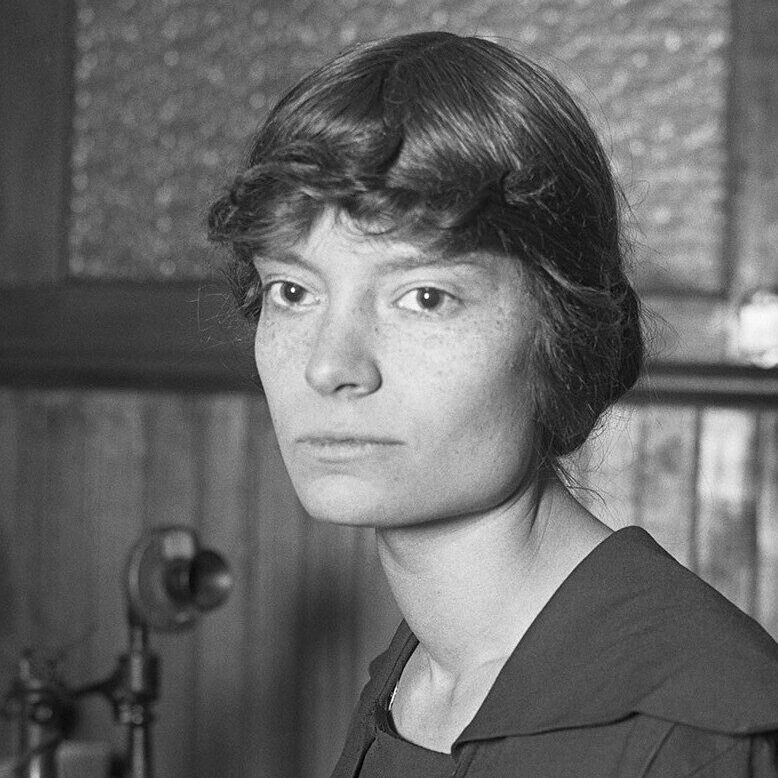
Catholic lay activist Dorothy Day also helped meet the needs of the poor. Day co-founded the first Catholic Worker settlement house in New York City, where volunteers served meals and provided housing to those on the margins of society. She was a single mother with a history of working for socialist organizations. In 1927, she converted to Catholicism.4 When the stock market crashed in 1929, conditions for working people and those living in poverty worsened. In 1932, while working as a freelance Catholic writer, Day met Peter Maurin, a French immigrant and itinerant Catholic intellectual.5 They founded the Catholic Worker movement on the Lower East Side of Manhattan and promoted a radical, activist interpretation of Christianity that was personalist (respecting the dignity of each individual), anarchist (unfettered from government), and pacifist (nonviolent). Catholic Worker was simultaneously a newspaper, a community of people committed to the works of mercy, and a network of urban houses of hospitality and rural farming communes.
The newspaper Catholic Worker launched May 1, 1933, to radicalize its readership with an alternative to atheistic Marxism.6 It argued that works of mercy should be central practices of every Christian life: feed the hungry, give drink to the thirsty, shelter the homeless, give alms to the poor, visit the sick, visit the prisoner, bury the dead, instruct the ignorant, counsel the doubtful, admonish sinners, bear wrongs patiently, forgive offenses, comfort the afflicted, and pray for the living and the dead. Later known for houses of hospitality that fed and housed the destitute, the Catholic Worker movement was not intended merely to ease poverty; it hoped to prevent it. The movement democratized moral aspirations and promoted the most egalitarian strands of Catholic teaching about private property.
Day was disappointed by the inadequate response of Catholic dioceses, which, she believed, failed to follow Jesus’ example of directly ministering to the poor. She also objected to federal programs like the New Deal, since they elided the interpersonal aspects of Christian charity. Citing St. Teresa of Avila, Day wrote, “the only way we can measure the love we have for God, is the love we have for our fellows.”7 Day believed that the government should not provide the basic care that churches and Christian communities should provide locals in need.
.jpg)
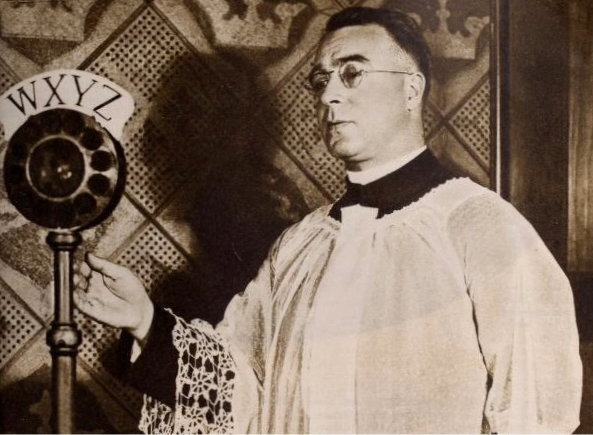
Catholic theologian John Ryan also spoke about the problems of capitalism, as did Detroit-based Catholic radio host Father Charles Coughlin, who reached beyond his local congregation to build a national following through his broadcast “Shrine of the Little Flower,” highlighting the injustice of banks exploiting workers. Coughlin’s criticisms, however, came laced with bigotry against Communists and Jews — those he blamed for the global crisis — and opposition to President Franklin Roosevelt and the New Deal. Though Catholics increasingly raised a public voice in the 1930s and 1940s, they were not immune from bigotry.

The Depression brought more than social activism, however. For some religious groups it was a time of great growth. Pentecostalism, particularly grew rapidly, especially in the South. Reiff wrote in a Pentecostal magazine that “Nineteen hundred years ago, holy men foretold just such events as are now transpiring, to be fulfilled in the ‘end’ time.” She claimed however that “men of finance and affairs” would not lead the nation to deliverance because she believed that “there is no human remedy for present conditions.”8 Fundamentalists blamed the nation’s woes on decades of sin and what they saw as the anti-Christian drift of American liberalism. After largely retreating from the national spotlight after the embarrassment of the Scopes Trial, American Fundamentalist leaders focused their energies on the grassroots and established the infrastructures for their eventual ascendance.9
III. Antisemitism and the Holocaust
Catholics were not the only religious group to suffer persecution during the Depression. The Ku Klux Klan also targeted Jews who faced increasingly violent attacks around the world, especially in Germany. The rise of Adolf Hitler and the Nazi party in the early 1930s put Jews in danger of violence, oppression, exile, and genocide. Millions of Jews were killed in concentration camps and throughout Europe, even as refugees mostly unsuccessfully sought safety in the United States and elsewhere. For Jewish refugees fleeing to the United States in the 1930s, the Immigration Act of 1924 limited their options. The Act assigned quotas for annual immigration from each country, prioritizing Western over Eastern Europeans and nearly barring immigration from non-European countries.
In the federal government, Labor Secretary Frances Perkins was the most consequential advocate for German-Jewish refugees. In 1933, she found a loophole in the Immigration Act of 1917. Perkins could allow refugees beyond the restrictive quotas if Americans agreed to sponsor a “charge bond” that promised a refugee would not burden the American economy. Her proposal led to a legal battle against the State Department, which she eventually won.10
Under the leadership of Jewish immigration activist Cecilia Razovsky, the German-Jewish Children’s Aid Inc. collaborated with the Labor Department to facilitate the immigration of nearly a thousand German-Jewish children from the mid-1930s to early 1940s. While providing new lives and safety for children, the program often meant permanent separation from parents who were murdered by the Nazis.11
In 1938, Nazi Germany began expanding its territory by annexing Austria, and immigration applications to the United States increased from Jewish people across Europe. In July 1938, President Roosevelt called the Evian Conference, in which thirty-two countries brainstormed solutions to the German-Jewish refugee crisis, achieving little besides creating the Intergovernmental Committee on Refugees. Later that year, on November 9, the Kristallnacht pogrom terrorized Jewish communities in Germany and Austria and made headlines across the world, garnering sympathy for an escalating refugee crisis.12
The Wagner-Rogers bill of 1939 aimed to expand child refugee programs by allowing 20,000 children over two years, beyond the quota system. The bill was the brainchild of Clarence Pickett, a Quaker and Director of the American Friends Service Committee. Following committee discussions and hearings, Senator Robert Reynolds proposed allowing the 10,000 children per year in exchange for cutting off all other immigration. Wagner refused and pulled the bill.13
The next effort came from the Interior Department, where Secretary Harold Ickes supported a plan to settle Jewish refugees in the colonized territory of Alaska. This idea became the King-Havenner bill, proposing a separate quota outside the American quota law for a Jewish settler colony in Alaska. However, antisemites doomed the King-Havenner bill, signifying a rare example of American imperialism losing to a different social force: antisemitism.14
In December 1941, the United States joined World War II to defeat the Axis Powers, including the Nazis, who waged both a world war and a systematic campaign to murder Jewish people. The newly formed War Refugee Board directly supported refugees directly during wartime and saved tens of thousands of Jewish and non-Jewish people over the course of seventeen months from 1944 to 1945.15 Still, American antisemitism hampered efforts to do more. American quota laws epitomized a long history of American xenophobia. Rabbi Stephen Wise connected American civil rights to events in Europe, warning, “what is happening in Germany today may happen tomorrow in any other land on earth unless it is challenged and rebuked.”16
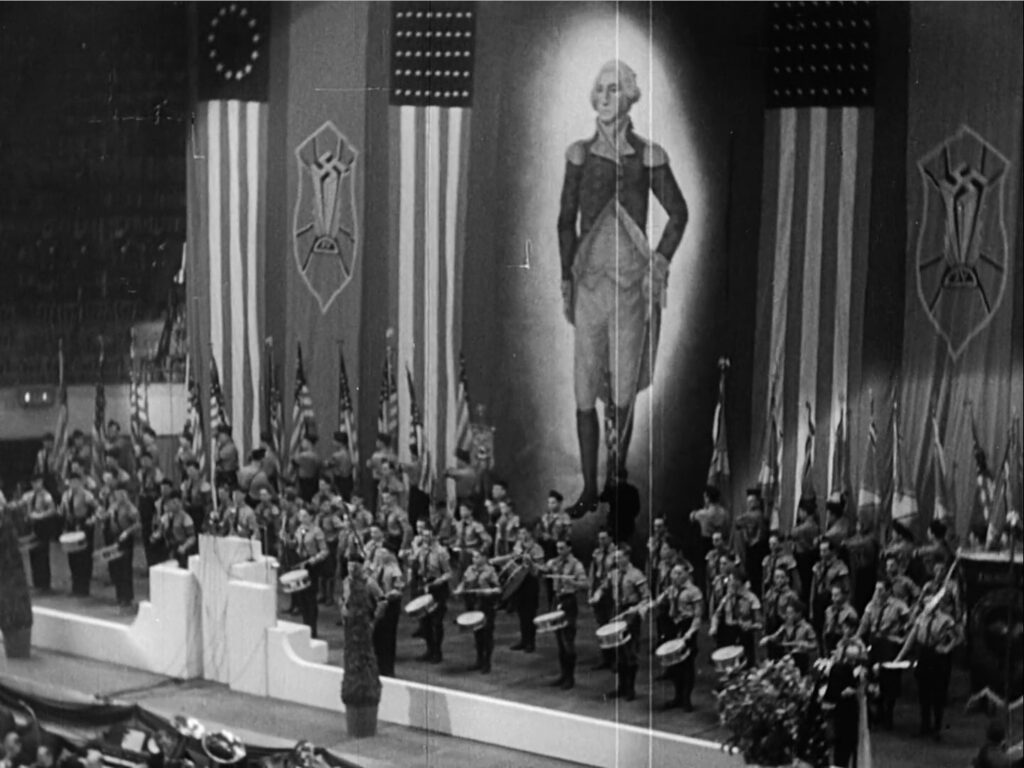

Many Christians continued to see Jews as a threat to American society. Christian fundamentalism reinforced the vision of America as a white, Christian nation that had strayed from strict adherence to biblical truth. The economic crisis of the 1930s fueled their belief that the nation had to renounce a liberal, secular society. However, some Christian evangelicals and dispensationalists considered Jews an important part of God’s plan to bring the world to Christ. Baptists Jacob Gartenhaus and J. Frank Norris called for a Zionist state to reclaim the promised land and fulfill prophecies that predicted the widespread conversion of Jewish people to Christianity. According to Gartenhaus, to oppose Zionism was “to oppose God’s plan.”17 These evangelicals also supported a Jewish-Christian coalition against Hindus, Buddhists, and Muslims.
IV. A Nation within a Nation
Though populations from these groups were limited by US immigration bans, Muslims in the 1930s began to build mosques and gain converts, including Black Americans of the Nation of Islam. The Nation of Islam (NOI), in fact, began in Detroit’s Black neighborhoods during the Great Depression. The religion’s founder, W.D. Fard, worked as a peddler by day and preached to African Americans at night. Most of his listeners came to Detroit from the South during the Great Migration.18 His religion borrowed teachings from the Moorish Science Temple and Black nationalist organizations.19
Fard taught that the original human beings (Asiatics or Original People) had been created by Allah (God) in His racial image (Black) and taught them His true religion of Islam. He also argued that there was a “religio-racial” connection between skin color and one’s godliness (Blackness) or demonic nature (whiteness). Fard believed that Allah would return to the earth and destroy white people and once again elevate Black people.20 He attracted many followers despite, or perhaps because of, his radical teachings on religion and race.21
Fard’s theology stressed male headship in family units. Men were expected to financially provide for their wives and children and physically protect them from danger. In this gendered system, women were subservient to men and cared for the family. The patriarchal system appealed to many women because it “promised” to transform men who did not fulfill traditional masculine duties, which was better than living in patriarchal systems that did not demand male breadwinning or physical protection.22
The NOI’s leadership changed when W.D. Fard was arrested in connection to one of his followers committing murder in 1932.23 The Chicago police likely gave Fard the option to either leave town or face charges related to the crime. Other than a brief visit to his common-law wife shortly after, no one reported seeing him again.24
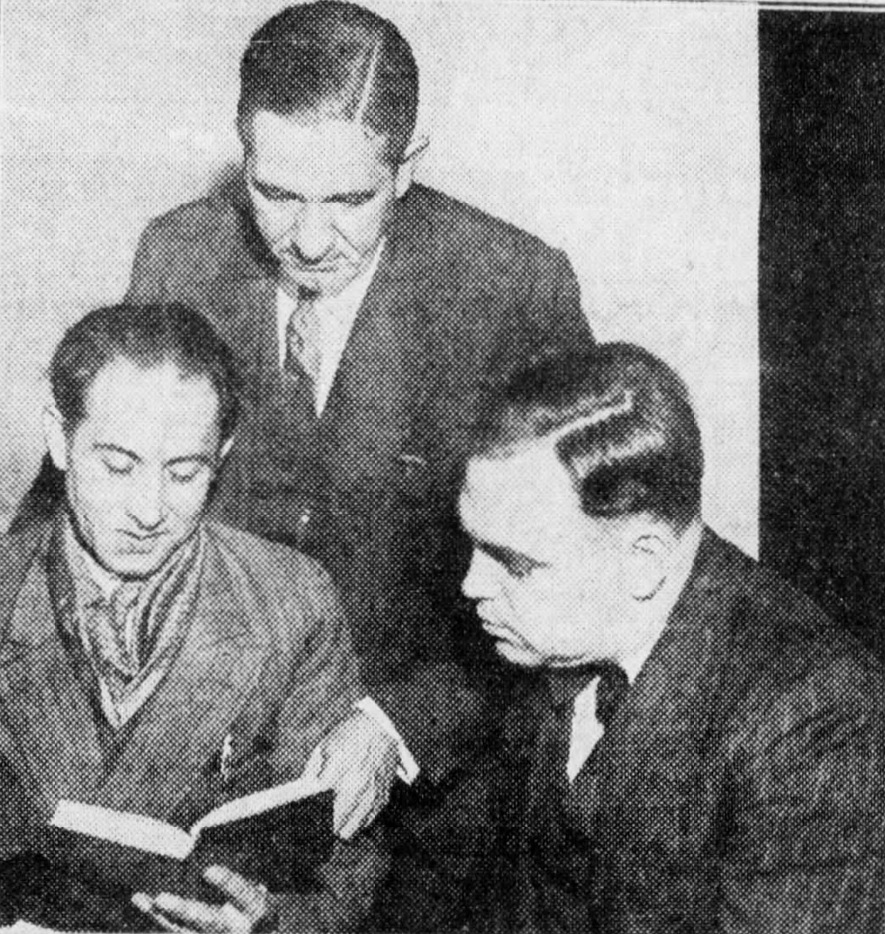

In Fard’s stead, Elijah Muhammad became the NOI’s leader. He oversaw the establishment of schools, founded a newspaper, and pushed the religious group to identify itself as a distinct political entity from the United States, wholly apart from white society and influence. They called themselves a “nation within a nation.” Demanding racial separation marked the NOI apart from other Black religious groups who sought integration into American society. It also set the Nation of Islam apart as a nation of religious people rather than a constellation of congregations.25
The NOI’s identity as a “nation within a nation” led them to side with Japan following Pearl Harbor. Their opposition to the United States and support of Japan triggered a massive movement against the organization by law enforcement. Thousands of Muslims were arrested for sedition or draft avoidance during World War II, leaving the organization with few non-incarcerated male members by 1945.26
After World War II, the Nation of Islam sought to convert Black men through proselytizing efforts they called “fishing,” especially targeting prisons through letter-writing.27 Malcolm Little (the future Malcolm X or el-Hajj el-Shabazz) was one such convert. In the early 1950s, he became a national and international spokesman for the NOI, sharing and defending Elijah Muhammad’s teachings in print, radio, and television.28
The release of the Mike Wallace-produced 1959 television program The Hate That Hate Produced, in which Wallace interviewed Elijah Muhammad and Malcolm X, put their philosophy side-by-side with those who fought for integration. In doing so, Wallace made an argument for what would happen if the white United States did not move to assimilate Black people into the United States. In practicality, it pitted the NOI as a radical non-Christian group against Christian integrationists, making the integrationist movement appear much less radical compared to the NOI’s racial separatism.29 Though Malcolm X and Martin Luther King, Jr. are often framed as opponents, they worked to promote Black civil rights through different methods and through different religious worlds.30
Religion and racial prejudice affected the civil rights of other minority groups as well. Japanese Americans, many of them Buddhists, were incarcerated in detainment camps during World War II. The FBI labeled Buddhist leaders as “known dangerous Group A suspects” and arrested them first. As the word spread that the government was targeting Buddhists, some converted to Christianity in attempt to escape internment. Yet many more held fast in their faith despite the persecution, and many Christian converts will still arrested and interned out of racist suspicion.31 Internment devastated Japanese-Americans. Many were given one week to sell all of their property, usually for only pennies on the dollar. Buddhist temples opened their doors and allowed some adherents to store valuables during the period of their incarceration. Many others lost everything they owned as they were absent for years in the detention camps, located in the interior of the United States. Like other Americans of various faiths, Japanese American Buddhists turned to their religion to get them through the upheaval that they faced. At the Manzanar Internment Camp in California’s Owens Valley, interned Buddhists erected a cemetery shrine in 1943 to, as its inscription reads, “console the souls of the dead.”32
V. Reviving Indigenous Religion
Native Americans, meanwhile, were caught in the limbo between increasing religious tolerance and continued religious persecution. On January 3, 1934, Indian Commissioner John Collier issued Circular 2970, “Indian Religious Freedom and Indian Culture,” which specified that Indian Service (Bureau of Indian Affairs) employees would not interfere with “Indian religious life or ceremonial expression.” Another circular on January 15 eliminated compulsory religious training at government boarding schools. Christian converts who followed the Jesus road, however, perceived Collier’s tolerance toward Native rites as reverting to paganism and heathenism.33 By the 1930s, about one-half of the Kiowas were Christians. Like other formerly nomadic Plains peoples, many converted around the turn of the century because of the missionaries and field matrons who tended to the sick and taught basic home industries that helped them adapt to a sedentary lifestyle. Moreover, Indigenous concepts of animistic dream spirits and power were fused into Christianity, thereby Indigenizing the new religion as it was interpreted through Native lenses.34
Relaxed federal Indian policy towards Indigenous religious practices led to cultural revival in the Northern Plains, where the Cheyennes opened the Medicine Hat and Sacred Arrow bundles, the Sioux Sun Dance revived, and the Shoshoni version of the Sun Dance, replete with Christian syncretisms, spread to the Crows in 1941.35 Throughout the Plains, variants of the Grass Dance, or War Dance became popular in the intertribal arena, then spread to larger venues at Indian fairs and expositions. The annual American Indian Exposition in Anadarko, Oklahoma, for instance, began in 1934. Cultural revival among the Kiowas resulted in reviving two near-defunct warrior societies in 1958: the Black Leggings and Gourd Clan. Today, the Gourd Dance is performed at many intertribal powwows in Oklahoma and beyond.36
During the 1930s, the Peyote religion was at an inflection point. Peyote (Lophophora williamsii), a small, green, spineless cactus that grows in clusters of “buttons” attached to taproots, grows naturally near Laredo, Texas. Peyote contains mescaline, a vision-inducing alkaloid. The Half Moon variant of the nascent Peyote rite originated in southwestern Oklahoma among the Kiowas, Comanches, and Plains Apaches sometime in the 1880s and spread throughout the Trans-Mississippi West by the 1930s. It emerged as an all-night form of worship led by a Roadman sitting at the west side of the Peyote tipi, with a Fireman by the door. Celebrants eat dried Peyote buttons, sing and pray accompanied by a rattle and water drum that circulate clockwise among those sitting cross-legged around the perimeter of the tipi. The Peyote rite became popular because Peyote is known to be a healer, teacher, and protector. Peyote, or tipi meetings, are held to celebrate holidays, birthdays, returning veterans, and to treat sickness.37 Legislation proposed in 1937 threatened to restrict interstate transportation of Peyote from Texas. Anthropologists and others testified on behalf of the Peyote religion and successfully defeated the bill, though anti-narcotics laws in Texas, California, and Idaho continued to pose issues for those who possessed Peyote through the 1950s.38 The Peyote religion was prohibited at Taos Pueblo until 1934, though the Navajo Tribal Council—influenced by missionaries and reformers—banned the “new religion.” Approximately 500 Peyotists were arrested for possession on Navajo reservation lands through the 1950s.39
VI. War
Beyond personal faith and church services, religious rhetoric was also utilized at the highest levels of the U.S. government in the 1930s and 1940s. Franklin D. Roosevelt attended Dutch Reformed and Episcopalian churches throughout his life, but as president, he employed a broad, inclusive religious language and biblical imagery to inspire Americans during the Depression and World War II. He was influenced by the social gospel movement of the early twentieth century that emphasized the Christian obligation to help others in need. In his first inaugural address in 1933, Roosevelt referred to a “plague of locusts” and “unscrupulous moneychangers,” which devout Christians would have recognized from the Old and New Testaments. He also assured his country that “our true destiny is not to be ministered unto but to minister to ourselves, to our fellow men.”40 In 1936, he defended the morality of New Deal programs, stating that “your government is still on the same side of the street with the Good Samaritan and not with those who pass by on the other side.”41
Though he spoke in specifically Christian terms, Roosevelt believed in widespread religious freedom and diversity, which he included in his Four Freedoms speech of 1941.42 In this speech, he listed the freedom to worship among the liberties worth fighting for during World War II. President Roosevelt and Vice President Henry A. Wallace also framed the conflict as a spiritual battle. As Wallace put it in his 1942 speech “The Century of the Common Man,” “the people’s revolution is on the march, and the devil and all his angels can not prevail against it. They can not prevail, for on the side of the people is the Lord.” Wallace was truly eclectic in his religious views, as he explored a number of different spiritual expressions and denominations including Presbyterianism, Episcopalian, Catholicism, Judaism, Buddhism, Islam, Zoroastrianism, Christian Science, and Native American religions attuned with nature.43
Christianity, however, remained the dominant religion in the United States during the war, and it had a significant role to play in the American war effort. Many GIs recalled that they prayed in foxholes and during battle or made pacts with God to do something significant in their lives if they survived. Some soldiers, however, did not want to be close to their chaplain or attend religious services. Others channeled their religious beliefs into bravery, putting themselves in more dangerous situations because they believed God would keep them safe as they fought for a righteous cause. Diaries, letters home, and memoirs of American GIs reflect their fervent religiosity. They prayed to God not only to protect them, but also because praying provided them with an emotional and psychological benefit. Praying helped many get through the war experience.44
Some Americans were members of “peace churches,” which did not believe in violence or military service. They based their arguments on pacifist grounds and registered with the draft boards as conscientious objectors. They typically served in non-combatant roles, which included medics and chaplains.45 About 70,000 American men of draft age received conscientious objector status with alternative service in non-combatant roles.46
Christian ministers and chaplains aided the war effort by giving sermons to increase morale, praying with the troops, and comforting soldiers. They also supervised burials as chaplains on the battlefield, where they were assigned to combat units.47 There were over 20,000 chaplains who served the needs of millions of American men and women in the armed forces. Only men could become chaplains, and they were categorized by religious affiliation. All Government Issued (GI) soldiers and chaplains were classified as either Jewish, Protestant, or Roman Catholic.48 The American government poured many resources into prompting the religiosity of American GIs to prevent them from being corrupted by amoral military life, and to set American religious culture against the atheism of dictatorships.
Jewish rabbis had to meet the needs of both Reform and Orthodox Jews, even though most of the rabbis during the war were Reform. However, chaplains tried to meet the needs of any soldier regardless of their religious affiliation. Historian G. Kurt Piehler argues that the mass armies housed individual religious identities among the combatants. The legacy of this was a movement toward more religious tolerance during and after the war. A soldier’s success and survival on the battlefield sometimes depended on an individual who was of a different faith.49 Indeed, religious ecumenicism largely had its watershed moment during and after World War II.
VII. Ecumenism
What became known as the ecumenical movement was a Protestant effort at the start of the twentieth century to encourage a greater spirit of collaboration among the various Christian denominations in the United States. This led to the creation of the Federal Council of Churches (FCC) in 1908, which brought under one umbrella many leading white Protestant denominations of the mainline tradition. Though a minority within the organization, some Black churches also joined, including the African Methodist Episcopal Church. The FCC carried out work on multiple fronts, including promoting evangelism, home and foreign missions, social reform, and church expansion, and publishing the weekly periodical Christian Century.50 In 1950, following the organization of the World Council of Churches two years earlier, ecumenical leaders in the United States established the National Council of Churches (NCC) to succeed the FCC. Under the banner “This Nation Under God,” organizers in 1950 saw the NCC as a response to godless communism during the early Cold War. In this regard, ecumenical Protestants were part of the broader postwar revivalism that swept the country.51
By midcentury, ecumenical Protestants had developed a social justice platform drawing in part upon the principles of the earlier social gospel movement. They called for an end to segregation and racial discrimination and promoted Race Relations Sundays to draw awareness to the racial divide in America.52 Speaking in 1958, Martin Luther King, Jr., turned to ecumenical Christians for support during the early years of the civil rights movement: “You must come to see that God is not a Baptist, God is not a Methodist, God is not a Presbyterian, God is not an Episcopalian. God is bigger than all of our denominations…. [A]lthough we differ in certain credal systems and certain doctrinal forms, there is a unity that makes us all one.”53
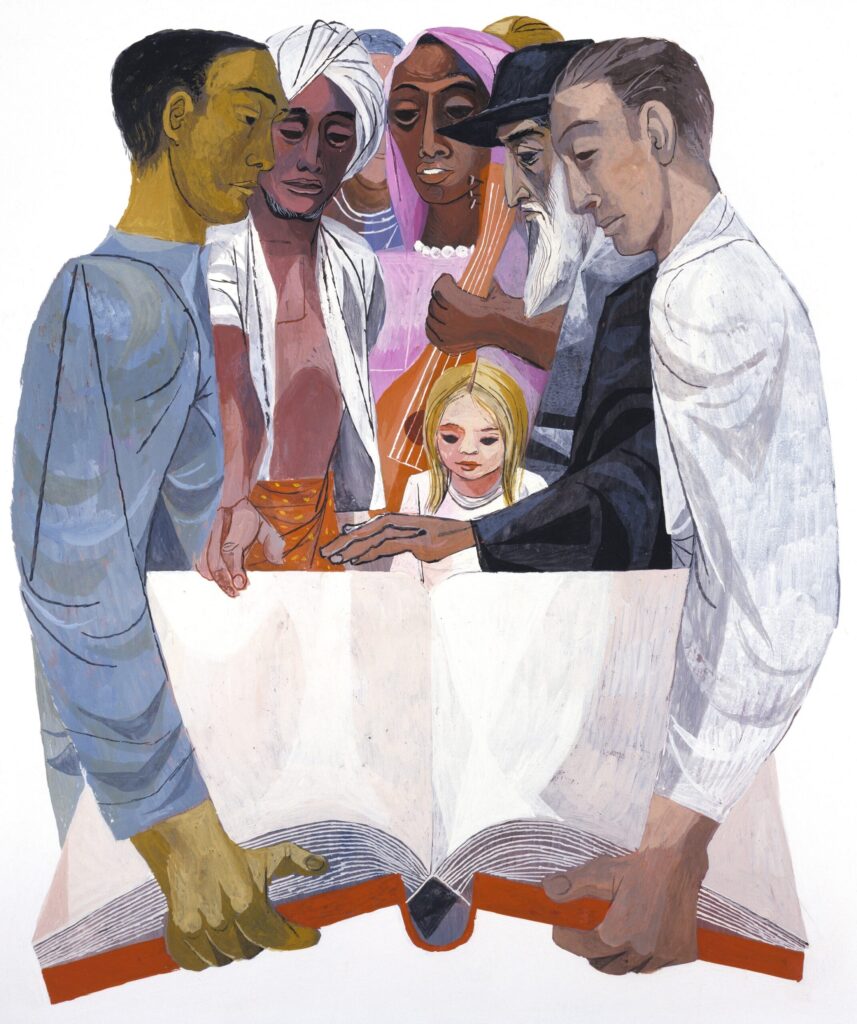
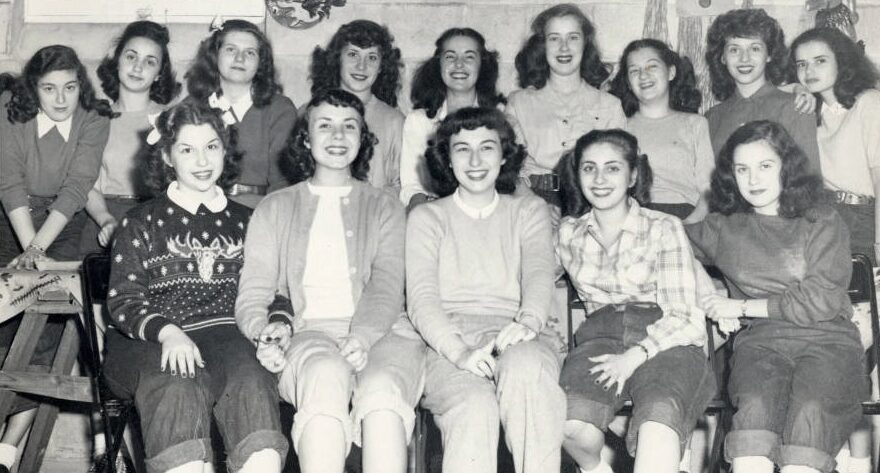
Some ecumenical leaders also petitioned for immigration reform, helping put pressure on Congress to overturn Chinese exclusion in 1943 and the discriminatory quota system in 1965.54 Despite their earnest attempts, however, much of mainline Protestantism still reflected a white demographic reluctant to change. Ecumenical leaders and theologians were often more liberal and progressive than local church communities. And while women gained an increasing role in the ecumenical movement, they found greater autonomy within separate organizations and auxiliaries, such as the United Council of Church Women.55
.jpg)
By 1950, liberal Protestants were stretching the notion of ecumenism and working to collaborate with other faith traditions, most notably Jews and Catholics. Promoting what some have called “Tri-Faith America,” there was a growing recognition that Catholics and Jews, alongside Protestants, comprised a Judeo-Christian culture that distinguished the nation from its Cold War enemy, the Soviet Union.56 Sociologist Will Herberg concluded in 1955 that for many Americans, “Not to be . . . either a Protestant, a Catholic, or a Jew is somehow not to be an American.”57 The earlier formation of the National Conference of Christians and Jews set a precedent for the more capacious ecumenical movement that followed. The young evangelist Billy Graham found common cause with ecumenical Protestants when promoting a revival in New York City in 1957, despite opposition from more conservative Christians. The apparent, persistent divide between evangelicals and the ecumenical movement, seen as more liberal or progressive, would only grow during the 1960s and 1970s with the continued growth of evangelicalism and the rise of the Religious Right.58
VIII. Red Scare
Despite signs of tolerance and ecumenicism, bigotry still permeated the 1940s and 1950s, fueled by the Cold War and Red Scare. Red scares—widespread panics about the possibility that communism would subvert social order in the United States—have punctuated American history. The Red Scare or Second Red Scare usually refers to the period between 1946 and 1954 when intense political persecution of supposed communists or suspected Soviet spies led to the blacklisting of innocent people. An earlier Red Scare, the First Red Scare, occurred between 1918 and 1921 in the wake of the 1917 Russian Bolshevik Revolution. The First Red Scare also involved government raids, investigative judicial committees, and mass deportations. Both periods were characterized by rampant paranoia and suspicion of a broader communist conspiracy. Although these two periods reflect the greatest escalation of anti-communism within the American government, they belie a longer history of anti-communist activism in the United States that stretches beyond and between their chronological boundaries.59
Red scares and anti-communism generally have always been construed in moral and religious language. In a social environment defined by suspicion, religion—particularly Protestant Christianity—was used as a litmus test to gauge one’s loyalty to the United States. Couched in religious language, the United States was upheld as a bastion of Christian purity against the transgressive atheism of communism.60 The allegation of communist atheism was not unmerited: in the Soviet Union especially, the state denigrated religious practice and destroyed religious buildings. As more Russian immigrants entered the United States in the period between 1880 and 1924, some Americans feared that they would import communist ideology and mete out a similar fate to American religious institutions. In 1954, Congress modified the pledge of allegiance to include the phrase “under God” between “One nation” and “indivisible.” This addition reinforced the role of religion in distinguishing the United States from the Soviet Union.
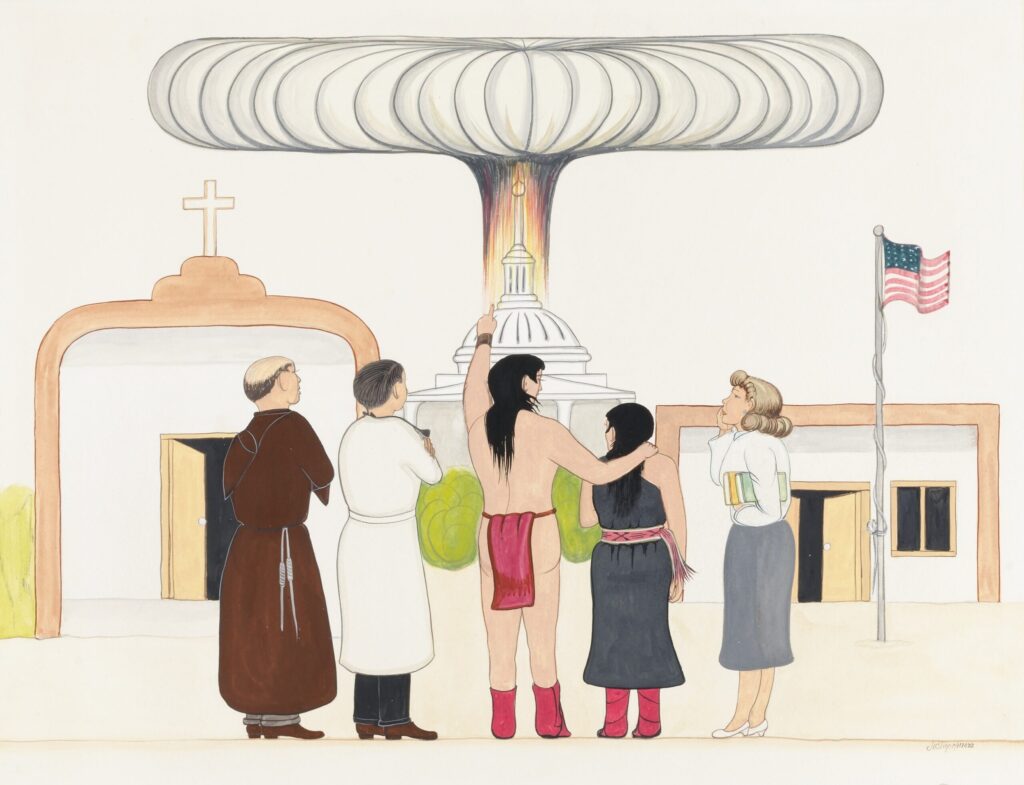
Many targets of anti-communist persecution before World War II were Catholic and Jewish immigrants who came from Eastern and Southern Europe.61 The Bolshevik influence in the United States was blamed for everything from intemperance to lack of Sunday observance.62 In 1935, Abraham Vereide invoked the power of prayer to combat “subversive forces” creating labor unrest.63 Irish and Italian Roman Catholics were also considered susceptible to communist propaganda due to their European roots and representation in the labor movement.64
Throughout the Second Red Scare in the 1950s, American evangelical leaders attacked the communist threat in both the press and the pulpit. The conservative coalition between Christian organizations and anti-communist political actors reached new heights during this Second Red Scare, also imprecisely termed McCarthyism after the Wisconsin Senator who launched an anti-communist witch hunt. Specific interest groups like Fred Schwarz’s Christian Anti-Communist Crusade and Schools of Anti-Communism sprang up in the 1950s and 1960s to promote the incompatibility of communism with Christianity.65 Popular preachers like Billy Graham invoked the spiritual battle between Christianity and communism in communications with presidents, Supreme Court justices, and cabinet members.66
Religious and political leaders thus collaborated in the spiritual war against communism. Protestant Christianity and a broader religious revival were considered the best defense against communist threats to capitalism, freedom, and democracy. The shared European roots of transatlantic immigrants and communist ideas placed Catholic and Jewish foreigners under suspicion in an environment that saw potential enemies everywhere. These symbolic allegiances continued to manifest real social divisions as anti-communism persisted throughout the Cold War and beyond.
IX. Graham and Niebuhr
Religious leaders used various forms of media to reach the masses. Billy Graham, a Southern Baptist minister, was one of the most successful modern evangelists in the United States. He commanded stages and airwaves across the country, and during the 1940s, Graham traveled the world as an itinerant preacher delivering sermons at public venues. He led revivals and “crusades” to bring “born-again-Christians” back to the church, and he promoted evangelical Christianity on his radio show Hour of Decision in the early 1950s. He represented the ecumenical movement in some ways by advocating for racial integration, civil rights, and Christian mercy toward all human beings, regardless of religious affiliation. But he differed from many members of the ecumenical movement by also promoting biblicism and traditional values. With his ability to project the gospel via popular technology, Graham was a predecessor of the televangelists who appeared on religious broadcasts later in the twentieth century.
Known as the “Protestant Pope,” Graham influenced ordinary Americans, and quickly became the face of the National Association of Evangelicals (NAE). In 1942, a collection of religious leaders sought to find a middle way between Fundamentalism and liberal Protestantism. The result was the NAE, which skewed closer to Fundamentalism than liberalism. The NAE was influential in promoting Billy Graham’s radio programs, extending his voice and their message.
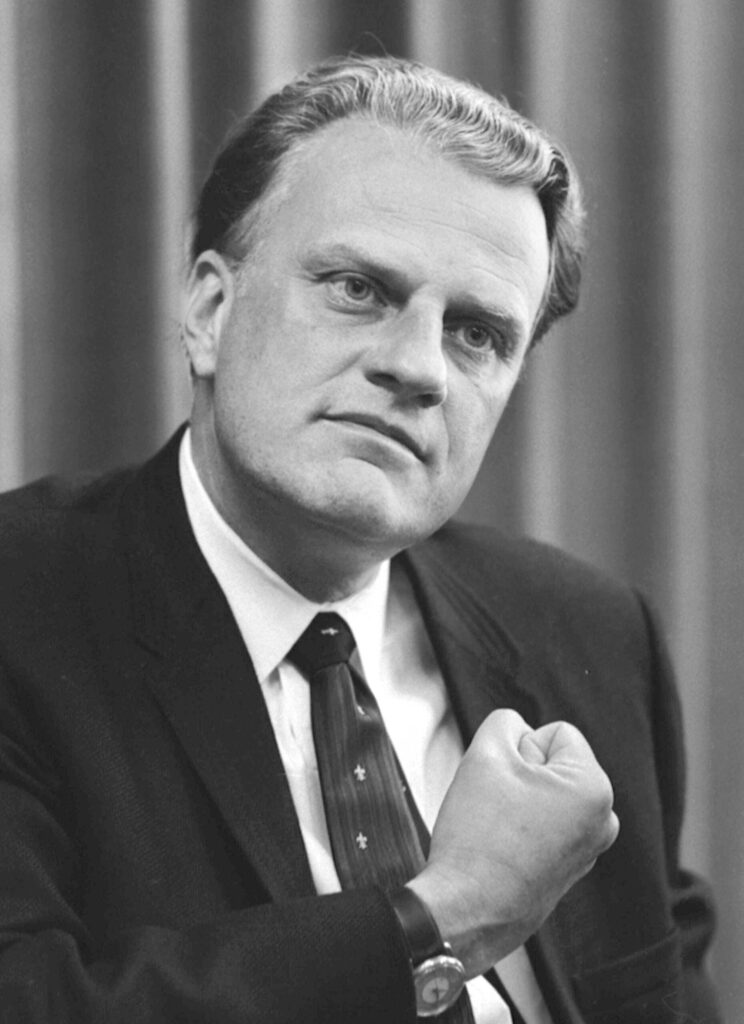
Graham and the NAE also caught the ear of prominent politicians like Richard Nixon who investigated suspected communists in the House Un-American Activities Committee (HUAC) during the Red Scare. Graham also met with President Harry S. Truman and gave advice to President Dwight D. Eisenhower. Presidents regularly sought Graham’s counsel throughout the 1960s and 1970s, knowing that Graham’s association with their administration or policies would convince many Americans that they were morally sound.
Theologian Reinhold Niebuhr was also courted and cited by politicians in the mid-twentieth century. In his popular 1932 book Moral Man and Immoral Society, Niebuhr argued that nations need not abide by interpersonal norms of morality when facing international threats like fascism or communism. Christians, he believed, had to leverage force, even violence, to apply justice and thwart evil. “Since it is impossible to count on enough moral goodwill among those who possess irresponsible power to sacrifice it for the good of the whole,” he explained, “it must be destroyed by coercive methods.”67
Niebuhr supported social justice and civil rights, but he was a “Christian Realist,” who believed that the harsh realities of international power and the brutalities of dictatorships made staunch pacifism impractical. Though he identified as a socialist in the 1930s, he soured on communist regimes as their undemocratic and atheistic policies became more apparent. In the 1940s, Niebuhr was active in politics as a supporter of President Roosevelt and his intervention in World War II. Niebuhr was also a co-founder of the Union for Democratic Action (later known as the Americans for Democratic Action). His religious rationalizations for warfare to defend or advance democracy were adopted by presidents and foreign policy advisors from World War II to the Vietnam War.
X. Reactions to the Red Scare
Niebuhr and Graham gathered considerable attention and praise for their efforts to right communism. Other religious leaders and organizations took actions that their critics labeled as subversive. Christian organizations that drew these charges insisted that their work in promoting the Gospel would prove to be the most effective deterrent to communism. Still, self-proclaimed patriots who supported McCarthy’s witch-hunt would not be deterred in their crusade.
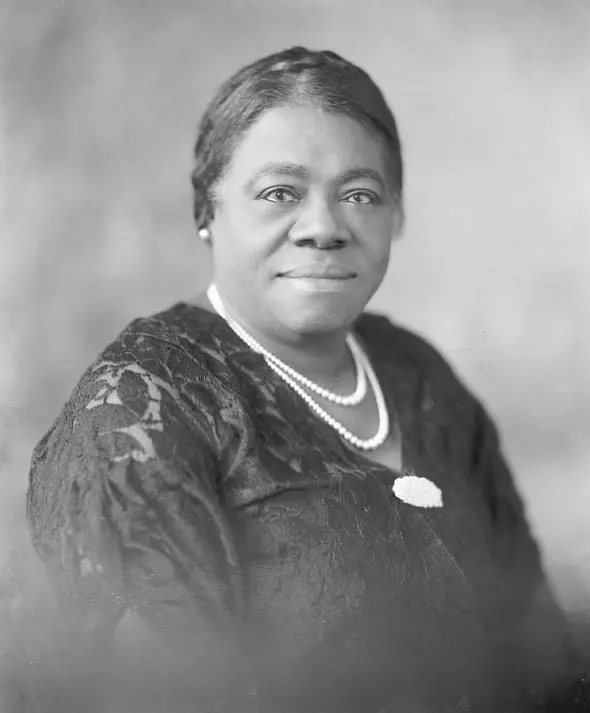
Following World War II, the Young Men’s and Young Women’s Christian Associations (YMCA and YWCA) were best known for supporting the U.S. military and promoting democracy through religious education. African American YMCA and YWCA leaders combined their patriotic fervor with visions of a desegregated homefront. Sometimes these organizations embraced this message by hosting African American speakers who emphasized anticommunist rhetoric. Three of the most prominent Black anticommunists in the country were affiliated with the Y movement as speakers or as national leaders: the educator and political strategist Mary McLeod Bethune, the attorney and diplomat Edith Sampson, and the NAACP trustee Channing Tobias.68 For example, Edith Sampson headlined two YMCA events between 1950 and 1965, and she spoke about collaborating with the US State Department and the United Nations to counteract Soviet messages about American anti-Black prejudice.69 Yet the National Student Council of the YMCA and YWCA also encouraged the academic study of communism and discouraged the exclusion of suspected subversives.70 The reasons why such dissimilar goals could coexist within the Y movement can be found in Cold War-era racism and antiracism.
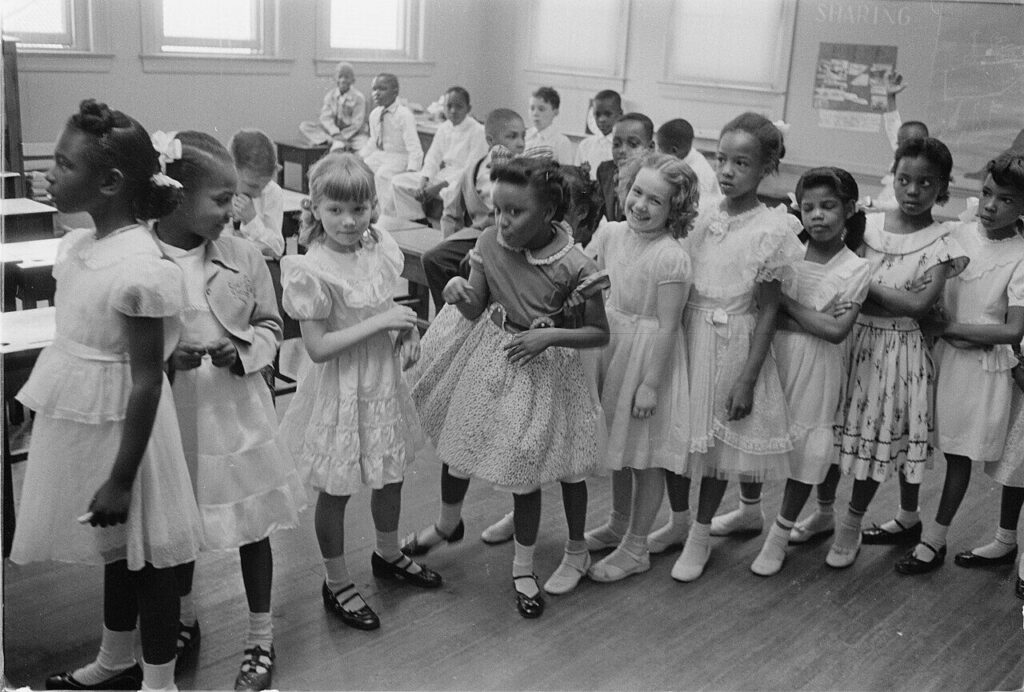
Channing Tobias, the former supervisor of the “Colored Work Department” of the YMCA, championed a patriotic racial justice message that helped hasten the desegregation of the Y Movement in 1946. His message included a four-step plan for the U.S. military and the American press to reward African Americans’ loyalty to the nation, and he advanced that plan by joining the NAACP board as a YMCA minister. But pressure to embrace anticommunism compelled Tobias to limit his support for African decolonization and the fight against state-sponsored racial violence.71 Most notably, he followed US State Department guidance and issued a disapproving statement about a 1951 United Nations petition claiming official US genocidal acts against African Americans.72 Nevertheless he along with other NAACP members still faced allegations of communist sympathies, particularly as a backlash against the 1954 Brown v. Board of Education decision.73

As anticommunist fervor expanded through the early and mid-1950s, several Christian ministers and laypeople used denominational affiliation and doctrinal appeals to protect their community members from allegations. Mary McLeod Bethune became a high-profile example in 1952 when she faced temporary blacklisting. NAACP Chairman Walter White highlighted Bethune’s Methodist Church membership in his protest letter after a New Jersey Anti-Communist League succeeded in getting her banned from speaking at a local school.74 Former First Lady Eleanor Roosevelt followed up by arguing that Bethune’s Christian faith was secure enough to withstand and to dismantle subversive communist messages. As Roosevelt wrote, “If she went to [any Communist-front organizations] to speak, she undoubtedly did them good. Mary McLeod Bethune would meet the devil and confront him with Christ, and I would feel quite sure that she and Christ would triumph.”75
Individual church congregations sometimes helped American Christians facing the consequences of the Second Red Scare. Bethel Presbyterian Church supported Bethune by agreeing to host her speech despite the accusations.76 Black churches continued to host many of the NAACP meetings at local levels, despite the risk of legal and economic consequences in several southern states.77 The United Church Women issued a public statement in defense of NAACP members who were blacklisted from teaching positions in southern states.78 Likewise, Pastor Adam Clayton Powell Jr. preached in 1953 that McCarthyism was itself a religious heresy, calling it a “cult of deceit” that threatened the nation’s future. 79
Perhaps the most impactful response to McCarthyism came from the National Conference of Christians and Jews against the J.B. Matthews, the executive director of Sen. Joseph McCarthy’s investigations committee. After Matthews published a July 1953 article titled “Reds in Our Churches,” three leaders from the National Conference of Christians and Jews convinced President Dwight Eisenhower to condemn the accusations against Protestant ministers (and any unsubstantiated redbaiting) in writing. This high-level rebuke was perceived as the beginning of McCarthy’s decline from political power.80
XI. Conclusion
Church attendance from the 1930s through the 1950s fluctuated as religious institutions struggled to attract followers. However, religion in the United States remained popular and populist. Americans relied on their faith traditions to get them through the hard times of the Great Depression and World War II. Politicians used religious rhetoric to comfort and inspire the American public. Though that rhetoric was mostly couched in Christian Protestant terms, and Protestants constituted 69% of the populous in 1949, the American religious landscape expanded to include Jews and Catholics.81 Americans also had to reckon with the increasing presence of minority religions like Islam and Buddhism, as well as new Christian denominations that broke off the mainline churches. Liberal Protestants, Christian fundamentalists, evangelicals, radical and conservative Catholics, and militant Muslims like the Nation of Islam all vied for a voice in American culture in the mid-twentieth century.
XII. Reference Material
This chapter was edited by Vaneesa Cook, with content contributions from Vaneesa Cook, Carolyn R. Dupont, Rebecca Brenner Graham, Kimberly Hill, Travis Hill, Benjamin R. Kracht, Nicholas Pruitt, Jon Kara Shields, Emily Stolken, Joseph Stuart, David Trevino, and Ben Wright.
Recommended Reading
- Margaret Bendroth, Good and Mad: Mainline Protestant Churchwomen, 1920–1980 (Oxford University Press, 2022).
- Vaughn A. Booker, Lift Every Voice and Swing: Black Musicians and Religious Culture in the Jazz Century (NYU Press, 2020).
- Elesha J. Coffman, The Christian Century and the Rise of the Protestant Mainline (Oxford University Press, 2013).
- Vaneesa Cook, Spiritual Socialists: Religion and the American Left (University of Pennsylvania Press, 2019).
- Darren Dochuk, Anointed with Oil: How Christianity and Crude Made Modern America (Basic Books, 2019).
- Darren Dochuk, From Bible Belt to Sunbelt: Plain-Folk Religion, Grassroots Politics, and the Rise of Evangelical Conservatism (Norton, 2011).
- Curtis J. Evans, A Theology of Brotherhood: The Federal Council of Churches and the Problem of Race (New York University Press, 2024).
- Darren Dochuk, From Bible Belt to Sunbelt: Plain-Folk Religion, Grassroots Politics, and the Rise of Evangelical Conservatism (W. W. Norton, 2011).
- Frances FitzGerald, The Evangelicals: The Struggle to Reshape America (Simon & Schuster, 2017).
- K. Healan Gaston, Imagining Judeo-Christian America: Religion, Secularism, and the Redefinition of Democracy (University of Chicago Press, 2019).
- Sarah Barringer Gordon, The Spirit of the Law: Religious Voices and the Constitution in Modern America (Harvard University Press, 2010).
- Rebecca Brenner Graham, Dear Miss Perkins: A Story of Frances Perkins’s Efforts to Aid Refugees from Nazi Germany (Kensington Books, 2025).
- David A. Hollinger, After Cloven Tongues of Fire: Protestant Liberalism in Modern American History (Princeton University Press, 2013).
- David A. Hollinger, Protestants Abroad: How Missionaries Tried to Change the World but Changed America (Princeton University Press, 2017).
- Jonathan P. Herzog, The Spiritual-Industrial Complex: America’s Religious Battle against Communism in the Early Cold War (Oxford University Press, 2011).
- William Inboden, Religion and American Foreign Policy, 1945–1960: The Soul of Containment (Cambridge University Press, 2008).
- Gale L. Kenny, Christian Imperial Feminism: White Protestant Women and the Consecration of Empire (NYU Press, 2024).
- Helen Jin Kim, Race for Revival: How Cold War South Korea Shaped the American Evangelical Empire (Oxford University Press, 2022).
- Kevin M. Kruse, One Nation Under God: How Corporate America Invented Christian America (Basic Books, 2015).
- Angela M. Lahr, Millennial Dreams and Apocalyptic Nightmares: The Cold War Origins of Political Evangelicalism (Oxford University Press, 2007).
- Andrew Preston, Sword of the Spirit, Shield of Faith: Religion in American War and Diplomacy (Alfred A. Knopf, 2012).
- Kevin M. Schultz, Tri-Faith America: How Catholics and Jews Held Postwar America to Its Protestant Promise (Oxford University Press, 2011).
- Matthew Avery Sutton, American Apocalypse: A History of Modern Evangelicalism (Harvard University Press, 2014).
- Ula Taylor, Promise of Patriarchy: Women and the Nation of Islam (University of North Carolina Press, 2017).
- Paul Harvey, Through the Storm, Through the Night: A History of African American Christianity (Rowman & Littlefield, 2011).
- Robert Wuthnow, America and the Challenges of Religious Diversity (Princeton University Press, 2005).
- Gene Zubovich, Before the Religious Right: Liberal Protestants, Human Rights, and the Polarization of the United States (University of Pennsylvania Press, 2022).
Notes
- Randall J. Stephens, “The Dust Bowl, the Depression, and American Protestant Responses to Environmental Devastation,” Church History 92, no. 2 (2023): 313. ↩︎
- https://www.fdrlibrary.org/great-depression-facts. ↩︎
- See Vaneesa Cook, Spiritual Socialists: Religion and the American Left (University of Pennsylvania Press, 2019), 42-55, 59-69. ↩︎
- Dorothy Day. The Long Loneliness, reprint (HarperCollins, 2017 [1952]). ↩︎
- Mel Piehl, Breaking Bread: The Catholic Worker and the Origin of Catholic Radicalism in America (University of Alabama Press, 2006). ↩︎
- Dorothy Day, “To Our Reader,” Catholic Worker, May 1, 1933, 1. ↩︎
- Dorothy Day, From Union Square to Rome (Faith Press, 1938). ↩︎
- Heather D. Curtis, “’God Is Not Affected by the Depression’”: Pentecostal Missions during the 1930s,” Church History 80, no. 3 (2011): 582. ↩︎
- Joel A. Carpenter, “Fundamentalist Institutions and the Rise of Evangelical Protestantism, 1929–1942,” Church History 49, no. 1 (1980): 62–75. ↩︎
- Rebecca Brenner Graham, Dear Miss Perkins: A Story of Frances Perkins’s Efforts to Aid Refugees from Nazi Germany (Kensington Books, 2025), 65-82. ↩︎
- German-Jewish Children’s Aid Records (RG 249) YIVO https://archives.cjh.org/repositories/7/resources/549. ↩︎
- For statistics, see “How Many Refugees Came to the United States from 1933-1945?” Americans and the Holocaust, U.S. Holocaust Memorial Museum, https://exhibitions.ushmm.org/americans-and-the-holocaust/how-many-refugees-came-to-the-united-states-from-1933-1945. ↩︎
- Graham, Dear Miss Perkins, 103-110. ↩︎
- Graham, Dear Miss Perkins, 159-79. ↩︎
- Rebecca Erbelding, Rescue Board: The Untold Story of America’s Efforts to Save the Jews of Europe (Doubleday, 2018), 7. ↩︎
- Stephen Wise, American Jewish Congress, 1933. ↩︎
- Jacob Gartenhaus, The Rebirth of a Nation: Zionism in History and Prophecy, 1936. ↩︎
- Erdmann Doane Beynon, “The Voodoo Cult Among Negro Migrants in Detroit,” American Journal of Sociology 43, no. 6 (1938): 897-98. For more on the Great Migration and African American New Religious Movements, see Judith Weisenfeld, New World A-Coming: Black Religion and Racial Identity during the Great Migration (NYU Press, 2016). ↩︎
- Sylvester A. Johnson, African American Religions, 1500-2000: Colonialism, Democracy, and Freedom (Cambridge University Press, 2015), 320-21. ↩︎
- “Religio-racial identity” is defined as the co-constitutive relationship of racial identity and religious identity in Judith Weisenfeld, New World A-Coming, 5-6. For more on race and embodiment in the NOI, see Stephen C. Finley, In & Out of This World: Material and Extraterrestrial Bodies in the Nation of Islam (Duke University Press, 2022). ↩︎
- Ed Beynon mentions “hundreds” of converts. See Ed Beynon, “The Voodoo Cult Among Negro Migrants in Detroit,” 897. For more on Fard, see Claude Andrew Clegg III, An Original Man: The Life and Times of Elijah Muhammad (St. Martin’s Press, 1997), 20-22. ↩︎
- Ula Y. Taylor, The Promise of Patriarchy: Women and the Nation of Islam (University of North Carolina Press, 2017), 1-7. ↩︎
- Weisenfeld, New World A-Coming, 63-66. ↩︎
- Clegg III, An Original Man, 34-35. ↩︎
- Joseph R. Stuart, “Freedom, Justice, and Equality for Black Men in America: Race, Masculinity, and the Nation of Islam in the Black Freedom Movement, 1931-1975″ (PhD Diss., University of Utah, 2022), 51. ↩︎
- For more on the Nation of Islam in the historiography of religion and law, see Sarah Barringer Gordon, The Spirit of the Law: Religious Voices and the Constitution in Modern America (Belknap Press, 2010), 96-97; Garrett Felber, Those Who Know Don’t Say: The Nation of Islam, the Black Freedom Movement, and the Carceral State (University of North Carolina Press, 2020), 16-49. Hatin Sahib writes that there were only thirteen active participants in the NOI at the war’s end. See Hatin A. Sahib, “The Nation of Islam,” reprinted in Contributions in Black Studies: A Journal of African and Afro-American Studies 13 (1995): 62. ↩︎
- Ula Taylor, Promise of Patriarchy, 72-73. ↩︎
- The best recent biography of Malcolm X is Les Payne and Tamara Payne, The Dead Are Arising: The Life of Malcolm X (Liveright, 2020). Another excellent biography is Manning Marable, Malcolm X: A Life of Reinvention (Penguin, 2011). ↩︎
- Vaughn A. Booker, “The Hate that Hate Produced: Representing Black Religion in the Twentieth Century,” in Benjamin E. Park, ed., A Companion to American Religious History (Wiley, 2021), 299-316. ↩︎
- Peniel E. Joseph, The Sword and the Shield: The Revolutionary Lives of Malcolm X and Martin Luther King Jr. (Basic Books, 2020). ↩︎
- Duncan Ryuken Williams, “Camp Dharma: Japanese-American Buddhist Identity and the Internment Experience of World War II,” in Westward Dhamra: Buddhism beyond Asia, eds. Charles S. Prebish and Martin Baumann. (University of California Press, 2002), 192, 194. ↩︎
- Duncan Ryuken Williams, “Complex Loyalties: Issei Buddhist Ministers during the Wartime Incarceration,” Pacific World: Journal of the Institute of Buddhist Studies no. 5 (2003), 268. ↩︎
- Francis Paul Prucha, The Great Father: The United States Government and the American Indians (University of Nebraska Press, 1984). ↩︎
- Benjamin R. Kracht, Religious Revitalization among the Kiowas: The Ghost Dance, Peyote, and Christianity (University of Nebraska Press, 2018), 225-29. ↩︎
- C. Adrian Heidenreich, Native American Studies: An Introduction (McGraw-Hill, 1991); C. Adrian Heidenreich, Smoke Signals in Crow (Apsáalooke) Country: Beyond the Capture of Horses from the Lewis & Clark Expedition (2006). ↩︎
- Benjamin R. Kracht, Religious Revitalization among the Kiowas; Kracht, Kiowa Belief and Ritual (University of Nebraska Press, 2017). ↩︎
- Thomas C. Maroukis, The Peyote Road: Religious Freedom and the Native American Church (University of Oklahoma Press, 2010), 59-90; Kracht, Religious Revitalization among the Kiowas, 25, 72-73. ↩︎
- Kracht, Religious Revitalization among the Kiowas, 165-68, 184. ↩︎
- Omer C. Stewart, Peyote Religion: A History (University of Oklahoma Press, 1987), 203-8, 294-310. ↩︎
- Franklin Roosevelt, “First Inaugural Address,” March 1933. ↩︎
- Franklin Roosevelt, Democratic National Convention, 1936. ↩︎
- Franklin Roosevelt, “Four Freedoms speech,” State of the Union Address, January 6, 1941. ↩︎
- Cook, Spiritual Socialists, 109-11, 117-31. ↩︎
- Nicholas Pelligrino, “Embattled Belief: The Religious Experiences of American Military Combatants during World War II and Today,” Journal of Military Experience 3, no. 2 (2013). ↩︎
- “Religion on the World War II Homefront,” National Park Service. ↩︎
- Dayna Barnes, “Gods at War: Religion and the Pacific Theater in World War II,” Garnet: Global Affairs and Religion Network, February 12, 2023. ↩︎
- Dayna Barnes, “Gods at War.” ↩︎
- Steve R. Waddell, Review of A Religious History of the American GI World War II, by G. Kurt Piehler, Journal of Arizona History 64, no. 3 (2023). ↩︎
- G. Kurt Piehler, A Religious History of the American GI in World War II (University of Nebraska Press, 2021). ↩︎
- Elesha J. Coffman, The Christian Century and the Rise of the Protestant Mainline (Oxford University Press, 2013). ↩︎
- Jonathan P. Herzog, The Spiritual-Industrial Complex: America’s Religious Battle against Communism in the Early Cold War (Oxford University Press, 2011). ↩︎
- Christopher H. Evans, The Social Gospel in American Religion: A History (NYU Press, 2017); Curtis J. Evans, A Theology of Brotherhood: The Federal Council of Churches and the Problem of Race (NYU Press, 2024); James F. Findlay Jr., Church People in the Struggle: The National Council of Churches and the Black Freedom Movement, 1950-1970 (Oxford University Press, 1997). ↩︎
- Martin Luther King, Jr., “Paul’s Letter to American Christians,” June 3, 1958, Martin Luther King, Jr. Research and Education Institute, Stanford University, https://kinginstitute.stanford.edu/king-papers/documents/pauls-letter-american-christians-sermon-delivered-commission-ecumenical#fn2 (accessed July 31, 2024). ↩︎
- Nicholas T. Pruitt, Open Hearts, Closed Doors: Immigration Reform and the Waning of Mainline Protestantism (NYU Press, 2021). ↩︎
- Gale L. Kenny, Christian Imperial Feminism: White Protestant Women and the Consecration of Empire (NYU Press, 2024); Margaret Bendroth, Good and Mad: Mainline Protestant Churchwomen, 1920-1980 (Oxford University Press, 2022). ↩︎
- Kevin M. Schultz, Tri-Faith America: How Catholics and Jews Held Postwar America to Its Protestant Promise (Oxford University Press, 2011); K. Healan Gaston, Imagining Judeo-Christian America: Religion, Secularism, and the Redefinition of Democracy (University of Chicago Press, 2019). ↩︎
- Will Herberg, Protestant, Catholic, Jew: An Essay in American Religious Sociology (Doubleday, 1955), 274. ↩︎
- David A. Hollinger, Christianity’s American Fate: How Religion Became More Conservative and Society More Secular (Princeton University Press, 2024). Gene Zubovich, Before the Religious Right: Liberal Protestants, Human Rights, and the Polarization of the United States (University of Pennsylvania Press, 2022). ↩︎
- See Robert Justin Goldstein, ed., Little “Red Scares”: Anti-Communism and Political Repression in the United States, 1921-1946 (Routledge, 2016). This volume addresses American anti-communism between the two “great” red scares. ↩︎
- Jonathan P. Herzog, The Spiritual-Industrial Complex: America’s Religious Battle Against Communism in the Early Cold War (Oxford University Press, 2011), 47. ↩︎
- See Robert F. Zeidel, Robber Barons and Wretched Refuse: Ethnic and Class Dynamics During the Era of American Industrialization (Cornell University Press, 2020), especially Chapter 8, “Addressing the Reds: Immigrants and the Postwar Great Scare of 1919-1921.” ↩︎
- Anderson R. Rouse, “Keeping Up With the Joneses: Progressive-Era Revivalism in the South and the Rise of the Christian Right” (PhD Diss., The University of North Carolina at Greensboro, 2024), 207. ↩︎
- Kevin M. Kruse, One Nation Under God: How Corporate America Invented Christian America (Basic Books, 2015), 42. ↩︎
- Nick Fischer, Spider Web: The Birth of American Anticommunism (University of Illinois Press, 2016) , 101 and 155. ↩︎
- Nick Fischer, Spider Web, 148. ↩︎
- Nick Fischer, Spider Web, 80. ↩︎
- Reinhold Niebuhr, Moral Man and Immoral Society (Scribner’s, 1932), 21. ↩︎
- Kenneth R. Janken, “From Colonial Liberation to Cold War liberalism: Walter White, the NAACP, and Foreign Affairs, 1941–1955,” Ethnic and Racial Studies 21, no. 6 (1998): 1090; Gerald Horne, Black Revolutionary: William Patterson and the Globalization of the African American Freedom Struggle (University of Illinois Press, 2014), 1-3, 130. ↩︎
- Helen Laville and Scott Lucas, “The American Way: Edith Sampson, the NAACP, and African American Identity in the Cold War,” Diplomatic History 20, no. 4 (1996): 574-576, 579. ↩︎
- National Student Council of the YMCA and YWCA, “Memo on Political Responsibility,” October 1953, Young Men’s and Young Women’s Christian Associations, 1952-55, NAACP Youth File, Proquest History Vault: NAACP Papers, 1-3. ↩︎
- Channing H. Tobias, “The Negro in Our Democracy: Address at Cooper Union Forum,” 23 March 1943, Board of Directors Channing Tobias General File, 1943-49, Proquest History Vault: NAACP Papers, 2-7. ↩︎
- Janken, “From Colonial Liberation to Cold War liberalism,” 1087; Civil Rights Congress, We Charge Genocide, second edition (International Publishers, 1970). ↩︎
- Cherisse Jones-Branch, Crossing the Line: Women’s Interracial Activism in South Carolina during and after World War II (University Press of Florida, 2014), 64. ↩︎
- Walter White to William J. Fitzpatrick, Englewood Board of Education, 25 April 1952, Bethune, Mary McLeod, Englewood, NJ Incident, 1952-53 File, Proquest History Vault: NAACP Papers, 47; Re: Englewood Meeting – Mrs. Bethune – April 24, 1952, Bethune, Mary McLeod, Englewood, NJ Incident, 1952-53 File, Proquest History Vault: NAACP Papers, 8. ↩︎
- Eleanor Roosevelt, “Vehement Protest,” unnamed newspaper, undated (April or May 1952), Bethune, Mary McLeod, Englewood, NJ Incident, 1952-53 File, Proquest History Vault: NAACP Papers, p. 41. ↩︎
- Re: Englewood Meeting – Mrs. Bethune – April 24, 1952. ↩︎
- “What is the NAACP?,” Information Service 36:8 (23 February 1957), 1, National Council of the Churches of Christ in the U.S.A, in the Church Department Correspondence File, 1957-63, Proquest History Vault: NAACP Papers. ↩︎
- Cherisse Jones-Branch, Crossing the Line, 84. ↩︎
- Herbert Robinson Marbury, “Exodus in the Civil Rights Era: Returning the Struggle to the Black Church,” in Pillars of Cloud and Fire: The Politics of Exodus in African American Biblical Interpretation (NYU Press, 2015), 149; Jones-Branch, Crossing the Line, 67, 149. ↩︎
- “McCarthy Takes Over,” The Progressive (April 1954), 47-50, in McCarthy, Joseph 1954, NAACP File 1940-1955, Proquest History Vault: NAACP Papers. ↩︎
- See Pew Research Center data, https://www.pewresearch.org/collections/religious-landscape-study/. ↩︎