You are reading a working draft of The Palace of Thundering Gods, a living history project built through scholarly collaboration. Please click here to help improve this chapter.
I. Introduction
In 1960, Billy Graham and Martin Luther King travelled together to Rio de Janeiro, Brazil, for the 10th Baptist World Congress. The message of Christ’s love and salvation was a familiar one, but the two ministers stood at the precipice of a new age in American religions. Some things would change drastically. Supreme Court rulings, the emergence of diverse pluralism, a racial revolution, progressive theological interventions, and a critique of institutions would create a new society. But others would continue—the witness of the Black church, the eclectic search for the divine, the endurance of conservative evangelicalism. Throughout the tumultuous 1960s, American religions shaped the nation’s political, social, and cultural transformations.
II. Kennedy and the Courts
In 1960 America approached a decade of drastic change. “History rarely follows the decimal system as neatly as it did in 1960,” one historian put it.1 Embodying this spirit of optimism was the charming 43-year-old recently elected to the Presidency. “The torch has been passed to a new generation,” John F. Kennedy intoned in his aristocratic Boston accent. But it hadn’t been an inevitable handoff. The last Catholic to run, Al Smith in 1924, had faced virulent opposition and lost badly, as headlines warned the election amounted to a battle between “Protestant Americanism versus Rum and Romanism.”2 By 1960, those sentiments had softened, but many Americans still questioned electing a Catholic to the nation’s highest office.
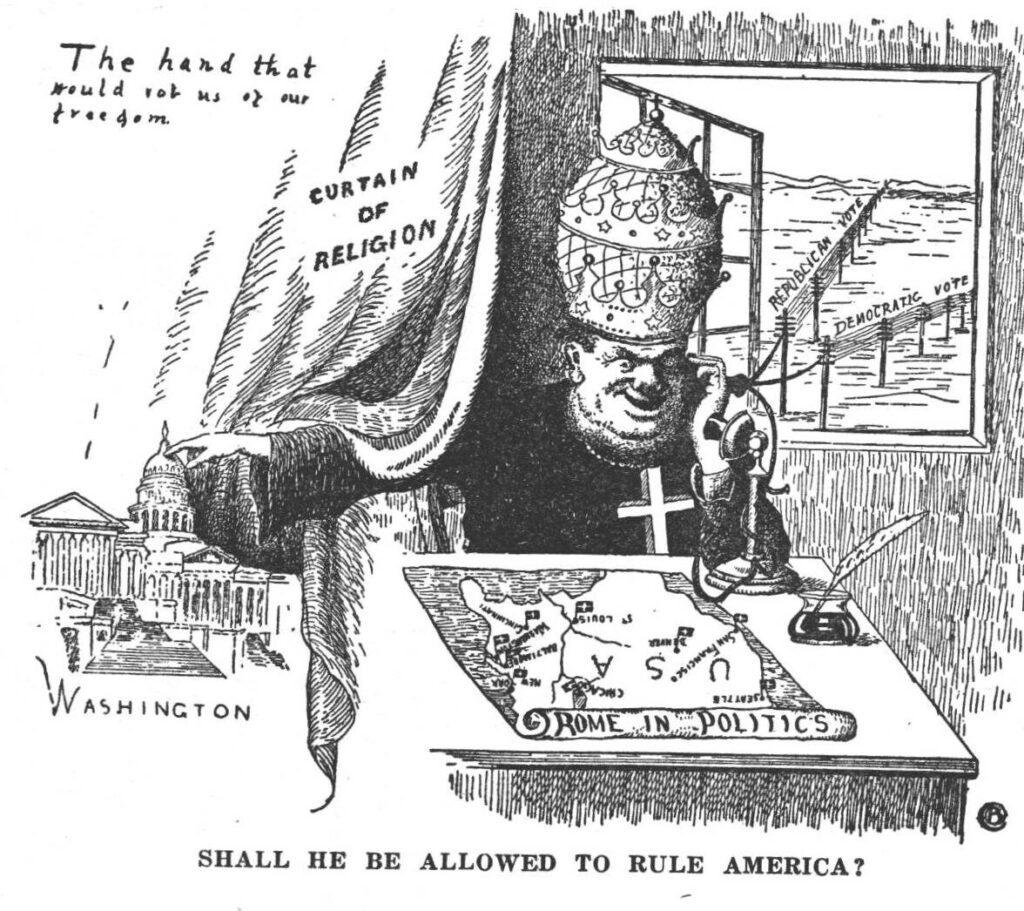
Billy Graham, who had developed a close friendship with Kennedy’s Republican opponent, Richard Nixon, promised not to publicly denounce Kennedy’s Catholic faith. Still, he met with Norman Vincent Peale and other Protestant ministers in Montreaux, Switzerland, determined to “do all within [their] power to help [Nixon].”3 Kennedy decided to address the “so-called religious issue” directly. At the September convening of the Greater Houston Ministerial Association, Kennedy stated, “I am Catholic,” and “I believe in an America where the separation of church and state is absolute.” He went on, “I believe in an America that is officially neither Catholic, Protestant nor Jewish… where religious intolerance will someday end… and where Catholics, Protestants and Jews [will] promote instead the American ideal of brotherhood.”4 It was just enough, and Kennedy won one of the closest elections in American history.
In his inaugural address, the President championed a new era, one of “defending freedom” against the “common enemies of man: tyranny, poverty, disease and war itself,” exhorting his fellow Americans from Paul’s epistle to the Romans to be always “rejoicing in hope, patient in tribulation.”5
When Kennedy was assassinated in November of 1963, Billy Graham lamented. “He was always interested in the moral and spiritual welfare of the country,” he began, “he was one of the most affable, winsome men I ever met. I never agreed with everything he did,” Graham went on, but said that the young President had been “very anxious to heal the religious breach in this country.” Graham, like so many other Americans, admitted: “I couldn’t keep the tears back.”6
The 1960 Election echoed the Cold War invocation of “one nation under God.” This theologically unspecific Judeo-Christian identity, created and wielded in opposition to godless communism, had earned broad appeal.7 Americans sought solace in religious institutions. According to the Yearbook of American Churches, 63% of Americans reported being church members, the highest number since statistical recording started in 1850.8 “Whether we judge by religious identification, church membership, or church attendance, whether we go by bestseller lists, the mass media, or writings of intellectuals,” sociologist Will Herberg wrote, the conclusion is the same: there is every sign of a notable ‘turn to religion’ among the American people today.”9 But Herberg lamented what he saw as a simultaneous secularity. Religion, whether of the Protestant, Catholic, or Jewish variety, had “lost much of its Christian (or Jewish) content.” It has also lost much ethnic distinctiveness, as decades of restrictive immigration laws, postwar assimilationism, and suburbanization led to a flattening of expression.
Civil religion proliferated, as did institutions of faith like the National Council of Churches and the National Evangelical Association, even as many Americans wrestled with individual belief.10 A minority also questioned religion’s role in the public sphere and the country’s commitment to pluralism.11 “It is this secularism of a religious people, this religiousness of a secularist framework, that constitutes the problem posed by the contemporary religious situation in America,” Herberg concluded.12 It was a problem that would soon be addressed by the courts.
In the early 1960s, the Supreme Court took up a series of questions examining religion and public life: Did “blue laws,” which closed businesses on Sundays, constitute a religious establishment or interfere with the rights of shopkeepers? Did the state owe unemployment benefits to someone fired for practicing their religious beliefs? Did a state requirement for public officials to swear they believed in the existence of God violate the First Amendment? Did voluntary prayers in schools violate the Establishment clause? What about daily recitations of the Bible?
In Torcaso v. Watkins (1961), the Court unanimously held that states could not deny atheists public office by demanding professions of belief, reasoning that a religious test for office “unconstitutionally invades the appellant’s freedom of belief and religion.”13 But blue laws which banned alcohol were deemed acceptable, as a majority of justices ruled in McGowan v. Maryland (8-1). Braunfield v. Brown (6-3) determined that a day of rest was neither an establishment of religion nor an infringement on the religious freedom of Jews or other non-Christians who wanted to do business on Sundays.14 While these 1961 cases produced only a mild response, two cases about religion in public schools loomed on the docket. These two cases “fell like a meteor” on American society.15
Every day, students in public schools in the state of New York recited the Pledge of Allegiance as well as an ecumenical prayer written by the Board of Regents that acknowledged “dependence” on Almighty God and asked for “blessings upon us, our parents, our teachers, and our Country.” In 1959, parents in New Hyde Park sued the School Board over the prayer, which, though voluntary, they felt violated the Establishment Clause of the Constitution. By 1962, Engel v. Vitale had worked its way up to the Supreme Court. Writing for the 6-1 majority, Justice Hugo Black wrote that the proscribed prayer constituted a “religious activity…a solemn avowal of divine faith and supplication,” and as such was “wholly inconsistent” with the Constitutional provision against establishing a state religion.16


But what about the Lord’s Prayer or a reading from the Bible? The following year, the Court considered that question in the case of Abington v. Schempp. As for Pennsylvania’s requirement that “at least ten Bible verses be read, without comment,” and the “Lord’s Prayer recited” at the start of the school day, the Court found that, despite the possibility of student exemption, “the religious exercises and the [state] law requiring them are in violation of the Establishment Clause.” Writing for the 8-1 majority, Justice Tom C. Clark acknowledged that “religion has been closely identified with our history and government,” but also insisted that this reality “is not to say, however…that religious freedom is not likewise as strongly embedded.”17 Reactions to Engel and Abington were immediate and vehement. The Supreme Court received more hate mail than ever before.18 Gallup found that 85% of respondents disagreed with the decisions, which, Georgia Senator Herman Talmadge railed, “put God and the Devil on equal plane.”19
III. Civil Rights
In the early 1960s, the Supreme Court sought to clarify the legal relationship between religion in public life with a “strong” establishment clause jurisprudence and a stronger free exercise clause jurisprudence.20 But the Court’s rulings on religion and education were invoked in a surprising and important way—to oppose the Brown decision and the ongoing civil rights movement. As Alabama Congressman George Andrews put it: “they put the Negroes in schools; now they put God out of the schools.”21
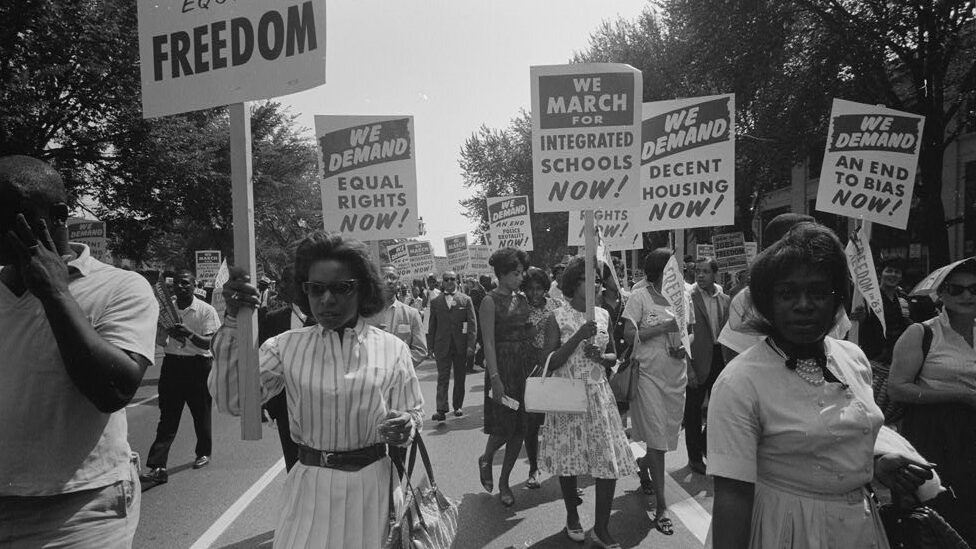
Of course, for Black proponents of freedom and equality, they felt God was on their side in the struggle for full social and political rights as Americans and as children of God. The grassroots Black protest movement of the 1960s was anchored within the structures and traditions of the Black church and powered by religious ideals.
At the 1960 founding of the Student Non-Violent Coordinating Committee in North Carolina, students declared: “We affirm the philosophical or religious idea of nonviolence as the foundation of our purpose, the presupposition of our faith, and the manner of our action. Nonviolence as it grows from a Judaeo-Christian tradition seeks a social order of justice permeated by love.”22 In Albany, Georgia in 1961, ordinary men and women engaged in direct action, challenging white supremacy and asserting, “We believe in the Fatherhood of God and the brotherhood of Man…[and] our beliefs have consequences.”23
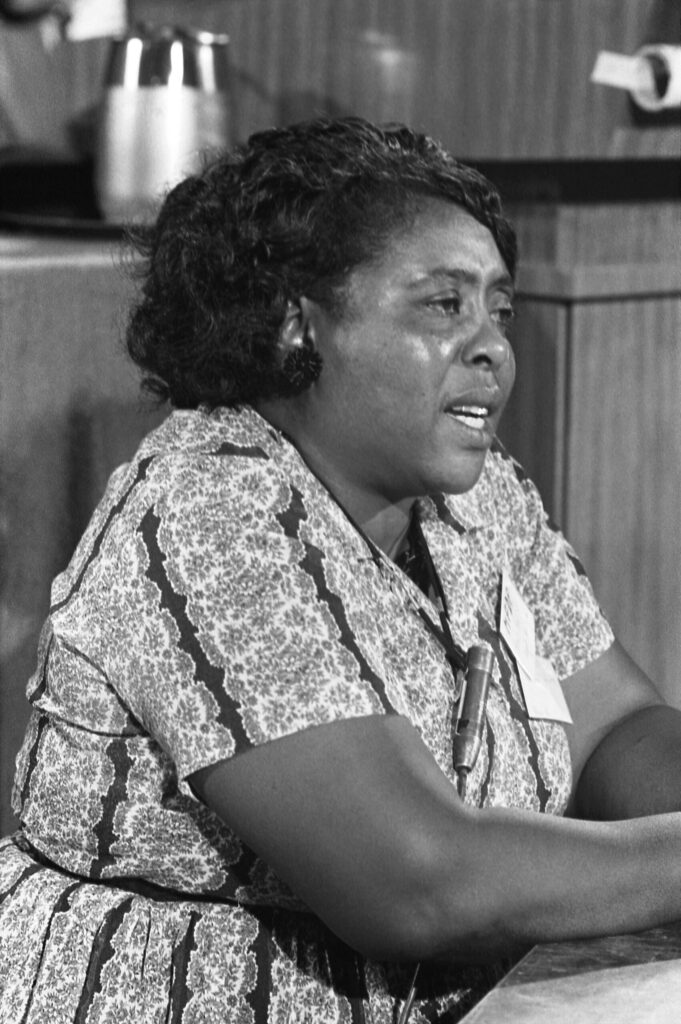
Believing that they possessed inherent dignity in the imago Dei, many Black Christians in the South engaged in nonviolent collective action designed to confront the sin of racism, convert the oppressor, and forge a beloved community. This is why, when Fannie Lou Hamer, the Mississippi organizer, first left the cotton fields of the Delta for the Movement, she said she was going to “work for Jesus.”24 This work would soon transform the nation. The well-known Montgomery Bus Boycott, marking for many the beginning of the grassroots civil rights struggle, was “decidedly more faith oriented” than politically oriented, constituting, in historian David Garrow’s words, a “mass witness.”25 Activist Bayard Rustin agreed, stating that the Montgomery Bus Boycott was “strong because it is religious as well as political. It has been built upon the most stable institution of the Southern Negro community—the Church.”26

For generations, the Black Church had cultivated a source of both organizational and theological power. Relatively autonomous within the Jim Crow South, the church offered the primary space for civil rights organizing and for the development of Movement leaders. Many mass meetings were held in churches, combining political will and spiritual power. As Prathia Hall, an activist from Pennsylvania, recounted, “you could hear the rhythm of the feet, and the clapping of the hands from the old prayer meeting tradition…it was just about the most powerful thing I’d ever experienced.”27
Black ministers also provided important leadership. Often trained in seminaries and connected within university and denominational structures, they formed what Dennis C. Dickerson has called a “cadre of religious intellectuals” who provided the freedom struggle’s theological underpinnings and usable praxes.28 Figures such as the Revs. Martin Luther King, Jr., James Lawson, Fred Shuttlesworth, Kelly Miller Smith, Joseph Lowery, Wyatt Tee Walker, and many others together comprised an impressive leadership network, collaborating in groups like the Southern Christian Leadership Conference.
But the Black church —the A.M.E., C.M.E., Black Baptist Church, Black Presbyterians and Catholics, along with Pentecostal brothers and sisters like those in the Church of God in Christ (COGIC)—offered more than independent space, leadership, and resources. As Aldon Morris has stated, it “supplied the civil rights movement with a collective enthusiasm…the songs, testimonies, oratory, and prayers that spoke directly to the needs of an oppressed group.”29 It should come as no surprise, then, that white supremacists, many claiming to be fellow Christians, burned Black churches to the ground during the 1960s, in places like Mt Olive Baptist Church in Terrell County, GA, and Mt. Zion Methodist Church in Neshoba County, MS, and bombed the 16th St. Baptist Church in Birmingham in 1963, killing four young girls attending Sunday School.
Proponents of the racial status quo white were also motivated by religion. In 1961, FBI Director J. Edgar Hoover expressed the Bureau’s “Christian purpose” to defend America against the threats of communism, including, in his mind, agitators at home. These included civil rights activists like Bayard Rustin and Martin Luther King, Jr., who Hoover considered a “clerical fraud,” and had investigated and wiretapped.30 Well into the 1960s, many white congregations passed official “closed door” laws, proclaiming their sanctuaries segregated.31 L. Nelson Bell, Billy Graham’s father-in-law, endorsed a statement that “voluntary segregation in churches, schools, and other social relations…is not unchristian.”32 “Eleven o’clock on Sunday morning, when we stand to sing ‘In Christ there is no East or West,’” Dr. King famously put it, “is the most segregated hour in America.”33 Other white moderate clergy stopped short of endorsing racial segregation in ecclesiastical space, but urged gradualism and moderation. Billy Graham urged his “good personal friend” to “put the brakes on a little bit.”34
In Birmingham, Alabama, in the spring of 1963, eight Alabama clergy representing Catholic, Protestant, and Jewish congregations appealed for “law and order and common sense.” They acknowledged “racial problems” and “the natural impatience” of those denied rights, but nevertheless urged “restraint” and criticized even nonviolent direct action as the work of “outsiders” which “incite[s] hatred and violence.”35
An incensed and incarcerated King responded. He not only defended nonviolent demonstrations and civil disobedience against unjust laws but pleaded for a theological reckoning over racial injustice. “In the midst of blatant injustices inflicted upon the Negro, I have watched white churches stand on the sideline and merely mouth pious irrelevancies and sanctimonious trivialities,” King scrawled out on scraps of paper and newspaper margins, “In the midst of a mighty struggle to rid our nation of racial and economic injustice, I have heard so many ministers say, “Those are social issues with which the Gospel has no real concern,” and I have watched so many churches commit themselves to a completely other-worldly religion which made a strange distinction between body and soul, the sacred and the secular.” The civil rights movement demanded that religious people and institutions apply their beliefs to a racially divided America, that they answer King’s questions: “What kind of people worship here? Who is their God?”36 As the grassroots civil rights movement sat in, prayed in, kneeled in, and marched from Montgomery to Albany, Birmingham to Washington, D.C., to Selma, it therefore transformed “ordinary Southern towns” into “theaters of complex theological drama.”37
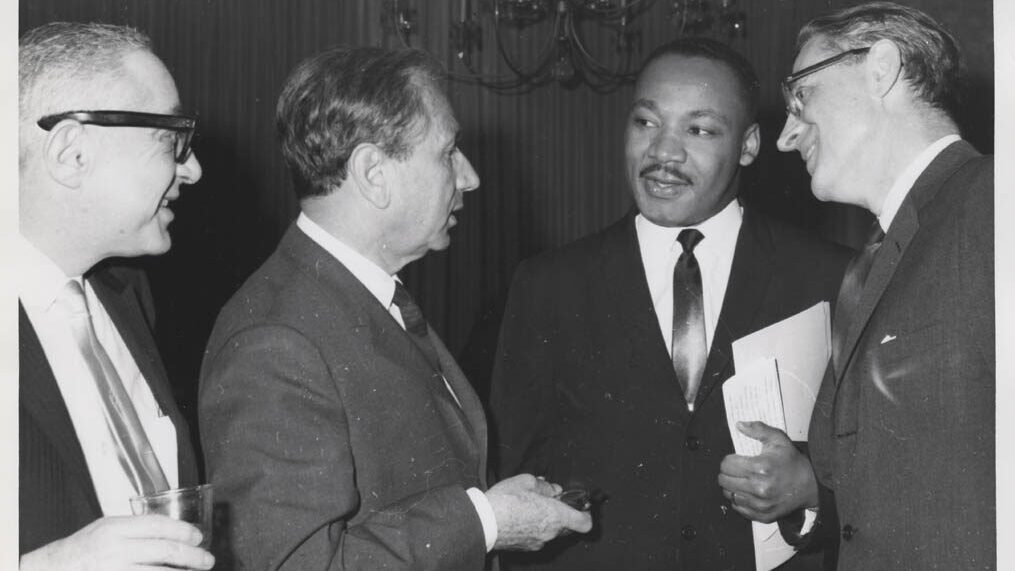
While the majority of grassroots Black Americans who participated in the Southern freedom struggle identified as Protestant Christians, there were other religious traditions present, from the Nation of Islam to the Greek Orthodox Church, to the Baháʼí Faith, pushing and pulling the movement in productive directions. Many Jewish college students came to the South with SNCC and CORE to work for change, people like Howard Zinn, Joni Rabinowitz, Zev Aelony, as well as Michael Schwerner and Andy Goodman, who were both killed in Mississippi in 1964.38 Rabbi Abraham Joshua Heschel offered theological power to arguments for racial equality. After marching alongside Black activists, he remarked, “my legs were praying.” Yarmulkes were so ubiquitous during marches that one rabbi joked they were “becoming fashionable”; the so-called “freedom cap “was the “hottest item” in Selma.39 Sister Mary Antonia Ebo also marched in Selma, declaring, “I am here today because I am a Negro, a nun, a Catholic, and because I want to bear witness.”40
.jpg)
The Catholic Church had issued a statement on civil rights in 1963, “On Racial Harmony,” which proclaimed, “the heart of the race question is moral and religious.” “No Catholic with a good Christian conscience,” it stated, five days before the March on Washington for Jobs and Freedom, “can fail to recognize the rights of all citizens to vote…. equal opportunity for employment, full participation in our public and private educational facilities, proper housing, and adequate welfare assistance when needed.”41 While individual Catholics did not all embrace this moral call, the Church had made its position clear. It was not the first time it had done so in the 1960s.
IV. Vatican II
In 1962, Pope John XXIII convened more than 2,000 bishops from around the world for a meeting that became known as the Second Vatican Council, or Vatican II. For more than three years, even after the Pope’s death, a remarkably unified group of Church leaders debated doctrinal reaffirmations and changes from St. Peter’s Basilica in Rome. With “a new enthusiasm, a new joy,” the ecumenical council sought that “certain and immutable doctrine…be studied afresh and reformulated in contemporary terms.”42 The 16 documents that emerged from Vatican II were stunning, invigorating, and, in some cases, controversial. They included defenses of religious liberty (Dignitatis Humanae), calls to ecumenicism (Unitatis Redintegratio) and religious dialogue (Nostra Aeate). They also radically altered Catholic practice, opening and simplifying the sacramental rites, loosening dietary requirements, and allowing for more musical styles and instrumentation, the so-called “guitar masses.”
Most importantly, though, Vatican II called for a vernacular mass, so that people could hear the prayers and the gospel in their native languages. The priests, now facing the people versus populum, spoke directly to the laity, who assumed a much more active participatory role in the life of the Church. “I was 12 or 13 when the changes at Vatican II began,” Jeanne McDermott recalled, “it had a big impact…you had more of a connection to what was going on. The Mass became more meaningful, more real to me.”43
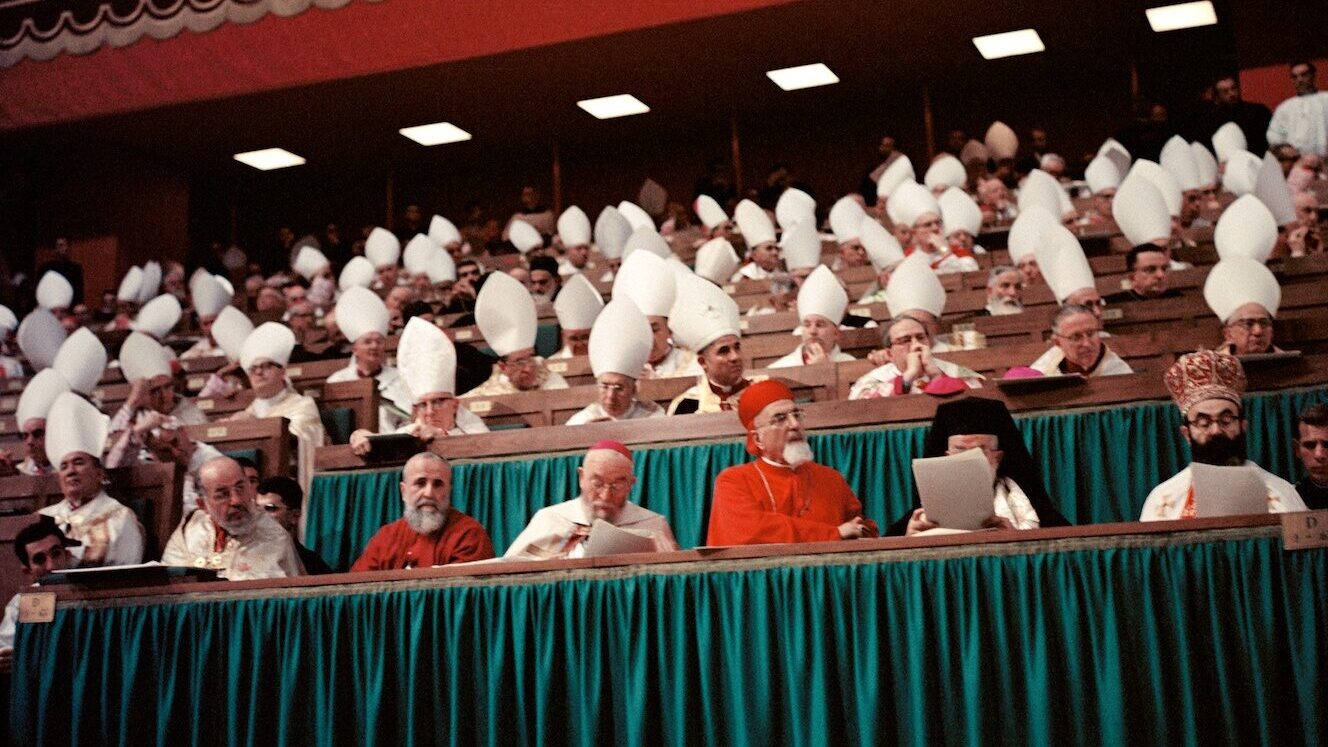

Some factions resisted the changes, like the Catholic Traditionalist Movement, founded in 1964, which insisted on the strict use of Latin. Anita Nelson of Encino, CA described this tension. “In the old days as a little girl I had to read my missal to know what the priest was saying,” she remembered. Vatican II “alienated some people[who] really wanted that strong Latin rite,” but also meant that “children growing up now can hear what the priest is saying. And turning the priest to facing us made him part of us.”44 Catholics began embracing new “spiritual gifts,” including those associated with movements of the Holy Spirit, setting off a small but significant Catholic charismatic movement. By the time, Vatican II concluded in 1965, the Church was transformed, even as it retained traditional views on many social doctrines, including around gender and sexuality.
V. New Migrants
1965 proved to be a year of massive change not only in the Church but also in American politics. After Kennedy’s assassination in November 1963, Texan Lyndon B. Johnson had assumed the Presidency and championed the Civil Rights Act of 1964 and, after the March from Selma to Montgomery, the Voting Rights Act of 1965 into law. But there was another piece of legislation adopted that year: the Immigration and Nationality Act of 1965, or Hart-Celler Act.
This massive immigration reform bill abolished the racial quotas established in the 1924 Immigration and National Origins Quota Act and instead set a total limit on migration regardless of nationality, with preference given for family unification and those possessing skills “advantageous” to the United States. It also set a limit on migration from the Western Hemisphere, for the first time. When President Johnson signed the bill into law on Liberty Island in New York, he proclaimed it “abolished…the harsh injustice of the national origins quota system.” Vice President Hubert Humphries declared that the reform, along with recently passed civil rights legislation, dispelled the notion that “there are second-class people” in America.45 But few lawmakers anticipated the seismic shift in demographics that would accompany Hart-Celler, in particular the long-term effects of family visas. For instance, in 1960, there were just 11,000 Koreans in the United States, 1,700 Pakistanis, and 17,000 Indians; by 2000, these groups would experience increases of 7755%, 13018%, and 5782% respectively.46
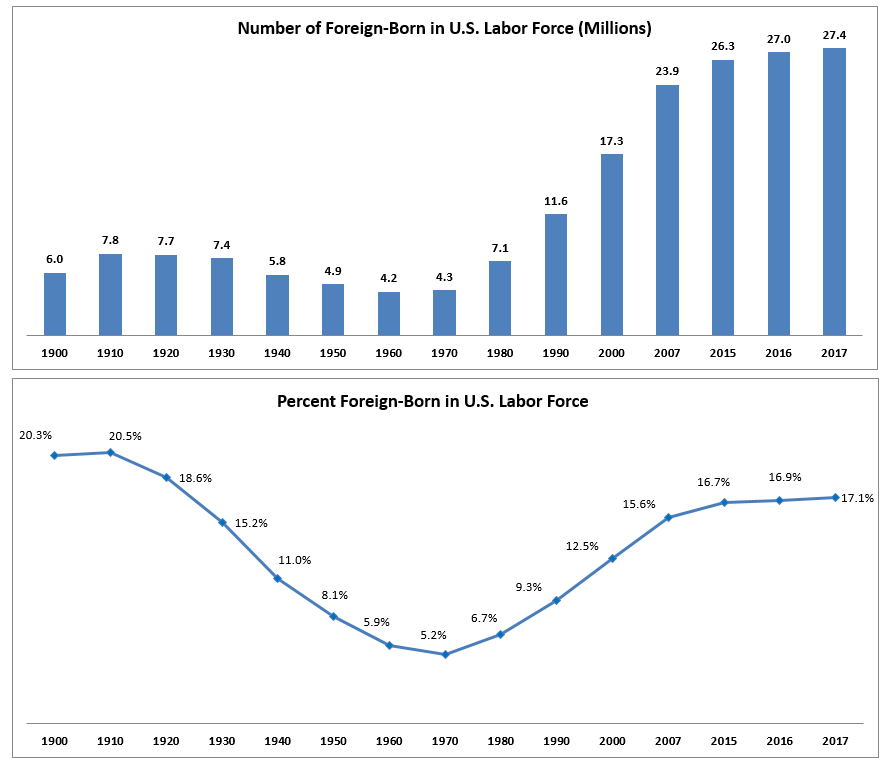

Without intending to, Congress had created an opening for the migration and citizenship of people possessing not only new national origins, but diverse religious commitments, including Muslims, Sikhs, Buddhists, Taoists, and Hindus, as well as Christians and Jews from around the world.
In 1963, Muslim graduate students at eleven land grant universities across the rural Midwest, who were recruited into scientific and technological fields from across South Asia and the Middle East, founded the Muslim Student Association (MSA) at the University of Illinois Urbana-Champaign. Initially, this small group gathered together simply to fulfill their basic religious obligations, namely communal prayer on Fridays. But following the passage of the Hart-Celler Act of 1965, the organization expanded rapidly. By 1968, the MSA had nearly 100 branches in universities across the United States.
In this period, the MSA emphasized protecting cultural practices, resisting Americanization, particularly around consumerism and gender, and creating an immigrant umma, a religious community undivided by sectarian and ethnic divisions. Energized by this vision of a more universalist Islam, early MSA members worked outside of American universities to start mosques and schools, to offer social services for Muslims in America and fundraise for Muslims around the world suffering from poverty, suppression of religion, and war. They imagined Islam as providing a “third way” between Soviet communism and liberal democratic capitalism, open to partnerships with other religious Americans.47
More and more, those religious Americans included practitioners of Asian religions. While many of these religious traditions had existed in the United States previously, their prevalence and influence increased significantly in the 1960s. For example, Sikhs, from the Punjab region of India, had been present in America in small numbers, as was the case with Bhagat Singh Thind, who petitioned for citizenship in 1923, and Iate Dalip Singh Saund, of California, who became the first Asian elected to the House of Representatives in 1957. But after 1965, Sikhs migrated in higher numbers. In 1965, Sikhs in New York City established a Sikh Cultural Center and later a gurdwara, or temple, in what had once been a Baptist Church.48
In 1968, Harbhajan Singh Puri, known as Yogi Bhajan, immigrated to the United States, starting a movement to help people become “healthy, happy, and holy” and also teaching the practice of yoga and meditation. Taoism similarly experienced growth post-1965. Though the Taoist Tin Hou Temple in San Francisco was initially constructed in the 1850s, immigration exclusion led to its closure until Hart-Celler, after which it was able to reopen due to new arriving practitioners.
In 1963, James R. Ware published a new edition of The Sayings of Chuang Tzu, popularizing Taoist ideas. Buddhist practice, too, experienced a resurgence in the 1960s. In 1965, Philip Kapleau published The Three Pillars of Zen: Teaching, Practice and Enlightenment, which introduced a broad audience to Buddhism, and in 1966, Sri Lankan monks founded the Washington Buddhist Vihara in D.C., the first Theravada Buddhist community in the United States. British-born Alan Watts played a large role in popularizing what he referred to as Eastern religions, which captured his attention following an encounter with Zen Buddhist D.T. Suzuki. After moving to California and joining the American Academy of Asian Studies, Watts wrote The Way of Zen in 1957, which would become a bestseller. In 1960, he recorded a TV show, “Eastern Wisdom and Modern Life,” which aired on KQED in San Francisco.
Korean newcomers were overwhelmingly Protestant, namely Presbyterian and Methodist. And while they had had churches in Hawaii since the turn of the century, in the 1960s, Korean immigrants founded numerous ethnically Korean churches that held services in Korean throughout the country. The same was true for Japanese American Christians. Take Paul Nagano, the Los Angeles-born minister who, during internment, preached on “the Circuit” from camp to camp, and afterwards founded the Japanese Baptist Church in Boyle Heights, CA.49 Ethnic congregations eventually came together to form “Asian caucuses” within several Protestant denominations.50
The expression of religious identity often converged with political movements for ethnic recognition, like the Asian American Movement (formerly the Asian American Political Alliance), founded by Yugi Ichioka and Emma Gee at Berkeley in 1968. Lloyd Wake and Roy Sano were both Japanese American ministers, and later bishops, in the United Methodist Church who joined the Asian American Movement not in spite of their religious beliefs, but “as a part of their faith witness as Asian Americans.”51 It started after the bombing of Pearl Harbor, when Wake was 20 and Sano a teenager. Despite the fact that both men were US-born citizens, they were rounded up and sent with their families to the Poston Internment camp in Arizona.
This experience of state-sponsored incarceration stayed with them as they began their ministries. Wake left Poston for Asbury Seminary in Kentucky, later transferring to Berkeley Baptist Divinity School. Sano, after Quakers helped him leave the camp, began as a youth minister in Pennsylvania before going to Union Theological Seminary in New York. But as they studied theology and ministered to others, they integrated their Japanese American identities and experiences. So, in 1968, when the Asian American Movement began on the Berkeley campus, Wake and Sano joined in protesting for ethnic studies programs, despite being decades older than the students. Wake framed it in terms of his faith; he was practicing “real religion” by “doing justice and living out one’s commitment to a better society.”52 For Wake and Sano, their experiences of racial oppression and incarceration informed their understanding of Christianity and its practice. They were not alone in this conclusion.
VI. Liberation
Liberation theology is a theological movement that insists on interpreting Christianity through the lived experiences of the oppressed. As Gustavo Gutierrez wrote in A Theology of Liberation, it is “based on the gospel and the experiences of men and women committed to the process of liberation in the oppressed and exploited land of Latin America…to build a different society, freer and more human.”53 While Gutierrez’s ideas emerged out of an anticolonial context in Latin America, notions that God was on the side of the poor and oppressed soon took hold in the United States.
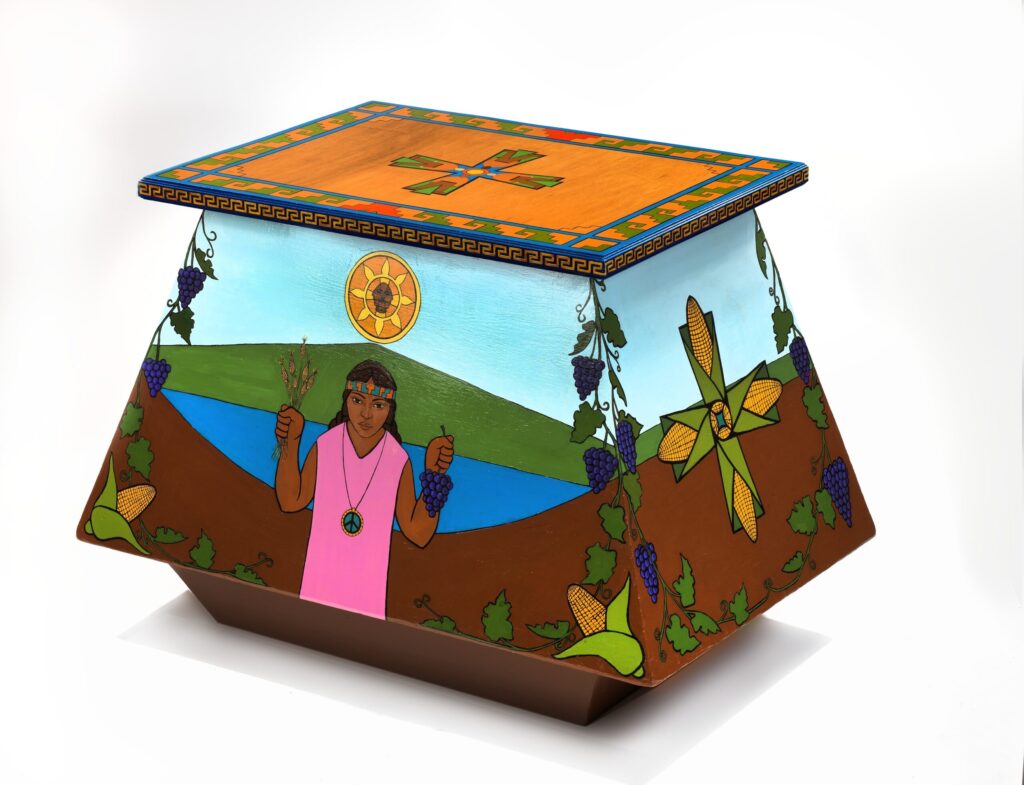
In March 1966, striking California farmworkers and their supporters began a 25-day pilgrimage from Delano to Sacramento. Led by a fasting Cesar Chavez, the grape harvesters were not just requesting labor rights, but were on a “religious march,” walking under banners that read “Pilgrimage, Penance, Revolution,” and ones bearing Our Lady of Guadeloupe, a cross, and the star of David. The farmworkers framed their struggle for economic justice, in this case increased wages and better working conditions, as fundamentally religious.54
For decades, farmworkers had faced harsh working conditions, low wages, no benefits, and a lack of union protection. But in 1962, experienced union organizer Dolores Huerta, along with Chavez and Gilbert Padilla, co-founded the National Farm Workers Association (NFWA). Based in Delano, the union organized a successful strike on behalf of rose grafters and soon attracted around 1200 members. When Chuck McDew, of the Student Nonviolent Coordinating Committee, arrived in California, he was excited to hear about the NFWA. While Huerta knew how to organize workers and negotiate with companies, McDew offered advice about nonviolent protest and garnering attention for the cause. “SNCC people were the only ones that really had any kind of concept about what to do,” farmworker Eliseo Medina recalled, “particularly in things like marches and demonstrations and all those tools of the Civil Rights movement, hell, we didn’t have a clue.”55
That changed in 1966. The previous year, Filipino grape pickers in the Agricultural Workers Organizing Committee (AWOC) faced a series of labor issues and in September of 1965 decided once again to go on strike. This time they were joined by the NFWA, forming a broad movement for workers’ rights (later the United Farm Workers) that culminated with the pilgrimage. Chavez hoped that the religious exercise, which ended on Easter Sunday 1966, would “call the entire nation to penance.”56 In his “Plan of Delano,” Chavez quoted Pope Leo XII’s admonition that “it is neither just nor human to oppress men with excessive work” and added, emphatically, “We seek, and have the support of the Church in what we do. At the head of the pilgrimage, we carry LA VIRGEN DE LA GUADELOUPE because she is ours, all ours, Patroness of the Mexican people. We also carry the Sacred Cross and the Star of David…GOD SHALL NOT ABANDON US.”57
Recently, Chavez’s sexual abuse of women and girls, including Dolores Huerta, has become publicly known, marring his reputation and also illuminating the persistent misogyny present in the 1960s, even in justice movements. The women who came forward told the New York Times that “the story of Chavez was their story,” pointing attention to “the women who marched beside the men, worked in the fields, took care of the children.”58
This sense of being overlooked and mistreated was echoed by women in the Black freedom struggle and others who began to reconsider Christianity in light of their gendered experience. Following the 1963 publication of Betty Friedan’s landmark The Feminine Mystique, women began to more openly discuss the stifling expectations and societal limitations they faced. Soon the “problem that has no name” had one: sexism.59
This critique extended to the male-dominated church, which had marginalized women in leadership and denied their full humanity. In 1968, Catholic theologian Mary Daly published The Church and the Second Sex, in which she made a “case against the church.” The Catholic church, she said, had refused “to adapt its structures to the condition of modern women, still preaching to them the passive virtues of obedience, submission and meekness, while seeming to refuse or ignore the profound aspirations of half the human race to liberty and full personhood.”60 Protestant women joined Daly in her critique, pressing for new theological perspectives and ordination. The challenges of sex discrimination were compounded for racially marginalized and LGBTQ Americans who also began asserting liberationist theologies and reinterpreting the Bible to include their lived experiences.
One of these was Pauli Murray, a multiracial Black, queer lawyer, activist, writer, and later, Episcopal priest. Raised in North Carolina, Murray left for college in New York at 16, where she was exposed to Marxist organizing. Her interest in equality led her to the nascent fight for civil rights. Murray challenged segregation in higher education, wrote about discrimination, earned a law degree, and joined the Fellowship of Reconciliation, CORE, and the NAACP, though she was sidelined by organization leaders because of suspicions around her sexuality.
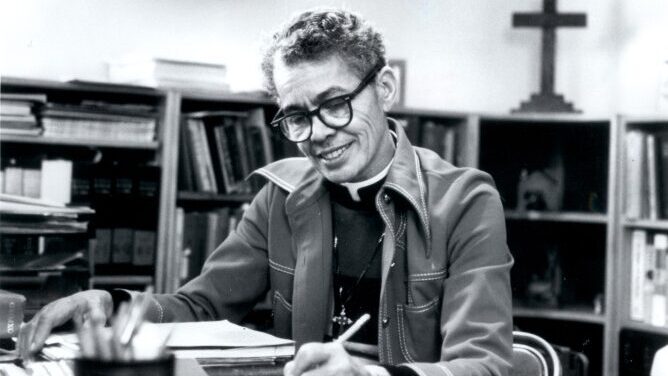
In 1961, President Kennedy appointed Murray to the Presidential Commission on the Status of Women, a committee chaired by Eleanor Roosevelt. Even as she worked for Black freedom alongside leaders like Martin Luther King, Jr., Bayard Rustin, and A. Philip Randolph, Murray continued to identify the ongoing sidelining of women. A few months after the 1963 March on Washington for Jobs and Freedom, where King had famously intoned, “when we let [freedom] ring … we will be able to speed up that day when all of God’s children, black men and white men, Jews and Gentiles, Protestants and Catholics, will be able to join hands and sing in the words of the old Negro spiritual, “Free at last, Free at last, Great God a-mighty, We are free at last,”61
Pauli Murray gave a speech of her own. Upset by the omission of women in the March (and in the speech), Murray called out “the dual burden of Jim Crow and Jane Crow.” She noted “the tendency to assign women to a secondary, ornamental or ‘honoree’ role instead of the partnership role” within the civil rights movement and encouraged Black women to “no longer postpone or subordinate the fight against discrimination because of sex to the civil rights struggle” but to “carry on both fights simultaneously.”62
Pauli Murray’s relentless pursuit of human equality–and her complex personal identity– meant that she was forced to confront intersectional discrimination; her faith provided a compelling response. “When I truly believe that God is my Father and Mother, in short, my Creator, I am bound also to believe that all men, women, and children of whatever race, color, creed, or ethnic origin are my sisters-and-brothers-in-Christ,” she said. “To think of oneself as a child of God is a liberating experience—it is to free oneself from all feelings of inferiority—whether of race, or color, or sex, or age, or economic status, or position in life.”63
In A Black Theology of Liberation, Union Seminary theologian James Cone agreed that Christianity “is essentially a religion of liberation,” but, he explained, “in a society where persons are oppressed because they are black, Christian theology must become black theology.” Black theology, according to Cone, who also wrote Black Theology and Black Power (1967), “is unreservedly identified with the goals of the oppressed,” since God is a God “of and for those who labor and are overladen.” Throughout Scripture, God not only identified with the poor and oppressed Israelites but had intervened to free his covenant people, from the Exodus through exile, to reveal his character. Jesus, as God’s full revelation, likewise came to save and to liberate, to offer spiritual salvation and also to heal the sick, liberate the shackled, and bring good news to the poor.64 Other Black theologians, like Albert Cleage of the Shine of the Black Madonna in Detroit and J. Deotis Roberts of Howard University, joined Cone in developing an expansive theology that honored the Black experience. Cleage excavated a historical Jesus who was, in his description, a “non-white leader of a non-white people struggling for national liberation against the rule of a white nation” while Roberts pressed for “liberation and reconciliation.”65
While specific applications varied, Black Christians grappled with understanding Christianity in relationship to mounting calls for Black Power. In 1966, at a march in the Mississippi Delta, SNCC Chairman Stokely Carmichael defiantly shouted “Black Power!,” a phrase previously uttered by fellow activist Willie Ricks, marking a turning point in the freedom struggle from interracialism towards separatism.
That same year, around fifty Black clergy calling themselves the National Committee of Negro Churchmen signed a statement, published in the New York Times, entitled “Black Power.” In it, they expressed sympathy for the historical conditions that created the “anguished” call for Black Power and condemned “the failure of American leaders to use American power to create equal opportunity in life as well as in law.” The way forward, these clergy insisted, was for white American political leaders and church leaders to begin sharing power with Blacks equally.66 In 1969, the (renamed) National Committee of Black Churchmen, which then boasted over 300 members from 12 denominations, issued another statement, “Why Black Theology?” Black theology, they explained, “seeks to plumb the black condition in light of God’s revelation in Jesus Christ,” it is “the affirmation of black humanity that emancipates black people from white racism,” and it is one that Christ “requires” since “Jesus is the Liberator!”67
For these clergy, Cone, and others, Black liberation theology sought to answer the question, using biblical revelation, of what God “has to say about the Black condition…more importantly, what is God doing about it?” Or, as Howard Thurman put it, to address what the religion of Jesus has to say to “the masses of men with their backs constantly against the wall?”68 Even after the Civil Rights Act of 1964 and Voting Rights Act of 1965, many Black Americans still found themselves with their backs against the wall. While some looked to Cone’s liberationist gospel, others embraced the ethos of poet Claude McKay, “like men we’ll face the murderous, cowardly pack,/pressed to the wall, dying, but fighting back!”69
VI. Countercultures
In some ways, Black theology was a response not only to segregationist white Christianity, but to separatist movements like the Nation of Islam. Years before Albert Cleage wrote The Black Messiah or James Cone declared “Jesus is Black,” Malcolm X had already dismissed “a white Christ.”70
Born Malcolm Little to a father who was both a Baptist minister and a follower of the Universal Negro Improvement Association’s Marcus Garvey, the tension between Christianity and Black separatism was always present. Then, while serving a 10-year prison sentence, Malcolm encountered the teachings of Elijah Muhammad and the Nation of Islam (NOI). Drawing upon Islam, as well as influences from the Moorish Science Temple, Jehovah’s Witnesses, and the UNIA, founder Wallace D. Fard (Farad Muhammad) began teaching his neighbors in Detroit in the 1930s that Christianity was a white religion and that they, as Moors and Afro-Asians, should rightfully follow Muhammad and reject white culture and beliefs.
Elijah Poole, later Elijah Muhammad, was convinced and later took over the movement after Fard’s disappearance. He spread the NOI’s message of Black self-determination and communal power throughout Chicago, established numerous businesses for followers, and published a paper. The paper, Muhammad Speaks, circulated ideas that captivated Malcolm and caused him to dedicate his life to the cause upon being released from prison in 1952.71 Minister Malcolm X was a zealous convert and an eloquent evangelist. He lambasted “the devil white man” and his Christianity, which had taught Blacks to “worship an alien God having the same blond hair, pale skin, and blue eyes” and to “always turn the other cheek.”72
Thus, Malcolm was critical of the nonviolent civil rights struggle and of Martin Luther King’s efforts. “Whoever heard of a revolution where they lock arms… singing ‘We Shall Overcome ‘?” he asked an audience in 1963. “You don’t do that in a revolution. You don’t do any singing, you’re too busy swinging…A revolutionary wants land so he can set up his own nation, an independent nation. These Negroes aren’t asking for any nation – they’re trying to crawl back on the plantation.”73 Instead, he called on Blacks in America to arm themselves and fight back, famously claiming that it would need to be “the ballot or the bullet.”74 In 1964, though, Malcolm X broke with Elijah Muhammad and, following a hajj to Mecca, with the NOI’s Black supremacist version of Islam, though he remained committed to Pan-Africanism. He embraced a more universal Islam and also began to move towards King’s nonviolent interracial vision, though how far is unknown, since he was murdered in 1965. By then, his ideas and those of the Nation of Islam promoting Black separatism had already proven influential.
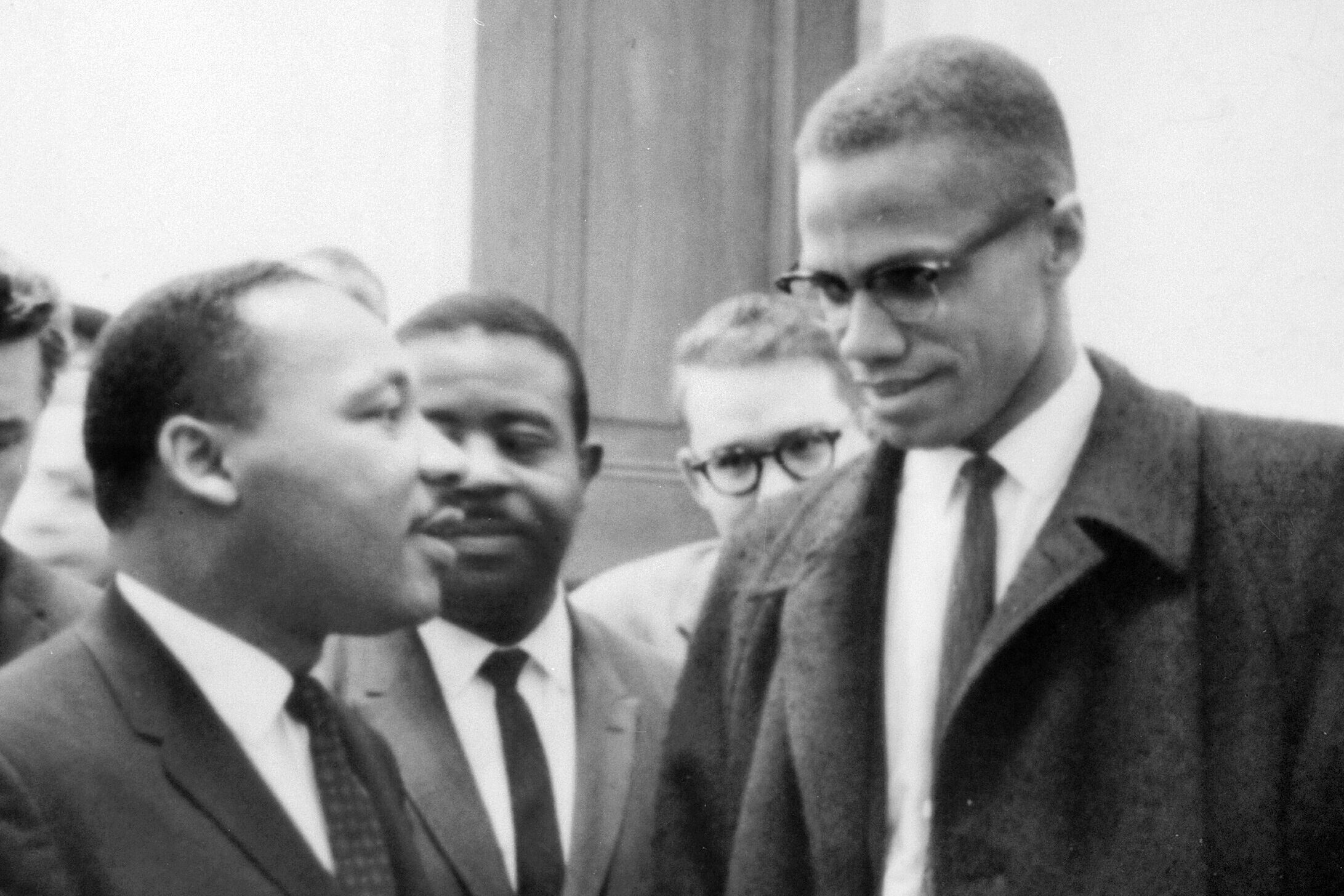
Across the United States, the Black Panther Party (BPP), a majority female organization of revolutionary Marxists, established dozens of chapters. The BPP aimed to raise the political conscience of Black People toward revolution, while implementing a series of “survival programs” designed to meet the material and care needs of the community.
Perhaps surprisingly, churches proved crucial to the success of these programs. The notable free breakfast for school children program, for instance, began in the basement of St. Augustine’s Episcopal Church in Oakland, California and expanded nationally due to support from dozens of churches.75 The rector of St. Augustine’s, Rev. Earl Neil, the “Minister of Religion of the Black Panther Party,” spoke at the Panthers’ United Front Against Fascism conference and joined the Panthers’ lawsuit against the federal government when the FBI’s Counterintelligence Program (COINTELPRO) became known.76
Other religious leaders across the country contributed to the Black Power movement directly from the pulpit. In Illinois, Baptist minister Charles Koen led the United Front of Cairo in a strategy of armed self-defense against the White Citizens Council, while in Chicago, Black Catholic priests held “Black Unity Masses.”77 Still others within the Black Power movement found strength in non-Christian religious traditions. Black Panther leader Ericka Huggins adopted yoga while a political prisoner, while Huey Newton explored Zen Buddhism.78 Various religious traditions contributed to the Panthers’ rejection of racial inferiority and embrace of Blackness as powerful and beautiful.
They were not the only group to do this in the late 1960s. While a smaller movement, American Indians, too, celebrated their Indigeneity and ancestral religious practices. In 1964, five Sicangu Lakota Indians declared Alcatraz Island rightfully Indian Land, a short-lived precursor to a longer occupation of the island in 1969. These “Indians of all Tribes,” led by Richard Oakes, told the authorities: “The choice now lies with the leaders of the American government—to use violence upon us as before to remove us from our Great Spirit’s land, or to institute a real change in dealing with the American Indian.”79 These activists declared their intention to “reinforce the traditional Indian way of life” which included, among other cultural retentions, founding a “religious and spiritual center.”80
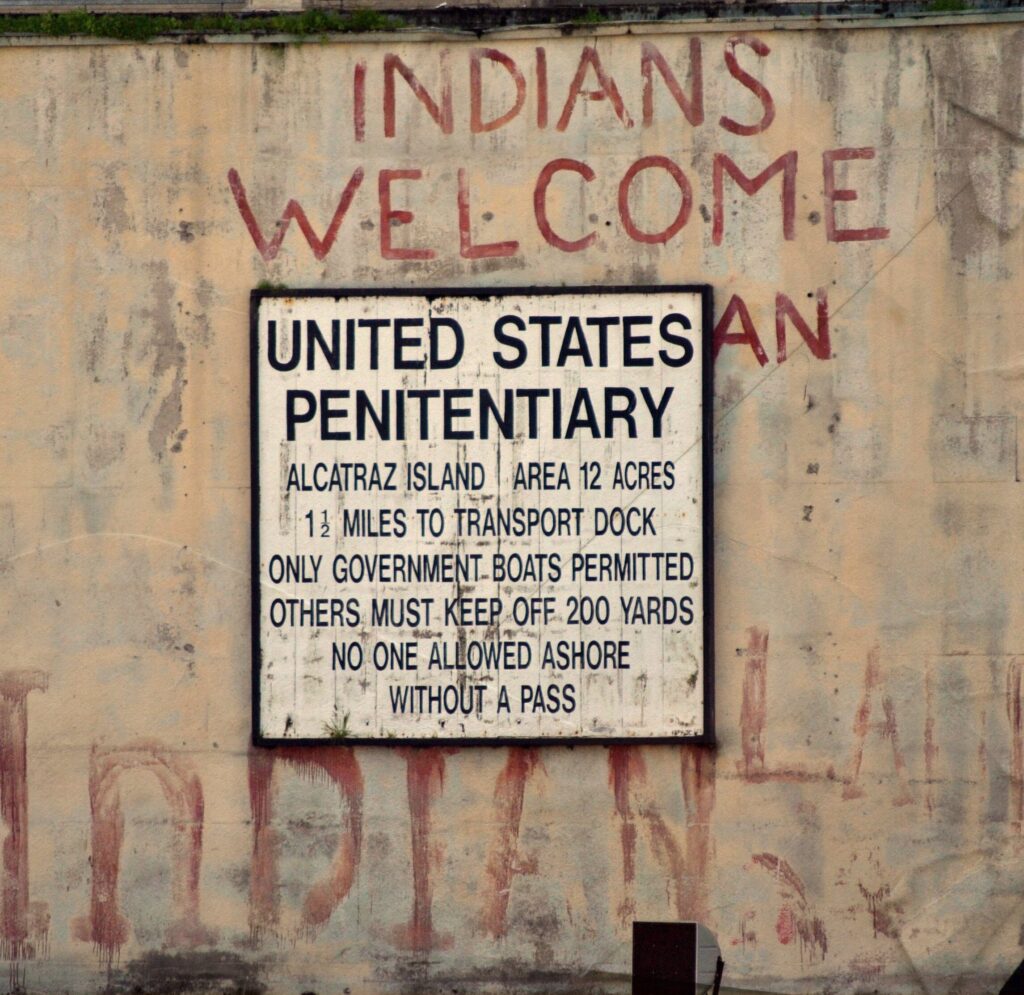
Retaining religious practices was an important part of what became known as the American Indian Movement (AIM). Following decades of persecution, forced conversion, and misunderstanding, American Indians in 1918 had formed the Native American Church, an invented, syncretic structure that codified diverse beliefs and coalesced various practices into one religion for the purpose of gaining protections under the First Amendment. One of these practices was the sacramental use of peyote, a cactus that contains the hallucinogen mescaline, so much so that the Native American Church sometimes adopted the name the Peyote Road.
It wasn’t just American Indian practitioners who used peyote in the 1960s; the so-called hippies did too. In the late 1960s, many young people spurned the institutions and mores of their parents and formed a counterculture. Though this counterculture encompassed a range of social movements and causes, it united around a rejection of materialism, traditionalism, and the establishment, including, of course, the church. Hippies emphasized authenticity, personal freedom, and experimentation, flocking to what became known as New Religious Movements (NRM). 81
Many of these religious movements were not new at all, but eastern philosophies and religions transplanted to the West Coast by new immigrants, which white Americans perceived as offering a more authentic and experiential form of spirituality. For example, the Hare Krishna movement, formally known as the International Society for Krishna Consciousness (ISKCON) and founded by A.C. Bhaktivedanta Swami Prabhupada, introduced many Americans to the devotional practices of Hinduism, including chanting, meditation, and vegetarianism.82 Hare Krishna gained even more popularity after poet Allen Ginsberg and Beatle George Harrison both publicly aligned themselves with the movement. The Beatles also expressed interest in The Transcendental Meditation (TM) movement popularized by Maharishi Mahesh Yogi, which promised inner peace and a higher state of consciousness.83
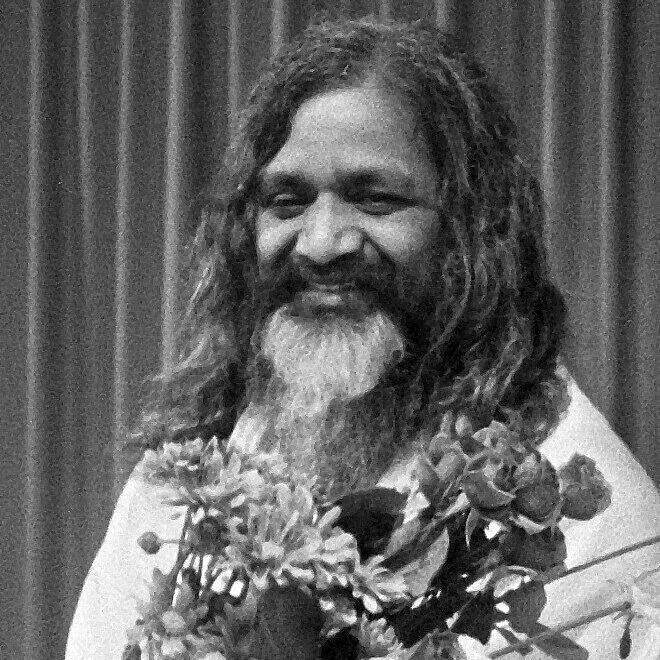
Other ancient and esoteric spiritual traditions, such as mysticism, occultism, and paganism, garnered newfound interest. Countercultural Americans also viewed the use of mind-altering drugs, such as peyote, LSD, or mushrooms, as a way to experience authentic religious experience or transcendence. Taken together, for many hippies, new religious movements offered deep fulfillment as an appealing spiritual alternative to Western materialism and staid institutional religion.
But many within traditional religions also questioned American institutions in the 1960s, particularly around the ongoing war in Vietnam. In April1967, Martin Luther King, Jr. gave a speech, “Beyond Vietnam,” “I come to this magnificent house of worship tonight because my conscience leaves me no other choice,” King began, with John Bennett, the President of Union Seminary, and Rabbi Abraham Joshua Heschel sitting beside him. “A time comes when silence is betrayal. And that time has come for us in relation to Vietnam.” The war had revealed the United States to be, “the greatest purveyor of violence in the world today,” King stated. It was a “demonic destructive suction tube” taking resources from the American poor and stealing precious lives, both American and Vietnamese. Addressing his critics, King pledged allegiance not to his country but to his God: “Have they forgotten that my ministry is in obedience to the One who loved his enemies so fully that he died for them?”84
King was speaking on behalf of the Clergy Concerned about Vietnam, a group of around 100 religious leaders founded in 1965.85 Mainline denominations and organizations were involved, including Lutherans, Presbyterians, Episcopalians, Methodists, Baptists, United Church of Christ, and the National Council of Churches.
One of the most prominent members was Father Daniel Berrigan. A Jesuit priest ordained in 1955, Fr. Berrigan served in WWII before becoming active in the civil rights struggle and adopting Christian pacifism. He was arrested several times, including, notoriously, when he and other anti-war activists, including his brother Father Phillip Berrigan, known as the Catonsville Nine, made homemade napalm and burned hundreds of draft records from a draft board in Maryland.86 In a statement, Berrigan defended “the burning of paper instead of children,” saying, “We could not, so help us God, do otherwise. For we are sick at heart, our hearts give us no rest for thinking of the Land of Burning Children. And for thinking of that other Child, of whom the poet Luke speaks.”87
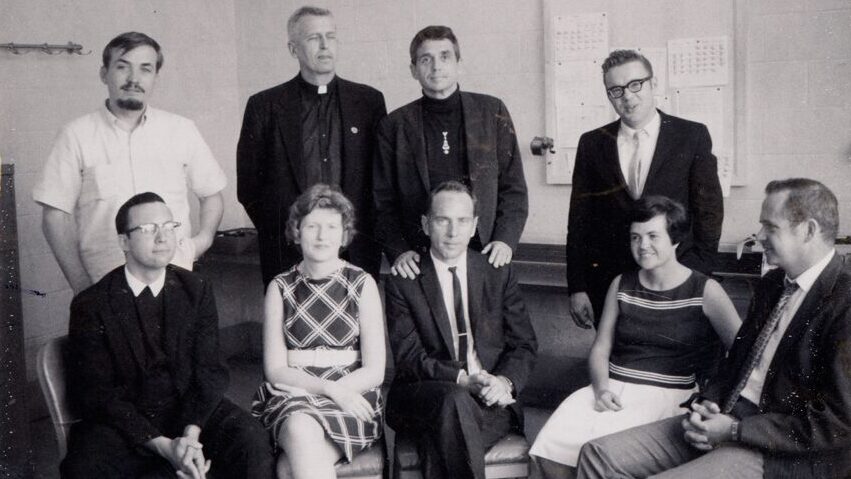
Though initially excluded from the CCVA, religious women, like Sister Elizabeth McAlister, were also actively involved in anti-war activities. In Los Angeles, the Sisters of the Immaculate Heart of Mary had protested the war since 1964. Carrying signs that read “God Likes Me,” and “Give us our Daily Bread,” nuns strummed guitars and called for “Peace, Peace, Peace.” Some critiques were more biting. In 1963, folk hero Bob Dylan penned the haunting “Masters of War,” in which he asked those who “build the bombs” and “hide behind desks,” “Is your money that good?/ Will it buy you forgiveness/Do you think that it could?” Dylan offered a scathing answer:” there’s one thing I know/Though I’m younger than you/ That even Jesus would never/Forgive what you do.”88
Ted Wise gave a presentation about the music of Bob Dylan in 1967—during a Wednesday night prayer meeting.89 A Bay Area native, Wise, along with his wife Elizabeth, had been early to the hippie scene, living on a “Beat commune,” doing drugs, and discussing art and philosophy with others in the counterculture. But while Ted was tripping and carousing, Elizabeth began quietly attending the First Baptist Church of Mill Valley in 1964. “She came back from church just glowing,” Ted claimed, while he was becoming increasingly convinced, usually while high, of his own defects in character. He decided to read the New Testament. “I just got fascinated with Jesus,” Ted recalled of his reading, “Jesus knocked me off my metaphysical ass.” One night in 1965, Ted and Liz, tripping on LSD, went to a party where Ted just started informing his fellow revelers that “Jesus is Lord.” Still high, he did the same thing the next morning in the middle of the service at First Baptist, befuddling the pastor, John MacDonald, who had been a classmate of Billy Graham’s at Wheaton.90
The Wises continued to go to the church and brought their friends, “a nucleus of hip, Bible-fixated, evangelically inclined Christians,” that blossomed into a movement known as the Jesus People, or the “Jesus Generation.”91 These Jesus people identified the counterculture’s desire for authenticity and community in Christianity, preaching to fellow hippies in Haight Ashbury and on the California beaches and living in Christian communes where, like the early church, “all things were held in common.”92 Evangelical churches like His Place on the Sunset Strip, Hollywood Presbyterian Church, the Alamo Foundation in LA, and Calvary Chapel in Costa Mesa began welcoming thousands of young hippies flashing the “One Way” sign rather than the peace. The Jesus Generation not only captured a surprised public, as when a psychedelic Jesus appeared on Time magazine’s cover in 1971, but spawned much of contemporary Christian music and evangelical culture.
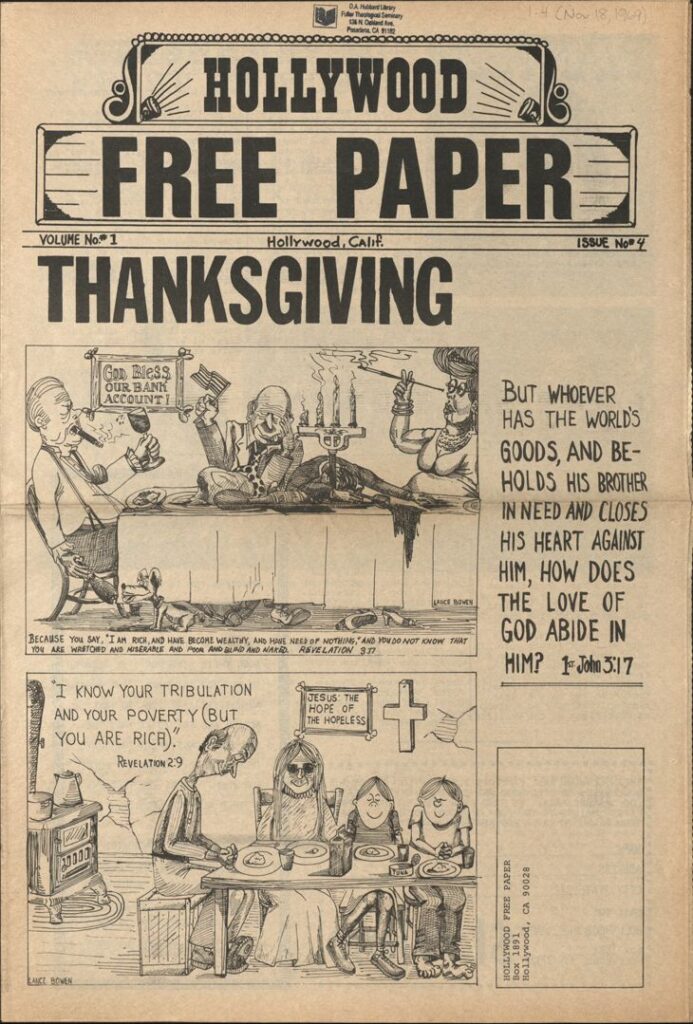
It produced, too, a new cadre of evangelical Christian ministers in different types of churches. The so-called “New Paradigm” churches and “seeker-friendly” megachurches rejected the liturgies, organs, and sportcoats of traditional Protestantism for a “come as you are” aesthetic where guitars strummed as blue-jean-clad pastors emphasized the gifts of the Holy Spirit.93 New ministries to college students emerged, as did works of intellectual apologetics promoting a Christian “worldview,” like Francis Schaeffer’s.94 Many of these congregations, though notably casual in style, were Fundamentalist in theology, producing in generations to come a powerful conservative cultural and political resurgence.
VII. Conclusion
This had already begun by 1968, when Richard Nixon ran a Republican campaign appealing to the “Silent Majority” of Americans who wanted an end to the revolutionary change of the 1960s and a return to “law and order.” Billy Graham, a close friend of Nixon’s, concurred. “The choice is ours,” he told American Christians, “with the election year coming up, American people want law, order, and security.”95
The theological civil rights movement, Vatican II, new immigrants and new religious movements, liberation theologies, and the counterculture had utterly transformed the nation over the previous years– leading to great freedom but also great instability. By the decade’s end, John F. Kennedy and Robert Kennedy were dead, Martin Luther King, Jr. and Malcolm X were dead, TIME magazine even suggested “God is dead.”96
But the story of American religions was not. In 1969, when the Apollo 11 mission became the first to land on the moon, Buzz Aldrin quietly celebrated the sacrament of Holy Communion on the lunar surface. Perhaps he was remembering not only the crucifixion of Jesus but the invocation of President Kennedy at the decade’s beginning: “we ask God’s blessing on the most hazardous and dangerous and greatest adventure on which man has ever embarked.”97
VIII. Reference Material
This chapter was edited by Ansley Quiros, with content contributions from Chris Babits, Lilian Calles Barger, Matthew J. Cressler, Justine Howe, Andrea S. Johnson, Connor Martini, Michael McLaughlin, Ansley Quiros, Ronit Y. Stahl, and Ben Wright
Recommended Reading
- Edwin Bryant and Maria L. Ekstrand, eds., The Hare Krishna Movement: The Postcharismatic Fate of a Religious Transplant (Columbia University Press, 2004).
- Matthew J. Cressler, Authentically Black and Truly Catholic: The Rise of Black Catholicism in the Great Migration (NYU Press, 2017).
- Edward E. Curtis, Black Muslim Religion in the Nation of Islam, 1960–1975 (University of North Carolina Press, 2006).
- Angela Denise Dillard, Faith in the City: Preaching Radical Social Change in Detroit (University of Michigan Press, 2007).
- Larry Eskridge, God’s Forever Family: The Jesus People Movement in America (Oxford University Press, 2013).
- Garrett Felber, Those Who Know Don’t Say: The Nation of Islam, the Black Freedom Movement, and the Carceral State, Justice, Power, and Politics (University of North Carolina Press, 2020).
- Carol George, God’s Salesman: Norman Vincent Peale and the Power of Positive Thinking (Oxford University Press, 1993).
- Sarah Barringer Gordon, The Spirit of the Law: Religious Voices and the Constitution in Modern America (Harvard University Press, 2010).
- Cheryl Greenberg, Troubling the Waters: Black-Jewish Relations in the American Century (Princeton University Press, 2006).
- Stephen Haynes, The Last Segregated Hour (Oxford University Press, 2012).
- Felipe Hinojosa, Apostles of Change: Latino Radical Politics, Church Occupations, and the Fight to Save the Barrio (University of Texas Press, 2021).
- Kevin M. Kruse, One Nation Under God (Basic Books, 2015).
- Carter Dalton Lyon, Sanctuaries of Segregation (University Press of Mississippi, 2017).
- Lerone Martin, The Gospel of J. Edgar Hoover (Princeton University Press, 2023).
- Charles Marsh, God’s Long Summer: Stories of Faith and Civil Rights (Princeton, 1997).
- Aldon D. Morris, The Origins of the Civil Rights Movement: Black Communities Organizing for Change (The Free Press, 1984).
- Mark Oppenheimer, Knocking on Heaven’s Door: American Religion in the Age of Counterculture (Yale University Press, 2003).
- Kerry Pimblott, Faith in Black Power: Religion, Race, and Resistance in Cairo, Illinois (University Press of Kentucky, 2017).
- Leslie Ribovich, Without a Prayer: Religion and Race in New York Public Schools (NYU Press, 2024).
- David Sehat, This Earthly Frame: The Making of American Secularism (Yale University Press, 2022).
- High B. Urban, New Age, Neopagan, and New Religious Movements: Alternative Spirituality in Contemporary America (University of California Press, 2015).
- Lola Williamson, Transcendent in America: Hindu-Inspired Meditation Movements as New Religion (NYU Press, 2010).
Notes
- Todd Gitlin, The Sixties: Years of Hope, Days of Rage (Bantam Books, 1987), 81. ↩︎
- Congressional Record (January 28, 1928), 1st Session, 70th Congress, vol. 69, pt. 2, 1654-55, 1658. ↩︎
- Carol George, God’s Salesman: Norman Vincent Peale and the Power of Positive Thinking, (Oxford University Press, 1993). See: Jon Butler, Grant Wacker & Randall Balmer, Religion in American Life: A Short History, second edition (Oxford, 2011) 364. ↩︎
- John F. Kennedy, Address to Protestant Ministers, Sep 12, 1960, John F. Kennedy Library. ↩︎
- Inaugural Address, Kennedy Draft, 01/17/1961; Papers of John F. Kennedy: President’s Office Files, 01/20/1961-11/22/1963; John F. Kennedy Library, National Archives and Record Administration. ↩︎
- Billy Graham, interview by Walter Cronkite, CBS Evening News, CBS, November 22, 1963. ↩︎
- See: Kevin Kruse, One Nation Under God (Basic Books, 2015). ↩︎
- Yearbook of American Churches Edition for 1960, 28th Issue, ed. Benson Y. Landis, National Council of the Churches of Christ in the United States of America, 1959. The Catholic Church claimed almost 40% of the 109 million American worshippers, while 61% were Protestant, with Methodists and Southern Baptists leading the way. ↩︎
- Will Herberg, Protestant-Catholic-Jew (Doubleday & Company, 1955), 1-3. ↩︎
- Robert N. Bellah, “Civil Religion in America,” Daedalus 134, no. 4 (October 1, 2005): 40–55. ↩︎
- See: Leslie Ribovich, Without a Prayer: Religion and Race in New York Public Schools (NYU Press, 2024). ↩︎
- Herberg, Protestant-Catholic-Jew, 3. ↩︎
- Torcaso v. Watkins, 367 U.S. 488 (1961), at 496. ↩︎
- Braunfield v. Brown, 366 U.S. 599 (1961); McGowan v. Maryland, 366 U.S. 420 (1961). ↩︎
- See: Sarah Barringer Gordon, The Spirit of the Law: Religious Voices and the Constitution in Modern America (Harvard University Press, 2010), 86; Paul G. Kauper, Prayer, Public Schools and the Supreme Court, 61 MICH. L. REV. 1031 (1963); https://repository.law.umich.edu/mlr/vol61/iss6/2. ↩︎
- Engel v. Vitale, 370 U.S. 421 (1962). ↩︎
- Abington School District v. Schempp, 374 U.S. 203 (1963). The court consolidated Schempp with a comparable case from Maryland, Murray v. Curlett. As historian David Sehat has observed, the Unitarian Schempp family was far more sympathetic than the Madalyn Murray, a divorced mother who appeared like a caricature of what “conservative religious leaders [w]ould invent [as] an antireligious zealot.” David Sehat, This Earthly Frame: The Making of American Secularism (Yale University Press, 2022), 161. ↩︎
- Bruce J. Dierenfield, “Engel v. Vitale,” in The Public Debate over Controversial Supreme Court Decision, ed. Melvin I. Urofsky (CQ Press, 2005). ↩︎
- Bruce J. Dierenfield, The Battle over School Prayer: How Engel v. Vitale Changed America (University Press of Kansas, 2007), 138; Ansley L. Quiros, God with Us: Lived Theology and the Freedom Struggle in Americus, Georgia, 1942–1976 (University of North Carolina Press, 2018), 137. ↩︎
- Ira C. Lupu, “Trouble with Accommodation,” George Washington Law Review 60, no. 3 (March 1992). See: John Witte Jr. and Eric Wang, “The New Fourth Era of Religious Freedom,” Hastings Law Journal 74, no. 6 (2023); Richard Schragger, Micah Schwartzman, and Nelson Tebbe, “Reestablishing Religion,” University of Chicago Law Review 91 (2024); David Sehat, This Earthly Frame; Gordon, The Spirit of the Law. ↩︎
- Interview, 1963, quoted in Dierenfield, Battle Over School Prayer, 147. ↩︎
- SNCC Statement of Purpose, April 17, 1960. See: Charles Marsh, The Beloved Community: How Faith Shapes Social Justice from the Civil Rights Movement to Today (Basic Books, 2005). ↩︎
- Handbill, “Albany Nonviolent Movement,” November 9, 1961. ↩︎
- Marsh, The Beloved Community, 4. ↩︎
- David J. Garrow, “Religious Resources and the Montgomery Bus Boycott,” Criterion 34, nos. 2-9 (1995): 2-9, 7, 9. ↩︎
- Quoted in David J. Garrow, Bearing the Cross: Martin Luther King, Jr., and the Southern Christian Leadership Conference (William Morrow Paperbacks, 2004), 79. ↩︎
- Quoted in Roger Bruns, Martin Luther King Jr.: A Biography (Greenwood, 2006), 70 ↩︎
- Dickerson, Dennis C. “African American Religious Intellectuals and the Theological Foundations of the Civil Rights Movement, 1930-55.” Church History 74, no. 2 (2005): 217–35. ↩︎
- Aldon D. Morris, The Origins of the Civil Rights Movement: Black Communities Organizing for Change (The Free Press, 1984),4. ↩︎
- Lerone Martin, The Gospel of J. Edgar The Gospel of J. Edgar Hoover: How the FBI Aided and Abetted the Rise of White Christian Nationalism (Princeton University Press, 2023), 229-233. ↩︎
- See: Carter Dalton Lyon, Sanctuaries of Segregation: The Story of the Jackson Church Visit Campaign(University Press of Mississippi, 2017); Stephen Haynes, The Last Segregated Hour: The Memphis Kneel-Ins and the Campaign for Southern Church Desegregation (Oxford University Press, 2012). ↩︎
- Quoted in Lerone Martin, The Gospel of J. Edgar Hoover, 222. ↩︎
- King, “Address Delivered at Albany Movement Mass Meeting at Shiloh Baptist Church,” Aug. 15, 1962, The Martin Luther King, Jr. Research and Education Institute, Stanford University. ↩︎
- “Billy Graham Urges Restraint in Sit-Ins,” New York Times, April 18, 1963. ↩︎
- “A Call for Unity,” April 12, 1963; see also: S. Jonathan Bass, Blessed are the Peacemakers: Martin Luther King Jr., Eight White Religious Leaders, and the “Letter from Birmingham Jail,” (Louisiana State University Press, 2001). ↩︎
- King, “Letter from a Birmingham Jail,” April 16, 1963. ↩︎
- Charles Marsh, God’s Long Summer: Stories of Faith and Civil Rights (Princeton, 1997), 2 ↩︎
- See; Cheryl Greenberg, Troubling the Waters: Black-Jewish Relations in the American Century (Princeton University Press, 2006); A Circle of Trust: Remembering SNCC (Rutgers University Press, 1998). ↩︎
- Abraham Joshua Heschel Papers, David M. Rubenstein Rare Book & Manuscript Library, Duke University. Rabbi Albert Hoschander Friedlander, quoted in Kate Collins, “Jewish Voices from the Selma to Montgomery March,” The Devil’s Tail: Dispatches from the David M. Rubenstein Rare Books & Manuscript Library, Duke University Libraries (2015). ↩︎
- Shannen Dee Williams, Subversive Habits: Black Catholic Nuns in the Long African American Freedom Struggle (Duke University Press, 2022), 2. See also: Amy Koehlinger, “Are you the White Sisters or the Black Sisters? Women Confounding Categories of Race and Gender,” in The Religious History of American Women, ed. Catherine Brekus (University of North Carolina Press, 2007). ↩︎
- “On Racial Harmony,” National Catholic Welfare Conference, August 23, 1963. See also: Karen Johnson, “Another Long Civil Rights Movement: How Catholic Interracialists Used the Resources of their Faith to Tear Down Racial Hierarchies,” American Catholic Studies 126, no. 4 (2015): 1–27. ↩︎
- The Encyclicals and Other Messages of John XXIII (TPS Press, 1964), 423-435. ↩︎
- “Other Reactions to Vatican II,” National Catholic Reporter, October 4, 2002, https://www.natcath.org/NCR_Online/archives/100402/100402k.htm. ↩︎
- “Other Reactions to Vatican II” National Catholic Reporter, October 4, 2002. ↩︎
- Tom Gjelten, A Nation of Nations: A Great American Immigration Story (Simon & Schuster, 2016), 114. ↩︎
- Gjelten, A Nation of Nations, 139. ↩︎
- Kambiz Ghanea Bassiri, A History of Islam in America: From the New World to the New World Order (Cambridge University Press, 2010); al-Ittihad, Muslim Students’ Association of the United States and Canada; A Handbook of the Muslim Students Association of the United States and Canada, Its Objectives, Functions, and Activities, Muslim Students’ Association of the United States and Canada, 1968; Maryam Kashani, Medina by the Bay: Scenes of Muslim Study and Survival (Duke University Press, 2023). ↩︎
- “Growing Sikh Community Celebrates 505th Anniversary of Founder’s Birth,” New York Times, Dec. 2, 1974. ↩︎
- See: Paul Nagano, “Paul M. Nagano’s Journey of Love and Community,” Journal of Asian and Asian American Theology 6 (2006); Karen Yonemoto, “Religion and Resistance: Reconstructing Ethnic Identity in Postwar Los Angeles, 1945–1950,” Journal of Asian and Asian American Theology 6 (2003–2004): 180–89. ↩︎
- Jane Hong, “How post 1965 migration changed US Christianity,” Center for Asian American Christianity, Princeton Theological Seminary, May 3, 2023. ↩︎
- Jane Hong, “The Asian American Movement and the Church: Laying the Foundations for Asian American Theology,” Theology Today 79, no. 4 (2022). ↩︎
- Helen Jin Kim, “Niseis of the Faith: Theologizing Liberation in the Asian American Movement” (B.A. Thesis, Stanford University, 2006), 55. ↩︎
- Gustavo Gutiérrez, A Theology of Liberation: History, Politics, and Salvation (Orbis Books, 1971. ↩︎
- Lloyd Barba, “Pilgrimage and Revolution: How Cesar Chavez married faith and ideology in landmark farmwokers march,” The Conversation, March 28, 2023. See also Barba, “More Spirit in that Little Madera Church,” California History 94, no. 1 (2017): 26-42. ↩︎
- “National Farm Workers Association (NFWA),” SNCC Digital Gateway; See: Lauren Araiza, To March for Others: The Black Freedom Struggle and the United Farm Workers (University of Pennsylvania Press, 2013). ↩︎
- Barba, “Pilgrimage and Revolution.” ↩︎
- Cesar Chavez, “Plan of Delano,” (1966), https://chavez.cde.ca.gov/modelcurriculum/teachers/lessons/resources/Documents/plan_of_delano.pdf ↩︎
- Manny Fernandez and Sarah Hurtes, “Cesar Chavez, a Civil Rights Icon, is Accused of Abusing Girls for Years,” The New York Times, March 18, 2026. ↩︎
- Betty Friedan, The Feminine Mystique (W. W. Norton & Company, 1963). ↩︎
- Mary Daly, The Church and the Second Sex (Harper and Row, 1968), 11. ↩︎
- “I Have a Dream,” Speech by the Rev. Martin Luther King Jr. at the “March on Washington,” 1963. ↩︎
- Pauli Murray, “The Negro Woman in the Quest for Equality,” November 1963. ↩︎
- Pauli Murray, “Father’s Day Sermon,” June 15, 1975, in To Speak a Defiant Word, 30. ↩︎
- James H. Cone, A Black Theology of Liberation (Orbis Books, 1970). ↩︎
- Albert Cleage, The Black Messiah (Sheed and Ward, 1968); J. Deotis Robert, Liberation and Reconciliation: A Black Theology, (Westminster Press, 1971). See also: Angela Denise Dillard, Faith in the City: Preaching Radical Social Change in Detroit (University of Michigan Press, 2007). ↩︎
- “Black Power: Statement by National Committee of Negro Churchmen,” The New York Times, July 31, 1966, E5. ↩︎
- Statement by the National Committee of Black Churchmen, June 13, 1969, “Why Black Theology?” in African American Religious History: A documentary Witness, 2nd Edition. ed. Milton C. Sernett (Duke University Press, 1999), 564-566. ↩︎
- Howard Thurman, Jesus and the Disinherited (Beacon Press, 1949). ↩︎
- Claude McKay, “If We Must Die,” (1919). ↩︎
- Malcolm X and Alex Haley, The Autobiography of Malcolm X (Grove Press, 1965), 220. ↩︎
- See: Edward E. Curtis, Black Muslim Religion in the Nation of Islam, 1960-1975 (University of North Carolina Press, 2006); Garrett Felber, Those Who Know Don’t Say: The Nation of Islam, the Black Freedom Movement, and the Carceral State, Justice, Power, and Politics (University of North Carolina Press, 2020). ↩︎
- Malcolm X and Haley, The Autobiography of Malcolm X , 220. ↩︎
- Malcolm X, “Message to the Grassroots,” 1963. ↩︎
- Malcolm X, “The Ballot or the Bullet,” April 12, 1964, C. Eric Lincoln Collection. Atlanta University Center Robert W. Woodruff Library. ↩︎
- See: Donna Jean Murch, Living for the City: Migration, Education, and the Rise of the Black Panther Party in Oakland, California, The John Hope Franklin Series in African American History and Culture (University of North Carolina Press, 2010), 172; Paul Alkebulan, Survival Pending Revolution: The History of the Black Panther Party (University of Alabama Press, 2007), 30–32. ↩︎
- “Black Panther Revolutionary Wedding,” Black Panther, May 11, 1969, 7. ↩︎
- Kerry Pimblott, Faith in Black Power: Religion, Race, and Resistance in Cairo, Illinois (University of Kentucky Press, 2017); Matthew J. Cressler, Authentically Black and Truly Catholic: The Rise of Black Catholicism in the Great Migration (New York University Press, 2017). ↩︎
- Diane C. Fujino and Matef Harmachis, eds., Black Power Afterlives: The Enduring Significance of the Black Panther Party (Haymarket Books, 2020), 81–84; Huey P. Newton Foundation Inc. collection, M0864. Dept. of Special Collections, Stanford University Libraries, Stanford, Calif., Series 2, Box 54, Folder 1. ↩︎
- Richard Oakes, Message to the San Francisco Department of the Interior, 1969. ↩︎
- “The Letter,” Indians of All Tribes, December 16, 1969. ↩︎
- See: Mark Oppenheimer, Knocking on Heaven’s Door: American Religion in the Age of Counterculture (Yale University Press, 2003); Damon Bach, The American Counterculture: A History of Hippies and Cultural Dissidents (University Press of Kansas, 2020); Joseph Laycock, New Religious Movements: The Basics (Routledge, 2022); High B. Urban, New Age, Neopagan, and New Religious Movements: Alternative Spirituality in Contemporary America (University of California Press, 2015). ↩︎
- Edwin Bryant and Maria L. Ekstrand, eds., The Hare Krishna Movement: The Postcharismatic Fate of a Religious Transplant (Columbia University Press, 2004). ↩︎
- Lola Williamson, Transcendent in America: Hindu-Inspired Meditation Movements as New Religion (NYU Press, 2010). ↩︎
- Martin Luther King, Jr. “Beyond Vietnam—A Time to Break Silence,” April 4, 1967, a speech given at Riverside Church, New York, NY. ↩︎
- Later, the group included laypeople and changed its name to the National Emergency Committee of Clergy and Laymen Concerned about Vietnam (CALCAV). ↩︎
- See: Shawn Francis Peters, The Catonsville Nine: A Story of Faith and Resistance in the Vietnam Era (Oxford University Press, 2012). ↩︎
- Daniel Berrigan, S.J., “Catonsville 9 Statement,” 1968. ↩︎
- Bob Dylan, “Masters of War,” The Freewheelin’ Bob Dylan, 1963. ↩︎
- Larry Eskridge, God’s Forever Family: The Jesus People Movement in America, (Oxford University Press, 2013), 27. ↩︎
- Eskridge, God’s Forever Family, 12-15. ↩︎
- Eskridge, God’s Forever Family, 21. ↩︎
- Acts 2:44-45. ↩︎
- Erskine, God’s Forever Family, 274-277. ↩︎
- See: Barry Hankins, Francis Shaeffer and the Shaping of Evangelical America (Eerdmans, 2008). ↩︎
- Quoted in Aaron Griffith, God’s Law and Order: The Politics of Punishment in Evangelical America (Harvard University Press, 2020), 141. ↩︎
- “Theology: The God is Dead Movement,” Time, October 22, 1965. See also: Richard L. Rubenstein, After Auschwitz: History, Theology, and Contemporary Judaism (Johns Hopkins University Press, 1966). ↩︎
- John F. Kennedy, “Address at Rice University on the Nation’s Space Effort” (speech, Houston, TX, September 12, 1962), John F. Kennedy Presidential Library and Museum. ↩︎