.jpg)
You are reading a working draft of The Palace of Thundering Gods, a living history project built through scholarly collaboration. Please click here to help improve this chapter.
I. Introduction
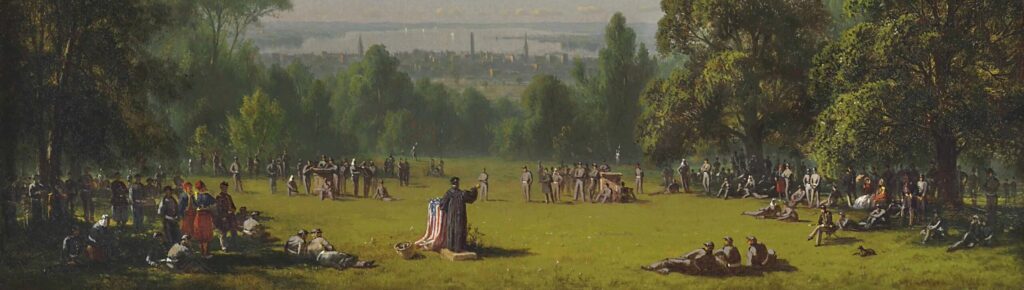
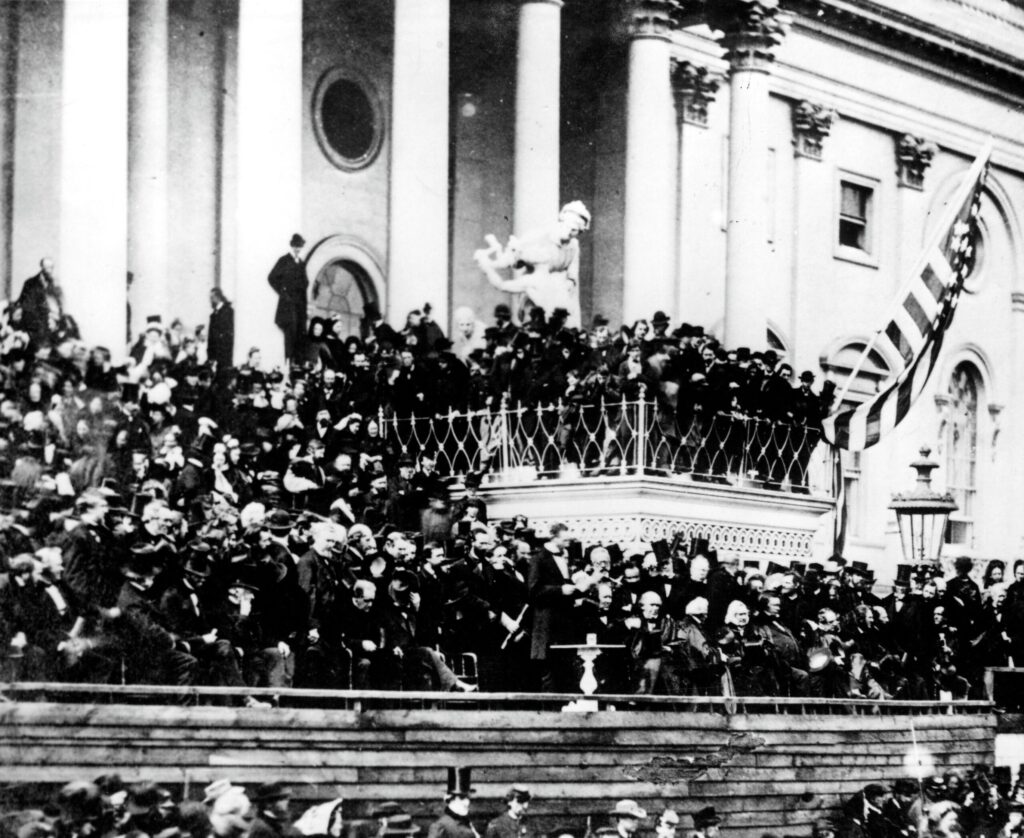
On March 4, 1865, President Abraham Lincoln delivered his second inaugural address. Deep into the war, with its casualties well known and deeply felt, Lincoln’s “Sermon on the Mount” as it came to be called, was a brief 703 words. In this speech Lincoln acknowledged the length of the war, the intractability of the core issue of slavery and that both sides could not win the war. Lincoln captured the essence of the stalemate when he said, “Both parties deprecated war but one of them would make war rather than let the nation survive, and the other would accept war rather than let it perish.”
One can almost feel his weariness. Like most Americans, Lincoln did not think that the war would be long when it began—some folks pulled up chairs to watch the first battle—and they did not think that slavery—the cause of the war—would end because of it. Both Southerners and Northerners believed that their causes were holy. Said Lincoln, “Both read the same Bible and pray to the same God and each invokes His aid against the other. It may seem strange that any men should dare to ask a just God’s assistance in wringing their bread from the sweat of other men’s faces but let us judge not that we be not judged. The prayers of both could not be answered ~ that of neither has been answered fully.”
This intractable war between states formerly united tapped into foundational thoughts about power, society, justice, and freedom. All of these thoughts were grounded in a national civil religion and belief in God’s concern for and involvement in their lives—God’s providence. Thus, the Civil War ruptured the religious fabric of the country. It also exposed the foundational connection between religion, race, and inequities that stretched across the breadth of the nation from North to South, and East to West, capturing Americans from all religious faiths and none.
.jpg)
When the 89-year-old nation descended into civil war, religious institutions and ideas both served as model and mode for separation and for reunification. The Civil War stymied the growth of churches, reinscribed and redrew racial boundaries, and reconfigured religious cultures. After the war, the Reconstruction of the nation also transformed the nation. More than reunifying the states, Reconstruction remade the nature of governance, launched a new birth of imperial expansion, and expanded religious innovation. The period transformed the roles and rights of women, African Americans, Jews, Catholics, social reformers, labor activists, and saw the birth of a new national mythology grounded in both American Protestantism and historical fantasy.
But before the nation could experience a new birth, it had to face near-death, and American religion hastened the nation’s march toward its own grave.
II. Sanctifying Secession
Religion was not central cause of the Civil War. Slavery was. The nation’s debate over slavery escalated until a catastrophic, fratricidal war broke out that severed the Republic, killed roughly 700,000 American combatants, and dramatically altered the country’s political landscape.
Although religious conflict was not the primary cause of the Civil War, Americans’ religious beliefs, practices and institutions nonetheless quickly became entangled with the conflict in profound, powerful, and devastating ways. Given the way that religiosity had surged across the United States in the first half of the nineteenth century, this could hardly have been otherwise. And when the nation burst into flames, religious communities, institutions, and ideals shared in the destruction.


The Civil War was a war among Americans, but it was also a war among believers. Abraham Lincoln famously observed in his Second Inaugural Address (1865), that Northerners and Southerners shared the same religious traditions. But as the ferocity of the war made clear, this shared religious culture did not abate sectional hostility. To the contrary, rather than mediating conflict, the religious dynamics in both North and South increasingly became coupled with irreconcilable sectional interests. This turned a civil conflict over slavery into a holy war between two Christian polities under God in which, as Lincoln put it, “each invokes His aid against the other.” Despite the existence of “counterpoint groups” who dissented from this weaponization of Christianity, and despite the circumspection of Lincoln himself, most Americans wholeheartedly adopted the fusion of religion with sectional politics.1
On both sides of the conflict, the central matter of slavery increasingly became an article of faith and a marker of orthodoxy for white Christians. Black Christians, North and South, labored tirelessly to eradicate both slavery and racism. White Northerners came to define human bondage as a grievous spiritual sin and increasingly made slaveholding a test of Christian fellowship. Far fewer bemoaned the racism in their communities, however. White Southerners found slavery clearly sanctioned in the Bible and saw it aligning with Christian benevolence and evangelism. In the decades before the war, these religious tensions over slavery passed the breaking point; the nation’s largest churches—Methodist and Baptist—all fractured into northern and southern bodies, a phenomenon that both anticipated and paved the way for political rupture. During the war itself, the same debates played out in intimate ways within individual congregations in the border regions, where the factions squabbled over church property and harassed ministers who engaged (or failed to engage) in political commentary.2
The stakes of these conflicts were supremely high. As James Henley Thornwell, the South’s leading theologian, explained, the parties to the War “are not merely Abolitionists and Slaveholders.” Rather, the struggle was between cosmic opposites, between “Christianity and Atheism.” At stake was the very “progress of humanity.”3 Existential dualism like this infused the war with a profound metaphysical intensity.
After Abraham Lincoln won the presidency in the election of 1860, southern states, including South Carolina, Mississippi, Alabama, Florida, and Georgia, held secession conventions to decide whether to remain in the Union. They feared Lincoln and claimed that he would abolish slavery. South Carolina held the first secession convention in December 1860 touching off a series of similar actions by other states: first, Mississippi, then Florida, Alabama and Georgia, Louisiana, Texas, Virginia, Arkansas, Tennessee and finally North Carolina. Political arguments about federal power and citizenship blended with religious claims about God’s providence and the righteousness of secession.
Confederate leaders framed their destruction of the United States as a holy obligation. In February 1861, Jefferson Davis, the president of the Confederate States of America, invoked the legacy of God’s Providence and American Saints in his first inaugural address, saying “Reverently let us invoke the God of our fathers to guide and protect us in our efforts to perpetuate the principles which, by his blessing, they were able to vindicate, establish and transmit to their posterity, and with a continuance of His favor, ever gratefully acknowledged, we may hopefully look forward to success, to peace, and to prosperity.”4 According to Davis, this new Confederate nation would inherit the blessings of the United States as they embarked on creating a nation grounded in slavery and white supremacy. Davis and his fellow Confederates did not doubt that God bestowed his blessing on their new nation, and this ensured their eventual success in battle.
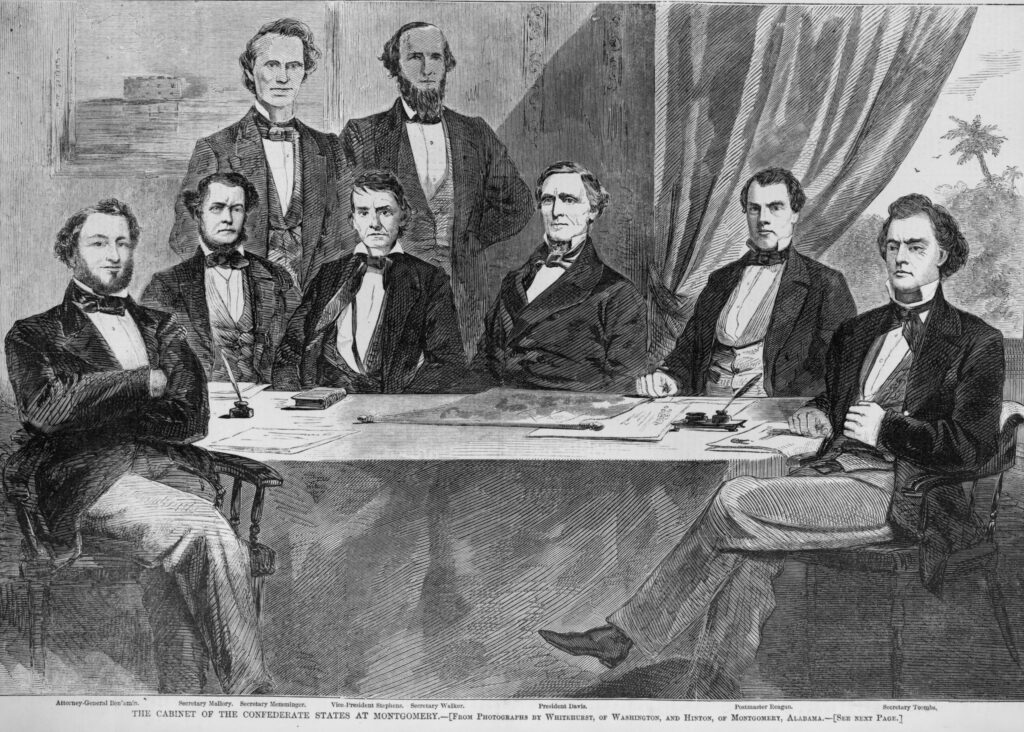

The same religious themes in Davis’s rhetoric appeared in secession conventions across the South as well as in the establishment of the Confederate States of America. The ties between religion and secession went beyond perfunctory prayers at conventions to encompass a new fashioning of Confederate religiosity both by Confederate leaders and Confederate Christians.
On March 21, 1861, in Savannah, Georgia, Alexander Stephens, the eventual vice president of the Confederacy, said what most Southerners were thinking in the spring of 1861: “Our new government is founded upon exactly the opposite idea; its foundations are laid, its corner-stone rests, upon the great truth that the negro is not equal to the white man; that slavery, subordination to the superior race, is his natural and normal condition. This, our new government, is the first, in the history of the world, based upon this great physical, philosophical, and moral truth.”5 As Stephens made clear, racism enacted through slavery was the foundation of the Confederacy. Stephens believed that God ordained slavery as the only true godly social order. And the Confederacy was chosen to preserve this institution of godly government. Later, Stephens spoke of providence and the great plan of the Creator, believing, much like most Americans, North and South, that God was on their side.6
The churches of the South mirrored and in many ways preceded the separatist stances of Southern state governments. The secession question echoed through many institutions, including the major Christian denominations. For example, on March 23, 1861, the Episcopal bishops Stephen Elliott and Leonidas Polk called the Episcopal clergy and bishops of the South to a convention because: “political changes, forced upon us by a stern necessity, have occurred, which have placed our Dioceses in a position, requiring consultation as to our future Ecclesiastical relations.”7 Elliott and Polk instigated a split of the southern dioceses from their northern counterparts. In so doing they emphasized that the denominational split was a political one and not theological.8 Secession necessitated a discussion of the national affiliations of religious institutions and questions remained as to whether they would align with the proslavery views of the Confederate nation.
III. Making Meaning of War
After secession, both the Union and the Confederacy infused religion into all aspects of the war—from their military, to their government, their hospitals, their music, and their grieving rituals.9 They did so to prove their devotion to their cause, their moral authority in fighting this war, and as a way to justify the war’s terror and destruction. As much as the Confederacy believed God was with them, so did the Union. The story of religion and the Civil War is the study of a nation grappling with their religious and national identity in the face of that great and terrible upheaval.
Religion gave the Civil War a multitude of contradictory meanings, for this was a world in which all things had ultimate meaning under God’s direction. The challenge of course, was how God could be on both sides—the North and South—given their disparate goals. Americans on all sides of the conflict believed that they could interpret the “providence” of God—the outworkings of the divine plan and will in the world—with what seems like stunning confidence. They plotted signal events of the war alongside the sacred history of the Bible and its prophecies.
As war often does, the cataclysm of the Civil War evoked visions of the end of times and stirred the apocalyptic imagination.10 For instance, Julia Ward Howe’s “Battle Hymn of the Republic” cast the Union army as God’s cleansing force in the Book of Revelation, treading the grapes of divine wrath. In the South, no one embodied providential confidence more than the pious General Thomas “Stonewall” Jackson, erstwhile Presbyterian deacon and Sunday School superintendent. Jackson’s death in May 1863 at the Battle of Chancellorsville—he was shot accidentally by his own men—seriously troubled the providentialist confidence of Southerners, and after the war was lost and their narrative was shattered, Jackson’s accidental death became essential to southerners’ providentialist reinterpretation of the war and its outcome. This reinterpretation was called the “Lost Cause.”11
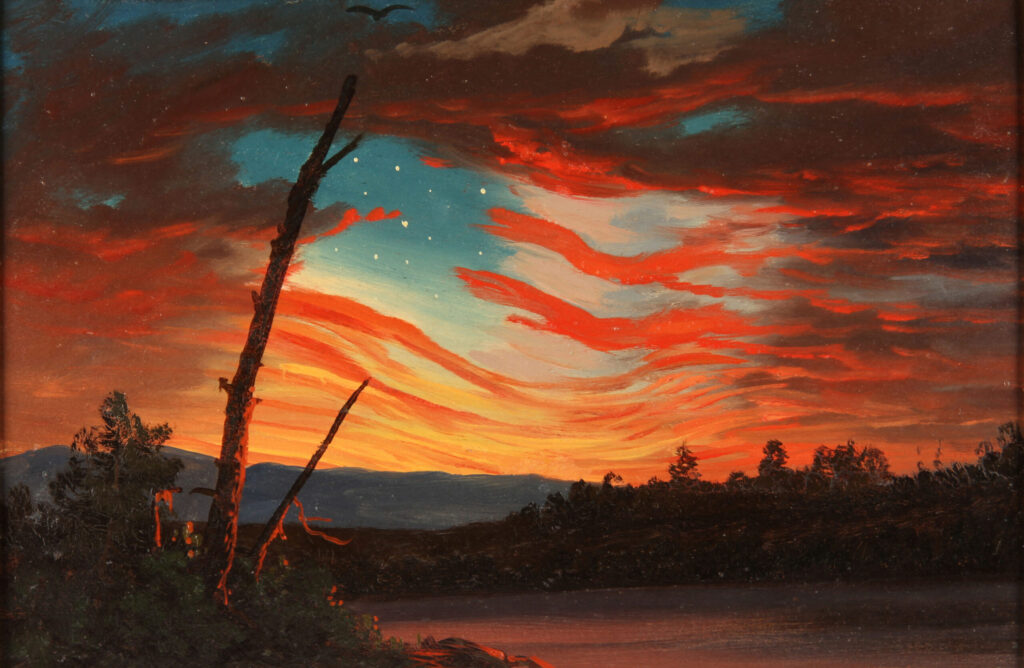

The traumas of the war, emerging from a free flow of prophecy and scripture, eventually did substantial damage to Americans’ providential confidence, as it did to their confidence in the Bible as an arbiter in all things. Consequently, the Civil War can be read as precipitating not only a mass slaughter but also a “theological crisis” for American Christianity.12
While true that Americans of the Civil War era read the same bible and ostensibly prayed to the same god, the ways that they read and used the bible to interpret the war and justify their actions differed. The Bible was full of wars and fighting so they came to understand war as a place where they could encounter God and understand God’s plan. This accorded with their providential view that God would intervene. Their faith was troubled when they did not win faced the horror of mass death. While both Northerners and Southerners used the same Bible, in a literal interpretive and material way–sometimes as actual shields during the war as reports of Bibles stashed in breast pockets suggest–they derived different insights and guidance. They even highlighted and turned to different scriptures in their sermons and public writings; Northerners to Romans 13 regarding submission to authorities and Southerners to Psalms 46:11 which proclaimed that “The Lord of Hosts is with us; the God of Jacob is our refuge.”13
Americans of other faith traditions struggled to negotiate both the sectional schism and the Protestant hegemony that suffused both sections. Many Catholics and Jews, for instance, had complicated allegiances, as the dominant Protestant culture viewed them with skepticism and questioned their dedication to the American nation. Their relationship with the Civil War was even further complicated by the fact that family members on the Catholic and Jewish homefront were more likely to support the Democratic Party and oppose wartime measures such as emancipation and the draft. However, some members of these groups saw their service in the Civil War as proof of their allegiance to the United States and attempted to use it as a badge of their successful assimilation.14
IV. Religion in the Armies
As the Civil War began, volunteers poured in from across the country, bringing their diverse religious backgrounds with them. While adherents of each tradition had distinct ways of approaching the war, most soldiers were united by a common evangelical Christian culture that emphasized individual salvation, a personal God, and the role of divine providence in history. But other faith traditions played important roles in the conflict as well.
Christian soldiers first thought about saving their own souls. In civilian life, many young men reasoned that they had a long life to reconcile themselves with their Creator, but the Civil War put them face-to-face with death in a way they had not experienced before. On the battlefield, a stray bullet or artillery shell could soon bring their existence to a close. The brutality of battle led many men to strengthen their Christian faith, which softened the finality of death through the belief in a serene afterlife.
The men of the Civil War generation did not reduce Heaven and Hell to metaphorical illusions; these were real places with genuine rewards and agonizing punishments. Daniel Abernathy, a Confederate private, recognized that his life could be taken at any moment and took solace in the Christian afterlife, writing to his family, “I think we would all better try and prepare for death … I will try to serve God the best I can and try to be prepared for death and eternity for that is all the comfort I see.”15
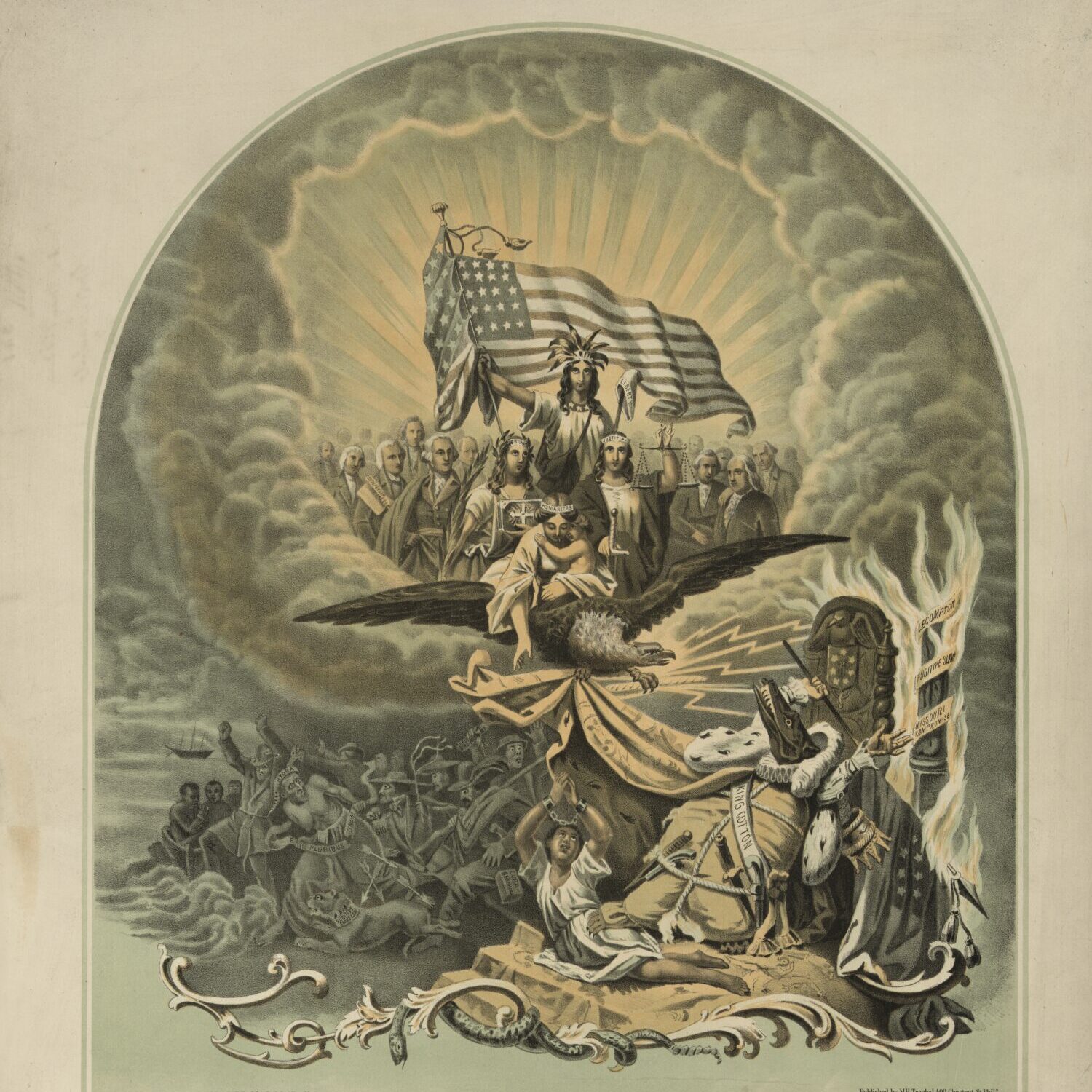
Likewise, Northern and Southern soldiers envisioned God as a deity who personally cared for them, and that belief gave the universe a sense of order and fairness. In this worldview, God had a plan for each individual soldier, so the man who fell in battle had not died in vain but had played an instrumental role within a mysterious divine plan. In addition, many soldiers believed that a just God looked after their friends and family after they passed. Before leaving for war, a New York soldier wrote that his son had asked him an uncomfortable question: what would happen if his father never returned? In a letter to his wife, the soldier replied, “I know now how to answer little Henry’s question. Tell him the Savior will be his pa, if I don’t come back.” In this sense, a personal, caring God provided order even amid the chaos of battle. Not all Civil War soldiers grew more devout, but the experience of war brought many to ask uncomfortable questions about their mortality and the fate of their souls.16
Civil War soldiers also expressed their religious faith through a broader providential lens, which held that God used events on Earth to punish or reward certain nations. Many Protestant ministers viewed America and its unfolding history through a biblical perspective. Just as the Old Testament prophets and nations had been chosen for a specific duty, America had its own divine purpose. However, a providential view of history did not mean that events were foreordained, as God could grant or withdraw His blessing based on the individual behavior of His believers.17
As a result, the Civil War became a matter of intense providential speculation. Why had the Lord wrought this gruesome war? Northern and Southern Protestant ministers delivered sermons aimed at convincing soldiers that God favored their respective sides and would ensure victory. These addresses bolstered morale in both armies, especially in the Confederate Army’s latter years, as Southern divines espoused the belief that, while God had momentarily punished the Confederacy through military defeats, He would eventually turn the war against the North.
Many ministers also used this providential worldview to argue that military defeats stemmed not from bad strategy but from God’s punishment. As a result, ministers pressed soldiers with sermons about their various sins. Many ministers questioned whether God would bestow His blessing on an army that engaged in cursing, gambling, and drinking. The men in uniform thus became targets for ministers’ sermons on the benefits of godly behavior for their cause.
Civil War soldiers did not always accept the ministers’ confident proclamations. Many soldiers adopted what historian Peter Carmichael terms “providential pragmatism,” neither adhering to the ministers’ moralism nor subscribing to overly simplistic narratives about divine providence, as the events on the battlefield proved incoherent and inconsistent. To be sure, this pragmatism rarely led soldiers to become nonbelievers, but it did lead them to place faith in their individual judgment and to resist the urge to interpret every event as a revelation of God’s will.
While most Civil War soldiers came of age in the antebellum era’s dominant evangelical Christian culture, some sat squarely outside that fold and thus had an uncertain relationship to the war..These tensions were not just abstract problems. The divisions of the war cut apart families of all faiths. Julius Ochs of Chattanooga, Tennessee joined the Union Army, while his wife Bertha supported the Confederacy and was even arrested for smuggling medical supplies to wounded Confederate soldiers.18
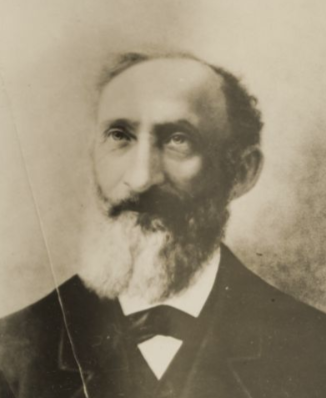
Religious diversity spread beyond the nation’s larger faiths. The Civil War Soldiers and Sailors System database includes at least 292 combatants with names associated with Islam. The most famous Muslim soldier was the formerly enslaved Muhammad ibn Said, who enlisted in the 55th Massachusetts Infantry and fought in several battles before starting schools for Black children during Reconstruction.19
Despite their different backgrounds, Civil War soldiers faced many of the same hardships. For Catholics, Jews, Protestants, and Muslims, the Civil War left an indelible mark, both physically and psychologically, on those who fought in it. During their service and beyond, these men turned to religion to understand the bloodshed and give their service meaning.
V. Homefront
Religion permeated nearly every element of life during the Civil War, both on the battlefield and the homefront. Countless Americans turned to heaven to try to reckon with the national cataclysm. Churches, synagogues, clergy, devotional literature, and religious rituals all helped Americans make meaning of world saturated in suffering, sacrifice, and confusion. Whether maintaining morale, organizing opposition, or simply offering comfort, religious institutions went to war as well, and this war exposed and often deepened divisions within American society.
Religious institutions also became central to wartime aid efforts. Through prayer circles, fundraising campaigns and other charity work, religious organizations supported the work of soldiers at war. They also worked to meet the spiritual needs of Americans struggling with separation from family and an increasing parade of death.
Spiritualism became one way that Americans reckoned with mass death. Spiritualism had spread quickly after its 1840s origins, but the loss of so many lives encouraged many to seek contact with lost ones through seances, trances, mediums, and spirit writings. Even Mary Todd Lincoln reportedly participated in seances in the White House after her son’s death in 1862.20
![This print from Harper's Weekly with its masthead across the top shows women contributing to the war effort by sewing (top frame); (left frame) providing religious counsel, a nun labeled "The Sister of Charity," prays with a man in bed as he holds a cross; (right frame) a woman visiting the injured. Beneath the image is the phrase "Our Women and the War-[See page 570]](https://www.thunderinggods.com/wp-content/uploads/2026/07/Our_women_and_the_war_wikimedia-commons-1024x740.jpg)
.jpg#)
Religious institutions created particular opportunities for women who distributed food, medical supplies, clothing, and Christian readings through the United States Christian Commission and the United States Sanitary Commission in the North and various church-based aid societies in the South.
Both sides repeatedly called for days of prayer and fasting, and pious partisans did their part to heed the call.21 Sometimes these calls for religious observance were paired with revivals that swept through both army camps and home front communities. Ubiquitous funeral sermons prompted considerations of eternity, and religious traditions helped a nation in near perpetual mourning.
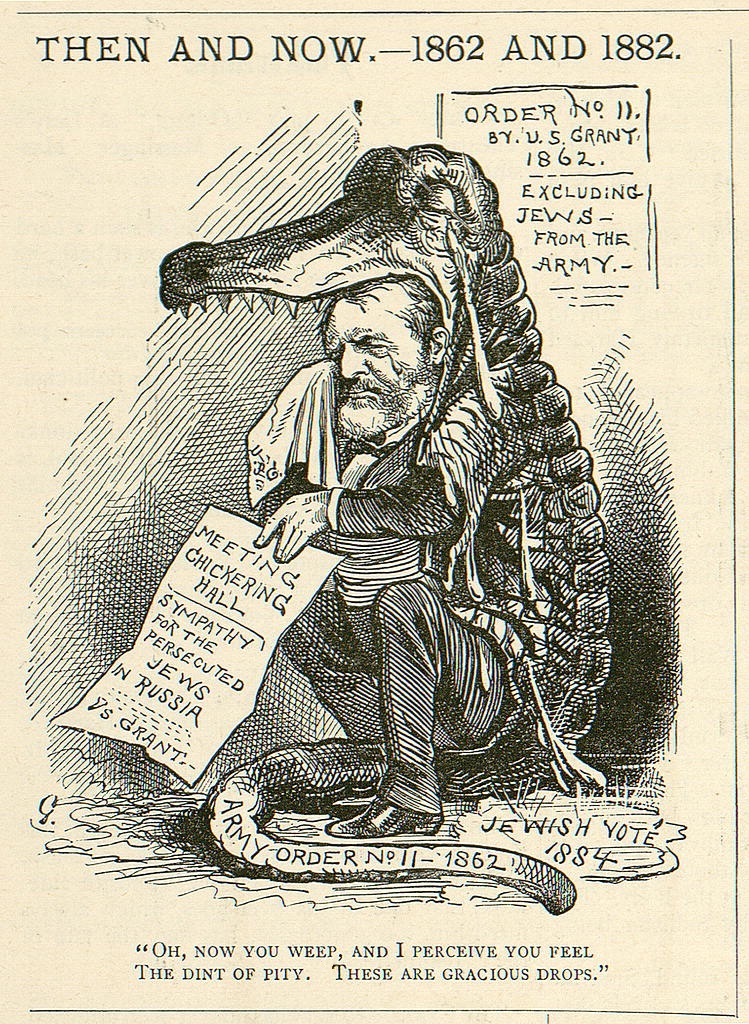
The war also caused an always simmering American antisemitism to boil over. In December 1862, Union Major General Ulysses S. Grant issued the most notorious act of government issued antisemitism in all of American history. General Orders No. 11 expelled all Jewish people from the area under his control which included parts of Kentucky, Tennessee, and Mississippi. President Lincoln rescinded the order earning him reverential esteem among America’s Jewish communities who came to nickname him Rabbi Abraham. Still, Lincoln’s intervention did not occur until well after many Jewish families frantically abandoned their homes and property.22
The war deepened tensions within American religious life. Denominations that had already split before the war remained divided along sectional lines, and Catholics, Jews, and other religious minorities navigated complicated loyalties amid widespread suspicion and nativism. By the war’s end, religion had provided Americans with language for sacrifice, redemption, judgment, and hope, while also revealing the profound moral and theological fractures at the heart of the nation.
VI. African American Wartime Religion
For African Americans of faith in the North and South, the outbreak of the American Civil War came as the fulfillment of long-awaited and prophesied judgment of God. Upon the outbreak of the Civil War, religious Black abolitionists and anti-slavey advocates met the moment with action. They understood the national strife as the fulfillment of the prophecies of David Walker and countless others declaring alongside abolitionist orator Frederick Douglass, “God be praised! That it is here at last!” and continuously found ways to support the war effort.23 Douglass enunciated the war objectives held by countless free Black people through scripture, stating that he must “stand up for the downtrodden, to open my mouth for the dumb, to remember those in bonds as bound with them.”24 And while Douglass’ fame and renown led him to the White House to negotiate directly with President Abraham Lincoln, many other Black religious leaders and lay people contributed to the war effort.
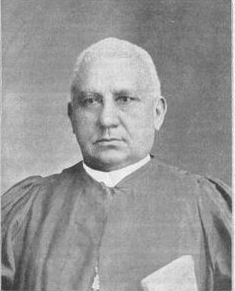
Reverend Henry McNeal Turner of Israel African Methodist Episcopal (AME) church in Washington D.C. used his pulpit to deliver “ardent sermons advocating the use of black soldiers,” and when Black men were allowed to enlist (after the Emancipation Proclamation in 1863), Reverend Turner transformed his “churchyard [into] the first volunteers signed up for the local regiment, soon to become the 1st USCT.” Once Black troops began training, Turner visited the regiment frequently, “preaching and encouraging the men to prove their manhood and protect their rights.”25 Desiring to serve Black troops more directly, Turner and other Black ministers advocated being permitted to serve as chaplains in the Union army, a role that would be the highest-ranking public office held by Black men. However, although Union officials permitted Black chaplains, they had to be elected by white officers, resulting in only 14 Black ministers receiving this appointment.
Despite this restriction, Black ministers and laypeople, men and women alike found alternative ways to take part in the long-anticipated move of God. Many churches and organizations raised funds, gathered clothing and supplies to send to the formerly enslaved, and hundreds of others served as missionaries. For the ecumenical American Missionary Association (AMA) alone, 437 free Black men and women served as missionaries to the freedpeople, driven by religious conviction and racial kinship. Sara G. Stanley, a free Black Presbyterian born in North Carolina and Oberlin-educated, applied to become a missionary to the freedpeople in 1863. In her application, she declared, “ I have felt a strong conviction of duty, an irresistible desire to engage in teaching the freed people; to aid to the extent of what ability God has given me, in bringing these poor outcasts from the pale of humanity, into the family of man.”26
Stanley was far from alone in seeing teaching and missionary work with the freedpeople as a religious duty. Edmonia Highgate, a young Black AMA missionary, was one of two women to address the attendees of the 1864 Colored Convention, encouraging the men to “trust in God and press on, and not abate one jot or tittle until the glorious day of jubilee shall come.”27 The prophesies that had dominated antebellum Black Northern theological and social discourse transformed into consistent calls to action, to see the deliverance of the enslaved brought to pass.
Enslaved people’s religious cosmology also understood the Civil War as a long-prayed-for deliverance and responded with actions of their own. As historian Abena Boakyewa-Ansah argues, to the enslaved the “opening of churches, provisions for Black ministers, the availability of the Gospel, and the accessibility of the Bible… were as much a part of freedom as education, home-building, and paid work.”28 Thus, enslaved people used the free soil brought by the Union to transform what historian Albert Raboteau called the “Invisible Institution” into a visible one.29
After the outbreak of the war, enslaved people who could not run away to Union lines continued to fervently pray. Formerly enslaved woman Chana Littlejohn recalled fellow enslaved people gathering in her cabin “to pray for the Yankees to come.” She recalled a woman so fervent in prayer that she ran into the yard crying out “blue bellies come on, blue bellies come on!”30 After Union occupation brought freedom, these hidden forms of worship and prayer burst into the visible landscape, with formerly enslaved people celebrating their freedom in the streets. For example, in New Bern, North Carolina, Union troops reported the parades of freedpeople crying out that “the providence of God in the fruition of a long deferred hope” through Union victory, seeing “victorious banners” of the Union as “a sign of their approaching millennium.”31
Black Christians North and South, free and enslaved, responded to the war consistently with action. For many, the Civil War was the Day of Jubilee that demanded their active participation, leading thousands of free Blacks to serve Union efforts to support the newly freedpeople, and the formerly enslaved to claim religious congregation and expression as a central part of their freedom.
VII. Reconstruction
After the Civil War, the theaters of Reconstruction expanded beyond the North-South axis to include the West and pushed the timeline beyond the presumed reunification in 1877 because what was really taking place was not just governmental reconstruction but also a reconstruction of ideas of citizenship and belonging that was recalcitrantly oriented toward white supremacy so that by the late-nineteenth century, policies around land and segregation reinforced white power and the adjudication of rights on the basis of race and class. This was reinforced by the increasing religious diversity of American society and the ways that religion became a proxy for difference where people were referred to as heathen if they did not practice Christian traditions.32
Northerners, Southerners and freedpeople alike, interpreted the war’s outcome from their own vantage point as something God had done, but ultimately, the use of providential explanations decreased. When the Confederate armies surrendered, white Southern Christians were devastated and found themselves at a loss to make sense of how God could have allowed them to lose.33 Bereft of the cornerstone institution of slavery, white Southerners scrambled to maintain superiority over freed people. This included an effort to maintain control over both bodies, land, and citizenship.34
Enslaved people believed they had finally been redeemed. Northern Black Christians shared this sense of redemption. Northern white Christians except for anti-war Democrats, felt a sense of redemption, that God had taken them through a terrible trial but then blessed them with victory. Regarding providentialism many Americans became less confident in believing they knew what God was doing through their life circumstances and took a posture more attuned to Lincoln’s. Even in the North, their confidence in providentialism waned due to the high cost of victory.35
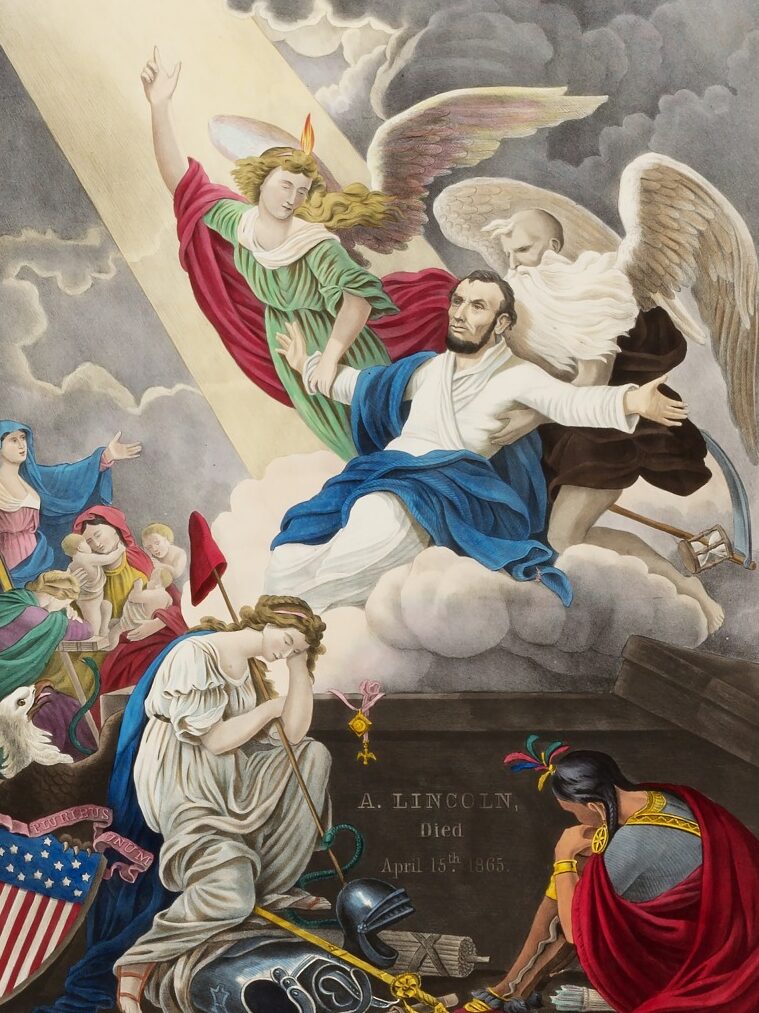
Americans immediately organized to enact their vision of a postwar America through religious institutions. During the war Protestant white Northerners grew more comfortable with fighting against slavery and this sentiment carried over into postwar aid. Protestant denominations lined up to send missionaries, teachers, doctors, and clergy to the South with the hopes of remaking the region and training formerly enslaved people to take their places in that remade society. Northern Protestants wanted to build on the redemption of victory. Some white clergy in the North called on the U.S. government to punish former rebels and to more deeply reconstruct the South.36 These calls would soon wane, however.
Christianity had long played a vital role in the lives of northern Black Christians and the war’s end led churches to push for Black civil rights, voting rights, and economic assistance for freedmen. In the South, Black churches grew by leaps and bounds. Before the war, enslaved were often forced to attend church alongside their enslavers where they heard sermons about how their Blackness was cursed by God. However, after the war, formerly enslaved Christians used their newly won agency to embrace Christianity for themselves and Black Southern churches quadrupled in a matter of decades.37
White Southerners used Christianity to transform Confederate defeat into the historical myth of the Lost Cause. Churches created stained glass windows depicting Confederate soldiers as saints. Lizzie Rutherford, a woman from Georgia, called Jefferson Davis’s birthday, now rechristened as Confederate Memorial Day, “the Sabbath of the South.”38 Organizations like the United Confederate Veterans, and especially women’s organizations like the United Daughters of the Confederacy and various Ladies Memorial Associations throughout the South institutionalized a religious narrative of Confederate righteousness.39 These traditions endured long after the war. In 1900 a Presbyterian clergymen prayed at a soldiers’ reunion that all in attendance “may meet in that Heavenly Home where Lee, Jackson, and all the Heroes who have gone before are waiting.”40
Some white southerners did more than just pray to honor the Confederacy. They engaged in campaigns of terrorism to restore its vision of a society rooted in white supremacy. In 1866, the Ku Klux Klan formed in Tennessee. Former Confederate General Nathan Bedford Forrest joined immediately and became the first Grand Wizard. Forrest and other Klan leaders framed their terrorism as a religious duty to protect Christian civilization from Black political participation. The Klan’s 1868 Organization and Principles of the Ku Klux Klan included a creed that began by asserting “We, the Order of the KKK, reverentially acknowledge the majesty and supremacy of the Divine Being, and recognize the goodness and providence of the same.”41
VIII. Black Reconstruction
African Americans understood the end of the war through Christian eschatology, which means understandings of the end of the world. References to biblical events and namesakes like “jubilee” and “Zion” and “New Jerusalem” accompanied the quest for freedom. By applying Christian understandings of the end of times to their situation, African Americans displayed the impact of widespread conversion to Christianity. Moreover, African American interpretations of Biblical events bled into the broader American Protestantism in the nineteenth century.42
African Americans not only interpreted their freedom through religious concepts, but also they gained more control over their religious organizations and worship practices. Many built associations of already extant independent churches and secured leadership for themselves. Some churches were formed out of white churches and with white church assistance. For instance, with the help of the Trinity Methodist—a white church—African Americans organized St. James Colored Methodist Episcopal in Tallahassee, Florida.43 The Colored Methodist Episcopal Church was one of two independent Black denominations formed in the South after emancipation. The Zion Union Apostolic church formed in North Carolina out of a union of Baptist and Episcopal church members and was entirely independent.44 The CME Church negotiated with the Methodist Episcopal Church, South to retain properties that otherwise would have had to be surrendered.45
Picking a pastor and a denomination were among freedpeople’s first acts of freedom. Congregations elected new trustees and deacons and voted to affiliate with new denominations. They navigated changing laws and authorities to keep hold of their buildings. For example, enslaved members of Immanuel Church in Portsmouth, Virginia, had paid two-thirds of the cost of their building, but under Virginia law, the property had to be held by white trustees. When Immanuel voted to leave the southern Methodists and affiliate with the AME, the former white pastor claimed to still have jurisdiction, and church members appealed to the U.S. military and the Freedman’s Bureau to keep the building.46
Northern missionaries helped facilitate the quick creation of independent Black congregations. “This has been a year of revivals in Georgia,” Henry McNeal Turner told his denomination’s newspaper in late 1866. Turner arrived in Georgia with the First Regiment of U.S. Colored Troops, as the Union Army’s first Black chaplain. He stayed as the lead missionary for the African Methodist Episcopal (AME) Church. Turner witnessed the greatest growth of Black churches in American history.47 James Walker Hood, a Black missionary from Connecticut, planted churches right behind Union lines in North Carolina, often having to flee towns as the army lost territory, only to resume church planting when the Union recaptured the town.48
Freed people, many of whom had been prevented from worshipping independently or openly, now thronged to religious services. One white Presbyterian in Charlotte, North Carolina, bemoaned that “when the war was ended in 1865, the Freedmen nearly all ceased to attend services in the churches in which they were brought up, but gathered in large crowds to open air meetings conducted by men of their own race.”49 The exodus out of southern white churches was quick. In Tennessee, Black membership in southern Methodist churches plummeted from 12,267 to only 17 by the end of Reconstruction.50 Northern denominations, Black and biracial, expanded all across the South. The Southern Black congregations that had worshipped independently before the Civil War now took on greater importance.
Turner noted that almost half of those Black worshippers who joined his church in 1866 and 1867 were new to the faith. What attracted so many to Black Christianity during Reconstruction? Perhaps it was the opportunity to worship without white oversight. Perhaps, it was because many believed that God had answered their prayers for freedom. As activist and scholar W. E. B. Du Bois said, Black Americans discerned the hand of God at work in emancipation. The outcome of the war convinced many that God was on the side of the oppressed, not the oppressor.51
Churches became the center of freed people’s organizing in politics, education, and charity work. Richmond’s First African Baptist Church, with seating for almost 4000, was the only space in the city large enough to host political mass meetings.52 North Carolina’s First Colored Convention met in Raleigh’s Loyal AME Church. Those mass meetings laid out Black priorities: equal citizenship and education.53 Many Black ministers were active in the Republican Party; Turner and Hood served as elected state officials. To establish schools, many Black churches worked closely with northern white denominations and missionary associations that sent an impressive number of teachers, missionaries, clothes, books, and money. They started printing presses, colleges and universities, and mutual aid societies.
African American women played a vital role in organizing churches. African American women served in churches and mutual aid societies that formed the backbone in African American communities. While formal leadership eventually became associated with maleness, women led worship services and churches in the immediate post-emancipation period and garnered influential roles in churches and associations through their financial giving/support and literacy.54 Black women’s sociality also formed foundations for the institutionalized religion.55 Despite racism and sexism, African American women emerged as teachers and missionaries in black churches and organizations designed to uplift their communities during and after the Civil War.56 Women like Lydia Smith of St. James C.M.E. were some of the first teachers in African American communities as schools often operated inside of black churches.57
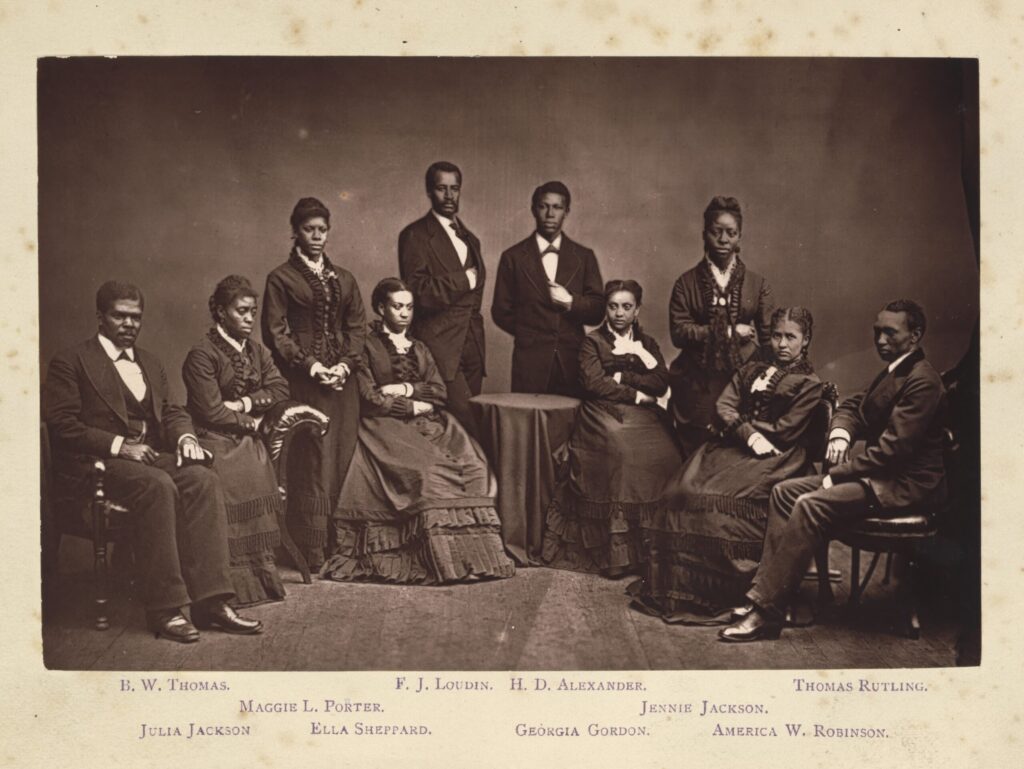
The postemancipation period also saw the transformation in African American religious culture. Field hollers and spirituals gave way to hymns and the emergence of public performance troupes like the Fisk Jubilee Singers. The songs of African American religion, also known as Spirituals, formed the soundtrack to their survival despite the harsh circumstances that accompanied slavery, the Civil War, and racial terrorism. These songs became a melodic resistance to slavery, provided hope and confidence after emancipation, and eventually became the foundation of modern American genres such as the Blues and Gospel.58
Black religious change included more than the rapid expansion of Black Protestant churches, however. African cosmologies continued to inform a range of practices, particularly in places like New Orleans where healing rituals, rootwork, conjuring, or divination blurred the boundaries between Christianity and traditional African religious practice. All of these traditions offered sources of protection, comfort, and resistance in an age of chaotic violence.59[18]
Reconstruction also brought changes to Black Catholicism. The Sisters of the Holy Family, a Black women’s religious order was formed in 1842 New Orleans but blossomed considerably during Reconstruction. The order opened St. Mary’s Academy in 1867 ast he first secondary school for Black girls in New Orleans. In Baltimore, the Society of St. Joseph of the Sacred Heart formed in 1875 for the purpose of evangelizing Black Americans. Despite an overwhelmingly white leadership, the Josephites nonetheless offered important sources of community, and eventually authority, for Black American Catholics.
The Ku Klux Klan and other white terrorist groups targeted Black churches during Reconstruction because they were so important to Black organizing. Even when Black worshippers won legal title to their buildings, arsonists frequently burned them down. One witness in Tuscaloosa, Alabama, testified before Congress that in the runup to the 1870 elections, almost “every colored church and school-house in the county was burned up.”60 One night in 1870, Klansmen severely assaulted Elias Hill, a disabled Black Baptist preacher in South Carolina, demanding that he “quit preaching” and renounce the Republican Party.61
The violence against Black people’s freedom and independence enraged Henry McNeal Turner, who had been elected to the Georgia state legislature in 1868, only to be evicted along with other Black legislators by a vote of the assembly. He said: It is extraordinary that . . . in a land where ringing chimes call child and sire to the church of God, a land where Bibles are read and Gospel truths are spoken, and where courts of justice are presumed to exist; it is extraordinary that, with all these advantages on your side, you can make war upon the poor defenseless black man. You know we have no money, no railroads, no telegraphs, no advantages of any sort, and yet all manner of injustice is placed upon us.”62
IX. Indigenous Religion in Reconstruction
Reconstruction was not just a reunification of the North and South. The process of reunification—the underlying ideas and ideals about citizenship and belonging gained greater purchase and were put to new use in the west as the removal of Native Americans continued and as religious groups and like the Mormon Church of Jesus Christ of Latter-Day Saints and Chinese immigrants challenged the assumptions of citizenship and belonging.
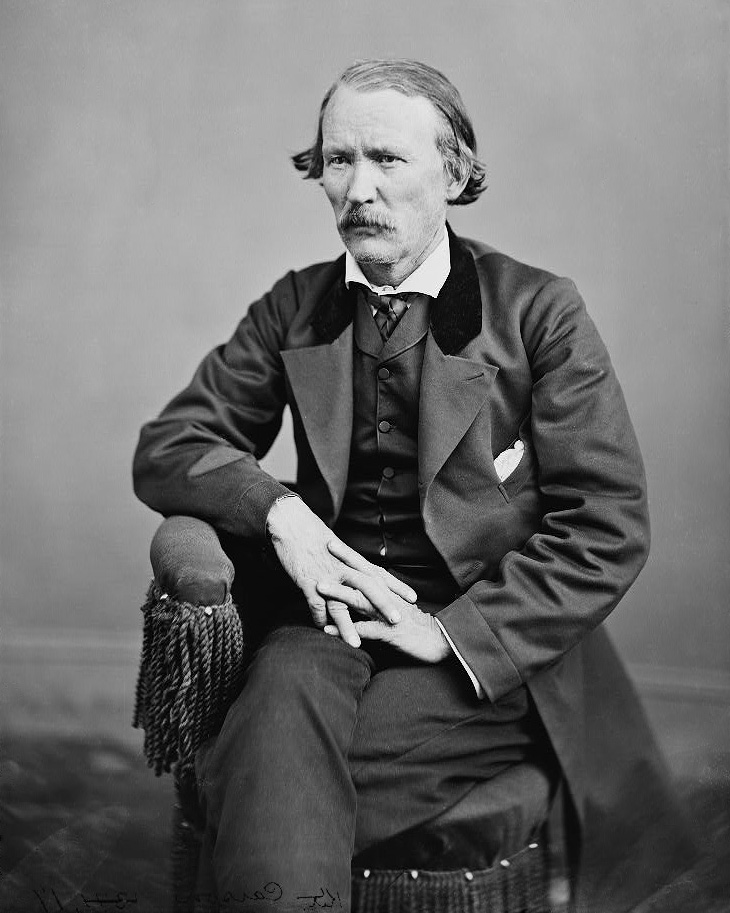
In 1864, Colonel Christopher “Kit” Carson emulated Sherman’s “March to the Sea” in the Western theater. Commanding 300 troops guided by allied Indian scouts, Carson launched a surprise attack against the Kiowa people in the Texas Panhandle, burning a main village before being forced to retreat in the face of a severe Kiowa counterattack.
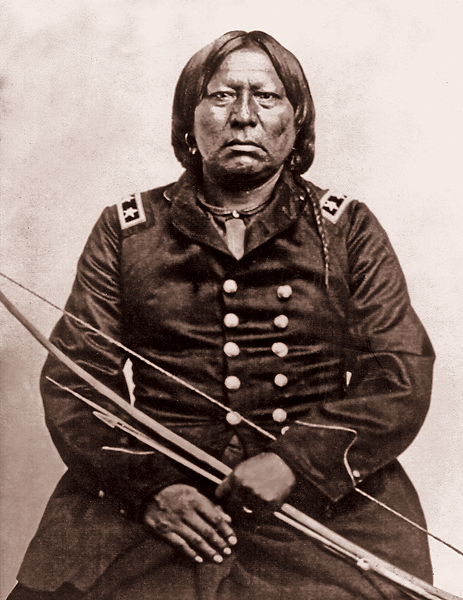
Oral histories of this battle testify to the sacred power of the Kiowa forces. At one point in the fight, “Sétèmqíà (Bear That Runs Over Them), … put on his feathered warbonnet, with a magpie attached to its base, before racing into the battle. Fighting at close range, American bullets tore the feathers off the headdress, but the magpie’s body stayed in place. Onlookers said that as Sétèmqíà continued to fight ‘the wings of that magpie [were] flapping like it was alive or something.’” Commenting on this record, historian Jennifer Graber notes how “Kiowas affirmed not only their warriors’ willingness to defend their free life on the land, but the sacred power that enlivened their struggle.”63 As this quote suggests, sacred power and freedom were intimately connected to the land.
.jpg)
During the Civil War and early Reconstruction, the U.S. greatly increased its westward expansion. A significant relationship between the government/state and religion helped effect westward expansion and removal of Native Americans as part of the process of reconstructing the nation along lines of racial inequality. Between 1861 and 1871, 58 treaties and 7 unratified agreements between the federal government and Indigenous nations were made, most of them concerning the purchasing of Indigenous land.64 In some treaties, the annuity payments for the land were overseen by an explicitly Christian “board of visitors,” or the treaty stipulated that the payment would only happen once missionaries had set up schools and churches, thus essentially requiring Christian presence in order for Native Americans to receive the economic sustenance they had been promised. What these treaties show is the intimate connection between religion, education, land, and imperialism. As Kiowa leader Séttháidé argued in the treaty negotiations, “I don’t want any of these medicine homes [churches] built in this country. I want the papooses brought up just exactly as I am.” This negotiation failed. By 1867, the Kiowas were being governed by Quakers on their new reservation, surrounded by Christian “medicine homes” and schools.65 The 1867 treaty with the Kiowa established “a school building or mission house.”66
In the late nineteenth century, therefore, Indigenous peoples called upon sacred power and rituals to resist and weather American imperialism. Indigenous religions incorporated, resisted, shaped, and were shaped by Christianity, especially various forms of Protestantism. They were neither eradicated nor fully resistant as common myths suggest. Some nations, like the Kiowa, resisted the forcible missionization of their lands and people. Others, like the Ojibwe in present-day Minnesota, incorporated elements of Christian worship into their practices. By the time of the Civil War, missionaries even remarked that hymn singing had “become indigenous.”67
Even when Indigenous people did convert, it was almost never a wholesale move. One Methodist Cherokee, Enola, a Cherokee Sergeant fighting for the Union, practiced conjure during the war.68 In this instance, Methodist prayer and Indigenous conjure were both ways for Enola to access spiritual power and certainty in a chaotic time. Indigenous practices were also dynamic and not static as commonly depicted. In fact, the Civil War and Westward Expansion greatly shaped sacred beliefs and rituals. During the war, Cherokee fighting for the Confederacy revitalized War Dance rituals.69 The Kiowa fighting on the plains adopted the Sun Dance in 1865.70
The Ghost Dance movement encapsulates these three themes of westward expansion, dynamic religious life, and adaptability. A “forward-looking, pragmatic religion,” the Ghost Dance originated in 1869 and quickly sparked Indian nationalism that would come to undergird 20th century pan-Indian politics.71 Predicting an imminent Apocalypse, The Ghost Dance practitioners believed in a coming Messiah – but disagreed over whether this Messiah was Jesus, demonstrating both the influence of evangelical Christianity and the retention of Indigenous practices and rituals.72
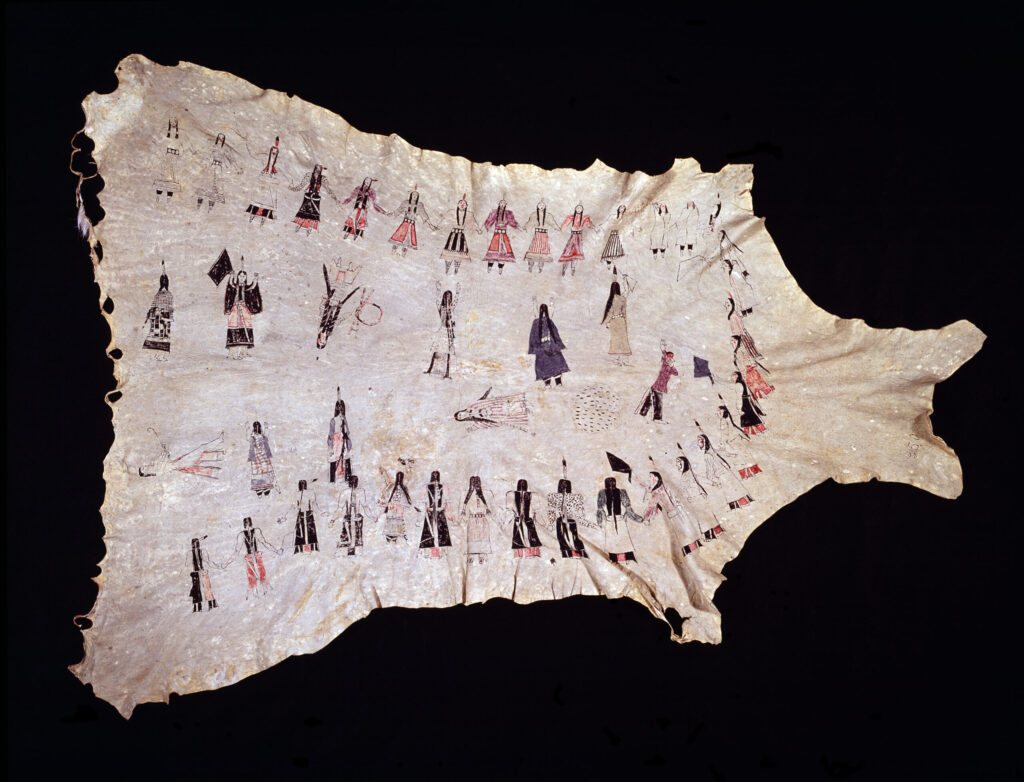
As the land grab set into overdrive by the 1862 Homestead Act continued throughout the 19th century, Native Americans living on reservations found access to their “old ways” continually restricted. The Ghost Dance’s vision of restored land and a renewed creation resonated deeply. Finally, in 1887 the infamous Dawes Act forced Indians to sell large portions of their reservation land, violating most of the previous treaties. All of this settler colonial violence and disruption drove Native Americans first to the Sun Dance and then to the Ghost Dance.73 While the Wounded Knee Massacre drove the Ghost Dance underground, it did not wipe it out; the Ghost Dance continued after the Ghost Dance War, proving a flexible and resilient religion for Native Americans entering the twentieth century.74
X. Conclusion
If religion couldn’t keep the Union together, how could it have been used to put it back together?
During Reconstruction 1865-1876, southern whites developed a different version of redemption. They mythologized the war which they saw as a Lost Cause because they refused to accept that their cause was illegal and military defeat sealed the deal. Organizations such as the Ku Klux Klan used violence to thwart every effort to extend citizenship to Black southerners. The redemption of the South from Black equality and a return to white superiority was woven together with a racist theology where God sanctified white supremacy in all areas of life.
Reconstruction policies included amendments to the Constitution that provided Black Americans with citizenship and male suffrage (14th and 15th Amendments). In the west, Christians also advocated policies of inclusion that embraced the Chinese and Native American people but this inclusion rested on presumptions of complete assimilation by the Chinese and Native Americans into the white Protestant culture of their proponents, but this was not to be.75 Northern Christians tired of the struggles with reconstructing the South and focused on a more expedient reunion. Many white Christians moved away from an optimistic millennialism that supported improving the world to a pessimistic millennialism. The push for unity placed Black civil rights on the shelf as the South entrenched the segregationist policies of Jim Crow. When Reconstruction ended, Southern whites believed they redeemed their communities for unjust Black rule. Black Christians realized that redemption in its fullest measure was a dream deferred as they looked for another Moses.76
Reconstruction finally fell after the Compromise of 1877 which just allowed the reimposition of race-based and white supremacist political and cultural ideology under the religious guise of Redemption. White southerners attacked Black ministers, claiming that they were sexual predators. Those that resisted were publicly lynched.77 Ida B. Wells chronicled these outrages with courageous journalism. Mississippi Legislators initiated a plan of racial terror under the guise of religious authority and offered prayers in the legislature after passing the Grandfather Clause which eroded the political rights of Black Southerners. Many white Northerners embraced these white supremacist ideas and practices.78 By the end of the nineteenth century, the United States had reconstructed along the lines of white supremacist power, and religion remained a resource for reinforcement and resistance.
XI. Reference Material
This chapter was edited by Nicole Myers Turner and Ben Wright, with content contributions from Devin Burns, Mark Draper, Ethan Goodnight, Matthew Harper, Brianna Harrison, Ryan Tobler, Nicole Myers Turner, and Ben Wright
Recommended Reading
- Edward J. Blum, Reforging the White Republic: Race, Religion, and American Nationalism, 1865–1898 (Baton Rouge: Louisiana State University Press, 2005).
- James P. Byrd, A Holy Baptism of Fire and Blood: The Bible and the Civil War (New York: Oxford University Press, 2021).
- Yvonne P. Chireau, Black Magic: Religion and the African American Conjuring Tradition (Berkeley: University of California Press, 2014).
- Emily Suzanne Clark, A Luminous Brotherhood: Afro-Creole Spiritualism in Nineteenth-Century New Orleans (Chapel Hill: University of North Carolina Press, 2016).
- Robert Darden, Nothing but Love in God’s Water: Black Sacred Music from the Civil War to the Civil Rights Movement (2014).
- Sarah Barringer Gordon, The Mormon Question: Polygamy and Constitutional Conflict in Nineteenth-Century America (University of North Carolina Press, 2010).
- Jennifer Graber, The Gods of Indian Country: Religion and the Struggle for the American West (New York: Oxford University Press, 2018), 68–69.
- Tiffany M. Hale, Fugitive Religion: The Ghost Dance and Indigenous Resistance After the U.S. Civil War (New Haven: Yale University Press, 2026).
- Luke Harlow, Religion, Race, and the Making of Confederate Kentucky, 1830–1880 (Cambridge: Cambridge University Press, 2014).
- Matthew Harper, The End of Days: African American Religion and Politics in the Age of Emancipation (2016).
- April Holm, A Kingdom Divided: Evangelicals, Loyalty, and Sectionalism in the Civil War Era (Baton Rouge: Louisiana State University Press, 2017).
- Elizabeth L. Jemison, Christian Citizens: Reading the Bible in Black and White in the Postemancipation South (Chapel Hill: University of North Carolina Press, 2020).
- William B. Kurtz, Excommunicated from the Union: How the Civil War Created a Separate Catholic America (New York: Fordham University Press, 2015).
- Kathryn Gin Lum, Damned Nation: Hell in America from the Revolution to Reconstruction (Oxford University Press, 2014).
- Kathryn Gin Lum, Heathen: Religion and Race in American History (Harvard University Press, 2022).
- Adam D. Mendelsohn, Jewish Soldiers in the Civil War: The Union Army (New York: New York University Press, 2022).
- Randall Miller, Harry Stout, and Charles Reagan Wilson, eds., Religion and the American Civil War (New York: Oxford University Press, 1998).
- Molly McGarry, Ghosts of Futures Past: Spiritualism and the Cultural Politics of Nineteenth-Century America (Berkeley: University of California Press, 2012).
- Mark A. Noll, The Civil War as a Theological Crisis (Chapel Hill: University of North Carolina Press, 2006).
- Joshua Paddison, American Heathens: Religion, Race, and Reconstruction in California (Berkeley: Huntington-USC Institute on California and the West by University of California Press, 2012).
- Shari Rabin, The Jewish South: An American History (Princeton, 2025).
- George C. Rable, God’s Almost Chosen Peoples: A Religious History of the American Civil War (North Carolina, 2010).
- Daniel W. Stowell, Rebuilding Zion: The Religious Reconstruction of the South, 1863–1877, 1st ed. (New York: Oxford University Press, 1998).
- Harry S. Stout, Upon the Altar of the Nation (New Haven: Yale University Press, 2007).
- Nicole Myers Turner, Soul Liberty: The Evolution of Black Religious Politics in Postemancipation Virginia (Chapel Hill: University of North Carolina Press, 2020).
- Benjamin J. Wetzel, American Crusade: Christianity, Warfare, and National Identity, 1860–1920 (Ithaca: Cornell University Press, 2022).
- Steve Woodworth, While God Is Marching On: The Religious World of Civil War Soldiers (Lawrence: University Press of Kansas, 2001).
- Ben Wright and Zachary W. Dresser, Apocalypse and the Millennium in the American Civil War Era (Baton Rouge: Louisiana State University Press, 2013).
Notes
- Benjamin J. Wetzel, American Crusade: Christianity, Warfare, and National Identity, 1860-1920 (Cornell University Press, 2022). ↩︎
- See April Holm, A Kingdom Divided: Evangelicals, Loyalty, and Sectionalism in the Civil War Era (Louisiana State University Press, 2017); Lucas P. Volkman, Houses Divided: Evangelical Schisms and the Crisis of Union in Missouri (Oxford University Press, 2018); and Bridget Ford, Bonds of Union: Religion, Race, and Politics in a Civil War Borderland (University of North Carolina Press, 2016); Luke Harlow, Religion, Race and the Making of Confederate Kentucky, 1830-1880 (Cambridge University Press, 2014). ↩︎
- James Henley Thornwell, “The Christine Doctrine of Slavery,” in Collected Writings of James Henley Thornwell, v. 6: Ecclesiastical (Richmond: Presbyterian Committee of Publication, 1873), 405-406. See James Oscar Farmer, Jr. The Metaphysical Confederacy: James Henley Thornwell and the Synthesis of Southern Values (Mercer University Press, 1986). ↩︎
- Jefferson Davis, “First Inaugural Address, February 18th, 1861” from The Papers of Jefferson Davis, Volume 7, pp. 45-51. Transcribed from the Congressional Journal, Volume 1, pp. 64-66. ↩︎
- Garrett Davis, and Alexander H. Stephens, The War Not For Emancipation: Speech by Hon. Garrett Davis, of Kentucky, and African Slavery, The Corner-Stone of the Southern Confederacy: Speech by Hon. Alex. H. Stephens, of Georgia (E.D. Baker, 1861), 70. ↩︎
- Stephens, The Corner-Stone of the Southern Confederacy, 71-5. ↩︎
- Letter from Leonidas Polk and Stephen Elliott to Southern Bishops. March 23rd, 1861. MS90, Polk Family Papers. Box 10, Polk Letters January 1861-February 1862. William R Laurie University Archives and Special Collections, the University of the South. ↩︎
- Luke E. Harlow, Religion, Race, and the Making of Confederate Kentucky, 1830-1880, (Cambridge University Press, 2014). ↩︎
- See David B. Cheesebrough, ed., “God Ordained This War”: Sermons on the Sectional Crisis, 1830-1865, (University of South Carolina Press, 1991); Warren B. Armstrong, For Courageous Fighting and Confident Dying: Union Chaplains in the Civil War, (University of Kansas Press, 1998); Harry Stout, Upon the Altar of the Nation, (Yale University Press, 2007); Mark Noll, The Civil War as a Theological Crisis, (University of North Carolina Press, 2006); James P. Byrd, A Holy Baptism of Fire and Blood: The Bible and The Civil War, (Oxford University Press, 2021); and Randall Miller, Harry Stout, and Charles Reagan Wilson, eds., Religion and the American Civil War (Oxford University Press, 1998). For the particularities of religious life amongst soldiers and civilians, see: Steve Woodworth, While God is Marching On: The Religious World of Civil War Soldiers, (University of Kansas Press, 2001); Gardiner H. Shattuck, A Shield and Hiding Place: The Religious Life of the Civil War Armies, (Mercer University Press, 1987); Chandra Manning, What This Cruel War Was Over: Soldiers, Slavery, and the Civil War, (Alfred A. Knopf, 2007); Drew Gilpin Faust, Mothers of Invention: Women of the Slaveholding South in the American Civil War, (University of North Carolina Press, 1996); Kent Dollar, Soldiers of the Cross: Confederate Soldier-Christians and the Impact of War on Their Faith, (Mercer University Press, 2005). ↩︎
- Ben Wright and Zachary W. Dresser, eds. Apocalypse and the Millenium in the American Civil War (Louisiana State University Press, 2013). ↩︎
- Daniel Stowell, “Stonewall Jackson and the Providence of God,” in Religion and the American Civil War, eds. Randall M. Miller, Harry S. Stout, and Charles Reagan Wilson (Oxford University Press, 1998), 187-207; Mark A. Noll, The Civil War as a Theological Crisis. ↩︎
- Noll, The Civil War as a Theological Crisis. ↩︎
- James P. Byrd, A Holy Baptism, 1-15. ↩︎
- See Adam D. Mendelsohn, Jewish Soldiers in the Civil War: The Union Army (NYU Press, 2022); William B. Kurtz, Excommunicated from the Union: How the Civil War Created a Separate Catholic America (Fordham University Press, 2015). ↩︎
- Daniel Abernathy to Moses and Polly Abernathy, March 22, 1864, Private Voices Online Archive, https://altchive.org/node/8664. ↩︎
- Edward P. Smith, Incidents of the United States Christian Commission (J.B. Lippincott & Co., 1871), 325, quoted in George C. Rable, God’s Almost Chosen Peoples: A Religious History of the American Civil War (University of North Carolina Press, 2010), 181. ↩︎
- For more on providentialism, see George C. Rable, God’s Almost Chosen Peoples; Steven E. Woodworth, While God is Marching On: The Religious World of Civil War Soldiers (University Press of Kansas, 2001). ↩︎
- Eli N. Evans, “The War between Jewish Brothers in America,” in Jews and the Civil War: A Reader, eds. Jonathan D. Sarna and Adam D. Mendelsohn (NYU Press, 2010), 30. ↩︎
- Nicholas Said, The Autobiography of Nicholas Said; a Native of Bornou, Eastern Soudan, Central Africa (1873). ↩︎
- Molly McGarry, Ghosts of Futures Past: Spiritualism and the Cultural Politics of Nineteenth-Century America (University of California Press, 2012). ↩︎
- For just one of many, many examples see “SOUTHERN NEWS.; The Fast Day Retaliation. RETALIATION” New York Times (March 18, 1864), 8. ↩︎
- Stephen V. Ash, “Civil War Exodus: The Jews and Grant’s General Order No. 11,” in Jews and the Civil War: A Reader, eds. Jonathan D. Sarna and Adam D. Mendelsohn (NYU Press, 2010). ↩︎
- Frederick Douglass, “The Fall of Fort Sumter,” Douglass Monthly, May, 1861, in Philip Foner, ed, Frederick Douglass: Selected Speeches and Writings, (Lawrence Hill Books, 1999), 444. ↩︎
- Douglass Monthly, March, 1862, in Foner, Frederick Douglass, 442. ↩︎
- Edwin S. Redkey, “Black Chaplains in the Union Army,” Civil War History 33, no. 4, (1987): 334. ↩︎
- Sara G. Stanley, “Letter to the American Missionary Association,” in A Community of Voices on Education and the African American Experience: A Record of Struggles and Triumphs, eds. Hazel Arnett Ervin and Lois Jamison Sheer (Cambridge Scholars Publishing, 2015), 72. ↩︎
- The Proceedings of the National Convention of Colored Men, held in the City of Syracuse, N.Y, October 4,5,6, and 7, with the Bill of Wrongs and Rights, and the Address to the American People, (J.S. Rock and G. L. Ruffin, 1864), 15. ↩︎
- Abena Boakyewa-Ansah, “Crafted By Their Own Hands: The African American Religious Experience in Union-Occupied North Carolina, 1862-1865,” The North Carolina Historical Review 94, no. 3 (2017): 299-300. ↩︎
- Albert Raboteau, Slave Religion: The “Invisible Institution” in the Antebellum South, (Oxford University Press, 2004). ↩︎
- “Chana Littlejohn,” in North Carolina Narratives, parts 1 and 2, vol. 11 of Slave Narratives: A Folk History of Slavery in the United States (N.p., 1941), 54-59 (quotation, 56), in Raboteau, Slave Religion, 319. ↩︎
- W.P. Derby, Bearing Arms in the Twenty-Seventh Massachusetts Regiment During the Civil War, 1861-1865, (Wright and Potter Printing Co. 1883),94-95, in Raboteau, Slave Religion, 320. ↩︎
- Louis S. Warren, God’s Red Son : The Ghost Dance Religion and the Making of Modern America (Basic Books, 2017); Kathryn Gin Lum, Heathen: Religion and Race in American History (Harvard University Press, 2022). ↩︎
- Daniel W. Stowell, Rebuilding Zion: The Religious Reconstruction of the South, 1863-1877 (Oxford University Press, 2001). ↩︎
- Elizabeth L. Jemison, Christian Citizens: Reading the Bible in Black and White in the Postemancipation South (The University of North Carolina Press, 2020); Curtis Evans, The Burden of Black Religion (Oxford University Press, 2008). ↩︎
- Edward J. Blum, “To Doubt this would be to doubt God,” in Apocalypse and the Millennium in the American Civil War Era, eds. Zachary Dresser and Ben Wright (Louisiana State University Press, 2013), 217–54. Harry S. Stout, Upon the Altar of the Nation: A Moral History of the American Civil War (Viking, 2006); Noll, The Civil War as a Theological Crisis. ↩︎
- Edward J. Blum, Reforging the White Republic: Race, Religion, and American Nationalism, 1865-1898, (Louisiana State University Press, 2015). ↩︎
- Paul Harvey, Christianity and Race in the American South: A History (University of Chicago Press, 2018), 75–112. ↩︎
- Charles Reagan Wilson, “The Religion of the Lost Cause: Ritual and Organization of the Southern Civil Religion, 1865-1920,” Journal of Southern History 46, no. 2 (1980), 227. ↩︎
- Caroline Janney, Burying the Dead But Not the Past: Ladies’ Memorial Associations and the Lost Cause (University of North Carolina Press, 2008). ↩︎
- United Confederate Veterans, Minutes of the Tenth Annual Meeting and Reunion, 1900 (New Orleans, 1902), 70. ↩︎
- Organization and Principles of the Ku Klux Klan (1868). ↩︎
- See Matthew Harper The End of Days; Steven Dundas, Mine Eyes Have Seen the Glory: Religion and the Politics of Race in the Civil War Era and Beyond (Potomac Books, 2022). ↩︎
- John G. Riley, “History of St. James C.M.E. Church,” Historical Structure Form: Florida Master Site File. ↩︎
- Worth E. Norman, Jr., James Solomon Russell: Former Slave, Pioneering Educator and Episcopal Evangelist (McFarland & Company, 2012). ↩︎
- Sarah Barringer Gordon, “Staying in Place: southern Methodists, the Colored Methodist Episcopal Church, and postwar battles for control of church property,” Journal of the Civil War Era 13, no. 3 (2023). ↩︎
- Nicole Myers Turner, Soul Liberty, 11–13, 29–31. ↩︎
- Christian Recorder, November 24, 1866; Jay Riley Case, An Unpredictable Gospel: American Evangelicals and World Christianity, 1812-1920, Illustrated edition (Oxford University Press, 2012), 159–82. ↩︎
- James Walker Hood, One Hundred Years of the African Methodist Episcopal Zion Church, or the Centennial of African Methodism (AME Zion Book Concern, 1895), 185–88, 289–300. ↩︎
- Mrs. Nannie R. Alexander, “Personal Reminiscences of the Founding of Seventh Street Presbyterian Church and Biddle University by Mrs. Nannie R. Alexander Who Assisted Her Husband, the Late Rev. S. C. Alexander, D. D., Founder of Both Church and School” (Personal Letter, Handwritten, Willerstown, PA, December 1910). ↩︎
- Daniel W. Stowell, Rebuilding Zion: The Religious Reconstruction of the South, 1863-1877 (Oxford University Press, 1998), 80–81. ↩︎
- W. E. Burghardt Du Bois, Black Reconstruction in America, 1860-1880, reprint (Free Press, 1998 [1935]), 123. ↩︎
- Elsa Barkley Brown, “Negotiating and Transforming the Public Sphere: African American Political Life in the Transition from Slavery to Freedom,” Public Culture 7, no. 1 (1994): 110. ↩︎
- Matthew Harper, The End of Days, 35–41. ↩︎
- Nicole Myers Turner, Soul Liberty; Martha S. Jones, All Bound up Together: The Woman Question in African American public culture, 1830-1900 (University of North Carolina Press, 2007); Anthea Butler, Women in the Church of God in Christ (University of North Carolina Press, 2007). ↩︎
- Alexis Wells-Oghoghomeh, The Souls of Womenfolk: The Religious Cultures of Enslaved Women in the Lower South (University of North Carolina Press, 2021). ↩︎
- See Bettye Collier-Thomas, Jesus, Jobs, and Justice: African American Women and Religion (Knopf, 2010). ↩︎
- Riley, “History of St. James C.M.E. Church.” ↩︎
- See Robert Darden, Nothing but Love in God’s Water. ↩︎
- Yvonne P. Chireau, Black Magic: Religion and the African American Conjuring Tradition (University of California Press, 2014) and Emily Suzanne Clark, A Luminous Brotherhood: Afro-Creole Spiritualism in Nineteenth-Century New Orleans (University of North Carolina Press, 2016). ↩︎
- U.S. Congress Joint Select Committee to Inquire into the Condition of Affairs in the Late Insurrectionary States, Testimony Taken by the Joint Select Committee to Inquire into the Condition of Affairs in the Late Insurrectionary States, vol. 9 (Washington, DC: Government Printing Office, 1872), 1025; Shawn Alexander, Reconstruction Violence and the Ku Klux Klan Hearings: A Brief History with Documents (Macmillan Higher Education, 2016), 13–14. ↩︎
- U.S. Congress Joint Select Committee to Inquire into the Condition of Affairs in the Late Insurrectionary States, Testimony Taken by the Joint Select Committee to Inquire into the Condition of Affairs in the Late Insurrectionary States, vol. 5 (Washington, DC: Government Printing Office, 1872), 1406-1410; Alexander, Reconstruction Violence, 87–92. ↩︎
- Henry McNeal Turner, “Speech on the Eligibility of Colored Members to Seats in the Georgia Legislature,” September 3, 1868, The #HMTProject Digital Archival Project. ↩︎
- Jennifer Graber, The Gods of Indian Country: Religion and the Struggle for the American West (Oxford University Press, 2018), 68–69. ↩︎
- 1868 was the final treaty. In 1871, the Indian Appropriation Act ended the practice of formal treaty making, as the United States asserted its imperial authority over the continent. ↩︎
- Graber, The Gods of Indian Country, 74. ↩︎
- Charles J. Kappler, ed., Indian Affairs: Laws and Treaties, vol. II. (Treaties). (Washington, D.C.: Government Printing Office, 1904), 978, https://hdl.handle.net/2027/uc1.31210003349790?urlappend=%3Bseq=9. ↩︎
- Michael David McNally, Ojibwe Singers: Hymns, Grief, and a Native Culture in Motion, Religion in America Series (Oxford University Press, 2000), 80. ↩︎
- John D. Loftin, People of Kituwah: The Old Ways of the Eastern Cherokees (University of California Press, 2024), 173. ↩︎
- Loftin, People of Kituwah, 174. ↩︎
- Graber, The Gods of Indian Country, 72. ↩︎
- Louis S. Warren, God’s Red Son, 7–9. See also Tiffany M. Hale, Fugitive Religion: The Ghost Dance and Indigenous Resistance After the U.S. Civil War (Yale University Press, 2026). ↩︎
- Warren, God’s Red Son 11–12, 106. ↩︎
- Warren, God’s Red Son, 152–60. ↩︎
- Warren, God’s Red Son, 377–78. ↩︎
- Joshua Paddison, American Heathens. ↩︎
- Blum, Reforging the White Republic, 174–209; Mark A Noll, “Reconstructing Religion,” Journal of the Civil War Era (March 12, 2017), https://www.journalofthecivilwarera.org/forum-the-future-of-reconstruction-studies/reconstructing-religion/. ↩︎
- Jemison, Christian Citizens. ↩︎
- David Blight, Race and Reunion: The Civil War in American Memory (The Belknap Press of Harvard University Press, 2001); Blum, Reforging the White Republic. ↩︎