You are reading a working draft of The Palace of Thundering Gods, a living history project built through scholarly collaboration. Please click here to help improve this chapter.
I. Introduction
In the decades before the American Revolution, British North America witnessed a growing intensity in religious activity. Missionary organizations such as the London-based Society for the Propagation of the Gospel (SPG) sent missionaries to North America in hopes of converting Natives and enslaved Africans to Anglicanism. They had considerable competition from Moravians, Quakers, and Congregationalists. Although the SPG achieved mixed results in its quest for conversions, it drew the attention and concern of its rivals. In New England, ministers and laypeople grew especially anxious about the growing influence of the Church of England in colonial affairs, which they believed might empower Anglicans to begin appointing bishops to oversee colonial religious life. Puritans had long battled Anglican authorities, and they feared that a North American bishop would threaten their “city on a hill,” which they believed modeled righteous religious and political governance.
Against the backdrop of perceived Anglican threats, enthusiasm surged in the 1740s with the arrival of British celebrity preacher George Whitefield. His tour ignited a wave of revivals that captivated audiences on both sides of the Atlantic, even if only briefly. Opponents soon emerged, and debates over the revivals echoed back and forth through an increasingly influential world of print media. In the broader context of colonial religious life, however, this short-lived “Great Awakening” was just one of several eighteenth-century efforts to link political and religious ambitions. Indigenous people experienced the constant encroachment of settlers as an existential threat, and many turned to religion in their response. The stirrings of religion in the eighteenth century increased the movement against slavery and animated African American efforts for both physical liberation and spiritual salvation.
The revivals covered in this chapter would cast long shadows across the history of American religion. And many of the same problems of colonialist violence, racism, and inequality would haunt American religion for centuries. But before the cascade of consequences fell and remade American religion, deep faultlines of faith erupted.
II. Awaiting Awakening
New England churches were already primed for the revivals that would later characterize the Great Awakening. Throughout the early 1700s, ministers and laypeople lived within a disciplined and emotionally charged religious system structured around moral vigilance, spiritual self-scrutiny, and the pursuit of “visible sainthood.” To be a true Christian meant living in conformity with divine law. In theory, salvation rested entirely on God’s sovereign grace. In practice, however, the uncertainty of God’s purposes meant that individuals were expected to show convincing signs of being among God’s elect before they could join the church.
This expectation produced a culture saturated with introspection. Converts recorded detailed accounts of their spiritual struggles, their awareness of personal sin, despair over their own inadequacy, and eventual release through Christ’s mercy. Ministers stood at the center of these dynamics. Their sermons helped congregants make sense of earthquakes, epidemics, conflicts with Native Americans, and other dramatic events, reminding listeners of how fragile their world truly was. Over time, these dynamics trained congregants to anticipate extraordinary events as part of the normal rhythms of religious life. Ministers also coached parishioners on writing personal conversion narratives, encouraging the kind of self-scrutiny and spiritual anxiety that reinforced the existing religious system. They reframed internal turmoil, including doubt, fear, and fleeting assurance, all as stages in a larger divine process. In doing so, they wove emotional conflict into the very grammar of conversion. Through these practices, ministers cultivated the patterns of religious life that shaped New England communities and taught laypeople to examine both themselves, their neighbors, and the institutions that sustained their spiritual world.
Concerns about maintaining a stable moral order shaped much of New Englanders’ religious scrutiny, especially because church and community life were deeply intertwined. Religious life required obeying local laws and paying taxes that supported churches. Offenses such as adultery, drunkenness, Sabbath-breaking, or slander were not viewed as private moral failings but as threats to the well-being of the entire community. Sermons repeatedly claimed that God might abandon New England altogether if they strayed too far from the path of righteousness. Church discipline, therefore, served both as a means of social control and as an expression of pastoral care. Penitent offenders were expected to confess publicly, express sorrow, and then be restored to fellowship. Discipline reaffirmed both God’s justice and the possibility of mercy. At the same time, ministers urged their congregations to seek sincere and heartfelt religion rather than mere outward conformity. These shared expectations about conversion and proper conduct held New England churches together, but they also produced anxiety and excluded many who struggled to meet the community’s strict standards of visible piety.
Printed sermons and devotional manuals circulated widely, encouraging regular fasting, prayer, and reflection on mortality. Through funeral sermons and reprinted deathbed testimonies, death loomed large in New England’s religious imagination. The boundary between life and eternity often felt very thin, and a hyperawareness of mortality only reinforced the urgency of a proper spiritual life. Central to this religious world were the sacraments of baptism and communion. Without any clear visible markers for the state of their salvation, parishioners frequently examined themselves to determine whether they were worthy of participating in these rites as a way of measuring the state of their souls. Many refrained from full membership out of fear that their conversion was not genuine, or because they worried they were deceiving themselves. Some remained in a state of long-term spiritual uncertainty, unsure whether they belonged among the redeemed. Ministers, too, worried about people who displayed outward conformity without inward transformation. In many respects, the ideal of righteous living functioned more as an aspiration than a fully attainable standard.
Questions about divine approval also led New England ministers and laypeople to pay close attention to religious developments elsewhere in North America. They frequently looked for signs of missionary success in newspapers and letters, reading them as possible indicators of God’s favor toward their own religious project of saving the world from paganism, Catholicism, Anglicanism, and really any belief that did not comport with their New England brand of Calvinism. Reports of English efforts to counter French and Spanish Catholic influence among Native Americans circulated widely in printed sermons and correspondence. Congregationalist leaders in New England used these concerns to bolster support for their own missions to Native peoples in Southern New England. Rival Anglican leaders expressed similar anxieties. Distrustful of New England Congregationalist efforts, the Church of England established the SPG to spread Anglicanism among Native Americans and enslaved Africans in Mid-Atlantic and Southern colonies. As stories of missionary successes, failures, and occasional stirrings of revival traveled back and forth across the Atlantic, these publications helped create the communication networks that later allowed observers to stitch together a wide range of local religious experiences into a single phenomenon that would eventually be called the Great Awakening.
New England Congregationalists had long placed their hopes for religious renewal on the success of missions to Indigenous people, particularly the Wampanoag, who had sustained their communities in the early years of colonization. These efforts continued into the eighteenth century. One notable example was the missionary named Experience Mayhew, who followed in the footsteps of the well-known seventeenth-century minister John Eliot. With tremendous effort, skill, and mastery of languages, Native translators such as Cuckenoe, John Sassamon, Job Nesuton, and Wawaus (who would later be known as James Printer) produced the first complete Bible printed in a Native American language. New England Congregationalists successfully showcased the power of the printing press to produce a text completely in a Native language. For sponsors of the project, the Eliot Bible, as it would be called, demonstrated English Protestantism’s conquest and mastery of Native American culture.
A few decades later, Experience Mayhew pursued a similar project, becoming one of the most important chroniclers of Wampanoag Christianity in the eighteenth century. In 1727, he published Indian Converts, a collection of biographical sketches describing the religious lives of Wampanoag men, women, and children on Martha’s Vineyard. In the introduction, Mayhew boasted of his Indigenous converts’ “Knowledge, Convictions, Faith, Repentance, and other Graces of the HOLY SPIRIT.”1 By foregrounding the spiritual agency of Native Americans, Mayhew hoped to counter persistent skepticism among New England ministers, many of whom doubted whether Native conversions could be genuine. Despite his careful documentation, Mayhew’s text did little to dispel such doubts. Anti-Indigenous prejudice proved too strong for his tales of Christian redemption. Questions about the sincerity of Native Christianity continued to shape missionary debates well into the eighteenth century. Nevertheless, Indian Converts reflected a deep and ongoing concern among ministers that the success or failure of their project rested on their ability to Christianize racialized populations.
Mayhew’s work also appeared during a period of declining public support for missions in New England. Ongoing conflicts between Native communities and English settlers over the continuing encroachment into Native lands, as well as European imperial rivalries causing conflict with the French, led many New Englanders to lose interest in funding missionary efforts. At the same time, Protestant clergy across the colonies grew increasingly anxious about the spread of Catholicism. One minister who endorsed Mayhew’s book lamented that Protestant churches had done “so little for the Propagation of a Faith” compared to the Jesuits. He reminded them that their Protestantism was that “which emancipates Mankind from the worst of Slaveries and Miseries” and that “the Missionaries of Antichrist are more than can be number[ed], and the Bigots are at prodigious Pains to propagate the Romish Idolatries.”2 Such commentary reflected a broader fear that Protestants were falling behind their Catholic rivals in the religious contest for the Americas. Thus, missionary work among Native communities continued into the mid-eighteenth century, though results remained mixed. The limited successes, particularly among the Mohegan, would later play an important role in the development of distinctly Native forms of Christianity. These early efforts also helped shape emerging networks of communication, translation, and Indigenous leadership that would influence Native Christian movements in the decades to come.3
At the same time that missionaries focused on Native communities, reports of Jewish conversions arriving from London heightened Protestant anxieties. After the ban on Jewish settlement in England lifted in 1656, London printers began producing a steady stream of Jewish conversion narratives. These accounts circulated widely, encouraging ministers such as the famed Cotton Mather to pursue the conversion of Jewish merchants passing through Boston’s ports. Mather found little success in the previous century, but his fortunes changed with the arrival of Judah Monis, a self-described expert in Hebrew. Monis was either from the Iberian Peninsula or Italy, and he had been educated in various Jewish academies in Europe. He visited Jewish communities in Jamaica and New York before settling in New England. At Harvard, Monis offered to teach Hebrew with an accompanying promise to be baptized into Christianity. Both his arrival and purported conversion sparked widespread attention, with newspapers reporting on the event and his new academic appointment. In 1735, he published Dickdook Leshon Gnebreet, the first Hebrew grammar printed in North America. Although many students had grown weary of studying Hebrew and Greek as part of their ministerial training, Monis’s textbook demonstrated Harvard’s ability to sponsor ambitious scholarly projects and highlighted the intellectual ambitions of early New England institutions to rival their British counterparts.
Yet Monis’s conversion was highly unusual when compared to the broader experiences of Jews in early British North America. In 1700, the Jewish population numbered about two hundred, concentrated primarily in Rhode Island, New York, and Charleston. Most were Sephardim, descendants of Jews who had fled the Iberian Peninsula during the Inquisition. By 1774, the Jewish population had grown to roughly 2,500. Synagogues regulated access to key milestones in Jewish life such as circumcision, marriage, and burial. Authority in these communities typically rested with lay leaders called hazzans, who enforced norms of observance and community membership. In a society where religious pluralism was limited and public life was dominated by Protestants, synagogues served as centers of cultural survival. Because of these institutional structures and the strong communal identities that they preserved, Jewish conversion to Christianity remained rare. Hence, Monis’ experience, while far from representative of the broader realities of Jewish life in early America, nevertheless reflected both the opportunities created by Protestant educational institutions and the social pressures faced by Jews navigating a colonial world shaped overwhelmingly by Protestant norms.
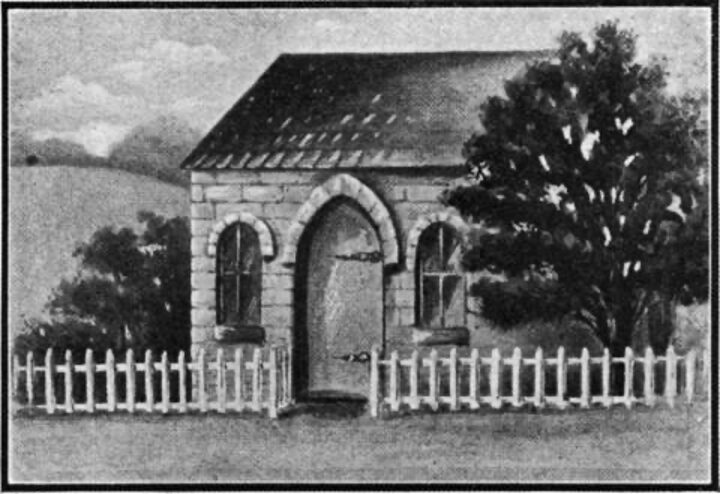
To counter the efforts of their New England counterparts, the Church of England focused their sights on Anglican missions in places like New York and Virginia. In 1710, the SPG sent missionary Andrew Williams to facilitate the conversion of Mohawk communities near Albany, New York. Mohawk parents and children showed some initial interest in the translated materials he brought, particularly Mohawk translations of Anglican texts such as the Book of Common Prayer. Some even committed to attending the school. Early eighteenth-century New York City saw similar efforts under SPG missionary Elias Neau. Neau established a school to provide religious instruction to enslaved peoples passing through the city, believing, like Andrews, that translating religious texts into the languages of potential converts would make Christianity more accessible. Like with Native Americans and their raids on colonial encroachments on Native land, Protestant enthusiasm for converting enslaved peoples was also repeatedly tempered by fears of slave uprisings, which grew throughout the colonies in these years.
These concerns were not unfounded as religion certainly played a crucial role in slave revolts and cultures of resistance. A 1712 revolt in New York, in which twenty-three Black men killed nine white colonists and injured several others, intensified white anxieties. Two of those convicted attended Neau’s school. Rumors of additional conspiracies spread across the city and into the Hudson River Valley, leading both colonial officials and missionary organizations to leave unaddressed Neau’s desire to print translations in the dialects of Black converts. SPG leaders became wary of translating catechisms into African languages, fearing that Christian literacy might encourage organized rebellion. In these cases, Protestant Christianity was imagined as a potential catalyst for resistance rather than a tool for social stability. Some also drew on inherited African religious traditions as they encountered new forms of Protestant worship. The Stono Rebellion of 1739 is a striking example of enslaved peoples adapting Christianity in ways that spoke directly to their lived circumstances.4 Many of the rebels were Kongolese Catholics who intentionally launched their uprising on September 8, the feast day of the Virgin Mary according to the Kongo Catholic liturgical calendar.5 Others also blended African and Protestant ideas to meet their immediate needs. In the mid-Atlantic, enslaved Africans incorporated drums, percussive fiddles, and other expressive practices into Pinkster celebrations rooted in Dutch Reformed tradition.6 By the time of the early rumblings of the New England revivals, thousands of enslaved and freed peoples seized on the emotional and experiential flexibility of the First Great Awakening, participating in revival meetings that allowed for ecstatic movement, shouted prayer, and new forms of communal worship.7
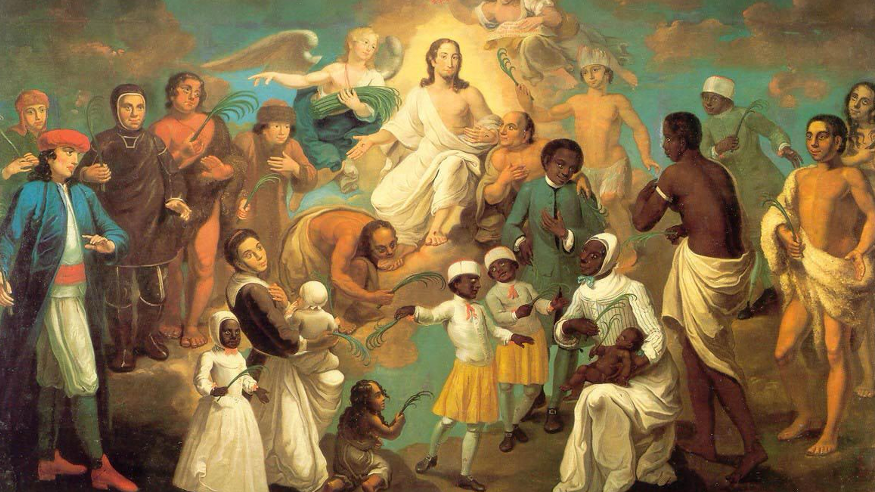
Despite these moments of creativity and agency, overall missionization efforts among enslaved Africans moved slowly and achieved limited success. Missionaries’ accounts often revealed enslaved people’s ambivalence toward Anglo-Protestant ideals, especially regarding marriage practices, modes of worship, and the moral codes missionaries sought to impose. Records also revealed the degree to which missionaries depended heavily on the cooperation of enslaved peoples to achieve any real success. In a 1714 letter, SPG agent Francis Le Jau described how the “most sensible” of his target Black population in Goose Creek, South Carolina had “solemnly” promised to report any murmurs of potential uprisings. Le Jau underscored his lack of authority, however, writing, “I can’t but depend upon the truth of their words.”8 Moravians in the Danish West Indies had somewhat greater success. Founded by German reformer Count Nicolaus Zinzendorf, they established a mission in 1732 on St. Thomas in the Danish West Indies and soon expanded across the Caribbean, including Antigua. They would help spread among enslaved populations in the West Indies, aided by Moravians’ willingness to preach in Creole languages and empower Black converts as evangelists. This Caribbean movement represented one of the earliest sustained Protestant evangelizing efforts towards enslaved Africans and would become one important site for African cultural and spiritual survival and adaptation in North America.
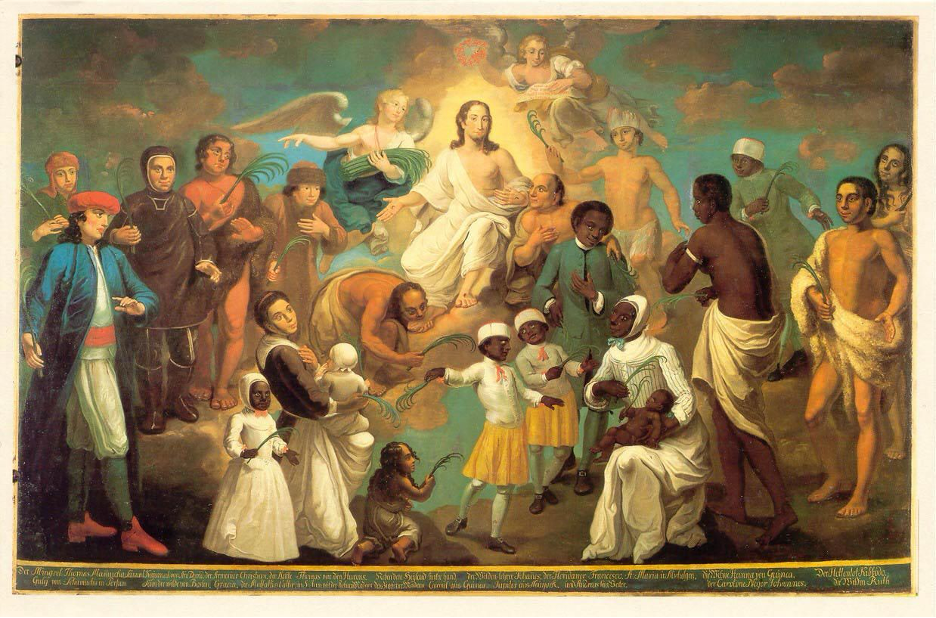
Taken together, these missionary activities towards Native Americans, Jewish communities, and enslaved African populations reveal a growing expectation among Anglo-American Protestants that some broader spiritual revival should be imminent across the Americas. Many missionaries hoped that converting a few members of non-English populations would spark similar awakenings among Euro-American Protestants, a belief that later revivalists would repeat. Yet most local ministers remained skeptical. They regularly questioned the sincerity of these conversions, and debates about the authenticity of religious transformation, especially among marginalized groups, continued to occupy American religious leaders for decades. What ultimately captivated the broader New England public was not the conversion of racialized communities or the renewed piety of religious outsiders. Instead, it was the arrival of a British celebrity preacher, George Whitefield. His skillful self-promotion, his extensive network of supporters among local ministers, and his widely advertised preaching tour featuring dramatic, emotionally charged performances catalyzed a series of events that later scholars would call “The Great Awakening.”
III. Promoting Revivals
Across the Ohio Valley-Great Lakes region, many Native communities experienced their own waves of spiritual renewal. New prophets guided communities through the devastation of epidemic disease, land dispossession, and escalating conflict with Euro-American settlers.9 Congregationalists in New England; Scots-Irish Presbyterians, Moravians and German Pietists in the Middle Colonies; and Methodists in Wales and England all witnessed noticeable increases in religious activity during the mid-eighteenth century. Together, these developments set the stage for what later observers would call the Great Awakening.
During the 1730s and 1740s religious life in New England changed dramatically, and these changes would echo throughout several centuries of American religious history. Previously, religious practice centered on the steady rhythms of attending services, hearing sermons, reading scripture, and engaging in careful self-examination within tightly knit communities. Revivalism disrupted these routines. Worshippers reported ecstatic visions, physical displays such as fainting or convulsing, and encounters with itinerant preachers who traveled from town to town, sometimes challenging local ministers and fracturing congregations. The expanding power of print, in the form of newspapers, published letters, and printed sermons, enabled contemporaries to connect these scattered episodes into what appeared to be a single, transatlantic phenomenon. As a result, the Great Awakening emerged as not only a widespread religious revival, but also as a media-driven spectacle and a source of intense theological debate that reconfigured the role of Protestantism in colonial society. It also left a lasting mark on American religious culture.10
In many respects, the narrative of a singular Great Awakening began with the publications of Northampton minister Jonathan Edwards (1703-1758), an influential figure whose legacy would continue long after his death. A member of a prominent family of Connecticut River Valley ministers, Edwards published A Faithful Narrative of the Surprising Work of God in 1734, describing an unexpected surge of religious enthusiasm in his congregation. Hundreds of attendees converted and testified to a personal, religious experience. Church membership at Northampton swelled to over six hundred, which accounted for nearly every adult in the town. Edwards described these mass conversions as a “shower of divine blessing” that spread from Northampton to neighboring towns such as South Hadley, Sunderland, and Westfield. He observed how New Englanders – men, women, and children – were all suddenly gripped by intense spiritual concern, devoting themselves to stricter Sabbath observance, more frequent Bible reading, and heightened private devotion. Many experienced deep anxiety over the fate of their souls and cried out, “What shall we do to be saved?” Others reported visions, emotional outbursts, trembling, fainting, or other dramatic signs of conversion that went beyond conventional professions of faith.11
Edwards’ wife, Sarah, also described powerful spiritual experiences during this period. As a minister’s spouse, Sarah was subject to higher levels of scrutiny relative to her peers. Despite the risk to her reputation, she began recounting to her husband an “agitation of body” and “convulsive motions” that she interpreted as signs of divine assurance from God. Yet, like many women’s spiritual writings of this period, her accounts were circulated cautiously and intensely curated to avoid overtly challenging patriarchal authority. Many ministers worried that vivid descriptions of bodily revelation, especially those written by women, might undermine not just their clerical authority but also be weaponized to discredit the emerging revival movement by their opponents.12 Trusting in Edwards’ curatorial hand to make a convincing case for the revivals that would appeal to their more conservative counterparts, Boston clergyman and editor Benjamin Colman (1673–1747) helped shepherd Edwards’ Faithful Narrative to publication with London printers in 1737. Once published, the text reached a transatlantic audience increasingly eager to reproduce Northampton’s experiences in their own congregations. As one scholar has recently put it, the dissemination of Edwards’s report “shaped Protestant patterns of revival” across a British landscape increasingly connected by cheap and popular print.13 Beyond the mere details filling its pages, A Faithful Narrative became a prototype of revivalist news-sharing and, of course, revivalism itself.
No figure took advantage of the rising revivalist excitement more effectively than English preacher George Whitefield. Whitefield was an Oxford-trained Anglican and collaborator with John and Charles Wesley, the founders of Methodism. He launched a widely publicized preaching career in England in the late 1730s. In his 1737 sermon The Nature and Necessity of the New Birth, he sharply criticized Christians who treated religion as routine habit rather than a truly heartfelt transformation. Genuine faith, he insisted, required being “baptized with the Holy Ghost” and that the confessant becomes a “New Creature,” saved from sin.14 In a religious culture long centered on orderly parish life and deference to ministers’ authority, Whitefield’s message was akin to spiritual anarchy.15 For many Congregants frustrated by the false assurance of salvation through steady, predictable rhythms of New England religion, however, Whitefield’s approach felt energizing, exciting, and even at times apocalyptic. One admirer from Byfield, Massachusetts, remarked that Whitefield seemed able to rouse the “Churches from their Deadness & Formality in Religion.”16
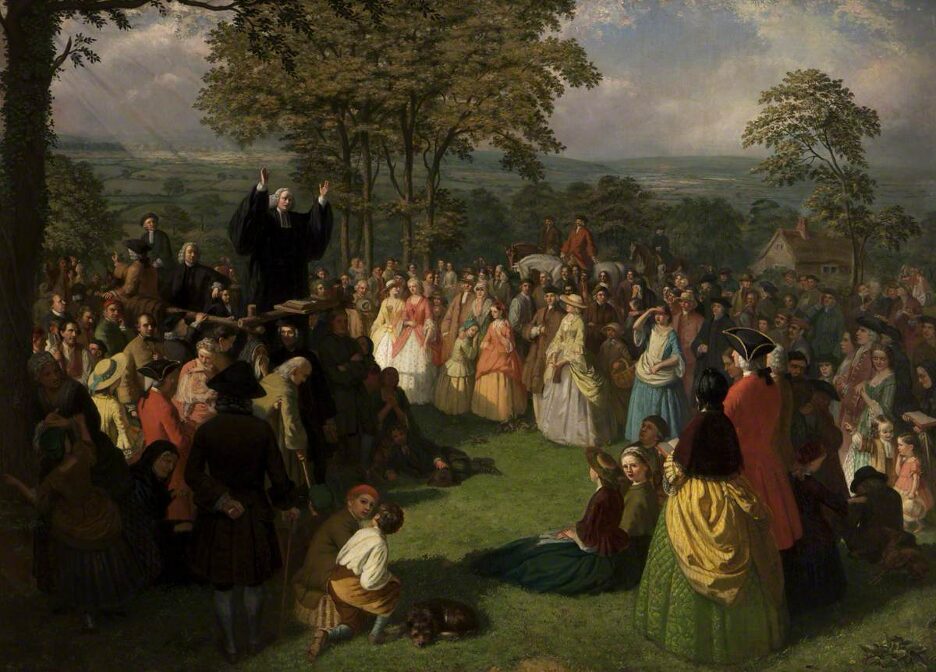

Newspapers, letters, and printed journals transformed Whitefield into a celebrity before he even reached North America. The itinerant preacher’s theology was not entirely novel to New England, but printed accounts fixated on his innovative delivery. Whitefield preached without a script and used dramatic gestures, tears, and direct appeals to his audience. These techniques sharply contrasted with the calm, measured style favored by most New England ministers. He was also a skilled self-promoter who used the expanding print network to craft the first truly modern, media-driven religious awakening. In July 1739, the South Carolina Gazette reported on the “wonderfully laborious” preacher who gathered crowds of 20,000 people in London’s outdoor public squares.17 Print accurately captured Whitefield’s ability to create powerful public spectacles that emphasized emotional renewal and personal rebirth, fueling expectations of an imminent, sweeping revival.
Whitefield’s popularity surged as he toured the colonies between 1741 and 1742. Other itinerant preachers copied several of his methods, including Gilbert Tennent, Eleazar Wheelock, and Daniel Rogers. They held multi-day meetings, preached spontaneously, and challenged the traditional system in which each town only allowed a single minister to oversee local religious life. Their efforts spread revivalist excitement even into rural parishes and reshaped ministers’ understanding of their own roles. Increasingly, revival-oriented clergy imagined themselves not as guardians of steady religious order but as divinely empowered agents capable of provoking radical spiritual transformation.

Revivalists went further, questioning the spiritual state of even the most respected church members who prided themselves on moral behavior, regular communion, and sound doctrine. Diaries, sermons, and conversion narratives from this period reveal that laypeople increasingly described their lives in terms of sudden awakening or impending damnation. Edwards himself escalated revivalist rhetoric during Whitefield’s tour, most famously in his sermon Sinners in the Hands of an Angry God. Here he likened sinners to “a spider” dangling over the fires of hell by God’s sheer mercy. It was a message aimed not at notorious sinners but at complacent church members. In an ironic twist, the revivals’ fiercest denunciations were directed at the very visible saints of New England’s churches:
“The God that holds you over the Pit of Hell, much as one holds a Spider, or some loathsome Insect, over the Fire, abhors you, and is dreadfully provoked; his Wrath towards you burns like Fire; he looks upon you as worthy of nothing else, but to be cast into the Fire; he is of purer Eyes than to bear to have you in his Sight; you are ten thousand Times so abominable in his Eyes as the most hateful venomous Serpent is in ours.”18
Gilbert Tennent advanced an even more pointed critique in his 1740 printed sermon The Danger of an Unconverted Ministry, accusing ministers who did not support the revivals of being “Pharisee-Teachers” who misled their congregants by confusing outward discipline with true spiritual rebirth. If empty piety laid at the heart of their ministrations, Tennent surmised, “Then it is both lawful and expedient to go from them to hear Godly Persons.”19 Such charges emboldened revival supporters to form new congregations, often directly beside or right across from the churches they left. What revivalists celebrated as a divine spark of renewal increasingly proved destabilizing. Whitefield’s tour fractured parish life, undermined longstanding clerical authority, and replaced inherited religious assurances with a volatile culture of spiritual self-examination.
Whitefield’s emphasis on a personal “new birth” and his contrast between heartfelt conversion and steady, routine spirituality fractured religious life throughout the colonies. Bodily manifestations such as trembling or fainting were not entirely new. Puritanism had long linked physical sensation to spiritual transformation. But the revivals intensified these practices and extended them beyond clerical control. Increasingly, such experiences occurred not only in formal worship but also in homes, fields, and informal gatherings. What ministers had once regarded as signs of genuine regeneration increasingly slipped beyond their ability to regulate or sometimes even understand. Men, women, children, including some Native and African converts, certainly saw the democratizing potential behind the notion that conversion could be a spontaneous, God-directed process. If anyone at any point in time could experience this burst of divine inspiration and salvation, then Anglo-Protestant ministers’ interventions could be deemed superfluous to one’s own personal relationship with God. Furthermore, anyone, and not just ministers, could personally corroborate their own salvation strictly through the evidence apparent on their bodies. This shift also elevated the role of personal engagement with scripture. While ministers had long served as the primary interpreters of the Bible, revivalists encouraged ordinary believers to seek meaning directly from the text. As laypeople increasingly relied on their own interpretations, biblical reading became a powerful tool for self-authentication. This trend magnified the authority of private judgment and weakened older communal and clerical frameworks.
Behind the revival phenomenon stood an extensive print media infrastructure. In addition to Whitefield’s sophisticated use of newspapers and correspondence, ministers such as Thomas Prince (1687–1758) published works that stitched together numerous local episodes into a larger narrative of spiritual revival. Prince’s An Account of the Revival in Boston in the Years 1740-1-2-3 (1743) and his periodical Christian History, reported on revival activity throughout the British Atlantic world. Through these publications, printed sermons, and reports of conversions more than tripled the size of government printing and political news.20Although not all ministers endorsed the revivals, those who supported them still outnumbered critics nine to three in Boston.21 Print not only documented revival activity. It also amplified, legitimized, and sustained the energy and excitement for it.
Even those outside the revivalist movement found themselves drawn into its spectacle. Printer and future founding father Benjamin Franklin did not share Whitefield’s theology, but he greatly admired the revivalist’s oratorical power. After hearing Whitefield preach outdoors, Franklin marveled at the clarity and reach of his voice. As he wrote in his autobiography: “He had a loud and clear Voice, and articulated his Words and Sentences so perfectly that he might be heard and understood at a great Distance… I computed that he might well be heard by more than Thirty Thousand. This reconcil’d me to the Newspaper Accounts of his having preach’d to 25,000 People in the Fields, and to the ancient Histories of Generals haranguing whole Armies, of which I had sometimes doubted.”22 So impressed was Franklin that he published some of Whitefield’s sermons for Philadelphia readers, further contributing to the movement’s media presence.
IV. Opposing Revivals
By 1743, the revivals had alienated many local ministers who felt threatened by itinerants. One dramatic example was the behavior of itinerant preacher James Davenport. By then, Davenport had already urged his followers to attack local sheriffs, had been arrested and jailed numerous times, was declared insane by several assemblies and juries, and had been forced to leave both Connecticut and Massachusetts. After receiving an invitation from a congregation in New London, he returned to Connecticut and staged a large bonfire, urging listeners to burn books written by respected New England ministers. The next evening, he organized a second fire, this time insisting that attendees also throw their clothing into the flames because, in his view, garments had become symbols of vanity. Davenport led by example, casting his own pants into the fire. A woman in the crowd disrupted the hysteria by retrieving his pants and handed them back to them, breaking the spell he had cast over listeners. In the aftermath, the itinerant preacher’s embarrassed followers began publicly distancing themselves from him, and even Davenport later lamented that he had strayed from God’s path.23
Opposition to the revivals had been building steadily throughout the 1740s as Whitefield’s followers increasingly challenged the authority of established ministers and local officials. Despite assurances from revival leaders that the movement’s excesses could be managed, ministers on the ground struggled to restrain the more disruptive behaviors without appearing hostile to the spirit of revival. As divisions continued to fracture communities, lay exhorters and visionaries began claiming biblical authority outside of ecclesial structures. Congregations began splitting between “New Lights,” who supported and promoted the revivals, and “Old Lights,” who opposed them. However, even among revival supporters, disagreements about theology and church structures increased. This was because many participants interpreted their revival experiences through the lens of Pentecost, the moment described in the Bible as when the Holy Spirit descended upon the early Christian apostles. If this was happening again amongst them, many felt that spiritual authority rested not with churches or clergy, but with visible signs of divine power. In other words, supporters encouraged a view of the revivals as a new kind of religious dispensation: the inauguration of a revolutionary system that replaced the old order rooted in the authority of a local minister with the authority of itinerant preachers or even direct revelation from God. So, when standing ministers resisted the movement’s more disruptive practices, revivalists took this resistance as proof of spiritual blindness. They understood their actions, which looked like schisms to opponents of revival, as obedience to God’s will.
As revivalist enthusiasm intensified, the conflict also spilled into civic life. Separatists who founded new congregations directly challenged compulsory parish taxes, contested clerical authority in court, and occasionally disrupted services. What began as a theological debate over conversion and assurance over salvation increasingly became a struggle over the boundaries of civil and political authority. By 1742, the Connecticut Assembly passed a law banning itinerant preaching. Itinerant preachers like Davenport and Wheelock soon lost their positions in local churches for violating the law. For some revivalists, the same experiences that validated exercised bodies now justified organized protest. Indeed, if God communicated his truth directly to those who are saved, then civil and ecclesiastical sanctions should be dismissed as human interference with divine will.
The Connecticut Assembly’s ban on itinerant preaching marked a turning point for opponents of the revival. Concerned that the law would extinguish revival enthusiasm, Edwards published Some Thoughts Concerning the Present Revival of Religion in New England (1742) in an effort to defend the movement and support the work of itinerant ministers like Wheelock. Edwards readily celebrated the spiritual egalitarianism of the revivals, noting that “All Sorts of Persons, throughout the whole Congregation of Israel, Great and Small, Rich and Poor, Men and Women, helped to build the Tabernacle in the Wilderness.” He continued, “Everyone whose Heart stirred him up, and every one whom his Spirit made willing; all Sorts contributed, and all Sorts were employed in that Affair, in Labours of their Hands, both Men and Women.”24 Converted African Americans and Native Americans who he initially believed were “ignorant and barbarous,” he recorded as growing “very glorious in [the revivals] Influences and Effects [on them].”25
Yet Edwards’s inclusive vision for the revival did not translate into expanded social or political opportunities for marginalized peoples. He continued to own enslaved Africans, and he framed the growing diversity of religious voices as an opportunity for ministers to exercise their ability to manage and oversee those converts, rather than embracing the democratizing spirit it seemed to carry. Edwards’ publication attempted to offer a middle path: it acknowledged the legitimacy of the revivals but without giving into its egalitarian social and political promises, therefore reassuring anxious clergy and civic leaders that their authority could still remain intact.
Edwards’ ardent defense, combined with declining enthusiasm for revival among ministers, gave Boston minister Charles Chauncy the opening he needed to rally anti-revivalists into a united opposition. Within just a few months after Some Thoughts was published, Chauncy published his rebuttal aptly titled Seasonable Thoughts on the State of Religion in New England (1743). Summarizing the frustrations of fellow Anglo-Protestant clergy, he complained that “Men of all Occupations… sometimes Lads, or rather Boys: Nay, Women and Girls; yea, Negroes, have taken upon them to do the Business of Preachers…[and] to be Teachers of others… Neither have they contented themselves to speak in the more private Meetings of Christians but have head forth in the publick Congregations.”26 While Edwards sought to ease ministers’ anxieties by finding room for them within the revivalist movement, Chauncy reassured them that their authority can only be maintained by defending the old religious order. As he wrote to his readers: “We, who have been made Overseers of the Flocks in this Land, are peculiarly oblig’d to use our Endeavours, in all suitable Ways, within our proper Sphere, to suppress these Disorders.”27 After months of witnessing the excesses and disruptions of the revivals, Chauncy’s views resonated widely. Subscribers to Seasonable Thoughts included the governors of Massachusetts, Connecticut, and Rhode Island, prominent merchants, town magistrates, more than a hundred ministers, and several militia officers. Chauncy’s rebuttal made him the leading voice of the antirevivalist movement and the primary editor of publications opposing the revivals.
Chauncy’s success came not only from the timing of his publication and his attentiveness to ministers’ growing dissatisfaction, but also from his willingness to boil the debate about the revivals down to a matter of interpretation: namely whether ambiguous bodily performances and ecstatic conversions should be understood as manifestations from God. Indeed, for most of the revivals’ presence in print, this was precisely how it was marketed and promoted by its supporters. So when revival leaders viewed public displays of emotion as signs of genuine love for God, Chauncy argued directly that true love should not be so ephemeral, but rather “uniform, steady and pleasant.”28 Similarly, revivalists interpreted crying and fainting as evidence of true spiritual joy. Chauncy countered that such a reaction could just as readily be explained as mere “animal Passion,” and that true joy consists of “a holy Satisfaction and Chearfulness of Mind… mixt with a becoming Fear and Caution.”29 In using terms like “animal passion” and “hysteria,” Chauncy offers a natural and physiological counter-explanation for the revivals that reframed it as an event marked strictly by its emotionalism rather than anything about divine intervention. His title choice makes this very clear. Whereas Edwards’ title Some Thoughts Concerning the Present Revival of Religion in New England readily described the phenomenon as a “revival,” Chauncy refused to even acknowledge it as such. Instead, he titled his work Seasonable Thoughts on the State of Religion in New England. Befitting the stature of someone beholden to the traditional order he wanted to restore, Chauncy relied strictly on the force of his ideas to challenge the print spectacle and media-saturated coverage of the revivals.
Some Thoughts accelerated institutional disinvestment in the revivals. Chauncy’s campaign spread across New England and beyond. Ministerial associations publicly denounced the revivals, itinerant preachers abandoned their circuits, and print coverage of revival activity declined sharply. By 1746, only about 5 percent of publications addressed revival news, compared to roughly 35 percent the previous year.30 Harvard College issued its own rebuttal in 1744 with The Testimony and Advice of the Pastors of New-England, which withdrew support for the revivals and condemned their disruptive effects on New England society. Perhaps most damaging to the cause of revival, however, was publishers’ sudden loss of interest in promoting revival literature. Before 1742, printers throughout New England had eagerly published almost anything related to the movement. In the following years, printed texts from revivals were printed primarily by a small handful in the publishing industry: Boston printers Samuel Kneeland and Timothy Green, and bookseller Daniel Henchman. Without widespread support for the revivals, which thrived primarily as a media spectacle, New England residents’ interests in religious revivals would similarly wane.
These institutional shifts chased out many itinerant preachers into neighboring colonies such as New York and Pennsylvania, placing them beyond the reach of Congregationalist oversight. Despite Jonathan Edwards’s prominence and his family’s regional influence, a combination of changing church policies on membership, disputes over his salary, and a scandal involving young men accessing a midwife’s manual ultimately led to his dismissal from the Northampton church in 1749. Afterward, Edwards accepted a position in Stockbridge, Massachusetts, where he ministered to the local Native communities. He was later offered the presidency of the College of New Jersey. Edwards worked closely with Native peoples, and at times advocated for their interests. He and his family never emancipated his own enslaved people, leaving unrealized the democratizing promise of the revivals even in the household of one of its most visible leaders. Several of Edwards’s theological heirs, including Samuel Hopkins, Jonathan Edwards Jr., Joseph Bellamy, and even southern Baptists such as Oliver Hart, eventually drew on aspects of his thought to promote abolitionism in later decades. Meanwhile, Whitefield shifted his attention toward establishing and maintaining an orphanage in Georgia. To sustain the institution, he spent considerable effort lobbying in support of slavery in the colony, and he himself owned numerous enslaved workers. In these ways, the spiritual egalitarianism so celebrated by revivalists proved, as Chauncy suggested, more marketing and rhetoric than actualized freedoms. The social and political payoffs of this democratizing movement were indeed limited.
V. Beyond Revival
The significance and long-term influence of the 1740s revivals on colonial American history remains debated, even among historians. In New England, the revivals’ legacy was marked by growing separatism and factionalism. Ministers in later decades worried that similar upheavals could recur, and many became cautious about encouraging anything that might reignite such divisions. This became especially true as tensions with Britain escalated in the 1760s. Outside of New England, revivalists pursued similar spiritual awakenings in the South, particularly in Anglican-dominated colonies, while continuing efforts among Native Americans and African Americans. Yet for many who did convert during the revivals, the egalitarian promises of the 1740s awakenings never fully materialized. New England churches that had initially welcomed Native and Black converts increasingly hardened their racial boundaries in the following decades, applying church discipline unevenly and often along racial lines. These failures led to further fragmentation, prompting Native and Black Christians to form their own congregations. In this sense, the democratizing possibilities of the revivals proved short-lived. Even so, the revivals did leave a lasting impact. Missionaries and revivalist leaders helped build important religious networks and institutional structures that later supported the rise of new denominations and fueled additional waves of revival in the eighteenth and nineteenth centuries.
As the flames of revival dimmed, many of the movement’s supporters began searching for the next wave of religious enthusiasm. Baptists who emerged from the New England revivals tried to spread revivals into the predominantly Anglican Virginia and the Carolinas. Leaders such as Samuel Harris and John Waller organized new Baptist congregations that emphasized adult conversion, believer’s baptism, and highly emotional styles of worship. Much like in New England, these revivals spread quickly through the Piedmont and backcountry regions, appealing especially to small farmers and settlers who lived far from the structures of Anglican parish life. Yet revivalism in Virginia brought conflict as well as growth. As dissenting groups multiplied during the 1760s, Anglican authorities sometimes arrested and jailed Baptist preachers for holding unauthorized services.
These movements often crossed racial boundaries as enslaved Africans participated in some early Baptist congregations. But like in the northern colonies, this egalitarianism was inconsistent and soon receded. Similar patterns unfolded in North Carolina, where Moravian missionaries arrived in the 1750s with hopes of building a unified community of believers. Within only a decade, they began purchasing enslaved people, revealing how easily revivalist ideals of Christian fellowship were constrained by entrenched racial hierarchies. Their rhetoric of spiritual equality did not translate into social equality in practice.31
A smaller but notable revival returned to New England during the 1760s, though it never matched the media spectacle of George Whitefield’s earlier tour. One influential leader was Sarah Osborne. She led prayer gatherings in her home and became a respected figure in her community. When Newport’s First Church sought a new minister, Osborne’s support for Samuel Hopkins, one of Edwards’ theological descendants, helped him secure the position. Hopkins often consulted Osborne while preparing his sermons, a sign of her informal but significant authority within the congregation. Osborne and other revivalists supported antislavery views. Yet even they did not fully embrace the social implications of their theology. Osborne herself kept her enslaved laborers and did not emancipate them, revealing once again the gap between the revivals’ egalitarian promises and their limited actions.32
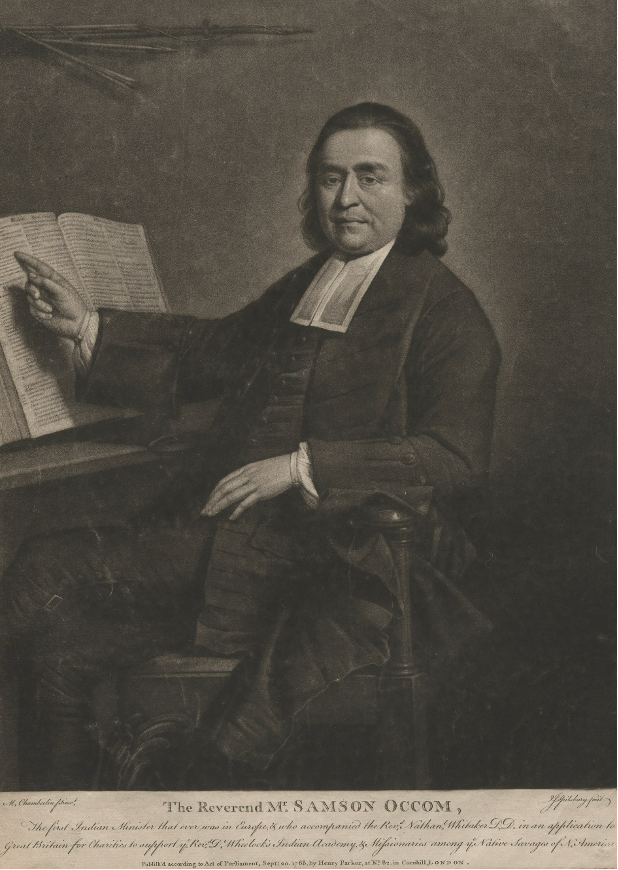
Revival leaders such as Eleazar Wheelock shifted their focus toward Native American communities. Wheelock founded Moor’s Indian Charity School in Lebanon, Connecticut, intending to educate Native children and train them as missionaries to their own communities. One of his most successful students was Samson Occom, a Mohegan minister who embraced the revivalist message and sought to spread Christianity among Native peoples. Occom believed that working with Anglo-American institutions might advance both religious and social opportunities for Native communities. However, his wife Mary Occom, who was also educated at Wheelock’s school, remained skeptical.33 Mary often refused to correspond with revivalist sympathizers from London, and many visitors often remarked on the ways she rarely spoke in English and continually dressed in Native garb, despite having been educated in those customs. At first, her outright refusal to engage with Anglo-Protestant society bothered her husband, but her approach would prove to be the least harmful to the Occom’s cause. After Occom undertook a major fundraising tour in Britain to support Moor’s Indian Charity School, Wheelock used the funds instead to establish what would become Dartmouth College for the education of Anglo-American Protestant children. Feeling betrayed and already underpaid compared to White missionaries, Occom distanced himself from Wheelock and recommitted to Native-centered efforts. He went on to become the first Native American author to publish a book in colonial America with his 1772 Sermon at the Execution of Moses Paul. Later, he joined other Native Christians in founding the community of Brothertown in upstate New York in an attempt to build a refuge from the constant suspicion and discrimination they faced in Anglo-American religious life.34
VI. Indigenous Revivals
Between 1740 and 1770, numerous Native American communities saw a remarkable surge in prophetic religious movements. These movements offered both explanations for Native suffering and strategies for cultural survival in the face of epidemic disease, land dispossession, and increasing dependence on European goods. This period saw the global conflict between Britain and France called the Seven Years’ War (1756-1763). Colonists called the conflict the French and Indian War, but Indigenous people fought on both sides. The war ravaged Indigenous communities through direct combat and through the removal of the French from the region. Allies of the French suffered most directly, including the Wabanaki, Ojibwa, Odawa, Lenape, Potawatomi, and more. But even those who did not ally with France suffered as Indigenous people lost significant leverage after they could no longer make Britain compete with France in negotiations.
Religious prophecy rose in response, and many of these prophets blended elements of Christianity with longstanding Indigenous religious traditions. They taught that Native people had been spiritually weakened through their interactions with Europeans, which disrupted the natural order and set their communities on a path toward destruction. According to these teachings, the loss of sacred power could be reversed only by rejecting European goods and customs and returning to traditional Native practices and lifeways.
Perhaps the most well-known of these prophets was the Lenape/Delaware shaman Neolin. Little is known about his early life, but beginning in 1761, during the war, Neolin reported a series of visions in which he encountered the Master of Life, who revealed specific instructions, prayers, and rituals to him. Neolin explained to his followers that the Master of Life was upset with Native people for their dependence on white people and for their apparent disregard for the traditional spirits. Hence, Native communities had strayed from the correct spiritual path, and returning to it required both purification and reform. He enacted these reforms by blending previous Delaware visionaries and folklore with Christian tropes and symbols like God, heaven, Satan, hell, and the paths to salvation and damnation. Native people, he insisted, must abandon alcohol, polygamy, witchcraft, and internal conflict. He also urged cultural renewal by rejecting European goods and practices of all kinds: “If you suffer the English among you, you are dead men,” he told his followers. “Sickness, smallpox, and their poison will destroy you entirely.”35
Neolin also called for returning to the bow-and-arrow, for wearing only skins and furs, and for the faithful execution of specific prayers and rituals. Through these actions, Native people could purify themselves. Unlike the rhetoric of the New England revivalists, this message went beyond individual spiritual renewal. It was a call for political resistance. The Master of Life, he taught, had declared: “This land where ye dwell I have made for you and not for others…[and] those who come to trouble your lands,—drive them out, make war upon them.”36 Through purification and renewed unity, Native peoples could regain the sacred power necessary to expel European settlers. This aspect of Neolin’s teachings resonated strongly with the Odawa leader Pontiac, who in 1762 and 1763 incorporated its themes into his own calls for resistance in what would later be known as Pontiac’s War.
Another influential prophet of this era was Papunhank (1705-1775), a Munsee religious leader known for advocating a message centered on peace, moral reform, and cultural renewal.37 He told Natives and settlers alike that “whatever argument might be advanced in defense of war… when God made men, he never intended they should kill and destroy one another.” According to later accounts, Papunhank began his prophetic career after undertaking a vision quest around 1750 in response to the death of his father. On the fifth day of his quest, he experienced a powerful revelation from the Great Spirit. He returned to his Pennsylvania community transformed and soon began preaching to neighboring Native groups, including Munsees, Delawares, Conoys, and Nanticokes, about the reforms required to restore Native well-being.
Amid the turmoil of the Seven Years’ War and Pontiac’s Rebellion, Papunhank urged strict adherence to traditional rituals, the revival of sacred dances, daily morning and evening prayer, and moral discipline. He condemned alcohol, called for the rejection of European customs, and encouraged Native communities to reform themselves in ways that would promote both cultural survival and spiritual renewal. Papunhank’s insistence on nonviolence linked him to older Indigenous traditions of diplomacy and peacekeeping. As a Munsee leader, he likely knew of earlier figures such as the sachem Tackapousha, who spent decades in the seventeenth century using negotiations, strategic alliances, and legal petitions to shield Munsee people from the escalating pressures of settler encroachment. For Tackapousha, these strategies were practical tools of survival. For Papunhank, however, they became matters of deep moral and spiritual conviction. “It has been told to my heart [by the Great Spirit], that man was not made for that end, therefore I have ceased from war.”38
Papunhank’s encounters with pacifist Quakers and Moravians during the late 1750s and 1760s reinforced his own pacifist views. While their understandings of peace differed, these groups mutually welcomed and wooed a Native who sounded a similar message. Papunhank agreed with many other Indigenous leaders that white settlers were destroying their worlds through corruption, deceit, fraud, and aggression, and he was bolder than most in speaking truth to colonial authorities. However, he also believed that rejecting everything Euro-American was neither possible nor desirable. When in 1763-1764 his village became more vulnerable to violent attacks from both Native warriors and vigilante settlers during Pontiac’s Rebellion, Papunhank turned to Moravian Christianity. In the final decade of his life, he helped lead Native Moravian communities in Philadelphia, northern Pennsylvania, and the Ohio Country as they searched for a secure homeland. For a time, these communities offered fragile refuge from both Native warriors and white vigilantes, demonstrating the possibilities and the limits of Papunhank’s vision of moral reform and peaceful coexistence.
VII. African American Responses
Among enslaved Africans, religious revival and conversion failed to advance their social or political goals. For some, this only reinforced the importance of preserving the spiritualities they brought from Africa. The violence of slavery was so pervasive across all aspects of colonial American life that it not only affected the physical body, but it also circumscribed Black spiritual and psychological selves. Amid separation from their homelands and families of origin, Black survival hinged on maintaining ancestral religious remembrances.39
Some West Central Africans trafficked from the Senegambia region continued to maintain Islamic traditions in bondage. Yarrow Mamout, a Fulani Muslim who was forcibly removed to Maryland in 1752, sought to preserve core elements of his Islamic traditions, such as daily prayers, dietary restrictions, and recitations of the Quran.40 While continuity marked Mamout and other Muslims’ practices, other enslaved peoples forged new rituals by interpreting traditional African cosmologies through the aperture of their “New World.” Often denigrated by missionaries and enslavers and labelled “witchcraft,” “fetish,” or “superstition,” these vernacular religious practices involved spiritual and pharmacological interventions, as well as objects that were believed to heal, protect, or cause harm depending on how they were engaged.41 Far from being marginal, these practices became central tools for maintaining cultural identity, spiritual resilience, and communal care under conditions of profound dislocation.
Black converts to Protestantism also contributed to the revival culture of the Americas. Some embraced Protestantism out of genuine belief in its spiritual promises, including the hope of spiritual salvation and the appeal of an egalitarian Christian community. Others understood conversion as a possible avenue for improving their social standing in colonial society. This belief was widespread enough that colonial legislatures felt compelled to clarify, once again, through statutes and legal rulings, that baptism did not grant freedom to enslaved people, thereby denying any link between Christian conversion and emancipation. For those who adopted elements of revivalism as it spread through plantations, churches, and daily routines of colonial life, conversion resembled cultural adaptation and socialization. One early figure who emerged from this context was Jupiter Hammon. Born into slavery on a Long Island manor, Hammon became one of the first published Black writers in North America when his poem An Evening Thought appeared as a broadside in 1761. His writings reveal how he drew upon Christian rhetoric and theology to critique slavery, anticipate later abolitionist arguments, and carve out a literary voice within the constraints of bondage.42
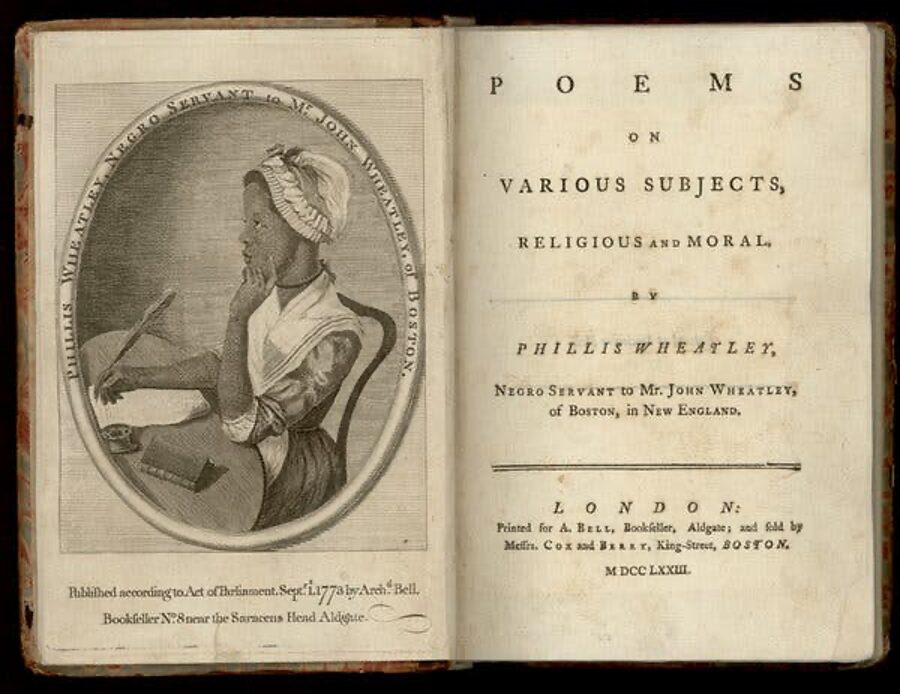
The mid-to-late eighteenth century also witnessed the emergence of African American literature whereby Protestant reflections, imagery, and themes became crucial sites for exploring African American life. The most famous among these was poet Phillis Wheatley Peters. Enslaved and educated in the Wheatley household in Boston, she gained recognition through her poems which circulated in colonial newspapers. Her Poems on Various Subjects Religious and Moral (1773) earned her celebrity across the Atlantic and made her the first African American woman to publish a book. This rise was made possible by her connection to wealthy patron Selina Hastings, the Countess of Huntingdon.43 A close friend of Whitefield, Hastings provided crucial support for revivalist ministers and helped bring the remarkable book to press before a transatlantic audience. However, the countess’s complicated relationship with slavery reflected the contradictory revival culture she financed. She supported the publications of Black writers such as Wheatley, Ukawsaw Gronniosaw, and Olaudah Equiano, while she herself owned enslaved people and inherited Whitefield’s plantation operations in Georgia.
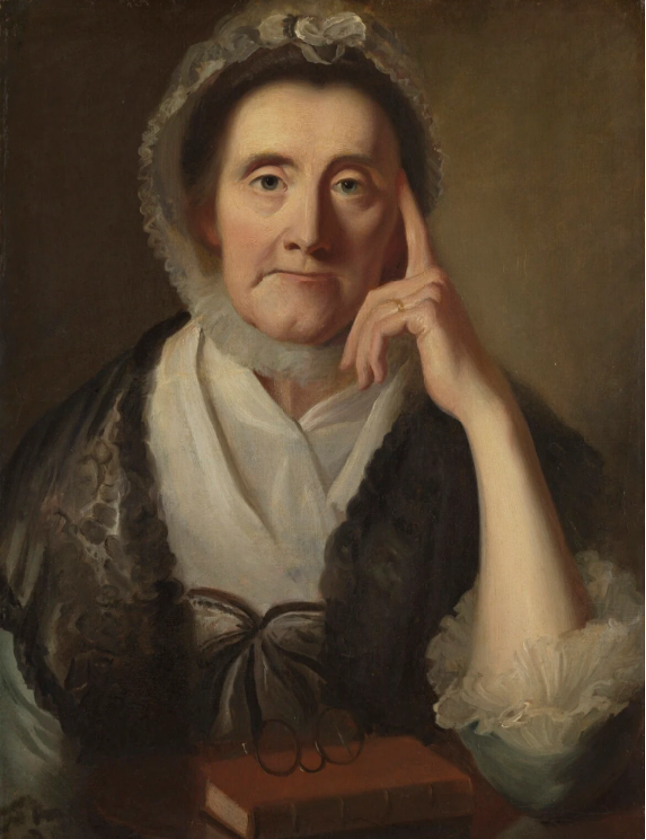

While much of Wheatley’s poetry was crafted to appeal to Anglo-American Protestant readers, it nonetheless expressed her own spiritual commitments and hopes for emancipation. In her poem “On Being Brought from Africa to America,” she famously reminded readers that her “sable race” had an equal right to the “angelic train” of a Christian heaven.44 However, her critique of American Christianity appeared more readily in a letter to Occom as she observed the hypocrisy of their cry for freedom, which they did not extend it to fellow believers:
In every human Breast, God has implanted a Principle, which we call Love of Freedom; it is impatient of Oppression, and pants for Deliverance, and by the leave of our Modern Egyptians I will assert, that the same Principle lives in us. God grant deliverance in his own Way and Time, and get him honor upon all those whose Avarice impels them to countenance and help forward the Calamities of their Fellow Creatures. This I desire not for their Hurt, but to convince them of the strange Absurdity of their Conduct whose Words and Actions are so diametrically opposite. How well the Cry for Liberty, and the reverse disposition for the Exercise of Oppressive Power over others agree.
This letter revealed both the promise and limitations of transatlantic awakenings in the middle eighteenth century. Any democratizing efforts that spiritual emancipation could have heralded were readily quashed by longstanding religious institutions and a new generation of ministers who reclaimed and preserved older hierarchies. Women preachers were repeatedly discouraged, and both Native and Black preachers regularly faced discrimination in church and in the presses.
VIII. Conclusion
These shortcomings haunted life in the eighteenth century and would soon shape a Revolution where the marginalized would claim the banner of freedom and democracy not under the auspices of revivals or spiritual awakenings, but on the battlefield where perhaps their deepest political aspirations might be truly realized. Decades of revival politicized the populace and created both unity and division through debates over the nature and boundaries of true religion. Soon, crises of empire would bring new divisions and new violence.
IX. Reference Material
This chapter was edited by Michael Baysa, with content contributions from Tucker Adkins, Michael Baysa, Joseph Cochran, Joshua J. Jeffers, Brenda Lakhani, John T. Lowe, Caitlin McGeever, Rick Pointer, Benjamin Steiner, Katy Telling, and Ben Wright.
Recommended Reading
- Catherine Brekus, Sarah Osborne’s World: The Rise of Evangelical Christianity in Early America (Yale University Press, 2013).
- Sylviane A. Diouf, Servants of Allah: African Muslims Enslaved in the Americas (New York University Press, 1998).
- Gregory Evans Dowd, A Spirited Resistance: The North American Indian Struggle for Unity, 1745–1815 (Johns Hopkins University Press, 1992).
- Linford D. Fisher, The Indian Great Awakening: Religion and the Shaping of Native Cultures in Early America (Oxford University Press, 2012).
- Sylvia R. Frey and Betty Wood, Come Shouting to Zion: African American Protestantism in the American South and British Caribbean to 1830 (University of North Carolina Press, 1998).
- Michael A. Gomez, Exchanging Our Country Marks: The Transformation of African Identities in the Colonial and Antebellum South (University of North Carolina Press, 1998).
- Sylvester Johnson, African American Religions, 1500–2000: Colonialism, Democracy, and Freedom (Cambridge University Press, 2015).
- Thomas S. Kidd, The Great Awakening: The Roots of Evangelical Christianity (Yale University Press, 2007).
- Richard W. Pointer, Pacifist Prophet: Papunhank and the Quest for Peace in Early America (University of Nebraska Press, 2020).
- Amanda Porterfield, Corporate Spirit: Religion and the Rise of the Modern Corporation (Oxford University Press, 2018).
- Jon F. Sensbach, A Separate Canaan: The Making of an Afro-Moravian World in North Carolina, 1763–1840 (University of North Carolina Press, 1998).
- David Waldstreicher, The Odyssey of Phillis Wheatley: A Poet’s Journeys Through American Slavery and Independence (Farrar, Straus and Giroux, 2023).
- Alexis Wells-Oghoghomeh, The Souls of Womenfolk: The Religious Cultures of Enslaved Women in the Lower South.
- Douglas L. Winiarski, Darkness Falls on the Land of Light: Experiencing Religious Awakenings in Eighteenth-Century New England (University of North Carolina Press, 2017).
Notes
- Experience Mayhew, “Author’s Preface,” Indian Converts, or some account of the lives and dying speeches of a considerable number of the Christianized Indians of Martha’s Vineyard, (Printed for Samuel Gerrish, 1727), xii-xiii. ↩︎
- Mayhew, “An Attestation by the United Ministers of Boston” in Indian Converts. ↩︎
- See Linford Fisher, The Indian Great Awakening: Religion and the Shaping of Native Cultures in Early America, (Oxford University Press, 2012). ↩︎
- See Michael A. Gomez, Exchanging Our Country Marks: The Transformation of African Identities in the Colonial and Antebellum South (University of North Carolina, 1998). ↩︎
- “Account of the Negroe Insurrection in South Carolina,” quoted from Jason R. Young, Rituals of Resistance: African Atlantic Religion in Kongo and the Lowcountry South in the Era of Slavery (Louisiana State University, 2007), 68. ↩︎
- Graham Russell Hodges, Root & Branch: African Americans in New York & East Jersey, 1613-1863 (University of North Carolina Press, 1999). ↩︎
- Sylvia R. Frey and Betty Wood, Come Shouting to Zion: African American Protestantism in the American South and British Caribbean to 1830 (University of North Carolina Press, 1998). ↩︎
- Francis Le Jau to the Society for the Propagation of the Gospel, 22 January 1714, quoted from The Carolina Chronicle of Dr. Francis Le Jau, 1706-1717 (University of California Press, 1956), 137. ↩︎
- See Gregory Evans Dowd, A Spirited Resistance: The North American Indian Struggle for Unity, 1745-1815 (Johns Hopkins University Press, 1992). ↩︎
- Frank Lambert, Inventing the “Great Awakening” (Princeton University Press, 1999). ↩︎
- Jonathan Edwards, A Faithful Narrative in C. C. Goen, ed., Works of Jonathan Edwards, Vol. 4: Great Awakening (Yale University Press, 1970), 152–53, 161, 184. ↩︎
- Kenneth Minkema, Catherine Brekus, and Harry Stout., et al. “Agitations, Convulsions, Leaping, and Loud Talking: The “Experiences” of Sarah Pierpont Edwards.” The William and Mary Quarterly 78 no. 3 (2021): 491-536, 499. ↩︎
- William R. Smith, Benjamin Colman’s Epistolary World, 1688–1755: Networking in the Dissenting Atlantic (Palgrave Macmillan, 2022), 206. ↩︎
- George Whitefield, quoted in Jonathan Yeager, ed., Early Evangelicalism: A Reader (Oxford University Press), 24–25. ↩︎
- Douglas Winiarski, Darkness Falls on the Land of Light: Experiencing Religious Awakenings in Eighteenth-Century New England (University of North Carolina Press, 2017), 135. ↩︎
- Byfield Church Records, 1744–1826, p. 57, Congregational Library & Archives, Boston, Mass. ↩︎
- The South Carolina Gazette, July 14, 1739. ↩︎
- Jonathan Edwards, Sinners in the Hands of an Angry God. A Sermon Preached at Enfield, (Printed by S. Kneeland and T. Green, 1741). ↩︎
- Alan Heimert and Perry Miller, eds., The Great Awakening: Documents Illustrating the Crisis and its Consequences (Bobbs-Merrill, 1967), 86–87. ↩︎
- Hugh Amory, “The New England Book Trade 1713-1790,” The Colonial Book in the Atlantic World, 330. ↩︎
- Edwin Gaustad, The Great Awakening in New England (Harper and Brothers, 1957), 55. ↩︎
- Benjamin Franklin, Franklin’s Autobiography, ed. Frank Woodworth Pine, (Henry Holt and Company, 1916), 106. ↩︎
- See Thomas Kidd, The Great Awakening: The Roots of Evangelical Christianity, (Yale University Press, 2007), 138-155. ↩︎
- Jonathan Edwards, Some Thoughts concerning the present revival of religion in New-England, (Kneeland and Green, 1742), 139. ↩︎
- Edwards, Some Thoughts, 86. ↩︎
- Charles Chauncy, Seasonable thoughts on the state of religion in New-England, (Rogers and Fowle, 1743), 226. ↩︎
- Chauncy, Seasonable thoughts, 334. ↩︎
- Chauncy, Seasonable thoughts, 26. ↩︎
- Chauncy, Seasonable thoughts, 27. ↩︎
- Lambert, Inventing the Great Awakening, 251-252. ↩︎
- Jon Sensbach, A Separate Canaan: The Making of an Afro-Moravian World in North Carolina, 1763-1840 (University of North Carolina Press, 1998). ↩︎
- Catherine Brekus, Sarah Osborne’s World: The Rise of Evangelical Christianity in Early America (Yale University Press, 2013). ↩︎
- Hillary Weiss, “Mary Occom and Sarah Simon: Gender and Native Literacy in New England.” New England Quarterly 79, no.3 (2006): 387-412. ↩︎
- For Occom’s writings, see Samson Occom, The Collected Writings of Samson Occom, ed. Joanna Brooks (Oxford University Press, 2006). ↩︎
- De Villiers to D’Abbadie, Dec. 1, 1763, Illinois Historical Collections, 10:51. ↩︎
- M. Agnes Burton (ed.), Journal of Pontiac’s Conspiracy (Published by Clarence Monroe Burton under the Auspices of the Michigan Society of the Colonial Wars, 1912), 28, 30. ↩︎
- See Richard W. Pointer, Pacifist Prophet: Papunhank and the Quest for Peace in Early America (University of Nebraska Press, 2020). ↩︎
- Anthony Benezet, “An Account of the Behaviour & Sentiments of a Number of Well-Disposed Indians Mostly of the Minusing Tribe,” in George S. Brookes, Friend Anthony Benezet (University of Pennsylvania Press, 1937), 482. ↩︎
- Alexis Wells-Oghoghomeh, The Souls of Womenfolk: The Religious Cultures of Enslaved Women in the Lower South (University of North Carolina Press, 2021). ↩︎
- James H. Johnston, From Slave Ship to Harvard: Yarrow Mamout and the History of an African American Family (Fordham University Press, 2012) and Sylvianne Diouf, Servants of Allah: African Muslims Enslaved in the Americas (New York University Press, 1998). ↩︎
- Sylvester Johnson, African American Religions, 1500-2000: Colonialism, Democracy, and Freedom (Cambridge University Press, 2015). ↩︎
- Jupiter Hammon, The Collected Works of Jupiter Hammon: Poems and Essays, ed. Cedrick May(University of Tennessee Press, 2017). ↩︎
- For recent work on Phillis Wheatley Peters, see Honorée Fannone Jeffers, The Age of Phillis (Wesleyan University Press, 2020) and David Waldstreicher, The Odyssey of Phillis Wheatley: A Poet’s Journeys Through American Slavery and Independence (Farrar, Straus and Giroux, 2023). ↩︎
- Phillis Wheatley, Poems on Various Subjects, Religious and Moral (Printed for A. Bell, 1773), 18. ↩︎