![Anti-Saloon League poster, 1919, titled "Satan's Sieve." It shows two hands holding a sieve. Into the sieve are all the food products used in alcohol production. The left is labeled "brewer" and the right "distiller." Filtering out of the sieve are various types of alcohol. It reads, "beer; whisk[e]y; rum; wines; brandy, spirits; liquers, gin." Below that are men in various stages of drunkenness.](https://www.thunderinggods.com/wp-content/uploads/2026/07/image-23-4-edited.jpg)

You are reading a working draft of The Palace of Thundering Gods, a living history project built through scholarly collaboration. Please click here to help improve this chapter.
I. Introduction
On Sunday May 21, 1922, Baptist minister Harry Emerson Fosdick stepped into the pulpit of First Presbyterian Church in Manhattan and delivered the defining sermon of his era. The title of the sermon was not a proclamation but a question: “Shall the Fundamentalists Win?” As Fosdick explained, “A great mass of new knowledge has come into man’s possession—new knowledge about the physical universe, its origin, its force, its laws; new knowledge about human history and in particular about the ways in which ancient peoples used to think in matters of religion…; and new knowledge, also, about other religions….” In an era of intellectual and political transformation, Fosdick was a leading voice among Protestant modernists (or liberals) who, he argued, “must be able to think our Christian faith clear through in modern terms.” Not all American Protestants were eager to embrace these changes. Fundamentalists who championed a literal interpretation of the Bible were, according to Fosdick, “thinking in ancient terms that leave ideas of progress out.”
For Fosdick, modernity presented an opportunity for collective spiritual progress. Modern science, which he deemed “an intellectual adventure for the truth,” brought the radio to an increasing number of American homes. The spiritual sounds of countless choirs and impassioned evangelists would soon overtake the airwaves. But technological modernity had also, just four years earlier, made possible the deadliest war the world had ever seen. Fosdick reminded those in the First Presbyterian pews of that devastation, asking, “If, during the war when the nations were wrestling upon the very brink of hell and at times all seemed lost, you chanced to hear two men in an altercation about some minor matter of sectarian denominationalism, could you restrain your indignation?” Fundamentalists, on the other hand, aimed to “set up in Protestantism a doctrinal tribunal more rigid than the Pope’s.” Even as he criticized sectarianism, Fosdick employed the anti-Catholicism that then pervaded Protestant America. Fosdick’s famous sermon made clear the nation’s religious reality: American modernity would incentivize progress and also empower prejudice; it would animate religious innovators and also activate indignant defenders of tradition; it would germinate new multifaith coalitions and also generate new intra- and inter-faith conflicts that would persist for decades.1
II. A World at War
In the summer of 1914, the assassination of Archduke Franz Ferdinand of Austria ignited the tinderbox of European nationalism. France and the United Kingdom led the Allies against the Central Powers—the German, Austro-Hungarian, and Ottoman Empires in the “Great War.” At first, most Americans favored staying out of the European conflict. But in 1915 a German U-Boat submarine sank the British ocean liner the Lusitania and killed 128 American citizens on board.
Some Americans began to call for American entry into the war, but President Woodrow Wilson only went as far as issuing a demand that Germany cease unrestricted attacks on vessels with American citizens. Even this was too much for Secretary of State William Jennings Bryan; the longtime anti-imperialist and staunch pacifist resigned from the cabinet. This marked the end of Bryan’s significant power within the Democratic Party after nearly two decades as the standard-bearer of the party’s populist wing. It similarly marked the decline of the Presbyterian Bryan’s unique fusion of Social Gospel progressivism and fundamentalist “old-time religion.” President Wilson, also a devout Presbyterian but a bookish theological moderate, championed a new brand of democratic internationalism instead of pacifist anti-imperialism.
Wilson was re-elected in 1916 behind promises to keep America out of the war. However, German U-Boats continued to attack American merchant ships. Further, British intelligence intercepted a telegram from German Foreign Minister Arthur Zimmermann encouraging Mexico to attack the United States. So, on April 6, 1917, Congress voted to declare war on Germany as requested by President Wilson.
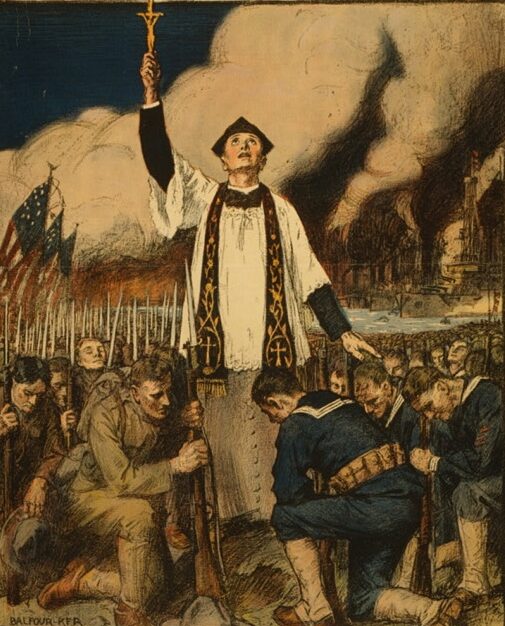
Over two million American soldiers were sent to Europe. Many of these soldiers and many American civilians were quick to cast the war as a religious mission to protect and spread Christian civilization. They claimed their German enemies were cruel “Huns,” descendants of the pre-Christian warlike nomads of the 4th to 6th centuries. Stars and Stripes, the newspaper created by and for the armed forces, frequently amplified the Christian stakes of the war. One article compared atrocities in German-occupied Belgium to the killing of infants ordered by King Herod, as detailed in the biblical book of Matthew. In an even bolder claim of divine support, one cartoon showed the German Crown Prince saying to the Kaiser of Jesus on the cross, “Oh, Look, Papa! Another of those Allies.”2 As British forces began to defeat the Ottoman Empire in Palestine, Stars and Stripes celebrated Christian control of the Holy Land as a successful latter-day crusade. American soldiers faced the realities of a deadly war from which 116,516 would not return (with over half lost off the battlefield to causes like the deadly “Spanish flu”). Countless soldiers turned to faith to identify noble sacrifice in death and to Christian national identity as comfort in the face of mass tragedy.3
For many fundamentalist Protestants, the unprecedented devastation of the Great War seemed to portend the apocalypse. Most fundamentalists were premillennialists who believed that the crises described in the book of Revelation would occur before Jesus’ thousand-year reign on Earth. For them, the British control of Palestine created the potential for the return of Jews to the Holy Land, which was another purported step toward Armageddon, a prophesied end-times battle between Israel and its enemies.4
Many Black soldiers also framed the war as a religious crusade for the soul of Europe and a chance to purify the sins of American racism. Many Black Americans hoped that the Christ-like sacrifice of Black soldiers on the battlefield would lay bare the sins of a nation that treated them as second-class citizens. But few white Americans took this lesson from the Great War. In fact, even as the Southern-born Woodrow Wilson insisted on democratic sovereignty abroad, he amplified white supremacist government at home. He instituted segregation of the federal bureaucracy and increased discrimination in government employment.
Meanwhile, German Americans also faced dramatically increased suspicion and prejudice. Several states passed laws banning German language instruction in schools. In 1918, Iowa Governor William Harding issued the Babel Proclamation, a state ban on any non-English speech in public—including in churches. While some German American Lutheran Churches in the United States changed to English language worship to prove their patriotic bona fides, others refused to comply with what they deemed a violation of their constitutional rights. The Supreme Court agreed in 1923 in Meyer v. Nebraska, and the ban was overturned.
Many members of the Quakers, Brethren, and Anabaptists, later dubbed the “peace churches,” found themselves outside the crusading consensus. The Selective Service Act of 1917, which created a national draft, included a provision allowing conscientious objection for members of “well-recognized religious groups.” Of the 24 million men who registered for the draft by November 1918, 64,693 claimed to be conscientious objectors. 3,989 persisted in their claims even after being selected and sent to military camps.5 Many conscientious objectors left to join the military in noncombatant roles, such as the medical field or logistics. Quakers created the American Friends Service Committee in 1917 to provide an avenue for conscientious objectors to assist with relief and reconstruction efforts in Europe. Still, those who remained firm in their stance were often abused. One Quaker recounted being beaten and strangled by peers at Camp Cody in New Mexico. Some who resisted all forms of military service were imprisoned. Only in 1933 was the last person detained for resisting conscription finally pardoned and released. After World War I, regret over the war’s carnage led to a surge in pacifism among mainline and liberal Protestants. Peace groups within denominations and the interdenominational Fellowship of Reconciliation provided a way for pacifists to gather and work together to lobby politicians and agitate for peace.
![A full-page advertisement promoting the League of Nations in "The New York Times. December 25, 1918," as noted on the masthead. The central pane shows angels with wings. The left wears a headband with the words "victory." The central figure holds a broadsword, and her headband reads "democracy," and the final angel's headband reads "Peace." She is shown with her left hand outstretched.
Below the angels are the words "Victory Democracy Peace, Make them secure by a League of Nations."
In two columns on each side of the angels are a list of the supporters for the League. On the left is a column that reads "Supporters of a League of Nations; Church." On the right, "Supporters of a League of Nations; Governors."
The main text reads as follows:
The article reads, “Make them secure by a LEAGUE OF NATIONS Christmas”
“This year dawns on a world groping from war toward peace. The world hopes and prays that peace may be established on justice and safeguarded against future wars. The army of occupation that sleeps till the Judgement Day in the graves of France will have fought and died in vain unless such a PEACE is framed. Our Soldiers and Sailors, returning from VICTORY, will have fought and suffered in vain if that VICTORY is not made secure. All the peoples of the free nations will have given in vain billions of their wealth and millions of their own flesh and blood if DEMOCRACY is not established forever.”
“The only Practical Way
These things which the whole world longs for can be gained only by the creation, right at the Peace Table, of a LEAGUE OF NATIONS. President Wilson has declared for such a League and is in France for the express purpose of guiding its formation. Ex-President Taft believes in it, heart and soul, and is urging his countrymen that a League must be established and that the United States must join.
A LEAGUE OF NATIONS: is necessary to do the things no one nation can accomplish alone. Victory and Peace have brought a multitude of new problems:
The New Nations:
We propose to carve out of the Old World a dozen or more Republics based upon the principle of Self-determination. Can we make the world safe for Democracy if we create these new nations and then leave them to shift for themselves? A LEAGUE OF NATIONS will be needed to guide and protect them.
German Colonies:
Germany has proved her unfitness for colonial rule. To return her colonies is unthinkable. They must become the wards of all the free peoples, banded together in a LEAGUE OF NATIONS.
Economic Questions:
Access to the sea and access to raw materials are two of the international questions that can be handled only by a LEAGUE OF NATIONS.
It will be possible for the Peace Congress to establish only broad, general rules for the regulation of these problems. No one nation can make safe and effective use of Economic Pressure to prevent war. The right to employ this weapon must reside, as President Wilson has pointed out, with a LEAGUE OF NATIONS.
Interpretation of the Peace Treaty:
Without a Supreme Court to interpret its provisions and a national police power to enforce them, the Constitution of the United States would long ago have become a dead letter. Yet the framers of the world Peace treaty at Paris face difficulties a hundred-fold greater than those which confronted the fathers of our Republic.
It will be impossible to apply the provisions of the Peace treaty without an international court to interpret them. How shall this court be appointed? How shall its decision be enforced? There is but one answer - By a LEAGUE OF NATIONS.
Your Responsibility:
This is a movement in which every man and woman in the United States can share. You believe in the principles here set forth. You want to make the world safe against the menace of future wars. You think that the progress of Civilization depends upon the co-operation of all the peoples of the world. You believe that the Team Work which won the war should be continued and utilized for the world's future prosperity. The League to Enforce Peace offers you an opportunity to DO SOMETHING ABOUT IT.
League to Enforce Peace
Bush Terminal Sajee Building, 130 W 42nd Street, New York
WILLIAM H. TAFT, President ALTON B. PARKER, Vice President
A. LAWRENCE LOWELL, Chairman Executive Com
W. H. SHORT, Secretary HERBERT S. Ноuston, Treasurer
Your Christmas Enrollment
You have just answered the Red Cross Christmas Roll Call. Will you enlist to-day with those who believe in LEAGUE OF NATIONS? This advertisement appears in fifteen of the largest cities in the country. East, West, North and South. It is paid for by a fund to which more than one thousand persons have contributed all over the United States.
We want this message to reach every man and woman in America. This advertising campaign will be continued and pushed as far and as long as funds are available. Will you fill in this coupon and mail it with your contribution? Don't wait! Do it to-day as your Christmas gift to Humanity and Civilization.”
[In a box in the center of the page ] “Victory Program
Adopted, November 23, 1918, as the Official Platform of the League to Enforce Peace.
THE war now happily brought to a close has been above all a war to end war, but in order to ensure the fruits of victory and to prevent the recurrence of such a catastrophe there should be formed a League of Free Nations, as universal as possible, based upon treaty and pledged that the security of each state shall rest upon the strength of the whole. The initiating nucleus of the membership of the League should be the nations associated as belligerents in winning the war.
The League should aim at promoting the liberty, progress, and fair economic opportunity of all nations, and the orderly development of the world. It should ensure peace by eliminating causes of dissension, by deciding controversies by peaceable means, and by uniting the potential force of all the members as a standing menace against any nation that seeks to upset the peace of the world.
The advantages of membership in the League, both economically and from the point of view of security, should be so clear that all nations will desire to be members of it.
For this purpose it is necessary to create-
1. For the decision of justiciable questions, an impartial tribunal whose jurisdiction shall not depend upon the assent of the parties to the controversy: provision to be made for enforcing its decisions.
2. For questions that are not justiciable in their character, a Council of Conciliation, as mediator, which shall hear, consider, and make recommendations; and failing acquiescence by the parties concerned, the League shall determine what action, if any, shall be taken.
3. An administrative organization for the conduct of affairs of common interest, the protection and care of backward regions and international places, and such matters as have been jointly administered before and during the war. We hold that this object must be attained by methods and through machinery that will ensure both stability and progress; preventing, on the one hand, any crystallization of the status quo will defeat the forces of healthy growth and change, and providing, on the other hand, a way by which progress can be secured and necessary change effected without recourse to war.
4. A representative Congress to formulate and codify rules of international law, to inspect the work of the administrative bodies and to consider any matter affecting the tranquility of the world or the progress or betterment of human relations. Its deliberations should be public.
5. An Executive Body, able to speak with authority in the name of the nations as represented, and to act in case the peace of the world is endangered.
The representation of the different nations in the organs of the League should be in proportion to the responsibilities and obligations they assume. The rules of international law should not be defeated for lack of unanimity.
A resort to force by any nation should be prevented by a solemn agreement that any aggression will be met immediately by such an overwhelming economic and military forces that it will not be attempted.
No member of the League should make any other offensive or defensive treaty or alliance, and all treaties of whatsoever nature made by any member of the League should once be made public.
Such a League must be formed at the time of the definitive peace, or the opportunity may be lost forever.
[Across the bottom of the page] Present this platform for discussion and endorsement by your Church, Club, Lodge, and any other organization. It has been approved by thousands of leading Americans”](https://www.thunderinggods.com/wp-content/uploads/2026/07/19181225_League_of_Nations_-_promotion_-_The_New_York_Times-890x1024.jpg)

Indeed, the end of the Great War in November 1918 was hardly the end of its impact on American religion. In 1919, American veterans in Paris founded the American Legion, which worked to commemorate the Christian sacrifice of American soldiers and counter the claims of Christian pacifists. At the same time at the Paris Peace Conference, President Wilson proposed a League of Nations, an international organization dedicated to maintaining world peace. For many liberal Protestants, the League of Nations promised the Social Gospel writ global. For many fundamentalists, however, the League of Nations threatened yet another prophesied step toward apocalyptic disaster. Many of these fundamentalists supported Republican Warren Harding as he campaigned against American participation in the League of Nations and in favor of an isolationist “return to normalcy” on his way to White House in 1920.
III. Progress and Prejudice
In 1917, one year before his untimely death due to the global influenza pandemic, Baptist minister and theologian Walter Rauschenbusch published A Theology for the Social Gospel. In it, he contended that “the social gospel is a permanent addition to our spiritual outlook and that its arrival constitutes a stage in the development of the Christian religion.” “The social gospel has become orthodox,” he optimistically proclaimed.6 In reality, Rauschenbusch’s Social Gospel was far from standard , as was his long commitment to alleviating urban poverty and advocating for Christian socialism. Nevertheless, the notion that Protestant morality should reshape American politics and culture was widespread even across denominations with increasingly divergent theologies. Indeed, the most significant changes of the late Progressive Era were consistently marked by both Protestant proclamations of progress and persistent Protestant prejudices.
![Anti-Saloon League poster, 1919, titled "Satan's Sieve." It shows two hands holding a sieve. Into the sieve are all the food products used in alcohol production. The left is labeled "brewer" and the right "distiller." Filtering out of the sieve are various types of alcohol. It reads, "beer; whisk[e]y; rum; wines; brandy, spirits; liquers, gin." Below that are men in various stages of drunkenness. At the very bottom of the image, in large, bold letters, is the word "Prohibition."](https://www.thunderinggods.com/wp-content/uploads/2026/07/Satans-Sieve-anti-Saloon-League-Poster.png)
In the nineteenth century, many Protestant ministers and influential laywomen had organized around the cause of temperance. In 1893, the Anti-Saloon League (ASL) was founded in Oberlin, Ohio. During this time, Wayne Wheeler was a student at the nearby Oberlin College, a Protestant school with a long history of social activism. Wheeler began working for the ASL the following year. By 1917, Wheeler was the head of the ASL, which had already successfully led state-level Prohibition efforts and established itself as a powerful force in both major parties. In December, both Congress and the Senate overwhelmingly voted in favor of a constitutional amendment to prohibit the “manufacture, sale, or transportation” of alcohol. On January 16, 1919, the necessary state ratifications led to the Eighteenth Amendment. The era of Prohibition began one year later when the Volstead Act enforced the Amendment.
Protestant motivations for supporting Prohibition were varied. Some viewed the measure as an essential social reform necessary to counter alcohol’s public health ramifications, domestic violence, and urban poverty. Others based their support on a pietistic theology in which consumption of alcohol and drunkenness were inherently sinful practices and associated with a host of other vices. From either perspective, Prohibition proved at least somewhat successful. Alcohol consumption decreased substantially, as did rates of liver cirrhosis.7
Not all Protestant zeal for Prohibition was high-minded, however. German-Americans had brought and maintained large-scale beer production in the United States. Anti-German sentiment during World War I thus amplified calls to eliminate the beer industry as an internal enemy of the United States. Even more significantly, anti-alcohol activism was often targeted at the immigrant communities of Irish, Italian, and Polish Catholics in American cities. The Roman Catholic Church rejected Protestant pietism with respect to alcohol. (Still, the Volstead Act did create an exception for sacramental wine.) This religious difference underlay Protestant claims that working class immigrants were a source of national moral decay. Prohibition and other Protestant reform efforts thus often blended xenophobia, classism, and religious prejudice into notions of progress.
Prohibition was not an isolated political movement. Since the nineteenth century, Protestant women—like Methodist Frances Willard, who led the Woman’s Christian Temperance Union—often combined the fight for temperance with calls for greater political rights for women, particularly the right to vote. Alcohol, many Prohibitionists argued, was a driver of domestic abuse and financial neglect that disproportionately harmed women. Indeed, support for Prohibition and women’s suffrage often overlapped and intertwined. American women had long demonstrated consistently higher levels of religious adherence than American men. To many Protestants, if American women were the moral and religious engine of the family, they might also prove the moral engine of the nation once they obtained the right to vote (as evidenced by their leadership and grassroots importance to the temperance movement.) Thus, calls for women’s suffrage invoked both social progress and Protestant moralism.
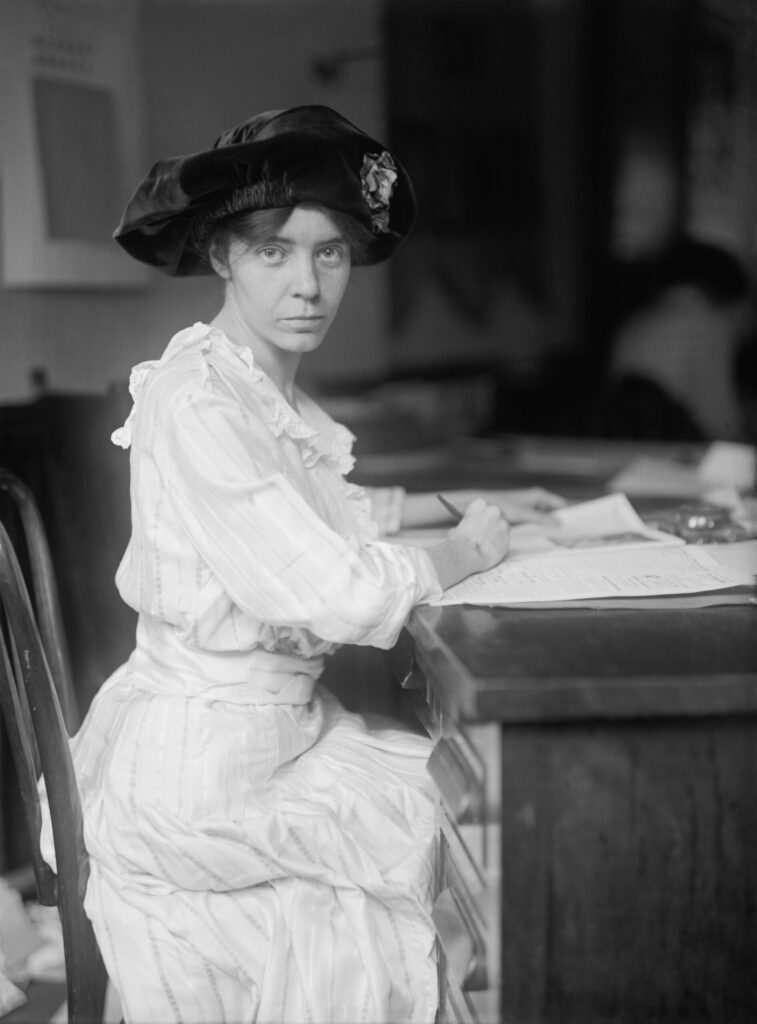

Some suffragists, like National American Women Suffrage Association president Carrie Chapman Catt, offered strategic religious arguments to advance their cause. Others, like National Women’s Party founder and devout Quaker Alice Paul, insisted on gender equality as a central faith tenet. In 1917, Paul and her more radical NWP organized the two and a half year “Silent Sentinels” protest at the White House gates. They carried signs that turned President Wilson’s Protestant paeans to democracy abroad during the war against him. Paul and many protestors were arrested, but their hunger strike in prison helped to sway public opinion and pressure the president. In 1919, an amendment passed through Congress and the Senate with Wilson’s support. In August 2020, the Nineteenth Amendment was ratified and American women finally gained the right to vote after decades and decades of political mobilization.
Many Americans resisted women’s suffrage. Women, especially wealthy women, led anti-suffrage organizations in many states. Many American Catholic clergy also took strong theological stances against women’s suffrage and encouraged women in their parishes to lead the fight against suffrage. As Cardinal James Gibbons of Baltimore explained, “Woman is queen indeed but her empire is the domestic kingdom.”8 Still, the fight for women’s suffrage brought together unusual religious bedfellows. Lucy Burns, co-founder of the National Woman’s Party, was a devout Catholic from an Irish background. Still racism divided the movement. Black suffragists like Presbyterian journalist Ida B. Wells were consistently and intentionally excluded from or sidelined in a movement that continued to appeal to White Protestant prejudice as well as egalitarian notions of progress.
Paul and other progressive Protestants pressed, but the reformist tide had begun to ebb. Paul and her National Women’s Party drafted the Equal Rights Amendment to ensure full equality for men and women under the Constitution. Though the amendment was introduced in Congress every year beginning in 1923, it would not pass through Congress until 1972 (and even then fall short of ratification.) The 1920 Smith-Towner Bill, which would have created greater funding for public schools and a Federal Department of Education, similarly failed to pass through Congress, and the Department would not be fully established until the 1970s.
Opposition to child labor had long been a keystone of Social Gospel Protestantism, and in 1924 an amendment granting Congress the power to regulate or prohibit labor for Americans under eighteen finally passed through both houses of Congress. However, business leaders committed to laissez faire economics joined with conservative Catholics and key fundamentalist leaders in organizations like the Sentinels of the Republic to argue that the amendment was a communistic threat to the traditional patriarchal family. Though twenty-eight states ratified the amendment, these arguments persuaded enough Americans that it fell short of the three-fourths of the states needed. The dominant Protestant progressivism had begun to erode. Meanwhile, the dominant Protestant xenophobia continued to grow.
The Great War was not the only international conflict to send shockwaves through the American religious landscape. In 1917, a revolutionary war broke out in Russia that toppled the monarchy and brought the communist Bolshevik Party to power. In reaction, a wave of anti-radical panic swept through the United States. Thus began what came to be known as the “First Red Scare”. Little distinction was made between dissenting socialists, communists, and anarchists who were the targets of President Wilson’s wartime Sedition Act of 1918. Many Americans understood communism not primarily as an economic and political ideology in opposition to capitalism, but as a competing anti-Christian religion committed to atheism. In fact, this deep theological anticommunism united religious traditions and communities that otherwise often found themselves at odds.
Still, Americans brought very different perspectives even to their shared anticommunist panic. Many of the premillennialists among fundamentalist and Pentecostal Protestant churches understood communism and its rise in Russia as yet another sign of biblical prophecy that pointed to the coming apocalypse. For example, an article in the Pentecostal Evangel posited that communism was the “great red dragon” or the “scarlet colored beast, full of the names of blasphemy” from the book of Revelation.9 More liberal Protestants, both white and Black, as well as socially-conscious Catholic leaders, took a more practical approach to their anticommunism, arguing that the United States would need progressive policy for the improved welfare of the working class if it hoped to avoid the proletarian upheaval that had brought communism to power in Russia.10 Catholics and Mormons contended that their committed anticommunism proved their oft-questioned patriotism.
Americans propagated a range of theories about who and what was to blame for the global rise of communism and its alleged threat to American society. In the summer of 1919, white supremacist riots in several American cities, most notably Chicago and Washington D.C., featured white-led attacks on Black civil rights leaders. Both the police and religious leaders blamed an alleged infiltration of communism as causing the violence. Seventh-Day Adventist and amateur geologist George McReady Price blamed the spread of communism on the growing acceptance of the naturalistic theory of evolution. Price’s writings, foundational to the growing creationist movement, met a receptive audience in fundamentalist Protestantism. Theologically conservative Protestants who had once joined in reformist political crusades with modernist Protestants began to emphasize evolution as an intolerable heresy and a reason to suspect liberal Protestants of holding communist sympathies.11 Catholics went on the ideological offensive as well. A 1919 article in the Catholic Telegraph stated, “We sometimes wonder whether there is not a causative relationship between Protestantism and Bolshevism. There can be no doubt but that the underlying basic principles of both isms are remarkably similar, if not identical.”12
But the most common targets of anticommunist scapegoating were Jews. In the United States, Jewish immigrants from Eastern Europe bore the brunt of this prejudice. In the wake of the Russian Revolution, anti-Bolshevik Russian émigrés introduced The Protocols of the Elders of Zion to the United States. The Protocols were conclusively proved fraudulent by a British journalist in 1921, but many antisemitic Americans wanted to believe their lies, which told of an alleged Jewish plot to achieve world domination that began with the communist takeover of Russia. Belief in a “Judeo-Bolshevik” conspiracy quickly spread in the United States. For many fundamentalist premillennialists, this narrative suited both their religious prejudice and their apocalyptic expectation of an evil global government.The most influential purveyor of the Protocols in the United States was the influential industrialist and automaker Henry Ford. Ford printed and distributed copies of the Protocols. His newspaper The Dearborn Independent also published a series of articles, written by lay preacher William J. Cameron, collectively titled “The International Jew.” Cameron’s articles spread antisemitism in America and, once translated into German, later fostered Nazi ideology. Cameron was also a proponent of Anglo-Israelism, the belief that Anglo-Saxons, not modern Jews (allegedly descended only from the tribe of Judah), were the true descendants of ancient Israel. This far-right antisemitic ideology made inroads in various American religious traditions including Pentecostalism, Adventism, Mormonism, and Christian Science and would remain a feature of the far right in the decades that followed. However, by the mid-1920s, the largest explicitly antisemitic organization was the Ku Klux Klan.
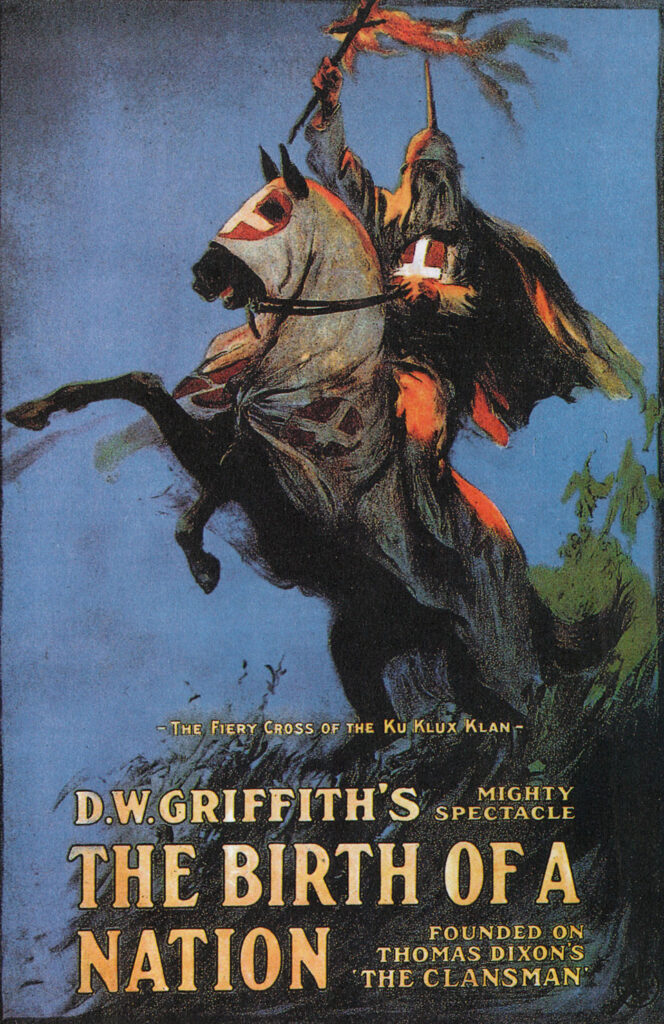

In 1915, William Joseph Simmons of Alabama re-founded the Ku Klux Klan at Stone Mountain, Georgia. He was inspired by the silent film The Birth of a Nation, which valorized the white supremacist vigilante organization that had terrorized Black Americans and their allies in the post-Civil War South. (The Birth of a Nation was also the first film shown inside the White House, further evidence of President Wilson’s Lost Cause sympathies.) At first, the Second Klan grew slowly. However, it aggressively recruited from Protestant churches, and membership soon began to grow. The Second Klan shared the anti-Black commitments of its predecessor, but shifted its focus to anti-Catholic, antisemitic, and anti-immigrant activism as well. While the First Klan had primarily operated in the South, the Second featured key leadership and outsized growth in states like Indiana and Oregon. The Klan insisted that white, native-born Protestants were and should remain the core of the nation. This claim held broad ecumenical appeal within white Protestant communities. While the so-called “Invisible Empire” maintained secretive practices and membership, in many places it also sponsored community events like parades and picnics.
In fact, the 1920s Klan harmonized with the politics of many other contemporary Protestants. The Klan supported Prohibition and acted in parallel with the Anti-Saloon League to provide extralegal vigilante enforcement where federal enforcement fell short.13 The Klan offered free membership for Protestant ministers and claimed that (a likely inflated) 30,000 of them joined. One Klan ritual was to interrupt church services with a procession of hooded figures, donate some money, and file out. Some ministers accepted the money and thanked the Klan; others chased them out of the building.
Between 1922 and 1924, many Klan-affiliated candidates won local, state, and federal office, particularly in Indiana, Colorado, Oregon, Oklahoma, and Texas. At its height, the Klan had between two million and five million members nationally (due to its secret nature, exact numbers are impossible). Hiram Wesley Evans, the Klan’s national leader from 1922 to 1939, emphasized anti-Catholicism and political engagement. Yet the Klan’s claim to uphold traditional morality crumbled with high-profile power struggles and scandals, such as when Indiana Klan chief David Curtis Stephenson was tried and convicted of kidnapping, rape, and murder in 1925. Klan membership, reportedly in the millions by 1924, had fallen to 37,000 by 1930.14
Nevertheless, the anti-Catholic and ethnonationalist positions that the Klan shared with many Protestants left a lasting mark on American law. In 1922, Oregon passed the Compulsory Education Act mandating public school attendance for all children in the state. The law was aimed at the less than 10% of the state’s children who attended parochial Catholic schools. On an even larger scale, American isolationism reached new heights with passage of the Immigration Act of 1924. Also known as the Johnson-Reed Act, the law banned immigration from Asia and set severe quotas on the number of immigrants who would be admitted from Southern and Eastern Europe. The anti-Catholicism and antisemitism of Protestant America had proved more durable than its progressivism.
IV. Immigrants and Innovators
It is difficult to identify an integrated narrative about a segregated society. But many of the era’s targets of religious and racial prejudices nevertheless carved out new opportunities for expansion, organization, and innovation. Northern US cities became the prime location for new religious organization and innovation due to their substantial populations of Jewish and Catholic immigrant communities from Europe and their growing Black population arriving from the South in the ongoing Great Migration.
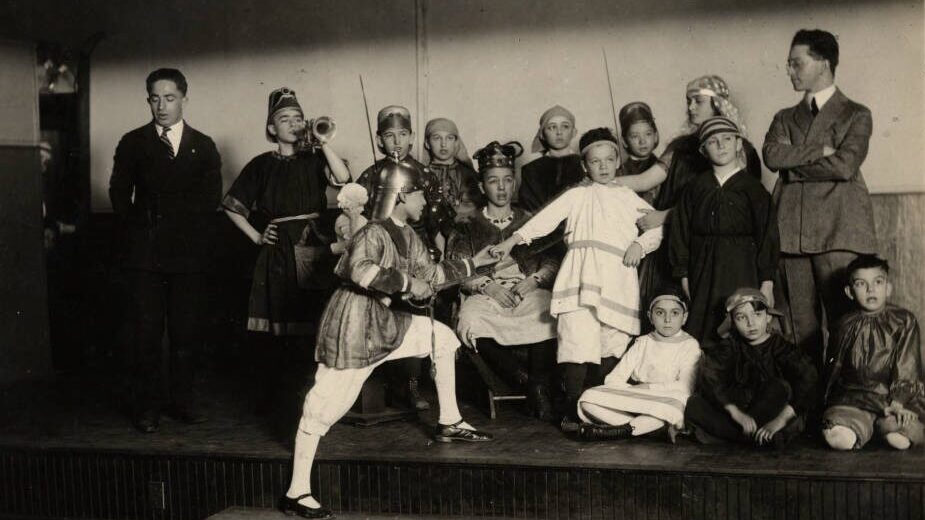
There were vibrant Jewish communities in Boston, Chicago, Cleveland, Detroit, Los Angeles, Newark, San Francisco, and Philadelphia. But by 1927, approximately forty-four percent of all American Jews lived in New York City. In fact, New York had the largest Jewish population of any city in the world.
.jpg)
Even after the conspiratorial antisemitism of the Red Scare, Jews faced exclusion in many facets of American life. They were prevented from owning homes in certain neighborhoods, belonging to various social clubs, or staying at specific hotels. Quotas kept Jews out of universities and professional schools (medical, dental, and law schools, for instance). In 1922, Harvard University President A. Lawrence Lowell wrote to Julian Mack, a Harvard alumnus and Chicago judge, asking whether he would approve of a plan limiting the percentage of entering Jews to fifteen percent of the total class. “I think we have found a way by which we can limit the Jews in Harvard College to the number that we can really benefit,” explained Lowell, who also suggested that this proposed quota system “would be for the greatest interest of everyone concerned.” While some Jewish Americans changed their names to avoid discrimination, many more supported antidiscrimination laws, civil rights organizations, and intentionally Jewish social spaces that ranged from restaurants to resorts.
Conservative and Orthodox Jews shared an emphasis on tradition, observing the Sabbath, following Jewish dietary laws, and promoting religious education. In 1926, they even considered a merger between the Jewish Theological Seminary (Conservative) and Yeshiva College (Orthodox). However, as Conservative Judaism began to adapt Jewish tradition to modern American life through the greater inclusion of women in synagogue life and services in English as well as Hebrew, the movements began to diverge. Conservative Judaism saw astonishing growth through this period. In 1913, it contained 22 member synagogues; by 1929, it boasted 229.15
Rabbi Mordecai Kaplan had been educated at Jewish Theological Seminary and later worked as a rabbi for Orthodox congregations. In 1922, however, he left his pulpit to form the Society for the Advancement of Judaism, which would serve as the epicenter for a new Jewish religious movement that became known as Reconstructionism. Kaplan insisted that Judaism should evolve with modernity and not be bound by historical tradition. As later recorded in his 1934 book, Judaism As A Civilization, Toward a Reconstruction of American-Jewish Life, Kaplan argued that Jews should view “Judaism not merely as a religion but as a civilization.” They could, he promised, “bring to bear creative intelligence upon whatever task they will undertake, whether it be the upbuilding of Palestine, the campaign against discrimination, the organization of communal life, the establishment of congregations, the fostering of religion or the encouragement of Jewish art.” Kaplan’s modernist Reconstructionism was the first major movement within Judaism to originate in the United States but would not be the last.
Like American Jews, American Catholics faced a choice between attempted assimilation and institutional separation in response to religious prejudice. But they approached the choice with a far larger share of the nation’s population. Immigrants, particularly those from Ireland, Italy, and Poland, had long relied on the Catholic Church to anchor ethnic enclaves in America’s urban North. Even within American Catholicism, inter-ethnic tensions often ran high. For example, more established Irish American Catholics complained of the unruliness of the growing Polish American Catholic community, while American clergy despaired of the lack of religious devotion among Italian Americans.16 Still, Catholic leadership in the United States identified new opportunities to stake a claim in American public life.
In 1917, American Catholic leaders met for the first time in decades to found the National Catholic War Council and coordinate the Church’s efforts to financially and spiritually support American soldiers in the Great War. In 1919, in response to American political threats to Catholic practice and Pope Benedict XV’s call for social justice, War Council leaders organized the permanent National Catholic Welfare Council (NCWC) so American Catholics could coordinate their political and social efforts. Bishops led departments for Education, Legislation, Social Action, Lay Organizations, and Press and Publicity. The following year the NCWC added a Bureau of Immigration to assist incoming immigrants in navigating legal requirements and gaining financial security. Anti-immigrant Protestants often assumed that new arrivals from predominantly Catholic nations were committed to the faith, but that was not always reality. The American Catholic Church won and secured new adherents with their outreach efforts.17
The NCWC brought specific Catholic concerns to the United States government at the same time that it brought a new level of national coordination to a previously balkanized American Catholic Church. Not everyone was enamored with this pivot. Many laypeople resented the top-down efforts to meld distinct and sometimes antagonistic communities in American cities. Many laypeople wanted their church to remain the source of their particular religio-ethnic identity, not an overarching faith that washed out longstanding differences. Many European leaders in the Roman Catholic Church had the opposite concern. They worried that the frequent meeting of American Catholic leaders could undermine the Vatican’s authority and that an interest in assimilating into American society could lead to an embrace of liberalism and rejection of Church doctrine. After Pope Benedict XV died in early 1922, the Consistorial Congregation (a body that assisted the Pope in governing the global Church) ordered the immediate dissolution of the NCWC. NCWC leaders petitioned Pope Pius XI to stay the decree and then sent a delegation that succeeded in convincing the Consistorial Congregation to reverse its decision. The NCWC did still accept the suggestion to replace the “Council” in its name and became the National Catholic Welfare Conference.
In the summer of 2026, at the request of Cardinal George Mundelein, the Archbishop of Chicago, and with the approval of Pope Pius XI, Chicago hosted the 28th International Eucharistic Congress. Over the course of five days, more than a million Catholics participated in open-air Masses centered on the Eucharist, also known as Holy Communion or the Blessed Sacrament. The massive Congress simultaneously proved the growing influence of Catholicism in American cities like Chicago, and the growing significance of American Catholicism for the global Catholic Church.
American Catholics were not alone in finding themselves at odds with national political powers. When Plutarco Elías Calles of the secularist Institutional Revolutionary Party became the 47th president of Mexico in 1924, he increased legal enforcement of the church-state separation article of the Mexican Constitution of 1917. His new policies sparked the Cristero War of 1926 to 1929 between the anticlerical government and Catholic rebels. This created a new wave of emigration to the United States that featured many priests, nuns, and other Cristero supporters. Many settled in the American Southwest in cities like El Paso and San Antonio. They often understood themselves as religious exiles, and, like many immigrants before them, they looked to the Church to reinforce their specific communal identity and concerns, not supersede them.
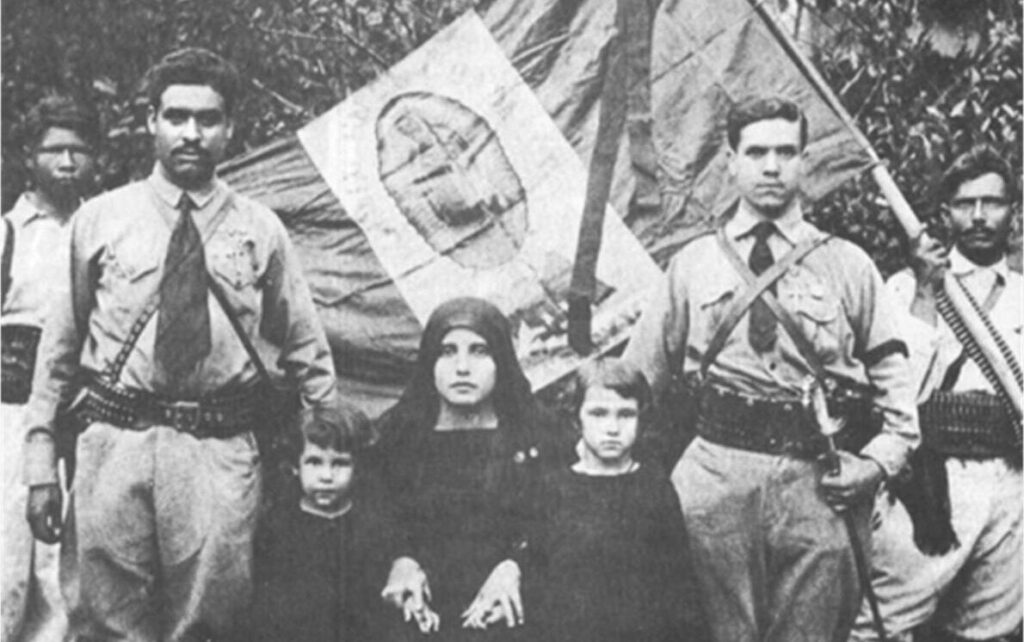

Black Catholics also looked to carve out a distinct space within a purportedly universal Church. During the war, Black Catholics were often excluded from the Church largesse directed at their white coreligionists. In response, Black Catholic Thomas Wyatt Turner, a Cornell-trained botanist, Howard University professor, and founding member of the NAACP, created the Committee Against the Extension of Race Prejudice in the Church. After the war, this became the Committee for the Advancement of Colored Catholics. In 1925, Turner reorganized the group as the Federated Colored Catholics. The organization’s stated goals included: “to advance the cause of Catholic education throughout the Negro population, to seek to raise the general Church status of the Negro and to stimulate colored Catholics to a larger participation in racial and civic affairs.”18 The FCC goals made plain what a growing number of Black Americans felt during these decades: a unique religious identity within a racial community, a unique racial identity within a religious community, and a unique religio-racial identity that underwrote distinct modes of engagement with American society at large.19
In the 1910s and 1920s, large numbers of Black Americans left the rural South to settle in the urban North and West. Over the next sixty years, this exodus, known as the Great Migration, would include the relocation of roughly six million Black Americans. By leaving behind Jim Crow and a lagging rural economy and heading to growing industrial cities like New York, Detroit, Cleveland, and Chicago, Black Americans found new freedoms and new opportunities. They did not, however, find a full reprieve from bigotry and persistent inequity. Instead, they faced discrimination in both employment and housing. And, on both fronts, they often came into competition with the working-class immigrant Catholics of Northern cities. In the summer of 1919, race riots in Chicago left thirty-eight people (twenty-three Black and fifteen white) dead. The following year, three Black men stabbed and killed an Irish-American after exchanging insults, then sought refuge in St. Gabriel’s Catholic Church while the priest, Father Thomas Burke, barely persuaded an encircling crowd to abandon their plans to lynch the men. Black neighborhoods frequently abutted and overlapped with the Catholic parishes that anchored white ethnic neighborhoods. Despite inter-ethnic tensions, many of these Catholics claimed a shared whiteness and marshalled it against Black inclusion within and even near their churches.20 As sociologist and civil rights activist W. E. B. DuBois wrote poignantly in 1925, “Because Catholicism has so much that is splendid in its past … it is the greater shame that ‘n—-r’ haters clothed in episcopal robes should do to black Americans in exclusion [and] segregation … all that the Ku Klux Klan ever asked.”21
Though some Black Americans, like Thomas Wyatt Turner, carved out a place within Catholicism, it was the Black Protestant churches of Northern cities that swelled the most during these years. Many migrants joined the pews of longstanding predominantly Black denominations like the African Methodist Episcopal Church and the African Methodist Episcopal Zion Church. The biggest gainers, however, were Black Baptist churches, both independent congregations and those affiliated with the National Baptist Convention. In 1926, roughly two-thirds of Black Americans claimed religious adherence, a number well above the national average.22 Faith offered migrants social solidarity alongside metaphysical meaning. The various corners of what came to be known as the “institutional church” offered social services and social advocacy for new and growing Black communities. But while the institutionalists predominated, there were also religious innovators forging new faiths and articulating more radical identities in the same urban environment.
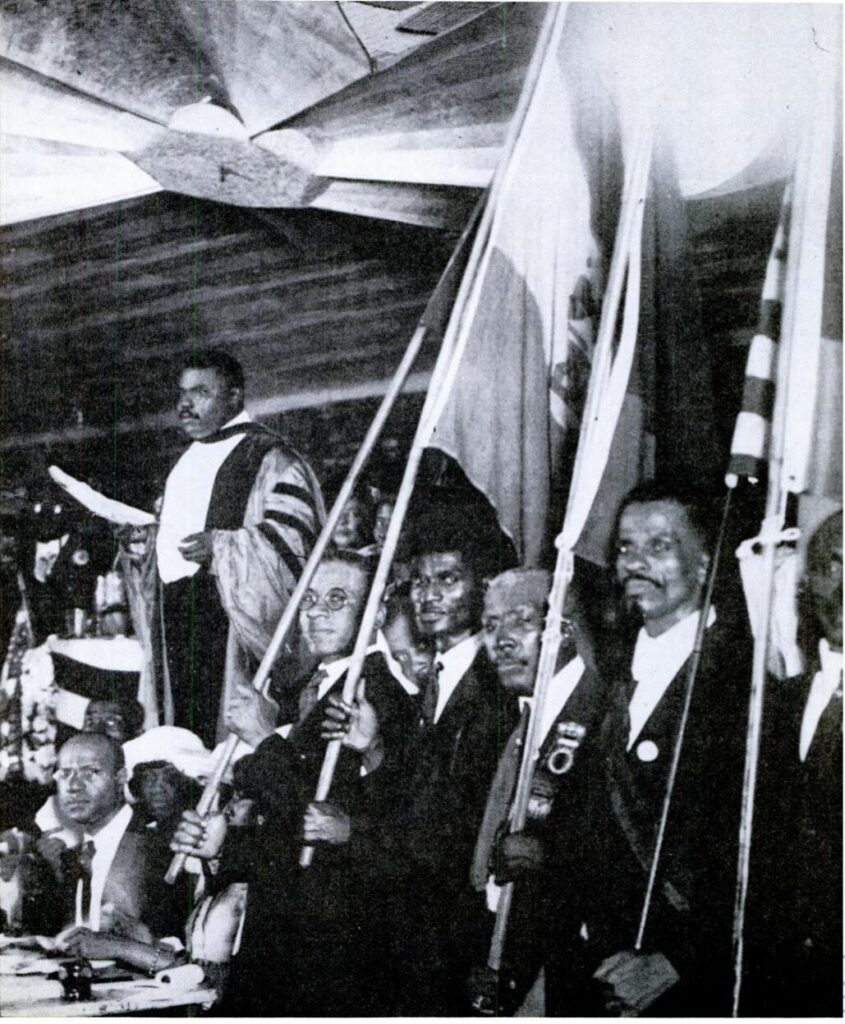

Arguably the most influential of the radical leaders was Marcus Garvey. In 1914, the Jamaican Garvey founded his Pan-Africanist organization, Universal Negro Improvement Association (UNIA). In 1916, he moved to New York City and started a branch of the UNIA in Harlem. Garvey was a Black nationalist who advocated for a Black return to a unified Africa and the end of European imperialism there. Garveyism grew rapidly as an increasing number of Black Americans found northern cities less welcoming than they had expected and concluded that exiting American society might prove more possible and productive.
Garvey’s separatism proved controversial with other Black leaders and activists, particularly after he met with the Imperial Wizard of the Klan in 1922. He found common ground with the Klan on their shared racial separatism and conspiratorial prejudice against Catholics and Jews. But UNIA offered new perspectives as well. In 1921, the UNIA published the Universal Negro Catechism, a sourcebook for the movement’s religio-racial theology. One portion read: “Q. If, then, you had to think or speak of the color of God, how would you describe it?; A. As black; since we are created in His image and likeness.”23 The UNIA crafted a Christianity of specific Black pride to contrast with claims of both racial hierarchy and universal inclusion.
The UNIA taught that God could be described as Black because he made Black people. Less than a hundred miles away on Long Island, an apparently Black man known to his followers as Father Divine claimed that he was God—but not “black.” The self-named leader of unknown origins had moved his predominantly Black religious commune to Sayville, NY where he hosted weekly banquets for an increasingly multiracial community, helped joiners find jobs, and showed off his Cadillac and other signs of wealth. Unlike Garvey, Father Divine was an advocate for integration and argued that racial labels should be suppressed and universal brotherhood emphasized to uplift marginalized people. Father Divine’s International Peace Mission movement pulled from Christianity, Judaism, and New Thought in its teachings.
Back in Harlem, Rabbi Wentworth Arthur Matthew claimed a syncretic Judaism for his community. Black people, he taught, were descended from Ethiopians who were a lost tribe of Israel descended from King Solomon and the Queen of Sheba. Matthew founded his Commandment Keepers Church as a Christian congregation in 1919, but Commandment Keepers soon shifted to adopting and adapting Orthodox Jewish practices and beliefs. Unlike Father Divine and his followers, the Commandment Keepers did not reject racial difference and taught elements of separatism. But they asserted that their identity was “Ethiopian Hebrew” rather than “black” or “Negro.”
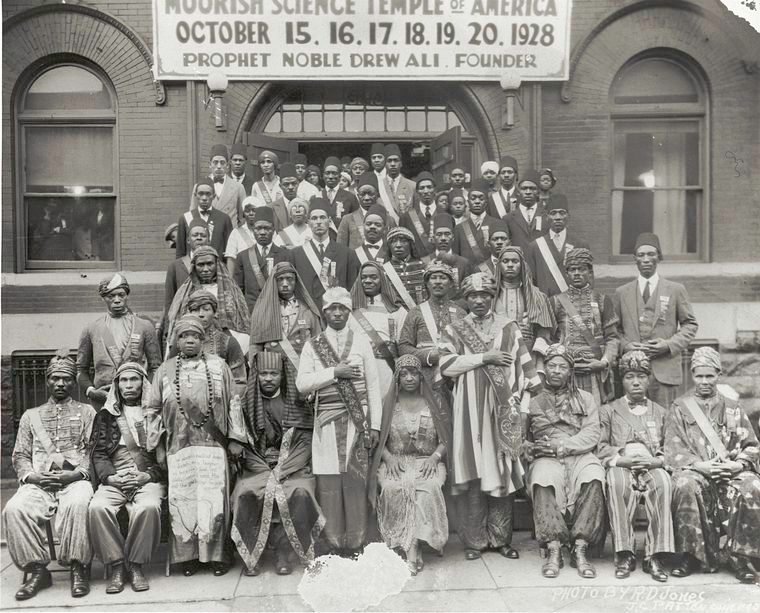
In Chicago, members of Noble Drew Ali’s Moorish Science Temple of America followed a similar logic to a different conclusion. They too rejected labels like “black” and “Negro” and asserted that they were descended from the Moabites and thus were “Moorish American” by nationality and Muslim by religion. They carried nationality cards to proclaim their religio-racial identity. Drew Ali had founded the movement in New Jersey in 1913, but it saw its meteoric growth when he moved to Chicago. By the late 1920s, there were an estimated 35,000 members in seventeen temples.24 Members who wore fezzes and turbans stood out as they publicly displayed their religio-racial pride. Drew Ali died in 1929 and a turbulent succession fight ensued. The following year, in Detroit, Wallace Fard Muhammad founded the Black nationalist Nation of Islam after coming into contact and adapting the teachings of the Moorish Science Temple.

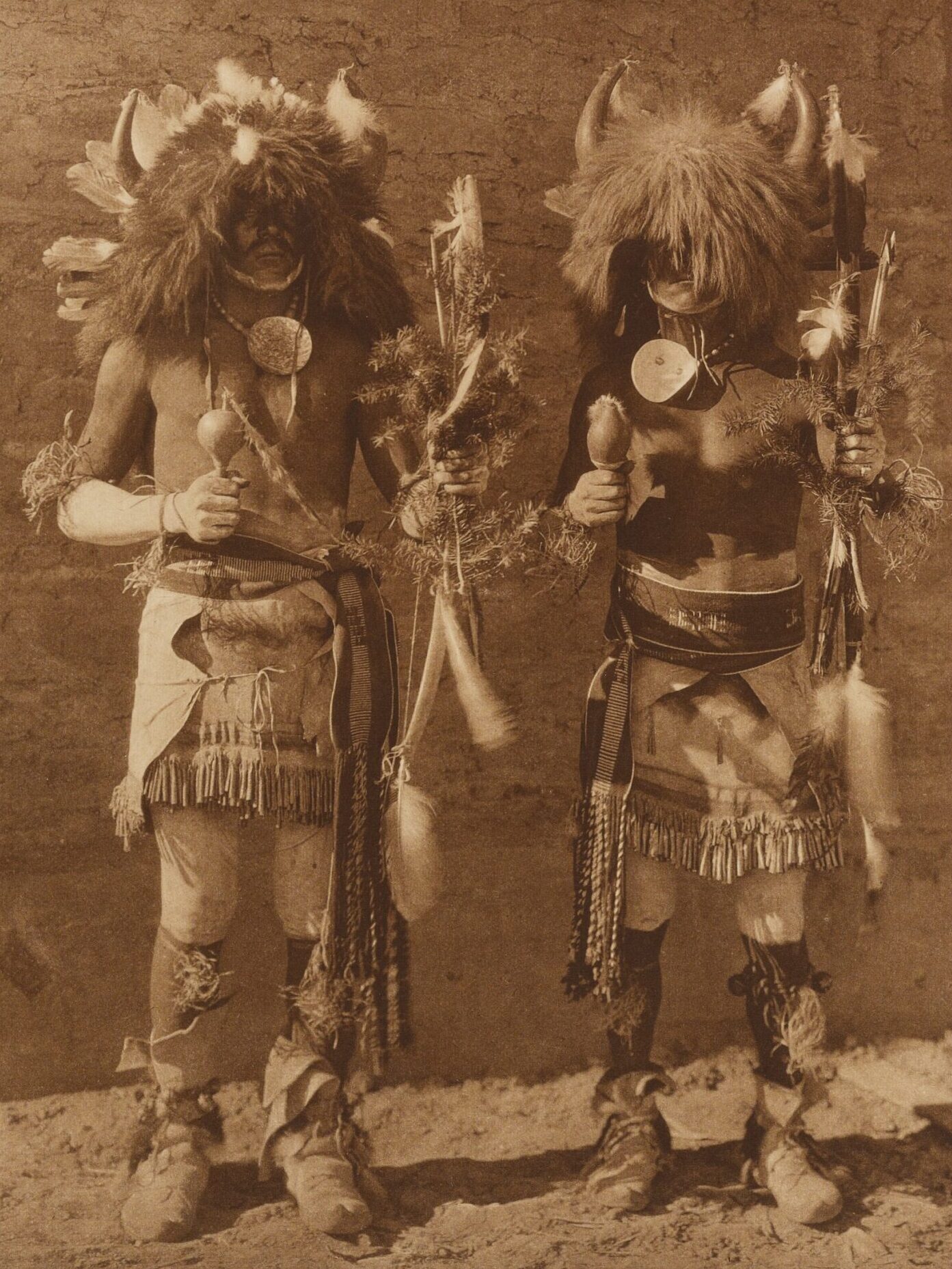
Black Americans were hardly alone in finding religion essential in pushing back on America’s racial hierarchies. In 1921, Commissioner of Indian Affairs Charles Burke issued “Circular No. 1665: Indian Dancing” encouraging federal agents to use education and punitive measures to end “degrading” dancing on reservations. This was a response to missionary complaints that tribal dances, particularly those of the Pueblos in New Mexico, were sexual pagan practices. In reality, the Pueblo dances commemorating New Year’s Day, the Feast of the Epiphany, the corn harvest, and more united traditional Pueblo rituals with Catholicism. Two years later, Burke added to his circular to allow agents further latitude to limit or outright ban such practices. Burke and the missionaries who backed his policy carried forward decades of the assimilationist approach that aimed to eradicate Native American distinctiveness.
_by_Edward_S._Curtis.jpg)
Pueblo leaders and their modernist allies—particularly anthropologists—quickly pushed back against the policy. The Pueblo dances, they argued, were not just rituals that could be eliminated by a hegemonic white Christianity. Rather, they were part of a “religion,” and therefore the dance practitioners were entitled to continue because of their First Amendment religious freedom. In the face of this pressure, Burke reluctantly backed down from the policy for the Pueblos in 1924, and optimistic observers could begin to imagine a liberal future of Native American rights beyond assimilationism. But for American modernists who embraced religious difference in the light of history and anthropology, the victories kept coming.25
V. Fundamentalist Fighters
In his 1925 book, The Faith of Modernism, Shailer Matthews, Dean of the University of Chicago Divinity School, offered an outline of his theological movement: “Modernism is a projection of the Christian movement into modern conditions. It proceeds within the religious limits set by an ongoing Christian group; it distinguishes permanent Christian convictions from their doctrinal expression; it uses these convictions in meeting the actual needs of our modern world.” Modernists embraced and championed the social and intellectual changes of the era and abandoned a faith rooted in timeless dogma. “A religion that cannot meet the deepest longings of restless hearts,” Matthews proclaimed, “that fears freedom of speech, that distrusts social reconstruction, that makes respectability its morality, that would muzzle scientific inquiry will be ignored by a world that has outgrown it.” Here, Matthews took aim at modernists’ fundamentalist foes.26
Princeton Seminary Professor J. Gresham Machen had written a broadside from the fundamentalist side, Christianity and Liberalism, just two years earlier. “The chief modern rival of Christianity is liberalism,” he wrote. “The two movements are in direct opposition.” Christianity, he argued, was and should remain “essentially dogmatic.” “In the intellectual battle of the present day,” he predicted, “there can be no ‘peace without victory’; one side or the other must win.”27
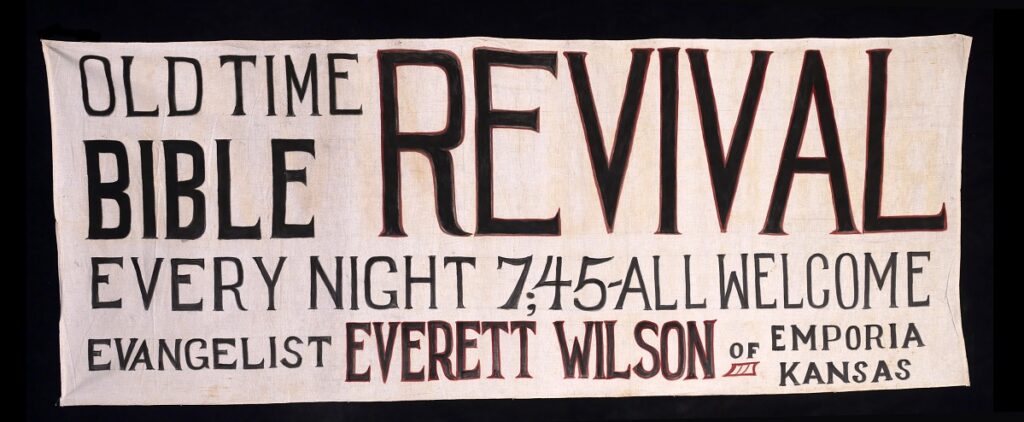
With the growth of modernist Protestantism and the growing number of non-Protestant Americans, conservative Protestants became more vocal and explicit in their defense of what they identified as the “fundamentals” of Christianity. Indeed, the term “fundamentalist” came from the series of essays by conservative Protestants titled The Fundamentals, published between 1910 and 1915. Both The Fundamentals and fundamentalists opposed liberal theology, but they also opposed political movements like socialism and communism that they identified as products of liberal theology.
Fundamentalism was never a monolithic movement. In 1919, Minneapolis Baptist pastor William Bell Riley, known as the “Grand Old Man of Fundamentalism,” founded the World Christian Fundamentals Association, which insisted on premillennialism, the belief that Jesus would physically return to earth before a thousand-year age of peace. (Riley later expanded his focus to include antisemitic conspiracies, anticommunism, and opposition to evolution in the years that followed.) Most fundamentalists proclaimed premillennialism, but others, particularly conservative Presbyterian Calvinists, did not adopt the position or downplayed the importance of apocalyptic beliefs. Consequently, later fundamentalist organizations like the Independent Fundamental Churches of America (founded in 1930) emphasized a slightly broader understanding of biblical inerrancy.
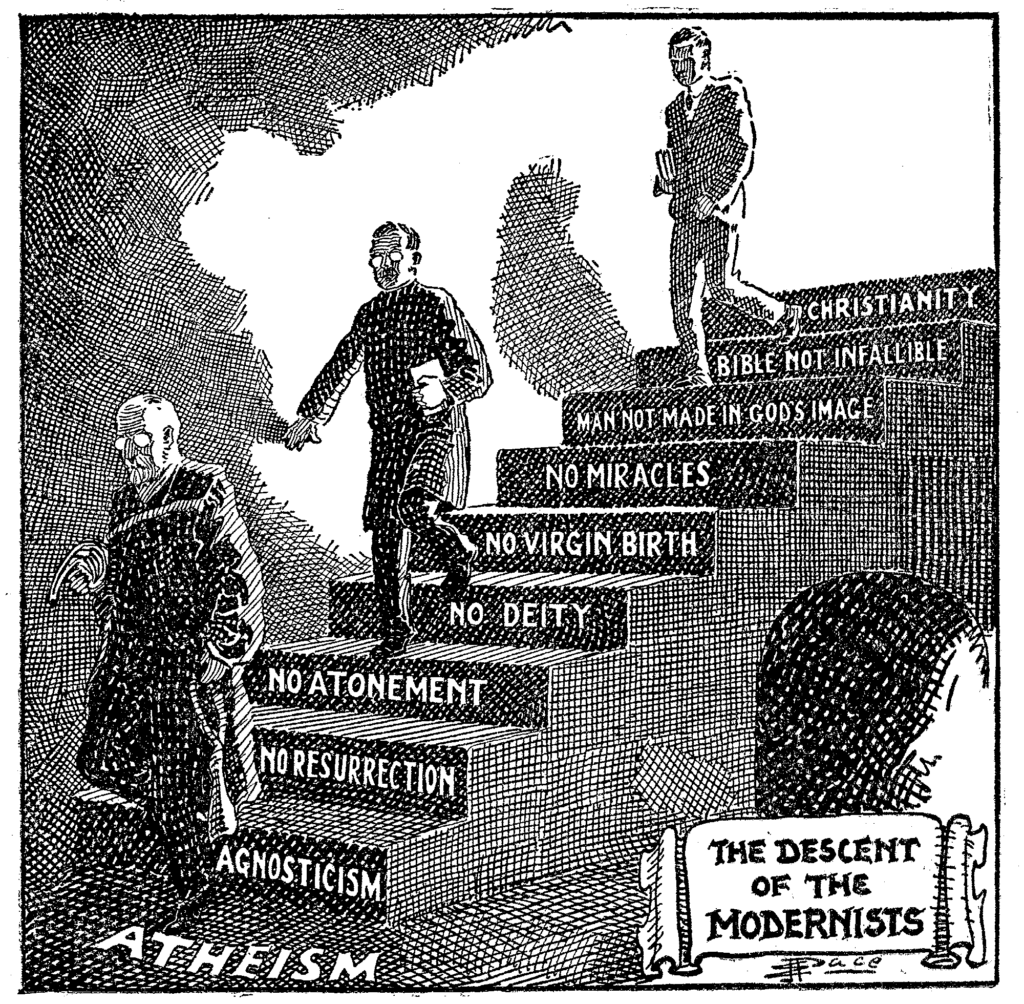
Fundamentalists and modernists offered new ideological lines of demarcation within American Protestantism that would last over a century. But institutional lines had to be drawn as well, and that proved a key point of conflict in the 1920s. Many denominations included both fundamentalists and modernists among their clergy and laity. To wit, Harry Emerson Fosdick and Shailer Matthews were Northern Baptists, but so was William Bell Riley. As fundamentalists accused modernists of heresy and modernists accused fundamentalists of closed-minded dogmatism, a battle for control of every major Northern Protestant denomination ensued. This included Baptists, Episcopalians, Methodists, Congregationalists, and, most notably, Presbyterians.
This rift in Protestantism was not a small conflict confined to the clergy. Major newspapers like the New York Times covered the denominational battles in detail for interested readers. In each denomination, modernists ultimately prevailed. Many Protestant clergy and laypeople were moderates, neither modernists nor fundamentalists. They did not follow modernists in completely rejecting many traditional doctrines and completely embracing modern scholarship, but they saw no need to expel those who did so, and many did not insist on biblical inerrancy. Ultimately, moderates in many of the denominations were resistant to the schismatism of fundamentalists who wanted to expel modernists and double down on rigid orthodoxy. Some fundamentalists remained as a resistant theological force in what eventually became known as the “mainline” Protestant denominations, but many fundamentalists left to form separate denominations, seminaries, and organizations.
American Protestantism had bifurcated once before—in the nineteenth century when many denominations split between North and South over slavery. Modernism made far greater inroads in the northern denominations. As a result, the “fundamentalist” label, which emerged in reaction to modernism, was far more common in the North as well. Still, as theological debates over topics like evolution gained increasing cultural and political significance, many Southern Protestants sprang into action to defend fundamentalism’s core tenets regardless of labels. At the same time, while the major institutional Black denominations were not wracked by theological conflict, some number of Black Protestants also defended fundamentalist faith and even adopted the fundamentalist moniker. However, their political commitment to racial equality and their exclusion from white-controlled fundamentalist organizations, particularly in the Jim Crow South, also limited their visibility within and impact on the movement.

.jpg)
The most famous skirmish of the Fundamentalist-Modernist controversy was the 1925 Scopes “monkey” trial. At the urging of the World Christian Fundamentals Association (WCFA) and its affiliates, Tennessee passed the Butler Act banning the teaching of evolution in the state’s public schools. John T. Scopes of Dayton, Tennessee, was charged with violating the law. The case became a national spectacle when the WCFA recruited William Jennings Bryan to serve as attorney for the prosecution and the American Civil Liberties Union recruited famed defense attorney and noted agnostic Clarence Darrow to serve as attorney for the defense. Though Bryan had lost his once-unrivaled power in the Democratic Party, his religious crusade against evolution and involvement in the fundamentalist fight for the Presbyterian Church had maintained his celebrity.
In one of the wildest moments in American legal history, Darrow and the defense called Bryan, lead attorney for the prosecution, as a witness on the Bible. In the ensuing examination, Darrow tried to show that the Bible contained scientific errors and internal contradictions. Bryan did a poor job defending inerrancy even in the eyes of many fundamentalists. When Darrow pressed Bryan on the date of the biblical flood, Bryan explained “I do not think about things I don’t think about.” Darrow’s rejoinder “Do you think about things you do think about?,” elicited laughter in the courthouse and throughout the nation.28 Bryan technically won the trial, but the critical coverage in the press together with his seemingly poetic unexpected death five days later gave the impression that the anti-intellectual fundamentalist movement had been browbeaten into submission.
But Bryan’s folksy “old-time religion” with its rejection of academic expertise was not the only form of fundamentalism, and even that version remained stronger than its triumphant opponents realized. Bryan had invited J. Gresham Machen, his ally in Presbyterian denominational politics, to serve as an expert witness in the Scopes trial. The Princeton Theological Seminary theologian and leading intellectual in American fundamentalism demurred. He disliked the prosecution’s majoritarian and sometimes utilitarian framing of the validity of the Butler Act. Unlike Bryan and many fundamentalist leaders, Machen aimed to defend inerrancy, particularly Jesus’ virgin birth and literal resurrection using–not rejecting–the academic methods he had learned at Princeton and in graduate studies in Germany. Before passing, Bryan had left money to found a new fundamentalist college in Dayton, Tennessee. In a sign of the shifting center of gravity within fundamentalism, the presidency of the college was first offered to Machen.
Machen, too, lost to the modernists in the short term. When moderates gained control of Princeton Theological Seminary, he left to found his own Westminster Theological Seminary in 1929. A few years later, he left the Presbyterian Church in a dispute over modernist missionaries and founded the Orthodox Presbyterian Church. But despite these institutional setbacks, at Westminster, Machen trained fundamentalist pastors like Carl McIntire, Harold Ockenga, and Francis Schaeffer, who would become the leading figures of fundamentalism, evangelicalism, and the New Christian Right. Fundamentalists had lost in the modernist moment, but the groundwork for greater influence had been laid.
VI. Radio, Rights, and Realignment
In January 1921, the crackling sounds of the Calvary Episcopal Church in Pittsburgh came across the airwaves and into American homes. It was the first religious radio broadcast in American history, but countless others would soon follow. It was also an indicator that pastors, prophets, and theologians would not be the only sources of innovation to reshape the American religious landscape.
Americans had mixed feelings about this new medium for worship. Some feared that it would keep people from attending church; others celebrated the ability to evangelize further, reach shut-ins, and break down religious and racial prejudice. Religious services soon became a regular part of radio schedules. The pairing benefited both. Religion reached larger audiences, and radio appeared less trivial than it might have otherwise. As radio grew more popular and became more common in American homes, religious programming expanded dramatically. Indeed, the percentage of stations owned by religious institutions increased fivefold from 1923 to 1925.
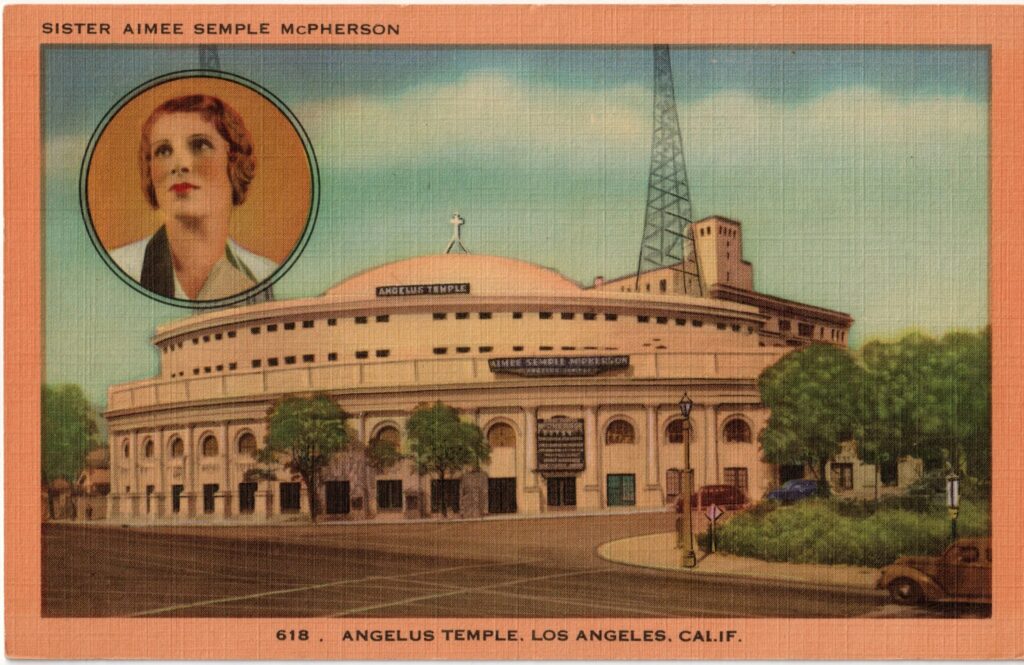
While parish boundaries and regional resettlement literally remade America’s religious landscape, radio offered new opportunities to exceed spatial limitations. It thus offered a path to American celebrity and elevated new voices. The first great religious radio celebrity was Aimee Semple McPherson, or Sister Aimee. McPherson was a Pentecostal evangelist and faith healer who lived in the growing city of Los Angeles. She was ordained by the Assemblies of God in 1919. In 1922, she became the first woman to preach over the airwaves. The following year, she founded her own Pentecostal denomination, the Foursquare Church and opened the Angelus Temple megachurch where she preached and healed. In 1924, the Foursquare Church established the KFSG radio station, which made Aimee McPherson a staple on the airwaves. A mysterious disappearance in 1926–she claimed she was kidnapped, but others suspected a scandal–added to her notoriety. Thanks to radio, McPherson exposed many Americans to Pentecostalism and women’s religious leadership for the first time.

Radio brought many religious “outsiders” inside American homes. Columbia Broadcasting System (CBS) began weekly broadcasts of the Mormon Tabernacle Choir from Salt Lake City, Utah, which eventually became one of the longest-running programs in radio history. Elder Lightfoot Solomon Michaux, an African American holiness minister, even garnered international fame through his broadcasts on CBS and the British Broadcasting Corporation (BBC). Michaux featured Black gospel music which many white audiences heard for the first time over the airwaves, and a step in religious integration proved influential for popular music as well.
Large networks like CBS and the National Broadcast Company (NBC) came to dominate the industry. They gave free airtime to Protestant, Catholic, and Jewish leaders. NBC mandated that its religious programs appeal to broad audiences by focusing on shared truths and not criticizing other religions. CBS later adopted a similar policy. Network broadcasting helped make ministers like modernist Harry Emerson Fosdick and the unusually ecumenical Catholic priest Fulton Sheen into national celebrities and stamped their brand of religion as the nation’s “best.” These stations helped to foster ecumenical and interfaith cohesion.
Not everyone won under this arrangement. Fundamentalists were excluded from networks due to their insistence on a rigid definition of Christianity but later found success by creating independent radio networks of their own. Collectively, these independent stations helped take the Fundamentalist-Modernist controversy national. Uncoincidentally, the 1925 Scopes trial was the first trial ever broadcast nationally as listeners tuned in to the religious conflict.
While the actual legal ramifications of Scopes were minor, that same year brought the landmark Supreme Court decision Pierce v. Society of Sisters. The Court overturned the Klan-backed 1922 Oregon Compulsory Education Law banning private education as a violation of the liberty of parents to direct their children’s education protected by the Fourteenth Amendment. American Catholics rejoiced at the demise of a law born of Protestant nativism. Even as most fundamentalists continued their anti-Catholic bromides, J. Gresham Machen celebrated the decision as well. An opponent of any government interference with education, Machen even testified before a joint Congressional committee against the creation of a Federal Department of Education in 1926. In his public writing and private correspondence with Catholic leaders, he suggested that theologically conservative Catholics and fundamentalists might make common political cause against the liberal Protestants and their secular allies who held so much power in American society. This suggestion would come to fruition decades later.
In the latter half of the 1920s, American Catholics could boast new legal rights and political power. This became abundantly clear when New York Governor Alfred E. Smith won the 1928 Democratic presidential nomination. Smith, from Irish-American and Italian-American ancestry, became the first Catholic to receive a major party’s nomination. He ran against Prohibition as its popularity slowly eroded. Smith consolidated the white ethnic Catholic vote for the Democratic Party. He also won some of the urban Northern liberal Protestants who had begun to turn away from anti-Catholicism.
Republican Herbert Hoover had the advantage of enduring anti-Catholic prejudice and a strong Republican-led economy. Fundamentalists like J. Frank Norris, a Texas Baptist with a large radio audience, made anti-Catholic attacks on Smith a central feature of their preaching in the run-up to the election. Democrats lost ground in the rural Protestant North and the deeply Protestant South. Smith’s candidacy thus became a bellwether of rising Catholic power and a reminder of its limits.
VII. Conclusion
Smith’s primary success had been bolstered by the support of Franklin Delano Roosevelt, a blue-blood Episcopalian who succeeded Smith as governor of New York and would soon rise to the presidency himself. Roosevelt was well-versed in the call for social progress preached by liberal modernist Protestants but was also popular with the urban Catholics and Jews of New York City. In October 1929, the stock market crashed, and the United States entered the Great Depression. Roosevelt became the first governor to call for unemployment insurance and created a state agency to distribute relief funds. A new economic reality called for a new type of progressive government, and a new religious coalition was essential in making it a national reality. Still, the fault lines of prejudice continued to haunt both American religion and American society.
VIII. Reference Material
This chapter was edited by Austin Steelman with content contributions from Austin Clements, Janine Girodano Drake, Connor Kenaston, Kristina I. Lizardy-Hajbi, Isaac Barnes May, Brenden J. Payne, Austin Steelman, Amy Weiss, and Ben Wright
Recommended Reading
- Paula Abrams, Cross Purposes: Pierce v. Society of Sisters and the Struggle Over Compulsory Public Education (University of Michigan Press, 2009)
- Daniel R. Bare, Black Fundamentalists: Conservative Christianity and Racial Identity in the Segregation Era (NYU Press, 2021)
- Richard E. Burnett, Machen’s Hope: The Transformation of a Modernist in the New Princeton (Eerdmans, 2024)
- Anthea Butler, Women in the Church of God in Christ: Making a Sanctified World (University of North Carolina Press, 2007)
- Jonathan Ebel, Faith in the Fight: Religion and the American Soldier in the Great War (Princeton University Press, 2010)
- Linda Gordon, The Second Coming of the KKK: The Ku Klux Klan of the 1920s and the American Tradition (Liveright, 2017)
- Gale L. Kenny, Christian Imperial Feminism: White Protestant Women and the Consecration of Empire (NYU Press, 2024)
- Bradley Longfield, The Presbyterian Controversy: Fundamentalists, Modernists, & Moderates (Oxford University Press,1993)
- Lisa McGirr, The War on Alcohol: Prohibition and the Rise of the American State (W. W. Norton & Company, 2015)
- John T. McGreevy, Parish Boundaries: The Catholic Encounter with Race in the Twentieth-Century Urban North (University of Chicago Press, 1996)
- Daniel Okrent, Last Call: The Rise and Fall of Prohibition (Scribner, 2010).
- Shari Rabin, The Jewish South: An American History (Princeton, 2025).
- Matthew Avery Sutton, Aimee Semple McPherson and the Resurrection of Christian America (Harvard University Press, 2009)
- Matthew Avery Sutton, American Apocalypse: A History of Modern Evangelicalism (Belknap Press, 2014), Chapters 2 and 3
- Carl Weinberg, Red Dynamite: Creationism, Culture Wars, and Anticommunism in America (Cornell University Press, 2021)
- Judith Weisenfeld, New World A-Coming: Black Religion and Racial Identity in the Great Migration (New York University Press, 2017)
- Tisa Wenger, We Have a Religion: The 1920s Pueblo Indian Dance Controversy and American Religious Freedom (University of North Carolina Press, 2009)
- Julia G. Young, Mexican Exodus: Emigrants, Exiles, and Refugees of the Cristero War (Oxford University Press, 2015)
- J. D. Zahniser and Amelia Fry, Alice Paul: Claiming Power (Oxford University Press, 2014)
Notes
- Henry Emerson Fosdick, “Shall the Fundamentalists Win?” May 21, 1922, available at https://digital.history.pcusa.org/islandora/20611. ↩︎
- The Stars and Stripes, 22 February 1918, 2; The Stars and Stripes, 14 June 1918, 8. ↩︎
- Jonathan Ebel, Faith in the Fight: Religion and the American Soldier in the Great War (Princeton University Press, 2010). ↩︎
- Matthew Sutton, American Apocalypse: A History of Modern Evangelicalism (Belknap Press: 2014). ↩︎
- Christopher Capozzola, Uncle Sam Wants You: World War I and the Making of the Modern American Citizen (Oxford University Press, 2008), 56. ↩︎
- Walter Rauschenbusch, A Theology for the Social Gospel (Macmillan Company, 1917), 2. ↩︎
- See, e.g., Jeffrey Miron and Jeffrey Zwiebel, “Alcohol Consumption During Prohibition,” National Bureau of Economic Research, 1991; Angela Dills and Jeffrey Miron, “Alcohol Prohibition and Cirrhosis,” National Bureau of Economic Research, 2003. ↩︎
- See “Vote NO on Women Suffrage,” The Cranford Citizen, October 7, 1915. ↩︎
- “Red Terror,” Pentecostal Evangel, February 2, 1924, 5. ↩︎
- See, e.g., David Goldstein and Martha Moore Avery, Bolshevism: Its Cure (Boston School of Political Economy, 1919). ↩︎
- Carl Weinberg, Red Dynamite: Creationism, Culture Wars, and Anticommunism in America (Cornell University Press, 2021). ↩︎
- “Is There a Connection?” The Catholic Telegraph, April 10, 1919, 4. ↩︎
- Thomas R. Pegram, “Hoodwinked: The Anti-Saloon League and the Ku Klux Klan in 1920s Prohibition Enforcement,” Journal of the Gilded Age and Progressive Era 7, no. 1 (January 2008): 89-119. ↩︎
- Thomas R. Pegram, One Hundred Percent American: The Rebirth and Decline of the Ku Klux Klan in the 1920s (Ivan R. Dee, 2011). ↩︎
- Benjamin J. Elton, “New York Orthodoxy Between the Wars,” Conversations, the journal of the Institute for Jewish Ideas and Ideals 20 (Autumn 2014). ↩︎
- John T. McGreevy, Parish Boundaries: The Catholic Encounter with Race in the Twentieth-Century Urban North (University of Chicago Press, 1996), 9-13. ↩︎
- Roger Finke and Rodney Stark, The Churching of America, 1776-2005: Winners and Losers in Our Religious Economy (Rutgers University Press, 2005), 117. ↩︎
- “Conflicting Visions of Race and Power in the FCC,” American Catholic History Classroom, The Catholic University of America, https://guides.lib.cua.edu/c.php?g=1403556&p=10387386. ↩︎
- See Judith Weisenfeld, New World A-Coming: Black Religion and Racial Identity in the Great Migration (NYU Press, 2017). ↩︎
- John T. McGreevy, Parish Boundaries: The Catholic Encounter with Race in the Twentieth-Century Urban North (University of Chicago Press, 1996). ↩︎
- W. E. B. DuBois, “The Catholic Church and Negroes,” The Crisis 30 (July 1925): 121. ↩︎
- Finke and Stark, The Churching of America, 191-193. ↩︎
- Universal Negro Catechism (Universal Negro Improvement Association, 1921). ↩︎
- Chicago Tribune, May 14, 1929. ↩︎
- Tisa Wenger, We Have a Religion: The 1920s Pueblo Indian Dance Controversy and American Religious Freedom (University of North Carolina Press, 2009). ↩︎
- Shailer Matthews, The Faith of Modernism (Macmillan Company, 1925), 2, 4. ↩︎
- J. Gresham Machen, Christianity and Liberalism, revised edition (Eerdmans, 2009 [1923]), 5, 45, 120. ↩︎
- The Scopes Trial: Examination of William Jennings Bryan by Clarence Darrow, https://www.digitalhistory.uh.edu/disp_textbook.cfm?smtID=3&psid=1160. ↩︎