
You are reading a working draft of The Palace of Thundering Gods, a living history project built through scholarly collaboration. Please click here to help improve this chapter.
I. Introduction
Industrialization transformed the United States in the decades after the Civil War and Reconstruction. Concentrated wealth and new communications technologies forever altered the scale and scope of American religion. Meanwhile, Americans innovated new traditions and reinvented old ones. Immigrants adapted Old World faiths to their New World lives. Economic titans wondered at the morality of their wealth as those trapped in overcrowded slums and caught within generational cycles of poverty—those for whom “progress” was an illusion—redefined the parameters of old theologies. Theologians battled over tradition, and, breathing in a new scientific age, many rejected old faiths altogether. For the worlds of American religion, the decades around the turn of the twentieth century were an era of reinventions.
II. New Currents
As the nineteenth century bred new ideas about science and scholarship, new methods of biblical interpretation questioned long-held assumptions about the authorship and authority of Scripture. German scholars began to apply historical criticism to both the Old and New Testament. Using literary analysis, archaeology, and other contemporary sources, they disputed the literal historicity and purported authorship of many portions of the Bible, particularly the accounts of supernatural miracles.
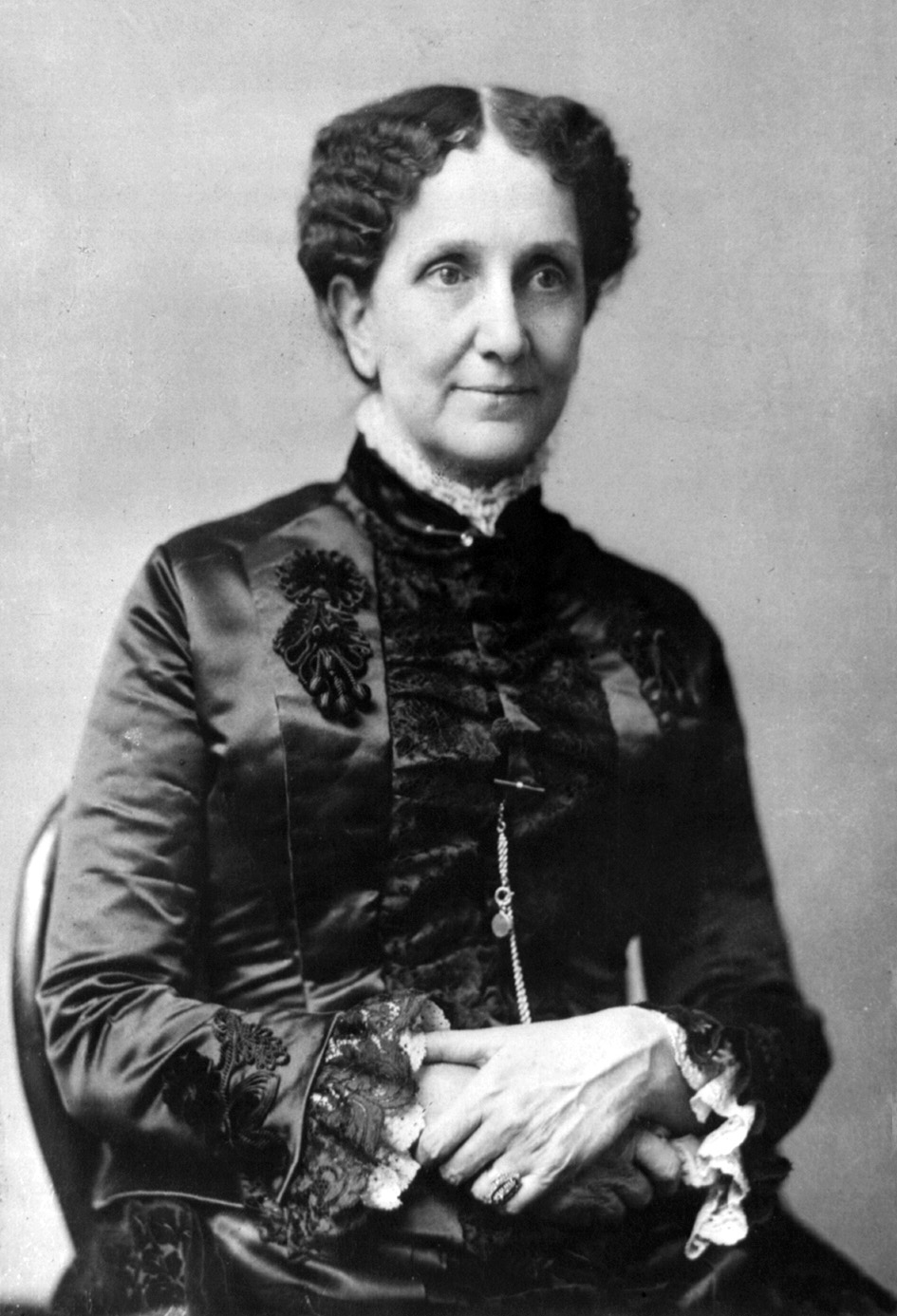
The bonds of orthodox creeds loosened across the United States. In 1867, Unitarians, Universalists, Quakers, Jews, freethinkers, and spiritualists met in Boston and organized the Free Religious Association. Transcendentalist Ralph Waldo Emerson was its first member. “Free religion” flourished, finding adherents from New England liberals to Texas Populists. Unitarians and Universalists, borrowing in part from Eastern religious traditions, rejected orthodox Christian notions about the Trinity and Christ’s divinity. Spiritualists borrowed from Swiss theologian Emanuel Swedenborg and communed with the spirits of the dead. Mediums held seances across the country. Borrowing from the same impulses that animated American free religionists, Mary Baker Eddy argued that spiritual perfection could overcome material suffering including sickness and even death, and founded the Christian Science movement in 1879.
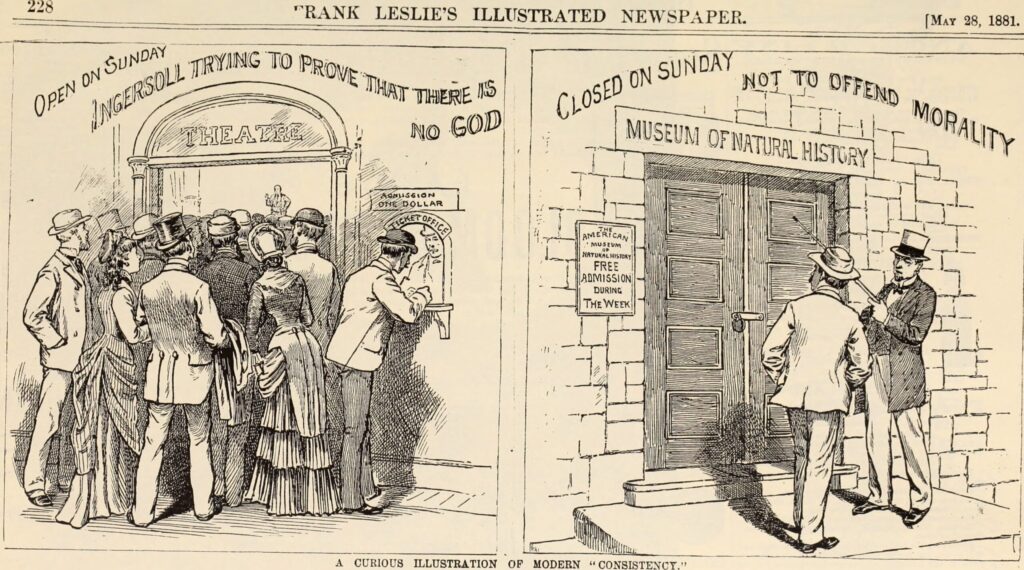
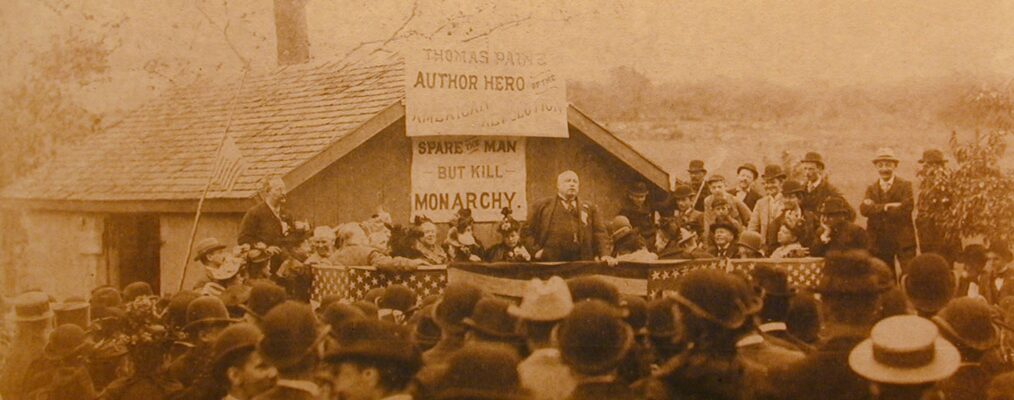
Others rejected religion altogether. In what one historian called the “Golden Age of Freethought,” celebrity-skeptics such as Robert Ingersoll–“The Great Agnostic”—barnstormed the nation, speaking to sell-out crowds about the corrosive impact of religion on the world, the primitive ideas of believers, the hypocrisies of religious leaders, and the grand histories of atheism and agnosticism. Secularists founded their own periodicals, such as the Truth-Seeker and The Iconoclast, and organizations such as the National Liberal League and the American Secular Union.1 Freethinkers and secularists pushed for the removal of religious influence in public life. In 1875, these impulses combined with a potent anti-Catholicism to propel the Blaine Amendment, a proposal by Representative James Blaine to constitutionally bar taxpayer support for sectarian schools, to within two senate votes of the necessary two-thirds needed for passage. Although the national amendment failed, more than a dozen states inserted similar clauses into their own constitutions, barring state support of religious schooling for more than a century before being overridden by the Supreme Court. Freethinkers preyed on the imaginations of American religious leaders. In 1890, Henry Carroll, a Methodist minister who directed the U.S. Census of Religious Bodies, estimated that only a small portion of Americans, roughly ten percent, were formally affiliated with any church. Among working people, participation was even lower. As he described it, large numbers of Americans were “active atheists, skeptics, secularists and infidels.”2
_(17922636760).jpg)
Christian theologians, meanwhile, grappled with modernity from within their own denominations. A number of German Protestant theologians, such as Wilhelm Herrman, began to articulate a new liberal theology based on historical insights.3 The core of Christianity, they contended, was not belief in a past reality about Jesus Christ but rather the experience of love at the core of the gospel and embodied by a socially-engaged church. Higher criticism, as it was often called, and theological liberalism slowly made their way across the Atlantic and into American colleges and churches. Conservative Protestants balked at this demythologizing turn in Christian theology and particularly resisted those who came to question the virgin birth of Jesus, his divinity, the miracles he performed, his Second Coming, the atoning nature of his crucifixion, or the literalness of his resurrection.

Advocates of what later came to be called fundamentalism emphasized the authority and inerrancy of Scripture and rejected evolutionary theory as incompatible with Christian belief. Many liberal Christians rejected Social Darwinism for its heartlessness; conservative Christians rejected Darwinism for its godlessness. The term “fundamentalist” emerged from a series of essays by conservative Protestants titled The Fundamentals, published between 1910 and 1915 and funded by Los Angeles oil magnate Lyman Stewart and his brother Milton.4 Conservative theologians and culture warriors took up the mantle. The work of conservative faculty, for instance, established Princeton Theological Seminary as the intellectual center of fundamentalist theology. At the same time, others worked to reconcile Christianity and modern thought. Often described as modernists, they emphasized the ethical teachings of Jesus and argued that religion must adapt to remain meaningful in a changing world. Theological tensions strained American religious institutions, presaging fault lines that would rupture Protestant Christianity in the coming decades.
III. New Americans
It wasn’t just foreign ideas that shocked conservative theologians. Between 1895 and the outbreak of World War I in 1914, fifteen to eighteen million immigrants, mostly (but not exclusively) from Southern and Eastern Europe, arrived in the United States. This demographic shift transformed the country’s religious landscape. New immigrant communities, many of them Roman Catholic or Jewish, altered the religious composition of American society, especially in its cities. Catholicism became the largest single denomination by the end of the nineteenth century. At the same time, Protestant churches—long dominant in American cultural life—faced new challenges. The diversity of urban populations and the fast-paced, often secular character of city life weakened their traditional authority and forced them to compete within the religious marketplace.5
Immigrants transformed urban religious life. While many peoples brought many traditions to American shores, the experience of Jewish immigrants in the late nineteenth and early twentieth century reveals much about immigration and American religious history. Jews had been in the United States since well before its founding, but new Jewish migrants arrived in large numbers and transformed the social and religious landscape of American cities. The implementation of anti-Jewish measures and government-sanctioned violence in Russia caused Jews to seek safety beyond the empire’s borders.6 Between 1881 and 1924, more than 2.5 million Jews immigrated to the United States, often fleeing persecution and seeking economic opportunity. In the years from 1899 to 1910 alone, approximately 700,000 Jews left the Russian Empire, a migration that represented nearly one-seventh of its Jewish population.7 These immigrants settled primarily in urban centers, where they established dense and vibrant communities. By 1900, approximately one million Jews lived in the United States, and by 1910 Jews made up roughly one-quarter of New York City’s population, making it the largest Jewish city in the world.8 Other cities—including Chicago, Boston, Philadelphia, and Cleveland—also became important centers of Jewish life.9
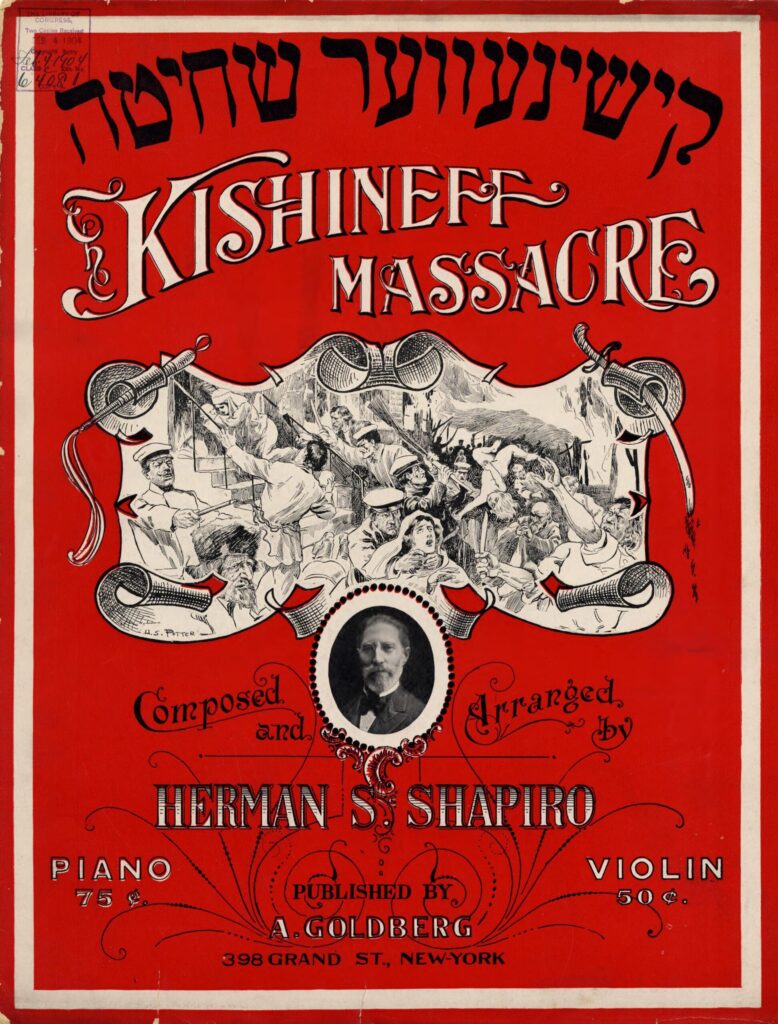

As they adapted to life in the United States, American Jews built a wide range of institutions to support their communities and respond to social challenges. In 1906, an elite group of Reform-minded, politically centrist, and non-Zionist Jews founded the American Jewish Committee to combat antisemitism and advocate for Jewish rights. Louis Marshall, one of the group’s founders, stated that this group sought “to promote the cause of Judaism” and to prevent the spread of anti-Jewish hate.10 The pogroms, or state-sanctioned violence, that spread to hundreds of towns throughout the Russian Empire between 1903 and 1905 served as the latest example of the potential danger that Jews faced around the globe.11 This was followed by the establishment of Hadassah, the Women’s Zionist Organization of America, in 1912, and the Anti-Defamation League in 1913, each reflecting growing concern with both global Jewish welfare and discrimination within the United States. Despite these efforts, Jewish Americans faced persistent forms of exclusion. They were often barred from certain neighborhoods, hotels, and social clubs, and universities began experimenting with informal quotas to limit Jewish enrollment. These experiences of discrimination shaped the development of Jewish communal life and reinforced the importance of collective organization and advocacy.
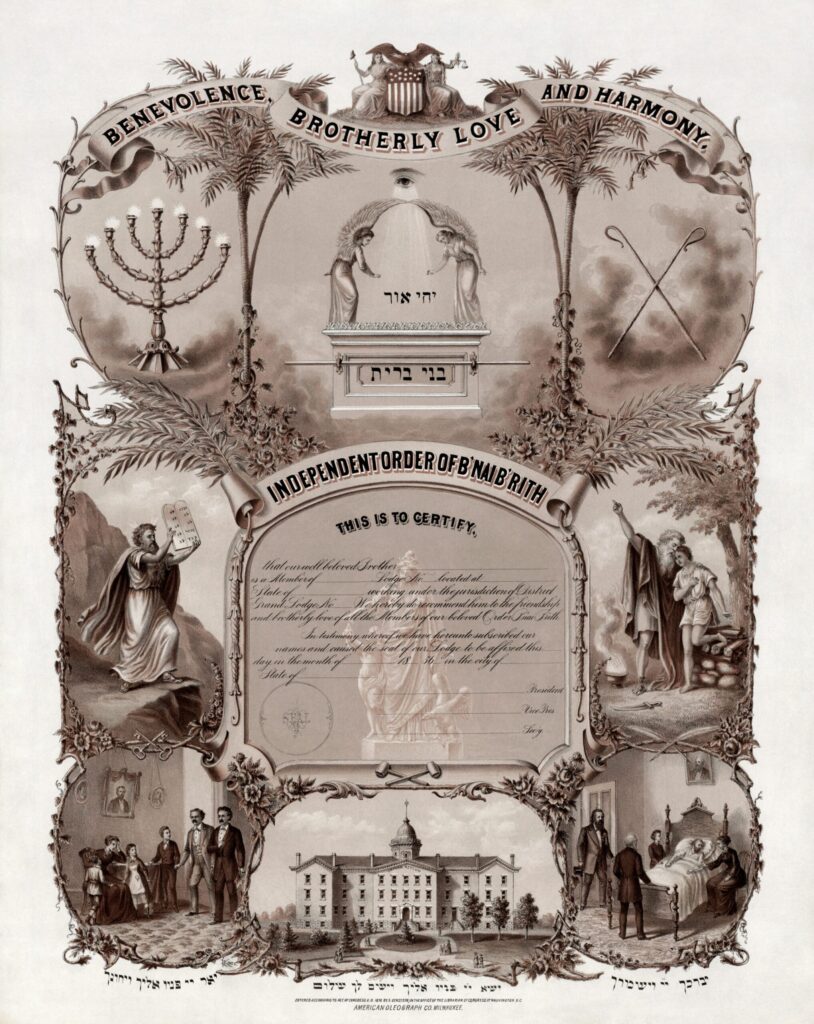

American Judaism itself also evolved during this period. Reform, Conservative, and Orthodox Judaism—each established in the nineteenth century—expanded and adapted to new social conditions in the early twentieth century. Conservative and Orthodox Judaism shared many of the same goals in the early 1900s. These included maintaining Jewish tradition, observing the Sabbath, following Jewish dietary laws, and maintaining Jewish religious education. To this end, the Jewish Theological Seminary (Conservative) and Yeshiva College (Orthodox) even considered a merger in 1926. Although this union never came to be, it highlighted the similar ideologies of early American Conservative and Orthodox Judaism. Yet, these two Jewish religious movements ideologically grew apart during the interwar period.
![A black-and-white photograph of children at a labor parade in New York City, about 1909. Two girls wear banners with "Abolish Ch[ild] Slavery!" in Yiddish and English. One girl carries an American flag and the other a black flag.](https://www.thunderinggods.com/wp-content/uploads/2026/07/service-pnp-ppmsca-06500-06591v.jpg)
Jews were not the only new Americans filling its urban centers. Immigration also remade American Catholicism. Already the largest religious group in the United States before the Civil War, waves of new migrants exploded the population of American Catholics, straining the church in new ways. Millions of immigrants arrived in the United States from southern and eastern Europe, including from nations like Italy, Poland, and many more. Many settled amidst large Catholic populations in New York City, Philadelphia, Chicago, and Boston. These new arrivals shifted American Catholicism away from its earlier German and Irish dominance, creating tensions over language, ethnicity, and power.
Catholic parishes remained segregated by ethnicity and language, due in part to a nineteenth-century Church law that allowed people to plant and attend parishes based on similar language and culture, not geographic location alone. These were known as national parishes.12 The establishment of national parishes provided important comfort and continuity for new arrivals. They also hindered interaction between different populations and strained the authority of the larger Church over these parishes since they often applied institutional policies inconsistently. Some leaders in the Church wanted to “Americanize” these parishes in terms of language and religious practices.13 This led to a 1917 Code of Canon Law that essentially halted the establishment of any new national parishes. Still, existing national parishes continued to thrive and retain unique rituals, customs, and practices.


Religious leaders struggled to maintain religious identity in an increasingly urban, industrial, and pluralistic society. American Catholic leaders, for instance, including James Gibbons, John Ireland, and others believed that Catholicism could blend and thrive with American democracy. European critics remained suspicious of what they saw as American innovations and in 1899 Pope Leo XIII condemned elements of “Americanism.”14
Outside of the Church hierarchy, immigrants were already busy remaking their religious lives. In his study of Italian immigrants in New York City, historian Robert Orsi captured the lived reality of immigrant faith. Studying religious celebrations—primarily the annual festa of the Madonna of Mount Carmel on East 115th Street—Orsi showed how the popular Catholicism of Italian immigrants marked the distance between the organized church and the lived realities of faith.15 Religion was not confined to mass and confession. It bled into the world. Family life, recreation, work: religion cut through it all.

,_A_Monday_Washing,_New_York_City,_1900,_NGA_136625.jpg)
The transformation of American religion in the late nineteenth and early twentieth centuries reshaped not just the lives of urban Americans, but the very physical landscape of American cities. From the 1890s through the early decades of the twentieth century, religious architecture reflected growing diversity in American society, as new communities built spaces that translated traditions into the vernacular of a new industrial, urban nation. This period did not produce a single dominant architectural style. Religious buildings varied widely, shaped by economic resources, available materials, local regulations, and the specific needs of different communities. In rapidly expanding cities, congregations sometimes constructed new buildings to assert their presence, while others adapted existing structures, purchasing and repurposing buildings left behind by shifting populations. The result was a dynamic and constantly evolving religious landscape.
Jewish immigrants, for example, adapted urban space in new ways, constructing an eruv—a symbolic enclosure that allowed certain activities otherwise restricted on the Sabbath. By linking existing utility poles, fences, and other urban features into a ritual boundary, eruvin transformed ordinary city infrastructure into a sacred geography that enabled observant Jews to carry objects and generally move more freely through city streets while maintaining their religious obligations. One of the first such enclosures was established in St. Louis in 1896, followed by another in New York City in 1907.
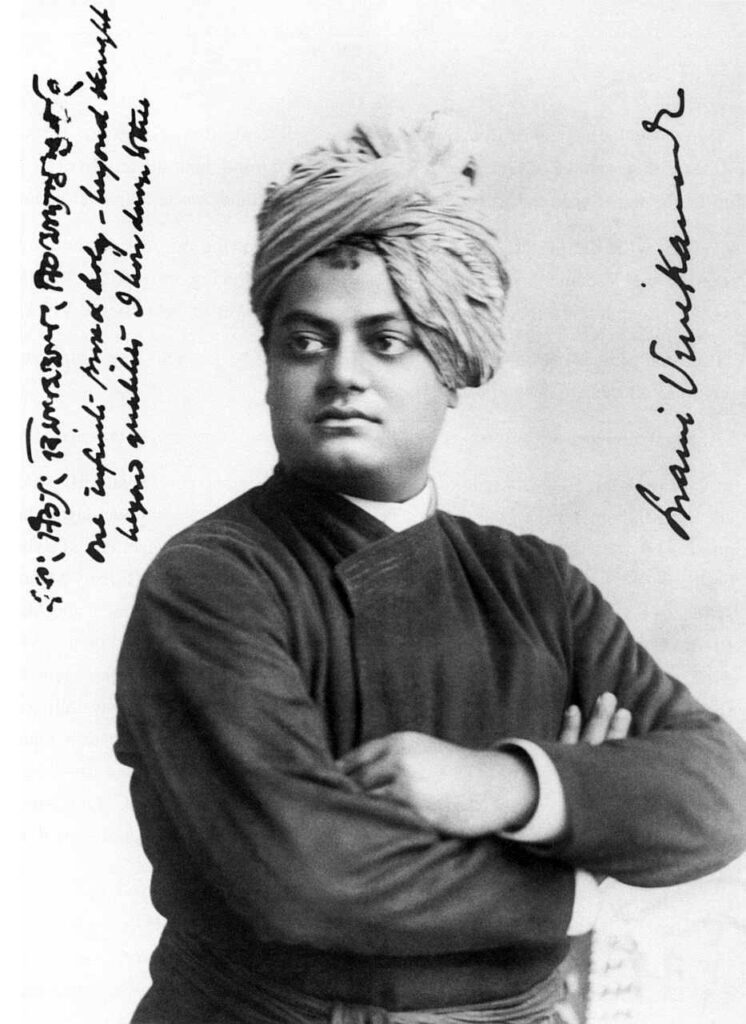
After the 1906 earthquake in San Francisco, Hindu immigrants constructed the Old Vedanta Society Temple, one of the first Hindu places of worship in the United States. In 1912, construction began on the Baháʼí House of Worship in Wilmette, Illinois, a project that would not be completed until 1953 but signaled the growing presence of new religious traditions. In 1915, Sikh immigrants built the Gurdwara Sahib in Stockton, California, the first Sikh temple in the country.
In the rapidly expanding American Southwest, new waves of Mexican immigrants joined Mexican Americans and others who practiced their historical faiths in their historical communities. Long-standing Catholic parishes tended to their parishioners, while the families of ranchers and ranch-workers tended home altars. Ethnic Mexicans venerated the Virgin of Guadalupe, the Marian figure associated with the Mexican Church, whose image defined Mexican American Catholicism. As the ubiquity of the Virgin testified, potent folk traditions coexisted alongside formal practice.
At the same time, railroad construction and agricultural expansion pulled large numbers of Mexican workers northward, and the outbreak of the Mexican Revolution in 1910 saw a massive wave of migrants fleeing the war’s violence and dislocations. Migrants swelled the borderlands, bringing with them Mexican religious practices. Many Mexicans and Mexican Americans sought the aid of curanderos, or folk healers, who blended Indigenous traditions and Catholic practice to treat emotional, mental, and physical maladies. Some curanderos, such as Santa Teresa Urrea and Don Pedro Jaramillo, achieved renown across the Southwest.16
Not all Mexican Americans were Catholic. Many embraced Protestantism. Elite and influential families, such as the Canaleses and the Idars of South Texas, affiliated with Protestant churches. Protestant missionaries, meanwhile, worked throughout the borderlands winning souls for Protestant churches. Still, in the late nineteenth and early twentieth centuries, Presbyterians and Methodists planted many churches and schools in Mexican majority geographical areas such as California, New Mexico, Arizona, southern Colorado, and Texas. These expanding networks of Protestant mission work laid the groundwork for new religious expressions within Latine communities, even as they introduced new tensions around language, culture, and authority. In 1910, for example, twenty-four congregations organized the Convención Bautista Mexicana de Texas (Mexican Baptist Convention of Texas), which eventually established new churches, an institute to train Mexican and Mexican American pastors, and a children’s home.17
Mexican Americans, of course, were not the only Latino populations in the United States. The conclusion of the Spanish-American War, for instance, brought the Catholic populations of Puerto Rico, the Philippines, and Guam into the American orbit. Migrants from the Caribbean had already established population centers in New York City and other sites on the East Coast, implanting their formal practices and folkways. Protestant churches quickly turned New York City into a hub of mission activity.18 The early twentieth century also saw an increase in Mormon Latines through evangelization by LDS (Latter Day Saint) settlers in Utah.19 While early mission efforts of Jehovah’s Witnesses within Latine communities can be traced back to John Wahlberg’s presence in Puerto Rico, with migration to the U.S. mainland, the number of Witnesses grew in subsequent decades.20


American faiths were adapting to new worlds. Native Americans practiced Indigenous faiths, adopted Christianity, or blended traditions. Architecture reveals religious adaptation: Indigenous religious traditions continued to rely on mobile or non-durable structures. The Native American Church, established around 1913, often used tipis for worship. These structures were designed to be assembled, disassembled, and relocated as needed, which reflected their longstanding relationship between religious life, mobility, and the natural environment. Americans also began to preserve older sacred spaces. The Antiquities Act of 1906 authorized the protection of historic sites, including Indigenous kivas and mission churches in the Southwest. These developments reveal how religious communities adapted to the conditions of modern America not only through belief and reform but through the built environment itself. Churches, synagogues, temples, mosques, and other sacred spaces were more than spiritual sites. They manufactured identity, belonging, and social change. In this way, architecture served as both a reflection of religious diversity and a tool for shaping the communities that inhabited an increasingly urban and industrial society.
IV. The Crisis of Industrial America
By the late nineteenth century, American industry had produced a new and unsettling reality. “Long ago it was said that one half of the world does not know how the other half lives,” journalist and social reformer Jacob Riis wrote of life in American cities at the turn of the twentieth century. Riis’s writing and photography exposed the nation’s ballooning economic inequality. As corporations and a small number of families accumulated a staggering amount of wealth, there were millions of workers and families whose lives were marked by unsafe working conditions, low wages, and overcrowded, dilapidated housing.
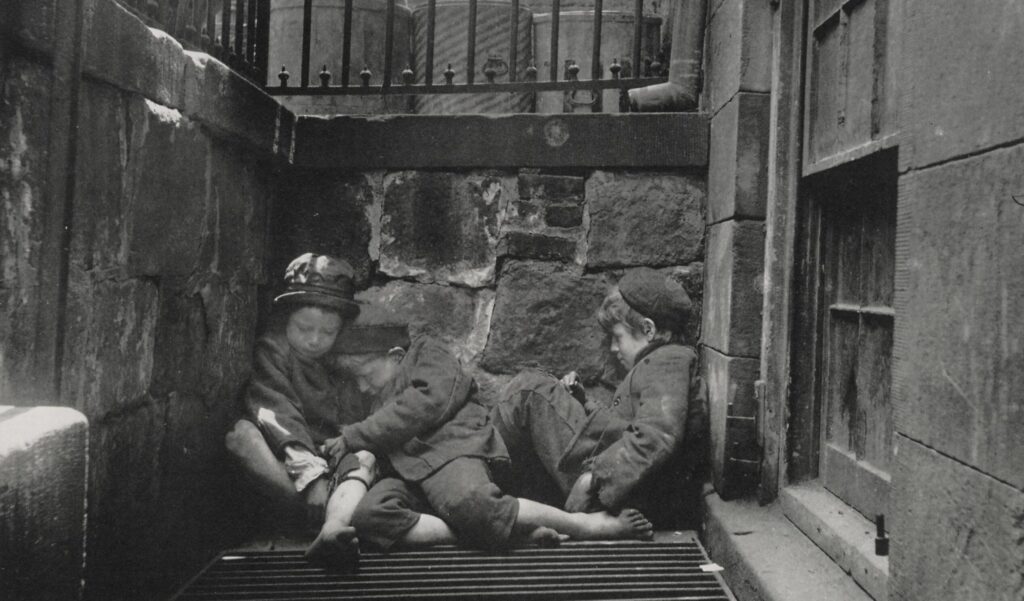
American cities swelled with migrants from rural America and immigrants from abroad. Newcomers brought different languages, religious traditions, and cultural practices that reshaped urban life. Protestants and Catholics grappled over questions of assimilation and national identity, and, as inequality became more visible, racial tensions also deepened as African Americans searched for opportunity within and beyond the South.
The Social Gospel emerged from these anxieties. In the late nineteenth and early twentieth centuries a diverse group of religious leaders, reformers, workers, and migrants grappled with the social ills wrought by industrial society. Drawing on competing visions of Christianity, they sought to redefine, and in some cases make real, their religious ideologies in American public life.
In the winter of 1907, John Meishell left Baltimore with his wife and five young children and traveled to St. Louis, Missouri in search of work. He and his family found employment at the Peerless Oyster Company. His children—all under ten years of age—worked alongside him in the oyster sheds. Even Meishell’s infant child remained on site, cared for in the same space where the others labored. The three-year-old helped as best they could. The family’s day began at three in the morning and stretched until late in the afternoon. Recruiters promised the family would secure a living wage. Instead, the work was irregular and the pay meager. At best, the Meishell family earned six dollars a week, a paltry sum for an American family.21 Their experience was not unusual. American laborers could expect long hours, low wages, and unsafe working conditions. Americans disagreed about the source of inequality some interpreted poverty and suffering as urgent social problems, while others interpreted them as natural and even necessary consequences of progress.
Such disagreements arose amid transformations in American understandings of science and religion. When Charles Darwin published On the Origin of Species in 1859, he introduced a theory of evolution based on natural selection, arguing that species developed over time through competition for survival.22 Although the book initially attracted limited attention in the United States, its implications became more apparent in the decades that followed. Darwin’s ideas raised difficult questions about the role of God in creation and whether the natural world reflected divine order or blind competition. Over time, Darwin’s ideas were adapted and extended beyond evolutionary biology. Thinkers such as Herbert Spencer applied the concept of evolution to human society, arguing that competition determined success or failure not only among species but also within individuals and groups. This interpretation—later known as Social Darwinism—legitimized inequality.23 Wealth and success appeared as evidence of strength and fitness, while poverty suggested weakness or failure.
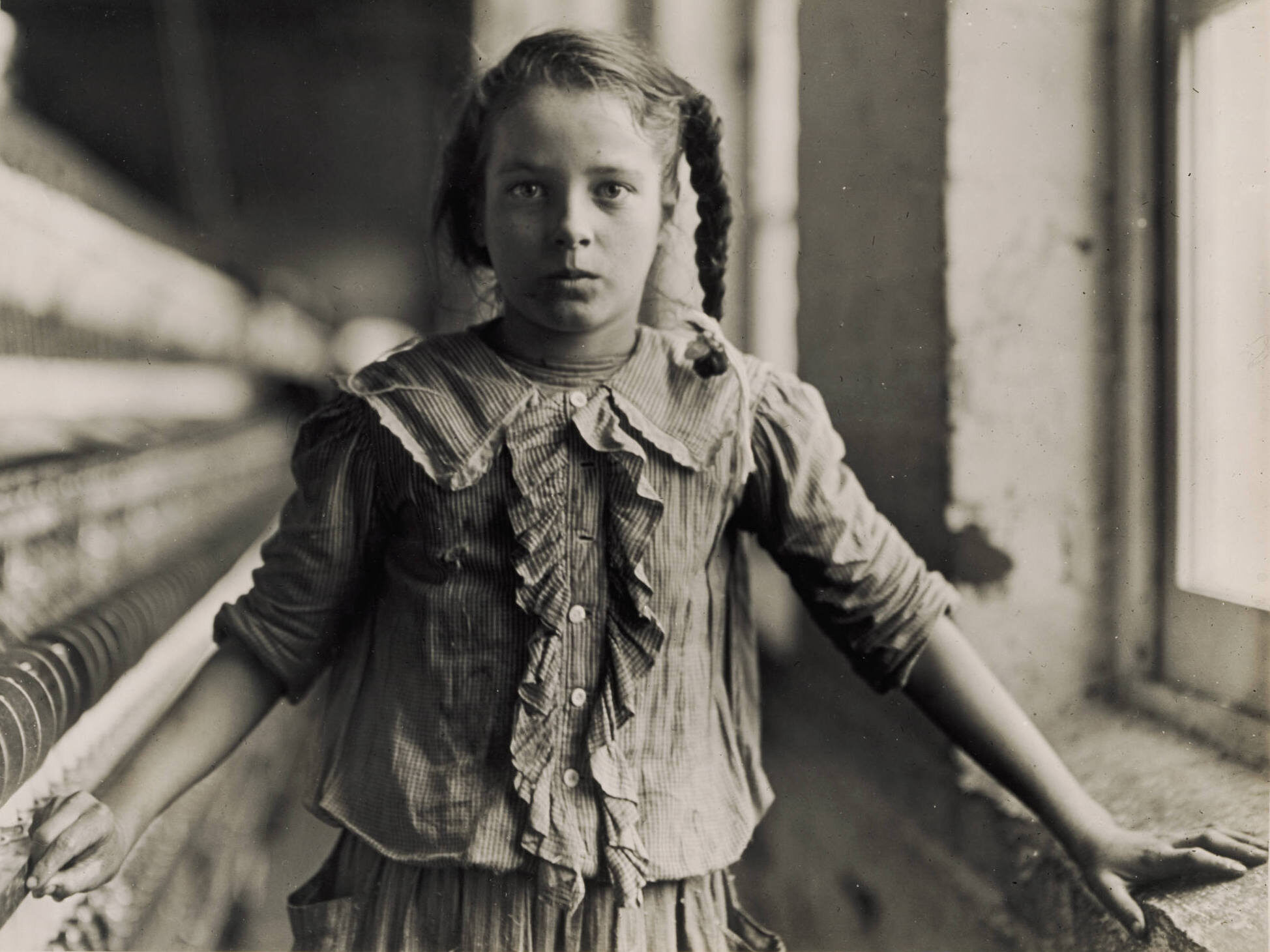

Many religious Americans refused to surrender the principles of charity and justice to the whims of mechanistic systems. Appalled at the raw cruelty of the industrial system, they applied their old theology to the new “social” worlds of industrial capitalism. But others embraced the logic of Social Darwinism. In his widely circulated lecture “Acres of Diamonds,” Baptist preacher Russell Conwell argued that “People ought to get rich and make money. Money should be used to buy Bibles and send out missionaries. Those with money are generally honest, good people.”24 Conwell’s logic rendered money a sign of virtue and usefulness. Similar ideas appeared in academic circles. The influential Yale sociologist William Graham Sumner (1840-1910) used Social Darwinist thought to argue, “A drunkard in the gutter is just where he ought to be.” This, Sumner wrote, was how “Nature […] removes things which have survived their usefulness.”25 For Social Darwinists, efforts to regulate industry or assist the poor could be seen as interfering with the natural order. These ideas influenced both public policy and religious thought. Some ministers embraced Social Darwinist reasoning, interpreting economic success as a sign of moral virtue.
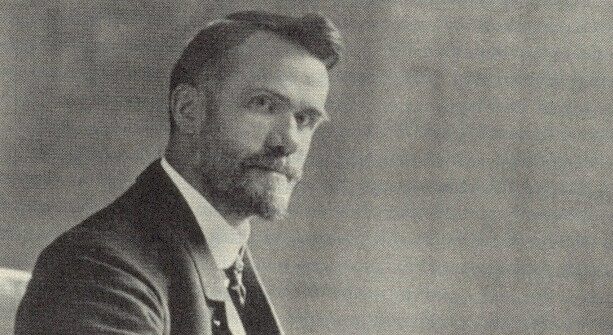
Theological liberals within the Social Gospel movement prioritized structural change over individual salvation, critiquing the excesses of laissez-faire capitalism and advocating social justice reform. The Social Gospel reflected the belief that Jesus’s teachings needed to be applied to all of society’s institutions, including economic systems, to realize God’s Kingdom on Earth.26 No figure articulated this vision more clearly than the Baptist minister, Walter Rauschenbusch. Drawing on his experiences in New York City’s Hell’s Kitchen neighborhood, Rauschenbusch argued that Christianity must confront what he called “social sins”—injustices rooted in economic systems, political institutions, and patterns of inequality. As the pastor of Second German Baptist Church, Rauschenbusch lamented having to hold the “tiny boxes” of children who had died as a result of malnutrition, dangerous living conditions, and other avoidable conditions of the new industrial era. In his seminal 1907 work, Christianity and the Social Crisis, he rejected the idea that religion should focus solely on saving individual souls. He insisted that the teachings of Jesus demanded the transformation of society itself, which would allow for a “free, just and brotherly social order.”27
These ideas did not remain confined to sermons or theological debates. They took shape in communities across the country, where reformers sought to apply Social Gospel principles to the challenges of urban life. Among the most influential figures in this movement was Jane Addams. In 1889, alongside Ellen Gates Starr, Addams founded Hull House in Chicago, one of the most prominent settlement houses in the United States. Located in a working-class, immigrant neighborhood, Hull House embodied the Social Gospel’s emphasis on engaging directly with the conditions of everyday life. Rather than offering charity from a distance, Addams and her colleagues lived among the communities they served. They established educational programs, childcare services, and cultural institutions designed to support immigrant families and bridge class divides. This approach reflected a broader belief that meaningful reform required not only moral concern but sustained social engagement. Addams’s work also challenged earlier models of charity. As she argued in Democracy and Social Ethics, traditional charitable efforts often reflected the biases of those offering aid rather than the needs of those receiving it.28 Reformers, she insisted, needed to understand the lived realities of working-class communities and approach their work with humility.
The theological innovations of the Social Gospel extended beyond abstract ideas and reshaped how reformers understood knowledge itself. Increasingly, religious leaders turned to emerging disciplines such as sociology, economics, and political science to better understand the conditions of modern life. Rather than relying solely on Scripture or personal experience, they sought empirical evidence about poverty, labor conditions, and urban life. This shift reflected a belief that Christianity should engage directly with the realities of the modern world using the tools of modern knowledge. One of the clearest expressions of this approach was the rise of the social survey movement. Reformers mapped urban neighborhoods, documenting patterns of employment, housing, and vice in an effort to identify the causes of poverty and inequality. These surveys were not merely academic exercises—they were used by churches and reform organizations to guide action. Figures such as Jane Addams and W.E.B. Du Bois participated in these efforts, demonstrating how religious conviction and social investigation could work together. This blending of religion and social science reflected a broader transformation in how reformers understood the mission of the church. For some, Christianity was no longer confined to the salvation of individuals; it became a framework for diagnosing and addressing the structural problems of modern society.
As religious communities addressed inequality in daily life, their work began to intersect with wider political movements aimed at turning moral ideals into public policy. In 1908, the Federal Council of Churches adopted the Social Creed of the Churches, a statement that outlined a collective Christian response to the conditions of industrial society.29 As the Creed declared, churches must stand “for equal rights and complete justice for all men in all stations of life” and “for the abolition of child labor.” The document also called for the establishment of a living wage, protections for women workers, and a guaranteed day of rest each week. It also endorsed arbitration in labor disputes and affirmed the principle of equal justice across social classes. The language of the Creed translated the theological insights of the Social Gospel into concrete social and political demands.
These ideas took on political significance in a broader international context. The Second International, the international socialist party formed in Paris in 1889, envisioned a future in which abused workers stopped believing in “miracles” and forged their primary identity in their status as “proletarians.” In the United States, the great geographical and cultural diversity of working people, in combination with the violent and repressive system of Jim Crow in the South, made the promise of a unified, international, “proletarian” identity both less conceivable and less appealing. Roman Catholic Churches in the United States strongly opposed “socialism” and heavily invested resources in stalling its advance. The American Federation of Labor (AFL), which became the largest federation of trade unions in the early twentieth century, acted pragmatically when they officially opposed “socialism.” AFL President Sam Gompers, a secular Jewish cigarmaker, worked closely with the Roman Catholic Church and the Federal Council of Churches to bolster trade union participation, end child labor, limit work days, improve working conditions, and achieve a minimum wage. He believed that the trade union movement would be more successful if it worked with rather than against the American churches.
Churches often had a conservative influence on the American labor movement.30 In the 1910s, when socialist labor participation was at a height around the world and many American workers supported some semblance of social democracy, American churches used their alliances with trade unions to grow their own power and influence over public space. Both Catholic and Protestant denominations built large church complexes with gymnasia, auditoriums, schools and athletic fields to make the statement that they supported working people. Rural migrants to cities, both Catholic and Protestant, participated in robust intellectual life in churches, combatting the perception that because they participated in “unskilled” work they were ignorant. In many respects, it was the Social Gospel movement which restored and grew the power of churches in the United States.31
V. American Vice
In response to this growing distance between churches and working-class communities, the late nineteenth and early twentieth centuries saw a wide range of moral reforms that both continued and adapted earlier traditions associated with the earlier “benevolent empire” of the Second Great Awakening. Rapid urbanization and mass migration often intensified not moral concern for the human costs of inequality, but anxieties about rising urban vice. As a burgeoning working class crowded into cities such as New York and Chicago, gambling, saloons, and prostitution proliferated, alarming white middle-class moral reformers.
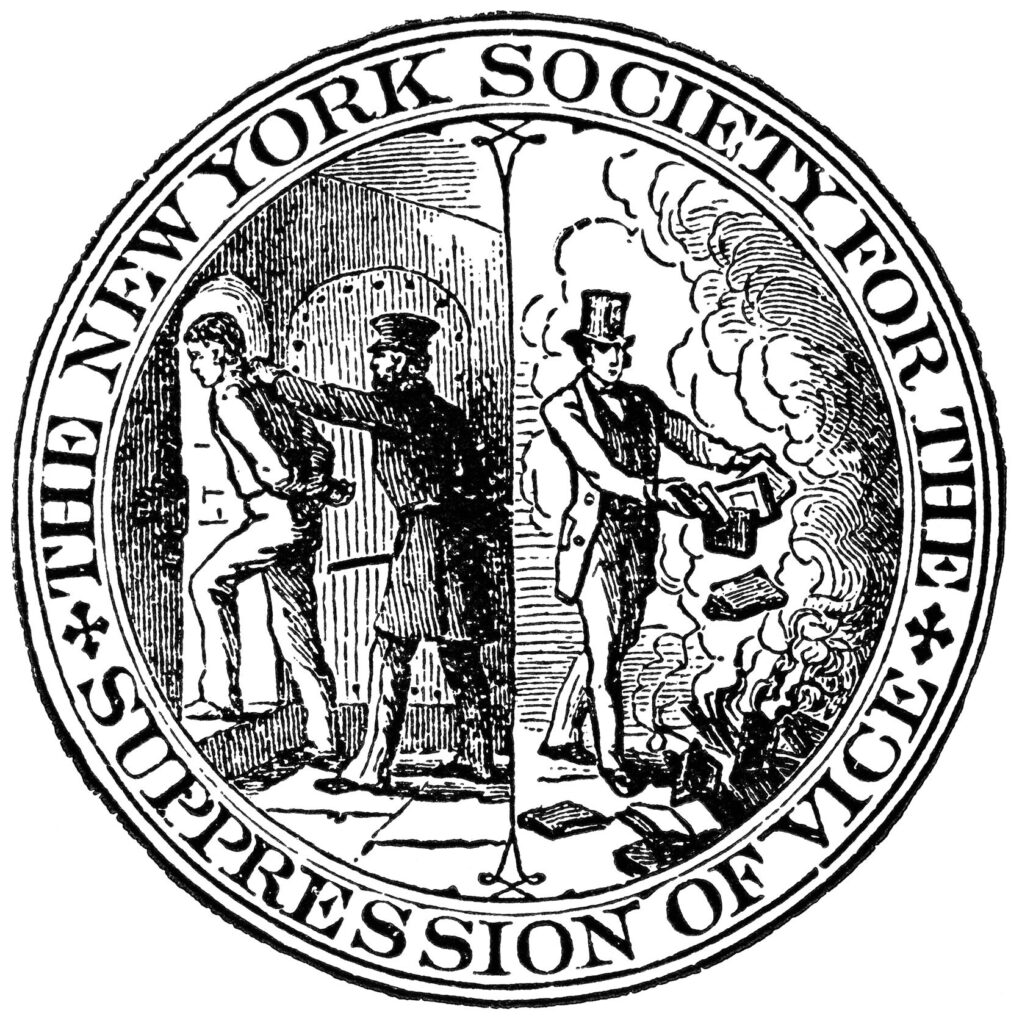

The perceived proliferation of sin alarmed Anthony Comstock, a devout member of the Young Men’s Christian Association (YMCA). Comstock was deeply frustrated by the government’s unwillingness to suppress titillating “dime novels,” pornographic photos, racy playing cards, as well as “free-love” advocates like Victoria Woodhull. In 1873, with the support of wealthy associates, Comstock helped found the New York Society for the Suppression of Vice and lobbied Congress to pass stricter laws against sending “obscene” material through the mail. The resulting Comstock Act empowered the U.S. Postal Service to inspect mail and confiscate lewd materials as well as information relating to abortion and contraception. Offenders faced heavy fines and even prison sentences. Like many post-Civil War reformers, Comstock was keen to employ the coercive power of the government to advance a moral agenda. After all, if force and the law had abolished the evils of slavery, it might rid the United States of other sins too, such as gambling, polygamy, and Sabbath-breaking, all of which Christian activists sought to legislate against.32
Alcohol was another supposed source of moral decay that reformers sought to tackle. Before the Civil War, temperance advocates succeeded in getting some states to briefly ban alcohol while convincing large numbers of Americans to temper their drinking or abstain altogether. The decades following the Civil War saw the rise of a new generation of anti-drinking activists and organizations such as the Woman’s Christian Temperance Union (WCTU), founded in 1874, and the Anti-Saloon League (ASL), founded in 1893. Prohibitionists championed politics, rather than individual moral suasion alone, as the most effective weapon against alcohol and the larger “liquor traffic.”33 Groups such as the WCTU and ASL lobbied for local, state, and national prohibition laws.34
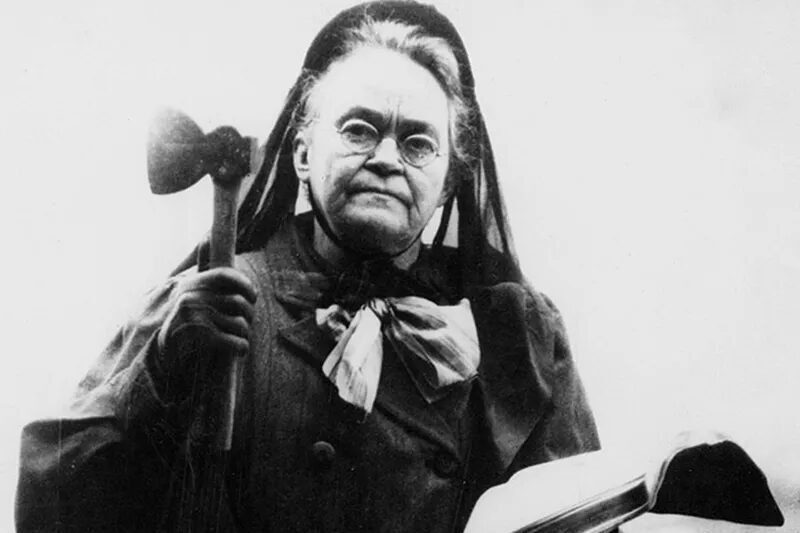
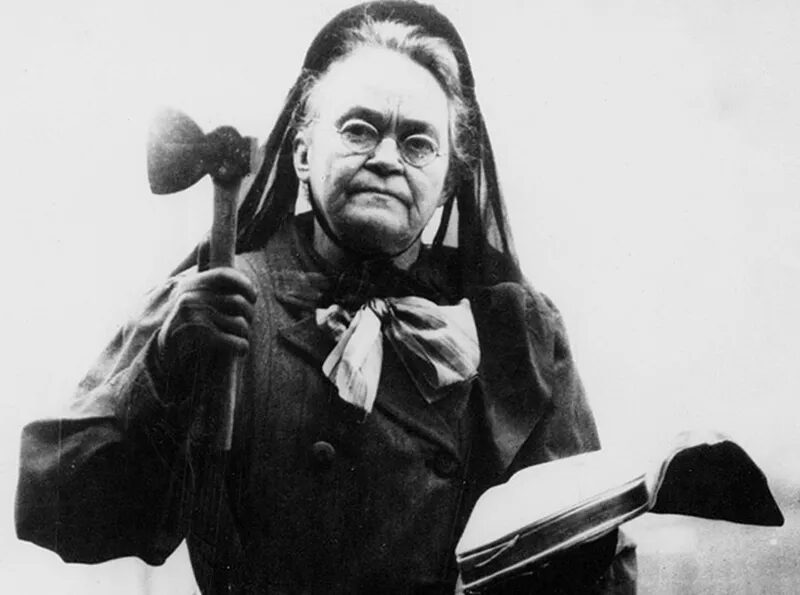
One WCTU member, Carrie (or Carry) A. Nation won notoriety for destroying saloons with a hatchet.35 While mostly an evangelical Protestant endeavor, some Catholic organizations, like the Catholic Total Abstinence Union of America, also pushed for temperance.36 The WCTU, adopting a “do everything” strategy under the leadership of Frances Willard, championed women’s suffrage (the right to vote) and other women’s causes. Willard grew the WCTU into a juggernaut. Willard became an international women’s leader, and the WCTU emerged as the most powerful women’s organization in the United States during the late nineteenth century.37
Alongside these attempts to change laws, many evangelical Protestants continued to emphasize personal regeneration as the means to overcome social sin, perpetuating the “moral suasion” paradigm of earlier antebellum reformers. This was the approach taken by a new generation of urban revivalists, such as Dwight Moody, who described the “great misery and suffering” in American cities as the result of people’s “sinful” behavior.38 The Salvation Army, for instance, sought to extend individual conversions while offering food and shelter to the homeless, unwed mothers, and needy children. As an alternative to the saloon, the YMCA sought to provide a positive moral environment for young transplants in urban centers.
The evangelical emphasis on personal responsibility over systemic injustice mirrored the larger “bootstrap” ideology of the American capitalism. Social improvement would emerge from individual reform. And yet, organized religion did not withdraw in the face of larger systemic realities. Religious leaders and churches expanded their presence in industrial centers and reshaped their message to address the needs of working-class communities. Their work raised a central question: what should Christianity mean in an industrial society riven by vast inequalities? Some found the answer in a defense of traditional beliefs against modern challenges. Others created wholly new traditions.
VI. The Black Church
Buffeted by both Jim Crow and wrenching economic changes, Black churches nourished independent spiritual worlds. While movements such as the Social Gospel and the Azusa Street Revival offered new approaches to addressing the crises of industrial America, African American religious communities had long pursued social reform, functioning as central sites for addressing the material, social, and spiritual needs of their communities.
In the American South, where the threat of violence could meet any demonstration of Black political power, Black churches emerged as sites of strength. Pastors naturally doubled as community leaders and political activity flowed naturally from congregational organization. Black religious institutions affirmed a moral vision that rejected racial hierarchy, even as they navigated the realities of segregation and discrimination. Leaders associated with social reform within Black religious life urged congregations to more fully realize the emancipatory dimensions of their faith. Some black leaders, such as Booker T. Washington, mocked the otherworldly pretensions of Black ministers, but few individuals were better positioned to weather the assaults of Jim Crow upon Black organizational life. When the Great Migration followed American entry into World War I, Black Southerners took their churches with them, spreading their Southern faith to Northern cities.
Black churches recognized the twin challenges of Jim Crow segregation and economic privation. The African Methodist Episcopal minister Reverdy C. Ransom articulated his vision of what came to be seen as the Black Social Gospel in a 1901 article in the Christian Recorder. Describing the role of the church in Chicago, Ransom wrote that the institutional church existed “to meet and serve the social conditions and industrial needs of the people, and to give answers and solutions to many grave problems which confront our Christianity in the great centers of population of our people.”39 For Ransom and others, Christianity demanded engagement with the full range of social problems confronting Black communities.
Black women reformers played a central role in this work. Figures such as Ida B. Wells-Barnett and Mary Church Terrell combined religious conviction with activism, addressing issues such as lynching, education, and racial inequality. Christianity was deeply important to Ida B. Wells. She was raised Methodist and attended Rust College, a Black institution formed by Methodists. She was married at Bethel African Methodist Episcopal Church in Chicago, and her experience leading Bible classes at Grace Presbyterian Church inspired her to form the Negro Fellowship League. Her tireless journalism forced the nation to confront the brutal reality of lynching. Mary Church Terrell insisted that Christianity required confronting racial injustice and, through the National Association of Colored Women, she called on others to uplift others, or as she put it “lifting as we climb.”40
As the American South descended further into Jim Crow segregation—with the tacit or explicit support of southern white churches—and the United States entered what many historians have called “the nadir of American race relations,” many Northern white churches stayed silent. Frederick Douglass, after reading Ida Wells’s Southern Horrors, her devastating account of American lynching, wrote to Wells and said, “If American conscience were only half alive, if the American church and clergy were only half Christianized, if American moral sensibility were not hardened by persistent infliction of outrage and crime against colored people, a scream of horror, shame and indignation would rise to Heaven wherever your pamphlet shall be read.”41 If American Christian ethics could not address human suffering, Douglass asked, then what good was the mass of American Christianity?
While white Social Gospelers framed their efforts as a new response to industrial society, African American communities had long practiced forms of social Christianity rooted in necessity and survival. Black religious life consistently linked spiritual practice with social transformation, even as it operated within—and against—the constraints of segregation and racial violence. In this sense, Black churches did not simply participate in the Social Gospel, they expanded and redefined it.42 Their work revealed that addressing inequality required not only institutional reform or spiritual renewal but sustained engagement with the realities of race, labor, and community life in modern America.
While Black churches labored under the onslaughts of Jim Crow, Black Americans invented new traditions, too, especially as the Great Migration, the mass movement of Black Southerners to areas outside of the South, began in earnest In an age of remaking, Black Americans used religion to create new racial identities and to better and grapple with the world around them.43 Followers of the Prophet Noble Drew Ali and the Moorish Science Temple claimed their identity as “Moors” rather than seeing themselves as Black or Negro. But perhaps no Black religious innovator so changed the history of American religion than William Seymour, a Black Southerner who taught the world how to speak in tongues.
VII. Speaking in Tongues
In April 1906, a multiracial group of worshippers gathered in a converted livery stable on Azusa Street in Los Angeles. The building itself was unremarkable—once used to house horses and equipment—but it became the site of one of the most influential religious movements of the twentieth century. Under the leadership of William J. Seymour, a Black southerner, participants met in a space that lacked the permanence and prestige of traditional religious institutions but nonetheless created something that would echo across the globe.
Perhaps no religious tradition embodied the spirit of reinvention more than Pentecostalism. From the Midwest to the Deep South to the West, and thence across the continent and into Latin America, it embodied the colliding geographies of a now-closely knit industrial nation. Bridging white theologians, Black revivalists, Latino evangelists, and stressing the limits of Jim Crow and turn-of-the-century race relations, its captured American racial fractures. And led often by women, it represented evolving American gender norms.
The origins of the Azusa Street Revival were closely tied to Seymour’s own life and experiences. Born in Centerville, Louisiana, in 1870 to a formerly enslaved couple, Seymour came of age in a society structured by the legacies of slavery. In his early twenties, he worked as a hotel waiter and traveled widely before relocating in 1903 to Houston,44 where he encountered Lucy Farrow, a Black preacher in the Holiness movement, a Methodist offshoot that emphasized a second work of grace after baptism. Farrow taught that a direct, personal experience with God could be achieved through a baptism of the Holy Spirit and encouraged Seymour to study under Holiness theologian Charles Fox Parham, who operated a Bible school in Houston. Seymour attended. Parham lectured to white students about the coming of the Pentecost, the power of sanctification, and glossolalia (speaking in tongues) as evidence of a third blessing. Seymour, owing to the dictates of Jim Crow, sat in the hallway, quietly listening through the the open doorway.45
Seymour arrived in Los Angeles in 1906, and freed from restrictions of Jim Crow Texas, quickly developed a reputation for his teachings, which focused on healing, the immanent presence of God, and speaking in tongues. On April 9, 1906, Seymour preached from Acts 2:4 on the baptism of the Holy Spirit, and participants reported that “the fire came down.”46 As attendance grew, the meetings moved to a building on Azusa Street, where the revival quickly attracted an interracial following. Worship services were marked by glossolalia, healing, and ecstatic prayer, drawing participants from across racial, ethnic, and national lines. The Los Angeles Times described the revival as a “weird babel of tongues,” portraying participants as “fanatical” and emphasizing the presence of “colored people and a sprinkling of whites.”47 But it was precisely this interracial character that distinguished Azusa Street from most American churches. At a time when segregation structured nearly every aspect of public life, the revival created a space, however fragile, where those boundaries were crossed.
Azusa Street offered an alternative vision of religious community and social reform. Institutional reform movements such as the Social Gospel often worked within existing structures. Seymour’s revival, on the other hand, reimagined those structures altogether. What had been denied to him in Houston, where he stood outside the classroom door, was transformed in Los Angeles into a multiracial community gathered within a former stable. This improvised space challenged both the social and religious boundaries of early twentieth-century America. That transgressive social space also provided the Black working class with an opportunity to convene and cultivate caring relationships while also challenging and reimagining restrictive social boundaries.48 The Social Gospel’s concern for social injustice did not translate into a sustained challenge to segregationist norms. By contrast, the Azusa Street Revival created spaces of worship that, at least temporarily, crossed racial and ethnic boundaries in ways that were rare in the early twentieth century.
Pentecostalism was on its way to becoming a hemispheric and global faith. William Seymour ordained Abundio L. López and Juan Navarro Martínez in 1909 as the first Latine Pentecostal ministers in the U.S. They helped to transform the revival from a largely biracial, English-speaking, and Americanized gathering to a more diverse, multilingual, and global movement.49 What attracted Latines to Azusa—and what enabled the longstanding growth of Pentecostalism in Latine communities in the United States and across Latin America—was its belief and practice of an egalitarian Holy Spirit, accessible to anyone who would seek its power and promise of salvation regardless of race, ethnicity, gender, citizenship status, education, or economic standing, ideas that resonated deeply among communities navigating displacement, labor exploitation, and racialization.
VIII. Conclusion
By the early twentieth century, the United States had been reshaped by industrialization, migration, and the expansion of its overseas and domestic empires. Cities grew denser and more diverse. Work became more precarious. Inequality became more visible. In response, Americans turned to religion not only as a retreat from modern life, but as a means of confronting its challenges. Americans transformed religious practice by innovating new traditions and ideas and adapting older ones to a changing old. The Social Gospel emerged as one of the most influential efforts to reconcile the demands of living in an industrial society. Reformers sought to apply Christian ethics to labor, poverty, and public life, translating theological ideas into political reform. Their efforts, however, were neither uniform nor complete. The Social Gospel often struggled to confront the racial hierarchies that shaped American society, even as other religious movements offered alternative paths. Black religious institutions weathered the violence and indignities of Jim Crow, practicing forms of social Christianity innovated long before the rise of the Social Gospel. But they, too, adapted to new worlds. At Azusa Street, worshippers crossed racial and ethnic boundaries in ways that challenged segregation, while Latine and immigrant communities reshaped religious life through their own institutions and practices.
No single movement fully resolved the tensions they confronted. Efforts to align Christian ethics with modern society achieved meaningful reforms, but they often stopped short of dismantling the deeper structures of inequality. The result was not a unified moral awakening, but a contested and uneven transformation—one that expanded the possibilities of spiritual engagement while leaving fundamental religious questions about the world unresolved.
IX. Reference Material
This chapter was edited by Cori Tucker-Price with content contributions from Paul A. Anthony, Janine Giordano Drake, Lisa Jane de Gara, Chanhee Heo, Jenny Wiley Legath, Kristina I. Lizardy-Hajbi, Joseph L. Locke, Everett Messamore, Barry Stiefel, Austin Steelman, Cori Tucker-Price, Amy Weiss, and Ben Wright
Recommended Reading
- Estrelda Alexander, Black Fire: One Hundred Years of African American Pentecostalism (InterVarsity Press, 2011).
- Tricia Colleen Bruce, Parish and Place: Making Room for Diversity in the American Catholic Church (Oxford University Press, 2017).
- Heath W. Carter, Union Made: Working People and the Rise of Social Christianity in Chicago (Oxford University Press, 2015).
- Emily Conroy-Krutz, Missionary Diplomacy: Religion and Nineteenth-Century American Foreign Relations (Cornell University Press, 2024).
- Keri Day, Azusa Reimagined: A Radical Vision of Religious and Democratic Belonging (Stanford University Press, 2022).
- Hasia Diner, The Jews of the United States, 1654–2000 (University of California Press, 2004).
- Janine Giordano Drake, The Gospel of Church: How Mainline Protestants Vilified Christian Socialism and Fractured the Labor Movement (Oxford University Press, 2023).
- Gastón Espinosa, Latino Pentecostals in America: Faith and Politics in Action (Harvard University Press, 2014).
- Jennifer Graber, The Gods of Indian Country: Religion and the Struggle for the American West (Oxford University Press, 2018).
- Susan Jacoby, Freethinkers: A History of American Secularism (MacMillan, 2004).
- Joseph L. Locke, Making the Bible Belt: Texas Prohibitionists and the Politicization of Southern Religion (Oxford University Press, 2017).
- Gale Kenny, Christian Imperial Feminism: White Protestant Women and the American West (New York University Press, 2020).
- Juan Francisco Martinez, The Story of Latino Protestants in the United States (William B. Eerdmans Publishing, 2018).
- Deborah Dash Moore, At Home in America: Second Generation New York Jews (Columbia University Press, 1981).
- Benjamin E. Park, American Zion: A New History of Mormonism (Norton, 2024).
- Alison M. Parker, Unceasing Militant: The Life of Mary Church Terrell (University of North Carolina Press, 2020).
- Amanda Porterfield, Corporate Spirit: Religion and the Rise of the Modern Corporation (Oxford University Press, 2018).
- Jonathan Sarna, American Judaism: A History (Yale University Press, 2004).
- Ann-Marie E. Szymanski, Pathways to Prohibition: Radicals, Moderates, and Social Movement Outcomes (Duke University Press, 2003).
- Judith Weisenfeld, New World A-Coming: Black Religion and Racial Identity During the Great Migration (NYU Press, 2016).
Notes
- Susan Jacoby, Freethinkers: A History of American Secularism (MacMillan, 2004). ↩︎
- Henry Carroll, The Religious Forces of the United States (Christian Literature Company, 1893), xi; Henry Caroll, Report of the Statistics of Churches in the United States at the Eleventh Census (Washington, DC: Government Printing Office, 1894), xvi-xviii; Janine Giordano Drake, The Gospel of Church: How Mainline Protestants Vilified Christian Socialism and Fractured the Labor Movement (Oxford University Press, 2023), 31. ↩︎
- J. Wilhelm Herrmann, The Communion of the Christian God (G. P. Putnam’s Sons, 1906). ↩︎
- Lyman Stewart. The Fundamentals: A Testimony to the Truth (Testimony Publishing Company, 1910) ↩︎
- Kyle B. Roberts. “Religion in the American City, 1600-1900,” in Oxford Research Encyclopedia of American History , ed. Jane Dailey (Oxford University Press, 2014). ↩︎
- Jessica Cooperman and Shira M. Kohn, “Jews and Jewish Americas, 1870 – 1940” in Immigrants in American History: Arrival, Adaptation, and Integration, ed., Elliott Robert Barkan (Bloomsbury, 2013), 460. ↩︎
- Hasia Diner, The Jews of the United States, 1654 – 2000 (University of California Press, 2004), 88. ↩︎
- Jonathan Sarna, American Judaism: A History (Yale University Press, 2004), 375. ↩︎
- Deborah Dash Moore, At Home in America: Second Generation New York Jews. (Columbia University Press, 1981), 3. ↩︎
- Quoted in Marianne R. Sanua, Let Us Prove Strong: The American Jewish Committee, 1945 – 2006 (Brandeis University Press, 2007), 6. ↩︎
- Sanua, Let Us Prove Strong, 3–6. ↩︎
- Tricia Colleen Bruce, Parish and Place: Making Room for Diversity in the American Catholic Church (Oxford University Press, 2017), 15. ↩︎
- Timothy Matovina, “Mexican-Descent Catholics,” in The Oxford Handbook of Latinx Christianities in the United States, ed. Kristy Nabhan-Warren (Oxford University Press, 2022). ↩︎
- Pope Leo XIII, Apostolic Letter Testem Benevolentiae Nostrae (Concerning Americanism) (January 22, 1899), Acta Sanctae Sedis 31 (1898–99): 471, Vatican Archive. ↩︎
- Robert Orsi, Madonna of 115th Street: Faith and Community in Italian Harlem, 1880-1950, third edition (Yale University Press, 2010). ↩︎
- Jennifer Koshatka Seman, Borderlands Curanderos: The Worlds of Santa Teresa Urrea and Don Pedrito Jaramillo (University of Texas Press, 2021). ↩︎
- Juan Francisco Martinez, The Story of Latino Protestants in the United States (William B. Eerdmans Publishing, 2018), 47. ↩︎
- Martinez, The Story of Latino Protestants, 49. ↩︎
- Sujey Vega, Mormon Barrio: Latino Belonging in the Church of Jesus Christ of Latter-day Saints (NYU Press, 2026). ↩︎
- Edwin David Aponte and Miguel A. De La Torre, Introducing Latinx Theologies, revised edition (Orbis Books, 2020), chapter 1. ↩︎
- “Child Labor in the Canning Industry of Maryland.” Lewis. Hine, July 1909. National Child Labor Committee Collection. ↩︎
- Charles Darwin, On the Origin of Species by Means of Natural Selection, or Preservation of Favoured Races in the Struggle for Life (John Murray, 1859). ↩︎
- James R. Moore, The Post-Darwinian Controversies (Cambridge University Press, 1979), 160-163; Michael Ruse, Charles Darwin (Blackwell, 2008), 299; Adrian Desmond and James Moore, Darwin: The Life of a Tormented Evolutionist (W.W. Norton, 1991), 594-595. ↩︎
- Russell Conwell, Acres of Diamonds, (Harper and Brothers), 1915. ↩︎
- William Graham Sumner, What Social Classes Owe to Each Other (Harper & Brothers, 1883), 131. ↩︎
- Sydney E. Ahlstrom, A Religious History of the American People (Yale University Press, 1972), 786-87. ↩︎
- Walter Rauschenbusch, Christianity and the Social Crisis (Macmillan, 1908), 104. ↩︎
- Jane Addams, Democracy and Social Ethics (Macmillan, 1902), 67-69. ↩︎
- Federal Council of Churches, “The Social Creed of the Churches,” December 4, 1908, National Council of Churches. ↩︎
- Heath W. Carter, Union Made: Working People and the Rise of Social Christianity in Chicago (Oxford University Press, 2015). ↩︎
- Drake, The Gospel of Church. ↩︎
- Gaines M. Foster, Moral Reconstruction: Christian Lobbyists and the Federal Legislation of Morality, 1865-1920 (University of North Carolina, 2002). ↩︎
- Ian Tyrell, Woman’s World/Woman’s Empire: The Woman’s Christian Temperance Union in International Perspective, 1880-1930 (University of North Carolina Press, 1991); Ann-Marie E. Szymanski, Pathways to Prohibition: Radicals, Moderates, and Social Movement Outcomes (Duke University Press, 2003), 19. ↩︎
- Szymanski, Pathways to Prohibition, 27-29. ↩︎
- Jack S. Blocker, “Nation, Carry (1846-1911), temperance reformer.” American National Biography 1 (February 2000); Carry A. Nation, The Use of Need of the Life of Carry A. Nation (F. M. Steves & Sons, 1909). ↩︎
- Szymanski, Pathways to Prohibition, 53. ↩︎
- Tyrell, Woman’s World/Woman’s Empire, 221, 232-35; Szymanski, Pathways to Prohibition, 50-51; Kenneth D. Rose, American Women and the Repeal of Prohibition (NYU Press, 2020), 21-22. ↩︎
- Dwight Moody (1876). ↩︎
- Reverdy C. Ransom, “The Institutional Church,” Christian Recorder, 1901, 1. ↩︎
- Alison M. Parker, Unceasing Militant: The Life of Mary Church Terrell (University of North Carolina Press, 2020). ↩︎
- Ida B. Wells-Barnett, A Red Record: Tabulated Statistics and Alleged Causes of Lynchings in the United States, 1892-1893 (Donohue & Henneberry, 1895). ↩︎
- Gary Dorrien, A Darkly Radiant Vision: The Black Social Gospel in the Shadow of MLK (Yale University Press, 2023). ↩︎
- Judith Weisenfeld, New World A-Coming: Black Religion and Racial Identity During the Great Migration (NYU Press, 2016). ↩︎
- Estrelda Alexander, Black Fire: One Hundred Years of African American Pentecostalism (InterVarsity Press, 2011), 111. ↩︎
- Gaston Espinosa. William J. Seymour and the Origins of Global Pentecostalism: A Biography and Documentary History. (Duke University Press, 2014), 50-57. ↩︎
- Espinosa, William J. Seymour, 55. ↩︎
- “Weird Babel of Tongues,” The Los Angeles Times, April 18, 1906, 111. ↩︎
- Keri Day’s work has advanced the idea that Azusa’s religious life critiqued America’s racial-capitalist order. See, Keri Day, Azusa Reimagined: A Radical Vision of Religious and Democratic Belonging (Stanford University Press, 2022). ↩︎
- Gastón Espinosa, Latino Pentecostals in America: Faith and Politics in Action (Harvard University Press, 2014), 51, 36. ↩︎