You are reading a working draft of The Palace of Thundering Gods, a living history project built through scholarly collaboration. Please click here to help improve this chapter.
I. Introduction
The optimism and upheaval of the 1960s did not simply disappear from the world of American religion. Americans continued to draw on religion to challenge the perceived injustices of the 1970s and 1980s. Many praised these developments; others feared they spelled the death of American life and culture. Social turbulence prompted questions about the fundamental nature and fate of the nation, questions that many Americans understood in spiritual terms. Some understood their world through a spiritual lens that prioritized racial justice, Indigenous sovereignty, women’s equality, gay liberation, global human rights, or environmental preservation. Others, however, saw these movements as desecrations of biblical mandates and corruptions of a Christian nation. Over the course of the 1970s and 1980s, the latter group—a newly coalesced alliance of conservative Christian activists popularly styled as the religious right–would take the reins of power and set a social and political agenda for the coming decades.
II. Black and Indigenous Movements
In 1966, James Meredith began a 220-mile walk through Mississippi. He called it the March Against Fear and hoped to encourage Black voters to participate in elections. On the second day of his march, a white supremacist shot and killed him. Civil rights leaders rushed to his bedside and then vowed to complete the march. Among these leaders was Stokely Carmichael (who later changed his name to Kwame Ture). Carmichael responded to Meredith’s death by calling for “Black Power.”
Carmichael’s call ushered in a movement that found its roots in the Black radical tradition and inspired a new generation of young Black Americans organizing their communities against oppression. While the Black Power movement embraced diverse philosophical traditions, ranging from Pan-Africanism to revolutionary Marxism, and took expression in a range of forms from artwork to armed resistance, its activists created organizations that incorporated various religious traditions.
One such organization was the Black Panther Party. As an organization of revolutionary Marxists, the Black Panthers implemented a series of “survival programs” designed to meet the needs of oppressed people while raising their political conscience toward the need for revolution. Churches proved crucial to the success of these survival programs. The Panthers’ most significant survival program, their free breakfast for school children program, began in the basement of St. Augustine’s Episcopal Church in Oakland, and grew into a nationwide program relying on the support of dozens of churches.1 Many religious leaders also leant their moral weight to the Panthers’ cause. For example, the rector of St. Augustine’s, Rev. Earl Neil, spoke at the Panthers’ United Front Against Fascism conference, and joined the Panthers’ lawsuit against the federal government following the public disclosure of the FBI’s Counterintelligence Program.2 In turn, the Panthers bestowed on Rev. Neil the title “Minister of Religion of the Black Panther Party.”3 Indeed, the Panthers understood the power of churches, and, in 1971, Black Panther Minister of Defense Huey Newton told a gathering of seminarians that the Panthers would begin attending church regularly.4
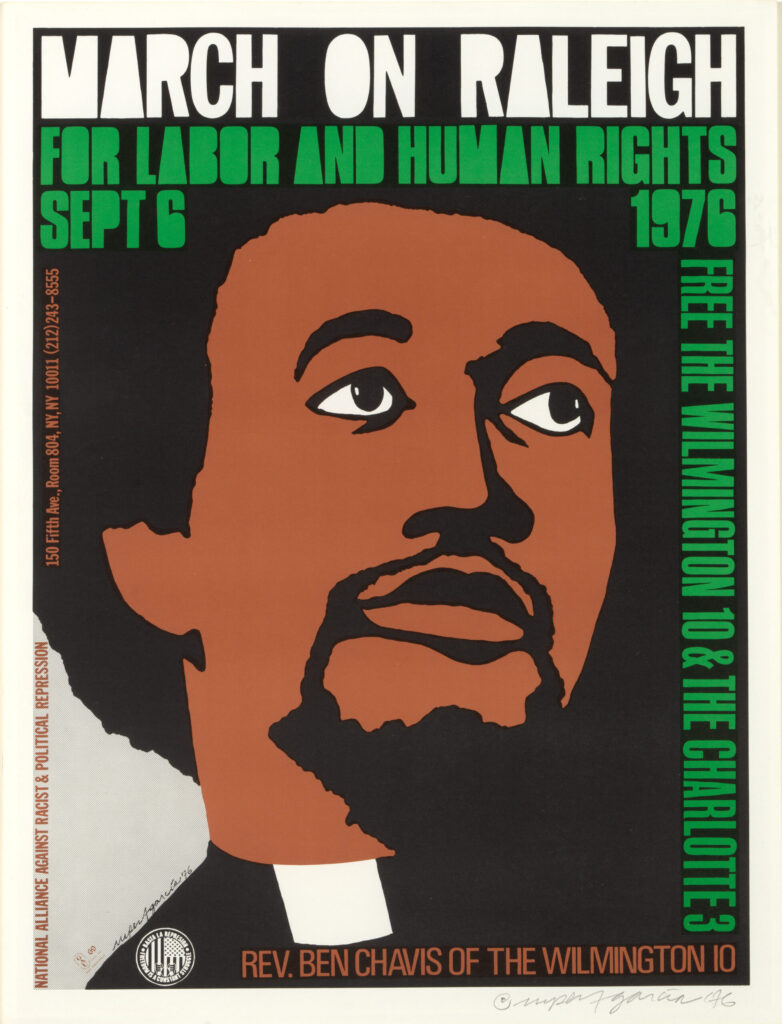
Other religious leaders across the country contributed to the Black Power movement directly from the pulpit. In Detroit, Albert Cleage preached a message of Black Christian nationalism centered around an interpretation of Jesus as a Black revolutionary.5 In Cairo, Illinois, Baptist minister Charles Koen led the United Front of Cairo in a strategy of armed self-defense against the White Citizens Council.6 And in Chicago, Black Catholic priests held “Black Unity Masses” which incorporated African aesthetics and urged attendees to be proud of their Blackness.7
Still others within the Black Power movement found strength in non-Christian religious traditions. For example, Black Panther leader Ericka Huggins found comfort and strength in yoga while incarcerated as a political prisoner, and Huey Newton discussed Buddhism with Richard Baker-Roshi of the San Francisco Zen Center and spent time at Tassajara Zen Mountain Center.8 While the Black Power movement drew significantly on secular ideologies such as Marxism, Black Nationalism, and Pan-Africanism, the movement was also intricately bound to a range of religious traditions.
Similar movements within Indigenous American communities also drew on religious roots. In November 1969, a group known as the Indians of all Nations, composed of many Indigenous college students in the Bay Area, made headlines with their occupation of Alcatraz in San Francisco.9 They hoped to turn this space into a cultural, ecological, and spiritual center for generations to come, and in return, they offered President Nixon “24 dollars in glass beads and red cloth,” which they noted was the buying price of another small island by previous white colonists.10 Quickly, the American Indian Movement (AIM), another important movement at this time, came to support and publicize the occupation. For 19 months, the activists took hold of the island, inspiring many more occupations and protests across the United States.
That same year, Vine Deloria Jr. published Custer Died for Your Sins: An Indian Manifesto. Deloria wrote on the disconnect between the actions of the AIM and the Red Power movement, who were fighting for self-determination and sovereignty, and how non-indigenous peoples were less interested in these struggles and far more interested in appropriating elements of Indigenous religion for their own gain. It is no accident that Deloria found it important to dedicate an entire book to reintroducing how Native people understood the sacred during this moment. The activists who were a part of the Indians of All Nations and AIM, among many other groups in the Red Power movement, drew deeply from their cultural and religious practices.
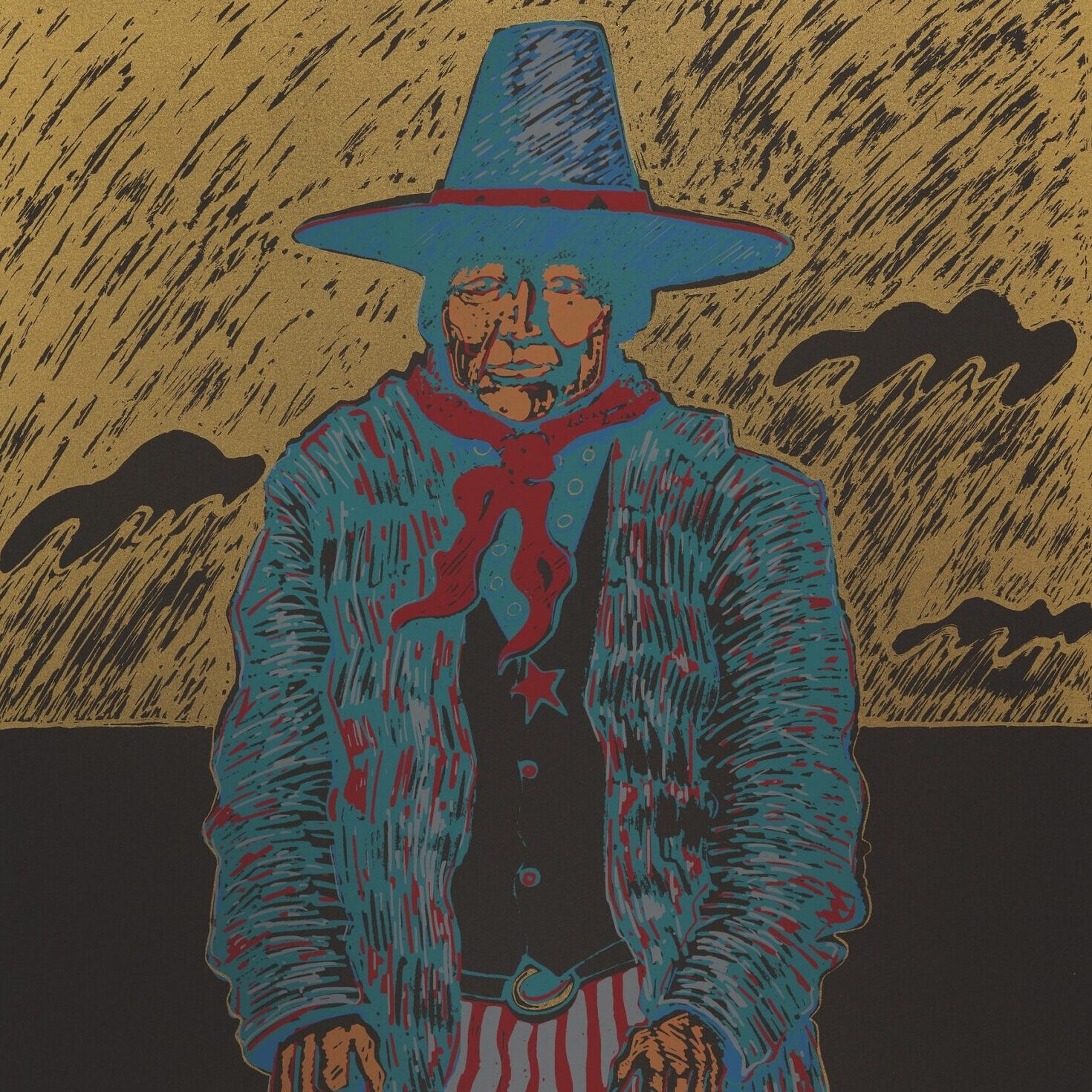
In response to this activism came a cluster of acts, such as the 1974 Indian Self-Determination Act, which endorsed tribal sovereignty, and in 1978, the American Indian Religious Freedom Act, which allowed the practice of traditional Indigenous religious practices.11 Many of the religious practices and materials foundational to Indigenous ceremonies, like peyote and the use of certain feathers, were still technically illegal before this act.12 Within the same year, on Thanksgiving Day, ten leaders of various Christian denominations in the United States also issued an apology and asked for forgiveness for the “longstanding participation in the destruction of traditional Native American spiritual practices.”13 A similar moment happened in the 1990s in response to more pressure from Indigenous activists when acts such as the Native American Language Act (NALA) and the Native American Grave Repatriation Act (NAGPRA) were passed.14 These helped revitalize Native languages and return bodily remains and sacred materials housed in museums or archives to their tribes. These were a product of on-the-ground efforts from activists invested in Indigenous self-determinacy and sovereignty who advocated for reconnecting people and future generations to come with traditional language, medicine, spirituality, and food, amongst many other things.15 Through reconnection with the past, they are better suited for issues the present and future world brings.
The spirit of social activism manifested on the right as well, and the 1970s birthed a new movement which would soon capture American religion and American politics.
III. The Religious Right
On July 5, 1976, Reverend Jerry Falwell thundered, “our country has left God.” Perhaps surprisingly, he blamed his audience, claiming, “if America falls, it will be because of people like you and me” and that “judgement begins at the house of God.”16 Falwell pointed to the removal of Bible reading and prayer from public schools, the rise in national debt, the decline of the nation’s military might, the nation’s entertainment and media outlets becoming more liberal, political scandals, and the growing acceptance of homosexuality. Falwell called Christian listeners to vote for Christian candidates.
Conservative evangelical leaders like Falwell, Pat Robertson, James Dobson, and Tim LaHaye helped turn the Christian Right into a sophisticated movement in the 1970s and 1980s. Capitalizing on developments in television broadcasting, these ministers used television to reach American living rooms. They also created religiopolitical organizations such as the Moral Majority, Focus on the Family, the Christian Coalition, and the Council for Christian Policy to turn conservative Christian voters into a solid voting bloc for Republican candidates.
With increasing political assertiveness in the 1960s and 1970s, conservative Christians took ownership of the phrase “Family Values” to define their core concerns, which included opposition to abortion, feminism, public education, and gay rights.17 While evangelical Protestants made up its core, the new Christian Right also included conservative Catholics, like activist Phyllis Schlafly, who worked together with Protestants to mount grassroots action against perceived liberal threats, including and especially against abortion.
In the same year that Jerry Falwell called the nation to return to its Christian heritage, another southern evangelical Christian was elected president of the United States. The election of Jimmy Carter in 1976 culminated in several religious forces and launched still others. Carter promised to redeem a nation reeling from scandals and a disastrous war. Watergate and Nixon’s shameful retreat from public life soured Americans’ faith in their institutions. Similarly, the massive casualties and psychological consequences of the failed war in Vietnam left Americans eager for a moral renewal. Jimmy Carter, a southern Sunday School teacher and proud “born again Christian,” promised just that.
Carter’s political rise coincided with other social trends that led TIME Magazine to mark 1976 as “the year of the evangelical.” Black Christians played an essential role in Carter’s victory and would help to secure several of his administration’s key goals. Many Catholics also supported him, and Americans saw Carter as a continuation of the long era of the New Deal. Some conservative Christians celebrated his election, inclined to see an evangelical in the White House as proof of their movement’s rise. Yet, Carter’s priorities differed sharply from those of most conservative Christians.
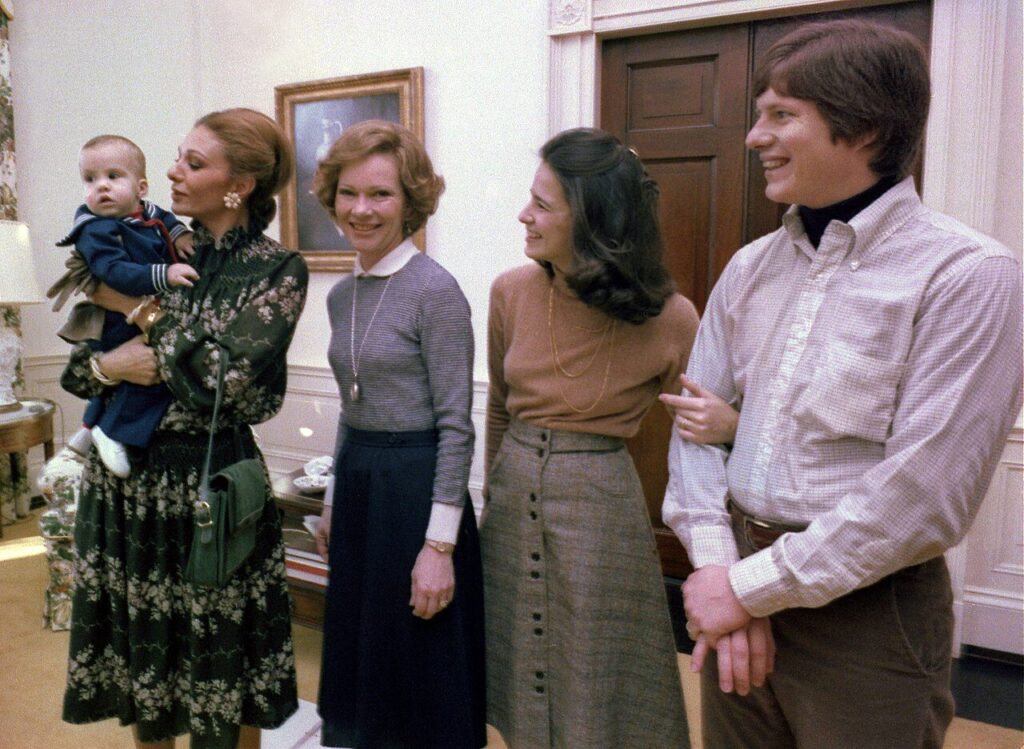
Carter’s faith emphasized peacemaking, racial healing, concern for the poor, environmentalism, and personal morality. President Carter appointed an unprecedented number of women, African Americans, and other minorities to positions in his government. His administration coincided with major economic challenges. Wars in the Middle East, namely the Yom Kippur War of 1973 and the Iranian Revolution of 1979, both skyrocketed the price of oil. Carter lectured the nation on the moral imperative of conservation and installed solar panels on the White House.
.jpg)
Carter also attempted to bring peace and stability to the Middle East, brokering the Camp David Accords in 1978 between Egyptian president Anwar Sadat and Israeli prime minister Menachem Begin. Carter also prioritized human rights in his foreign policy, condemning authoritarian regimes, many of which had earlier been empowered by American actions.
Carter’s election was thus both the culmination and a new beginning. It marked the end of the era of New Deal Liberalism and launched the conservative Christian politics of the New Right. Much of the New Right drew on debates over race and gender.
IV. Fighting Feminism
Reactions against feminism provided much of the energy that animated the Religious Right. In the 1970s, it appeared that the feminist movement was on a roll. Over the preceding decade, feminists had helped to shift conversations about gender roles, sexual freedom, women’s healthcare, and domestic violence in major ways. Their efforts coincided with major demographic shifts. More women were working outside of the home than ever before, and it was becoming more common for women to stay in the workforce even after marrying and having children.18
Conservative Christians objected to these changes on religious and political grounds. They believed God had designed the male-headed, nuclear family (and the gender roles that went with it) as the bedrock of a healthy society. Any effort to change these arrangements, they argued, could destabilize society as a whole.19 Activists referred to these models as the “traditional family” and “traditional gender roles” because they reflected long-standing ideals in American culture.
Since conservative Christian leaders and activists opposed the feminist movement so strongly, many people assumed that the New Christian Right was mostly a movement led by and for men. However, women—especially middle-class, suburban white women—provided a driving force, both as leaders and grassroots activists.20
Among their first targets was the proposed Equal Rights Amendment (ERA). This amendment to the Constitution, originally written by suffragists in 1923, would prohibit sex-based discrimination. When feminists reintroduced it to Congress in 1971, it initially had bipartisan support. In less than eighteen months, it had passed through the House and Senate, and been ratified by twenty-two states.21 To be added to the Constitution, an amendment needs support from ¾ of the states (38 states in total).
Phyllis Schlafly, a Catholic lawyer and activist from Missouri, launched the STOP ERA (“Stop Taking Our Privileges, ERA”) campaign.22 She argued that the broad wording of the ERA could result in unintended consequences, like overruling laws that had been specifically designed to protect women. She warned that the amendment could disadvantage housewives, make it possible to draft women into the military, and eliminate the expectation that women would receive alimony and custody in divorce cases.23

_(cropped_2).jpg)
Schlafly mobilized tens of thousands of women across the country. They emphasized their identities as housewives, often baking homemade treats for legislators, accompanied by handwritten poems like: “You can have your cake / And eat it, too / STOP ERA and / See Us Through.”24 They succeeded. Despite an extended deadline, the congressional vote to support the amendment expired in 1982. Only 36 states had ratified the ERA, 5 of which later voted to withdraw their support. The ERA was not added to the U.S. Constitution.
Other women came to the New Christian Right through church networks. Beginning in the 1970s, more women became celebrities in a growing evangelical Protestant subculture. Many wrote advice books for other women. One of the most prominent was Beverly LaHaye, whose early books promoted conservative Christian gender theology, including the ideas that women should dedicate their lives to motherhood and be submissive to their husbands. Like most conservative evangelical authors, she initially presented her views as apolitical and then later got involved in formal politics.25
In 1979, LaHaye founded Concerned Women for America (CWA) to “end the monopoly of feminists who claim to speak for all women.”26 She acknowledged that some conservative Christian women might be uncomfortable with political activism, especially those who had been raised to believe that their place was in the home. But she argued that getting involved in politics was an essential part of their duty as women and as mothers. As women, they had a unique power to demonstrate that not all women agreed with contemporary feminists. She insisted that mothers had a responsibility to fight for conservative values in the communities where their children would grow up. LaHaye also saw politics as a part of every Christian’s religious duty: “If we are truly committed to Jesus Christ,” she wrote, “we have no alternative but to wage warfare against those who would destroy our children, our families, our religious liberties.27 Like many others in this movement, she believed that the United States was a Christian nation and that Christians had to fight to keep it that way.
While women were often the driving force of religious grassroots activism against the feminist movement in the 1970s, evangelical men also took up the charge in various ways. In response to the feminist movement and permissive childrearing of the late 1960s, evangelical psychologist James C. Dobson wrote Dare to Discipline in 1970. The book sought to promote his version of the traditional family, one that he claimed could withstand the pressures of modern life because it was rooted in the Bible rather than the whims of contemporary culture. Dobson made it clear to his largely female audience that a strong family began with women rejecting feminist demands to enter the workforce and adhering to what he defined as their God-given role of submitting to their husbands, which meant, in part, devoting themselves to their children. Dobson’s recipe for a stable family appealed to many Christians—Protestant, Catholic, and Latter-day Saint—in the early 1970s.28
By 1977, readers were sending Dobson so much mail that he decided to create an organization to answer letters and disseminate Christian-centered material on childrearing, marriage, and family to parents. Dobson created a far-reaching parachurch clearinghouse for materials supporting a particular version of Christian family life. He called this new organization Focus on the Family. Although positioned as advice for the domestic sphere, Dobson’s purpose was always political. As early as 1983, for example, Dobson showed his support for the Reagan administration by having Susan Baker, the wife of then–Secretary of the Treasury James Baker, join the Focus on the Family Board of Directors.
Many Americans read Dobson’s column in over 550 newspapers in the United States and Canada, listened to his ninety-second radio spots on more than 230 stations, and became absorbed in the explicitly Christian half-hour broadcast carried on over four thousand stations by the mid-1990s. The organization influenced how users and their families behaved in schools, at work, and, by the beginning of the twenty-first century, at the voting booth. By the 2000s, Dobson frequently appeared on Fox News commenting on culture and presidential politics.
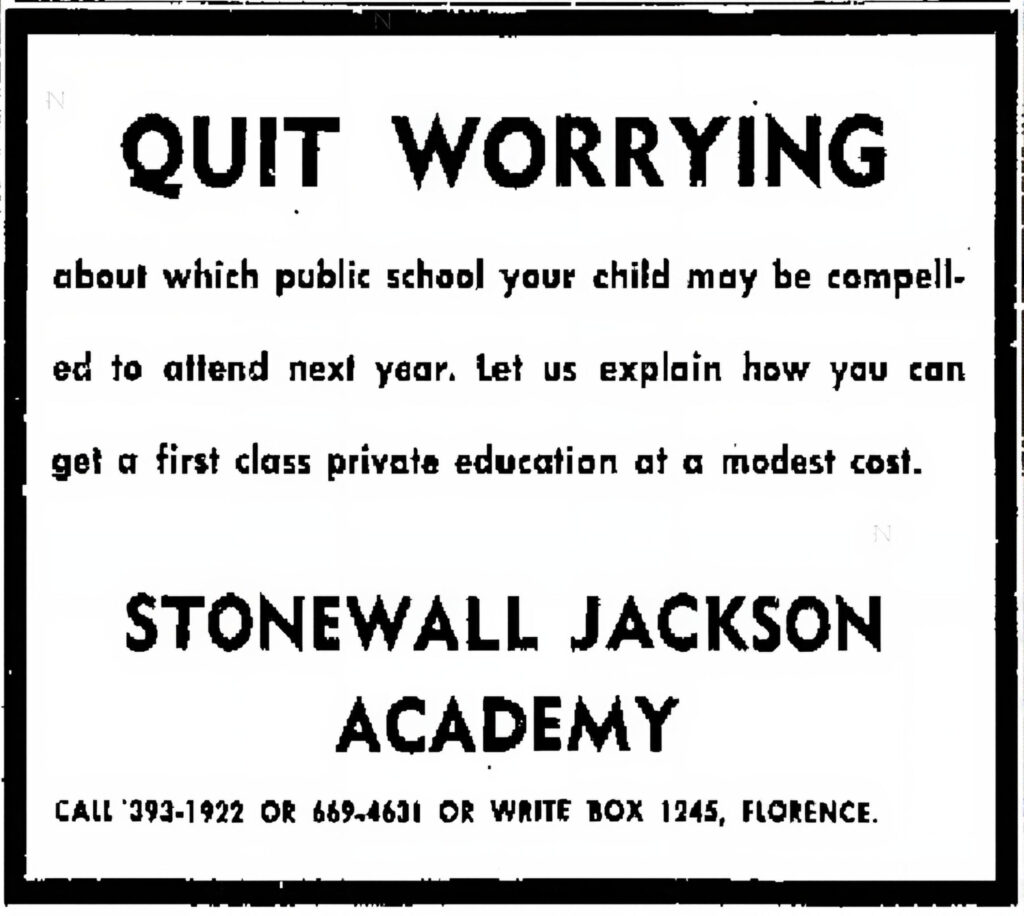
In the battle over parenting, schools became particularly important battlegrounds, especially after Supreme Court decisions altered education across the nation. Brown v. Board and Swann v. Charlotte-Mecklenburg changed the racial makeup of public schools by demanding racial integration.29 Other decisions like Engel v. Vitale and Abington v. Schempp outlawed mandated Christian prayers in schools.30
_1970_Advertisement.png#/media/File:Stonewall_Jackson_Academy_(Florence,_SC)_1970_Advertisement.png)
In order to circumvent the ban on racial segregation, conservative Protestants began creating white-only private schools in the late 1960s and early 1970s. The curriculum here reflected the conservative Christian values of the developing Christian Right. By 1968, forty-two such segregated private schools were receiving state tuition vouchers in Mississippi alone. Many of these schools appealed to conservative evangelicals by banning the teaching of evolution, sex education, and secular humanism. Additionally, conservative Christian school associations—like the American Association of Christian Schools (1972) and the Association of Christian Schools International (1978)—were created to provide accreditation, professional training, curriculum, and insurance protection to these like-minded schools.31
For some conservative Christians, these private schools were not the solution. Prior to 1980, fewer than 20,000 children were homeschooled in the U.S. By the end of the decade, however, over 300,000 American school children were homeschooled. Around 90 percent of those homeschoolers were conservative Christians.32
Raymond Moore, a Seventh-day Adventist, and developmental psychologists argued that children were not developmentally ready for school until age eight to ten. Versions of this research appeared in periodicals in the 1970s, including Reader’s Digest, which caught the attention of Christian psychologist James Dobson, who invited Moore and his wife, Dorothy, to host a series of radio shows promoting homeschool education for Focus on the Family in 1977. Between 1982 and 1988, twenty-eight states passed new homeschooling legislation, and the practice was legalized in all fifty states by 1993.33
Homeschooling cannot be understood without recognizing the broader politics of the late-twentieth century. Debates over education were rooted in disagreements about race, religion, gender, family, and the role of the state in modern life. As we have seen, so many of these divisions grew from arguments about sexuality.
V. Sexual Politics
The emergence of the modern gay rights movement felt like salvation to many Americans who had lived lives of quiet fear. For others, it marked proof of the cultural damnation that Jerry Falwell promised. As one of the latter Americans, the singer Anita Bryant spearheaded the “Save Our Children” campaign in 1977, which successfully overturned a city ordinance banning discrimination based on sexual orientation in Dade County, Florida, through a public vote. This was the first public confrontation between the emerging Christian Right and the gay rights movement. In 1981, with support and mobilization from Falwell’s Moral Majority, Congress attempted to pass the Family Protection Act, which would, among other things, prohibit government support for homosexuality. As the Christian Right began to turn to voting, legislative, and judicial strategies to combat the gay rights movement, the movement adapted its strategies in various directions, which included a religious activism of its own.
While gay activists in the 1950s and 1960s labored to recruit the help of sympathetic, straight religious leaders to their cause, starting in the 1970s, LGBT people began to create their own religious institutions and demanded acceptance of their sexuality from existing religious organizations.34 Their work furthered LGBT cultural acceptance and provided crucial infrastructure—financial support, a volunteer base, meeting space, seasoned leaders, and so forth—for the nascent gay rights movement.
Perhaps no religious figure was more influential in this regard than Rev. Troy D. Perry, founder of the United Fellowship of Metropolitan Community Churches (UFMCC), a Christian denomination with special outreach to the LGBT community.35 A Pentecostal preacher born in 1940 in Tallahassee, Florida, Perry came out as gay in 1963, causing him to lose both the church he pastored and his family. Called to start a church accepting of LGBT people, Perry held the first service of what would become the UFMCC in his living room in Huntington Beach, California, in October of 1968 with twelve people in attendance. By the time of the first National March on Washington for Lesbian and Gay Rights in October 1979, however, the UFMCC had expanded to more than one hundred churches and missions in seven countries, upwards of 20,000 members, with an operating budget of $230,000—making it, by far, the largest grassroots gay organization in the world.36
UFMCC members and leaders provided crucial support to emerging gay organizations in the 1970s at both the local and national levels, including local Gay Activists Alliances and the Gay Rights National Lobby (predecessor to the Human Rights Campaign). The emergence of the UFMCC also helped inspire the inauguration of similar groups across most major Christian denominations, like the Catholic group, Dignity, and supported the establishment of the first gay Jewish synagogues, Beth Chayim Chadashim in Los Angeles and Congregation Beth Simchat Torah in New York—all founded in the early 1970s.37
Still, many within the broader LGBT community viewed the UFMCC as primarily a white, male-centric, middle-class project. Lesbians and bisexual women, like Audre Lorde, Mary Daly, and Gloria Anzaldúa, often found their spiritual inspiration in women-centered communities and lesbian-feminist enclaves,38 as well as through eclectic forms of spirituality like Wicca and goddess worship.39 Meanwhile, transgender women, like Marsha P. Johnson and Sylvia Rivera, frequently found their spiritual sustenance in African and Latin American religious traditions like Santería and Vodou.40
In the 1980s, queer religious people and institutions continued to play an important role in queer politics, especially during the AIDS crisis, establishing and leading new political and service organizations emerging in response to the crisis.41 This was especially true in communities of color. Throughout the 1980s, people of color in the LGBT community pioneered new cultural and political institutions aimed at better representing the experiences and needs of LGBT racial minorities—organizations like the National Coalition of Black Lesbians and Gays (NCBLG) and the Latino/a Lesbian and Gay Organization (LLEGO). Several of these organizations were founded and led by UFMCC members and clergy, like Gilberto Gerald, Renee McCoy, Darlene Gardner, and Delores Berry.42 For these gay and lesbian religious activists of color, religion was political and political action was spiritually inspired.
Perhaps no religious figure better represents this intersection of race, religion, sexuality, and politics than Baltimore, Maryland native and former Motown singer, Rev. Carl Bean.43 In the midst of the AIDS crisis, Bean founded both the Unity Fellowship Church Movement, one of the first gay churches in the U.S. to meld together Afro-centric forms of spirituality and Christian praxis, and the Minority AIDS Project (MAP), one of the first community-based AIDS service providers prioritizing communities of color—both founded in Los Angeles in the early 1980s. Like Rev. Perry a decade earlier, Bean went on to become a nationally recognized gay religious leader, co-founding the National Minority AIDS Council in Washington, DC, in 1987, and serving on the organization’s board of directors.
The Acquired Immune Deficiency Syndrome (AIDS), which is caused by the Human Immunodeficiency Virus (HIV), killed hundreds of thousands of Americans and particularly devastated gay communities. Gay religious leaders responded with new forms of organization and resistance. Formed in 1987, the AIDS Coalition to Unleash Power (ACT UP) engaged in mass demonstrations outside state and federal buildings to protest the government’s inadequate response. They also targeted prominent Catholic churches to protest the church’s public stand against safe sex education and condom distribution. ACT UP was deeply indebted to the large number of Jewish participants in the organization and to Jewish history, thought, and terminology, which influenced ACT UP’s comparison of AIDS to the Holocaust and the use of the pink triangle and the slogan “Silence = Death” as the movement’s iconography.44 Catholic symbolism was also a common feature of both ACT UP protests and artistic production.45
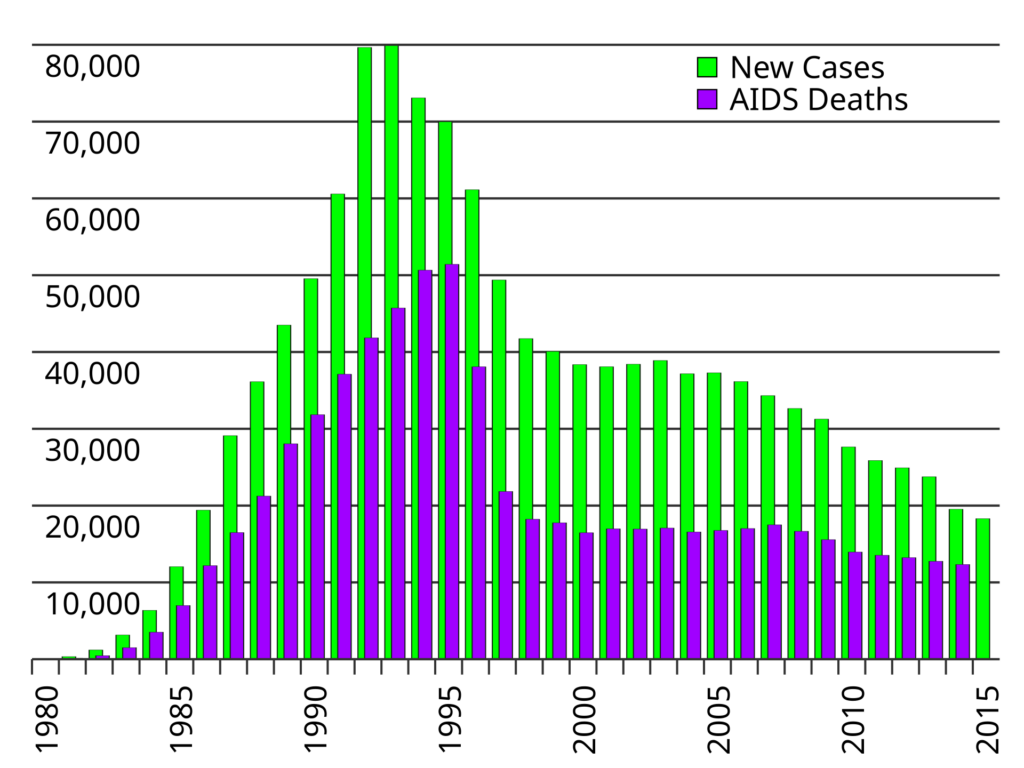

In an interview for the 1983 Diagnosis AIDS documentary, conservative evangelical Christian leader Jerry Falwell expressed the beliefs of many in the evangelical conservative Religious Right movement when he stated that the AIDS epidemic was the result of gay men “violating the laws of decency and morality.”46 Many Christian churches reflected this sentiment in the late 1980s by excluding individuals living with AIDS from their congregations or denying them access to pastoral care.47
In September 1987 Father John W. Lord, a Catholic priest in Orange County, California, was diagnosed with AIDS. In an act of support, and to dispel any perceived risk to their parishioners, Lord’s superior, Father Eamon O’Gorman, decided that, moving forward, he and Lord would celebrate Mass together and drink from the same communion cup in public.48 Religion informed both understandings of and responses to the crises that AIDS brought. But it was not the only crisis surrounding sexuality in the era.
As homosexuality became a more visible part of American culture in the twentieth century, Protestants were forced to grapple with an uncomfortable reality: some of their leaders appeared to be part of the increasingly recognizable sexual minority. As the midcentury ushered in a new era of social conservatism, Protestant leaders were worried about what they saw as loosened sexual mores and looked for ways to protect pastors’ reputations from accusations of sexual immorality. However, in the 1970s and 1980s, two high-profile scandals undermined Protestants’ claims to sexual innocence.
Billy James Hargis had risen to fame as an anti-communist preacher in the 1950s. By 1971, having denounced secular education, Hargis founded American Christian College, which sought to train the next generation of pious leaders. In 1976, Time magazine revealed that several students—both male and female—had accused Hargis of sexual impropriety.49 The minister denied all accusations and denounced fellow Christians for not defending him. Hargis’s ministry survived, but the college closed its doors in 1977.
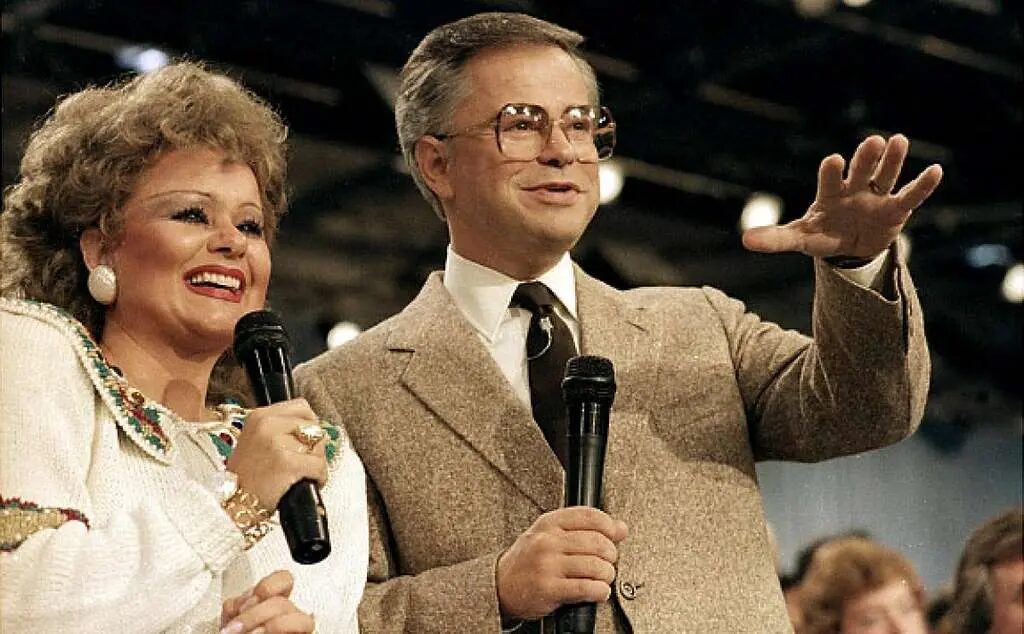
Meanwhile, a young charismatic preacher, Jim Bakker, and his wife Tammy Faye were building a Christian media empire. Their satellite television broadcasts reached millions of viewers with a message of salvation and prosperity. In 1987, the public learned that the Bakkers’ lavish lifestyles were supported, in part, by fraudulent financial machinations. Worse, the ministry had paid Jessica Hahn, a church secretary, $265,000 to stay silent about a 1980 sexual encounter with Bakker, which Hahn now characterized as assault.50 At first, the Bakkers attempted to deny the accusations in hopes of swiftly returning to their lucrative ministry, but after several men anonymously accused Bakker of “bisexual activity,” the Assemblies of God church defrocked the minister. The secular realm was no more forgiving. In 1989, Bakker was sentenced to a $500,000 fine and forty-five years in prison, though the sentence was later reduced.
While Protestants were responding to fallout of sexual impropriety and infidelity and same-sex sexual activity among the ranks of some of their most visible public figures, the Catholic Church was dealing with a more sinister and perhaps more systemic sexual abuse issue.
At the same time as the AIDS crisis unfolded, the Catholic Church confronted a crisis of its own—one rooted not in an external epidemic, but in decades of concealed abuse within its own institutions. In the mid-to-late 1980s, it was revealed that, for decades, bishops and other church leaders had disregarded, downplayed, and covered up the sexual abuse of minors by thousands of priests, urging silence from victims while protecting abusers.
On May 23, 1985, The Times of Acadiana published the first of a two-part exposé under the headline “The Tragedy of Gilbert Gauthe.” The eleven-page feature, written by journalist Jason Berry, detailed the case of a Roman Catholic priest from the Diocese of Lafayette, Louisiana, who had admitted in court to sexually abusing 37 young boys. The articles traced how, for years, church authorities ignored and buried reports about Gauthe, keeping him in active ministry even as he continued to victimize more children.51
The scale and notoriety of the Gauthe case marked a turning point in the life of the Roman Catholic Church. It was the first in what would become a worldwide cascade of revelations that, for decades, bishops and other church leaders had disregarded, downplayed, and covered up the sexual abuse of minors by thousands of priests, urging silence from victims while protecting abusers. The crises would corrode many Catholics’ trust in their institutions and undermine the credibility of its leaders, catalyze calls for greater transparency and accountability within the church hierarchy, give rise to decades of victims’ lawsuits, force the massive public disclosure of internal church documents, bankrupt more than three dozen U.S. dioceses and religious orders, and prompt gradual revisions in church policy.52
VI. Reagan and Religion
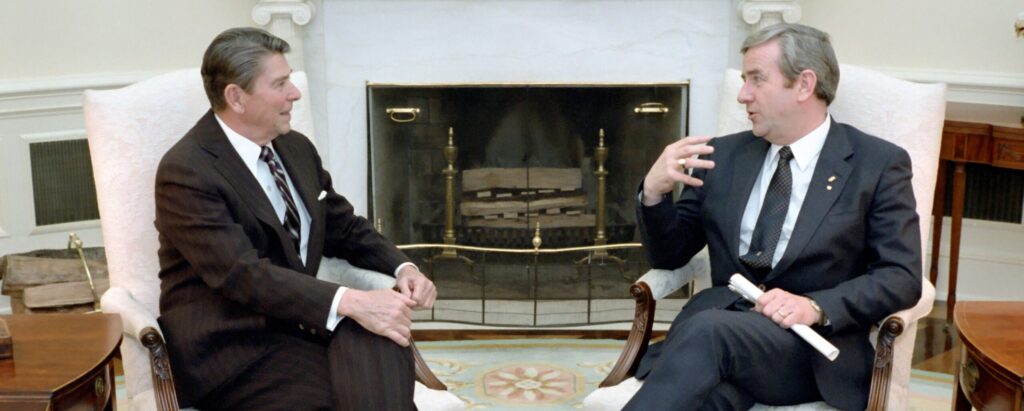
As he campaigned for President, Reagan famously told a collection of evangelical leaders, “I know this is nonpartisan, so you can’t endorse me, but I want you to know that I endorse you.”53 It worked, and indeed many conservative Christian religious leaders did endorse Reagan and encouraged others to do so as well, even as he sought to oust the southern evangelical Jimmy Carter. When Ronald Reagan entered the White House in 1981, the newly empowered Religious Right took it as their victory, and they worked to press that victory as far as they could.
Ronald Reagan’s election marked a repudiation of Jimmy Carter’s presidency and announced a new era in American politics, one suffused with a triumphant conservative Christianity. Unlike Jimmy Carter, Ronald Reagan did not have an active faith life. He was a former actor, a divorcee, and seemingly tainted by the sins of Hollywood. Yet Reagan proved highly effective at courting conservative Christians, and he adopted many policies that pleased the new religious right, including opposing abortion, supporting school prayer, and calling for a more confrontational militaristic response to the Soviet Union.
Reagan characterized the Soviet Union as an “evil empire” and ended the policy of “detente” that was pursued during the 1970s. Some religious Americans, including mainline Protestants, Catholic bishops, Jewish groups, and ecumenical organizations, opposed Reagan’s militarism, particularly his opposition to the movement to freeze the production of nuclear weapons and Reagan’s embrace of some authoritarian governments in Latin America. Conservative Christians, however, supported the muscular assertion of the United States as the world’s sole superpower. Reagan developed close ties with Pope John Paul II, who shared Reagan’s opposition to Soviet communism, if not his emphasis on military coercion.
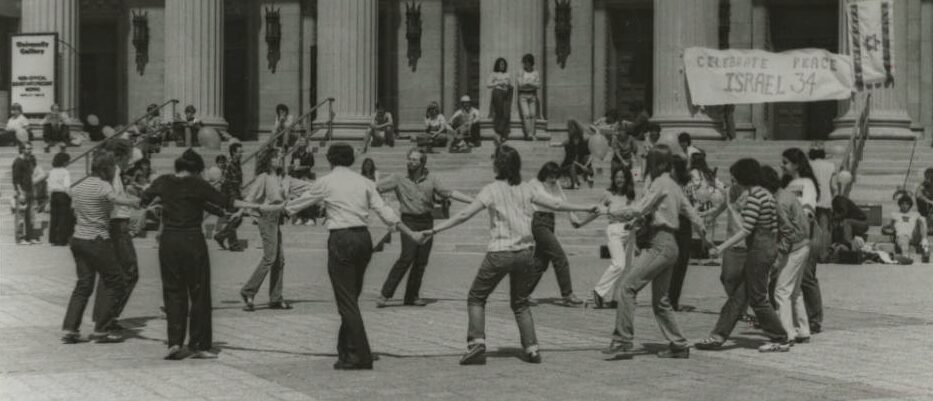

While most American Jews remained primarily aligned with the Democratic Party, some Orthodox and more conservative American Jews began moving toward the Republican Party due to support for Reagan’s policies in support of Israel and in opposition to global communism. Some expressed disappointment, however, when Reagan suspended delivery of F-16 fighter jets after Israel struck a nuclear reactor in Iraq. He also criticized Israel’s actions in its 1982 war against Lebanon. The Reagan administration also angered Israel after selling military aircraft to Saudi Arabia. Reagan’s strong stance against the Soviet Union included condemnations of Soviet mistreatment of Jews, and eventually hundreds of thousands of Jewish people fled the Soviet Union for the United States, further bolstering Reagan’s confrontational foreign policy.54
Many in the grassroots of the Religious Right prioritized the attack on abortion in their politics. As governor of California, Reagan had earlier signed one of the nation’s most permissive abortion laws. However, over the 1970s, he slowly changed his tune, and his presidency backed restrictions on federal funding for abortion and attempted to overturn Roe v. Wade. Still, many in the religious right were disappointed in Reagan’s failure to ban abortion.55
By the end of Reagan’s presidency, the religious right had become a seemingly permanent fixture in American politics. The Republican Party adopted policy proposals from religious organizations, and candidates courted religious leaders with zeal. A culture war was born with fronts at the ballot box, in media, and in schools. Yet the nation was also becoming more diverse, both challenging and galvanizing conservative Christian activists.
VII. Seeking Ummah
Muslims had lived among Americans long before the United States came to be. In the first half of the twentieth century, Muslim immigrants largely settled in the Northeast, Midwest, and West and largely assimilated quietly into those communities. The changes brought by the 1965 Hart-Celler Act would create new patterns for American Muslims who quickly began to build their own institutions.
Many new immigrants in the 1970s arrived from recently colonized parts of the world. Familiar with decolonization struggles, they tended to defend their cultural and religious identities and resist acculturation. The Muslim population continued to grow in the 1980s. Many older immigrants who had come as students graduated and settled permanently in America. To accommodate Muslims beyond college campuses, the Muslim Student Association (MSA) created the Islamic Society of North America (ISNA), which took over the MSA’s national responsibilities in 1983. As the decades progressed, Muslim communities spread out across the U.S., amassing a significant concentration in the South for the first time since the antebellum era.
During the 1970s and 1980s, especially after the 1979 “Islamic” revolution in Iran, Muslim Americans also became increasingly religious. In the postcolonial Muslim world, Islam symbolized resistance to Western colonialism, and the success of an “Islamic” revolution invigorated Muslim faith. Many began to seriously study the Qur’an and Sunna and understand it for themselves, embodying the individualism of their American homeland. Some scholars, such as Fazlur Rahman, also introduced new ways to read and interpret the scriptures. This awakening would continue through the rest of the nineteenth century and into the twentieth century.
The religious revitalization extended beyond scholarship to include institution-building. The 1970s were especially significant for building local masjids or mosques. In the 1970s, Muslim American communities established five times more Masjids than they had in the 1950s and 1960s. This continued in the 1980s, although at a slower rate. At times, local communities received financial support from national organizations or foreign governments, but most often Masjid-building was a local, independent venture.
The 1970s were also important for multi-racial and multi-ethnic cooperation. As Warith D. Muhammad brought the Nation of Islam (NOI) closer to mainstream Sunni religious practice in the mid-1970s, the NOI began to work together with immigrant organizations such as the MSA. Together, these Muslims strove to minimize ethnic and racial divides and identify themselves as a religious community under the unified banner of ummah.
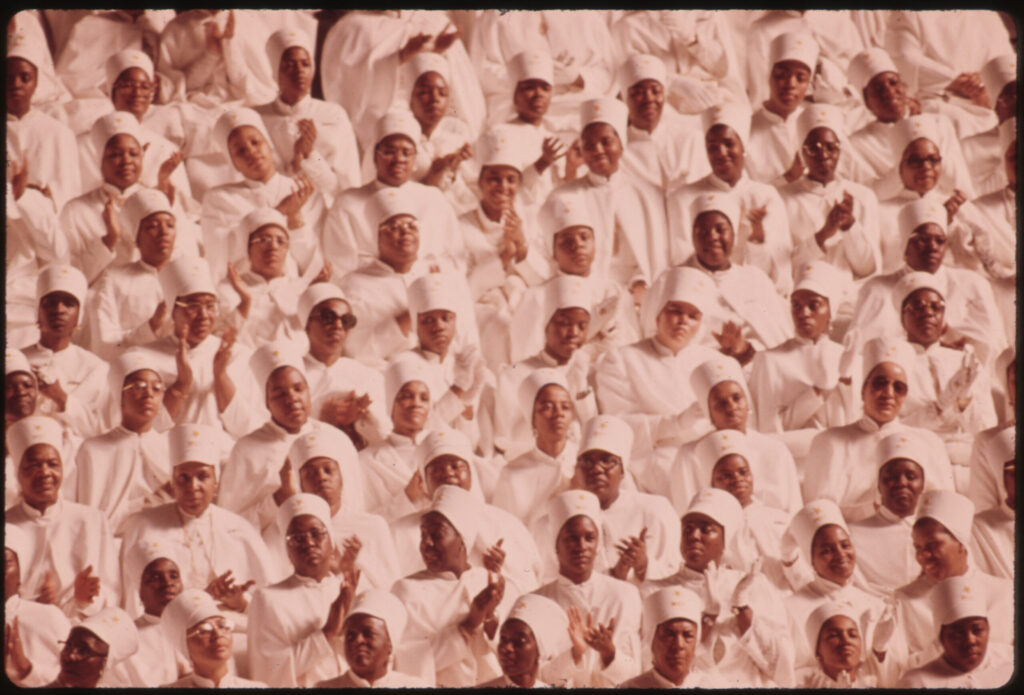
For ummah-building, the MSA also promoted a scripturalist version of Islam where Qur’an and Sunna guided religious practice rather than culture. Islamic practice within America was growing increasingly diverse as immigration increased. Immigrant Muslims arriving from all over the world brought localized Islamic practices that reflected the history and culture of their places of origin. However, tensions persisted between different ethnic groups, and most Muslims continued to identify with their ethnic cohorts.
Interracial tensions also simmered, even as interracial cooperation increased throughout the 1960s and 1970s. Class also played into the new dynamic. As Cold War priorities led the U.S. to favor high-skilled immigrants, the economic demographics within the Muslim American community shifted towards middle-class populations. Cold War U.S. politics allowed these immigrants access to higher education and white-collar jobs. These immigrants, in turn, separated themselves both residentially and socially from black communities. Immigrant Muslim communities seldom intermarried with black Muslims. Thus, racism and classicism significantly obstructed American ummah-building.
Tensions within Muslim America also extended to generational tensions. Newer immigrants denounced early twentieth-century immigrants for overly assimilating and viewed their practices as un-Islamic. However, despite their objections to assimilation, foreign developments pulled newer immigrants further into the American system.
U.S. Foreign policy catalyzed Muslim American activism by the end of the 1970s. For transnational Muslims, events abroad were integral to their identities and experiences. The Palestinian-Israeli conflict and the 1979 Soviet invasion of Afghanistan prompted the MSA to add political activism to their agenda. Muslim American leaders increasingly called on their communities to vote and participate in the political process to affect U.S. foreign policy. They hoped to stem U.S. support for Israeli occupation and increase U.S. support for Afghanistan.
The 1980s also mainstreamed American Islamophobia. Many Americans began to think of events in the Middle East through a religious lens. Although the FBI had begun surveilling Muslims as early as the 1960s, the Iranian Revolution led more Americans to view Muslims as threats. The 1979 Iranian Hostage Crisis became newly dubbed as “Islamic terrorism” rather than “Arab terrorism.”
American Muslims experienced two oppositional forces during the 1970s and 1980s. A surge in migration led to a rise in institution-building. At the same time, cultural forces seemed to align against them, particularly as the Religious Right gained strength and came to see Islam as fundamentally un-American.
VIII. Cults and New Religious Movements
On May 13, 1985, the Philadelphia Police Department bombed the Cobbs Creek neighborhood of Philadelphia, Pennsylvania resulting in the destruction of 61 homes. The target of the PPD was the MOVE organization, a new religious movement that the police department had been seeking to evict from a home in the neighborhood. Originally founded in 1972 under the name Christian Movement for Life, MOVE was a religious communalism organization that synthesized Christian theology with Black nationalism, the Rastafari movement, and anarcho-primitivism and advocated for Black liberation, animal rights, nature laws, and natural living.
The 1970s witnessed the emergence of numerous new religious movements (NRMs), referred to broadly as “cults.56 Like MOVE, many NRMs of the 1970s and 1980s were syncretistic, drawing from and combining elements from different religious and cultural traditions. The Children of God, one of the most controversial of 1970s NRMs, combined Evangelical Christian theology with 1960s hippie counterculture. Group members dressed like the flower children of Woodstock and practiced free love, but also held conventional evangelical Christian views of salvation, such as the need for a personal relationship with Jesus, and an expectation of a literal fulfillment of the prophecies foretold in the Book of Revelation.57
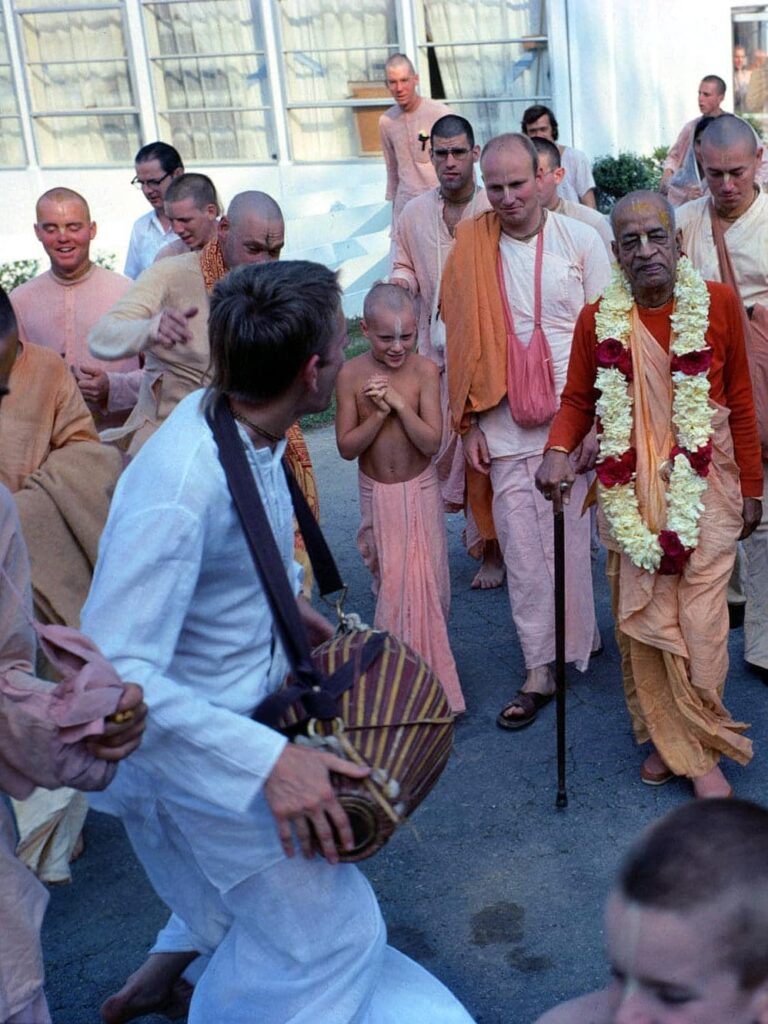

Other groups transplanted religion to American shores in new ways, such as the International Society for Krishna Consciousness (ISKCON), known more popularly as the Hare Krishnas. Dressed in Indian robes, chanting Sanskrit prayers, and distributing English translations of sacred Hindu literature, the group represented a transplantation of a form of Hinduism called Chaitanya Vaishnavism. But ISKCON appealed to many North Americans involved in psychedelics and spiritual seeking, offering a permanent high and ultimate spiritual trip through the practice of chanting and ritual devotion to the God Krishna.58
Both these examples—and many others—shared religious, sociological, and historical commonalities despite broad theological differences. NRMs of the late twentieth-century United States tended to embrace forms of millennialism, what scholar Catherine Wessinger identifies as “the belief in an imminent transition to a collective salvation” by means of divine or superhuman agents.59 For Hare Krishnas, this was the creation of a new society based on ancient Indian values. For the Children of God, it was the Second Coming of Jesus.
Numerous groups appealed to these millennial visions, with frequent turns to either the Christian Book of Revelation (e.g. the Branch Davidians, the Unification Church, the Twelve Tribes) or Asian religious models of salvation (3HO, Rajneesh movement).60 Other NRMs had alternative millennial expectations, such as the Communist utopia of the Peoples Temple, or the extraterrestrial outer space millennialism of Heaven’s Gate.61 NRMs also included confessional Satanists such as the Church of Satan and the Temple of Set. Esoteric and Neopagan NRMs proliferated as well. The rise of such NRMs revealed the tensions present in late twentieth-century cultural shifts, and the attraction to forms of alternative or radical spirituality in a rapidly changing world. Adherents longed for spiritual solutions to what they perceived as the pressing needs of modern life.
Such groups struck outsiders as deviant. NRMs often appealed to young people, who then rejected higher education and promising careers to drop out and join high-demand religious movements that their parents and broader society considered weird, if not heretical. Parents’ associations, churches, mental health advocates, and law enforcement latched onto the idea of “brainwashing” to explain why the youth would join such NRMs.62 The brainwashing model, based on a limited study of terrorized prisoners of war held in military prisons, provided a foundation for the rise of the anti-cult movement (ACM). A number of NRMs did in fact pose significant threats to members and outsiders, most notably the Peoples Temple, which culminated in a mass casualty event in 1978. The ACM eventually imploded due to the legal and ethical problems inherent in “forced deconversions” or “deprogrammings,” which generally involved kidnapping members of NRMs and holding them against their will.
IX. Conclusion
The rise of evangelicalism that coincided with Jimmy Carter turned into something quite different. The Religious Right remade American politics. The New Deal coalition had been shattered by the realignment that came after desegregation and through the rise of the culture war. Christian schools, homeschooling, megachurches, televangelism, and a rapidly growing network of conservative talk radio stations created an infrastructure for a religious and political movement that would capture the nation for decades.
Yet some of the trends of the 1960s continued. The nation continued to become more diverse and many of the liberalizing and secularizing currents in American culture gained strength. The movement for gay rights liberation advanced. Many women refused to surrender the social changes wrought by feminism. New immigrants developed infrastructures to nurture their communities. And Black and Indigenous Americans defended and sought to extend the advances of civil rights movements. All of these forces both drew on various forms of American religion and transformed them in turn.
X. Reference Material
This chapter was edited by Travis B. Hill with content contributions from Danny Ballon-Garst, Nicole Carroll, Matthew J. Cressler, Megan Goodwin, Travis B. Hill, Emily Suzanne Johnson, Joseph L. Locke, Suzanna Krivulskaya, Michael McLaughlin, Susan B. Reynolds, Susan B. Ridgely, L. Benjamin Rolsky, Jeffrey Sánchez, Faatimah Shamim, Taurean Webb, Ben Wright, and Benjamin E. Zeller
Recommended Reading
- Randall Balmer, Redeemer: The Life of Jimmy Carter (Basic Books, 2014).
- William Sims Bainbridge, The Endtime Family: The Children of God (State University of New York Press, 2002).
- Lilian Calles Barger, The World Come of Age: An Intellectual History of Liberation Theology (Oxford University Press, 2018).
- Donald T. Critchlow, Phyllis Schlafly and Grassroots Conservatism: A Woman’s Crusade (Princeton University Press, 2005).
- Matthew J. Cressler, Authentically Black and Truly Catholic: The Rise of Black Catholicism in the Great Migration (New York University Press, 2017).
- Seth Dowland, Family Values and the Rise of the Christian Right (University of Pennsylvania Press, 2015).
- Angela Denise Dillard, Faith in the City: Preaching Radical Social Change in Detroit (University of Michigan Press, 2007).
- Bruce J. Dierenfield, The Battle over School Prayer: How Engel v. Vitale Changed America (University Press of Kansas, 2007).
- Darren Dochuk, From Bible Belt to Sunbelt: Plain-Folk Religion, Grassroots Politics, and the Rise of Evangelical Conservatism (W. W. Norton, 2011).
- Emily Suzanne Johnson, This Is Our Message: Women’s Leadership in the New Christian Right (Oxford University Press, 2019).
- J. Russell Hawkins, The Bible Told Them So: How Southern Evangelicals Fought to Preserve White Supremacy (Oxford University Press, 2021).
- David A. Hollinger, After Cloven Tongues of Fire: Protestant Liberalism in Modern American History (Princeton University Press, 2013).
- R. Marie Griffith, God’s Daughters: Evangelical Women and the Power of Submission (University of California Press, 1997).
- R. Marie Griffith, Moral Combat: How Sex Divided American Christians and Fractured American Politics (Basic Books, 2017).
- Michael Lienesch, Redeeming America: Power and Politics in the New Christian Right (University of North Carolina Press, 2016).
- Joel W. Martin, The Land Looks After Us: A History of Native American Religion (Oxford University Press, 2001).
- Michael McNally, Defend the Sacred: Native American Religious Freedom beyond the First Amendment (Princeton University Press, 2020).
- Anthony M. Petro, After the Wrath of God: AIDS, Sexuality, and American Religion (Oxford University Press, 2015).
- E. Burke Rochford, Hare Krishna Transformed (New York University Press, 2007).
- Susan B. Ridgely, Practicing What the Doctor Preached: At Home with Focus on the Family (Oxford University Press, 2016).
- Matthew Avery Sutton, American Apocalypse: A History of Modern Evangelicalism (Harvard University Press, 2014).
- Daniel K. Williams, God’s Own Party: The Making of the Christian Right (Oxford University Press, 2010).
- Heather R. White, Reforming Sodom: Protestants and the Rise of Gay Rights (University of North Carolina Press, 2015).
- Daniel Vaca, Evangelicals Incorporated: Books and the Business of Religion in America (Harvard University Press, 2019)
- Benjamin E. Zeller, Heaven’s Gate: America’s UFO Religion (New York University Press, 2014).
Notes
- Donna Jean Murch, Living for the City: Migration, Education, and the Rise of the Black Panther Party in Oakland, California, The John Hope Franklin Series in African American History and Culture (University of North Carolina Press, 2010), 172; Paul Alkebulan, Survival Pending Revolution: The History of the Black Panther Party (University of Alabama Press, 2007), 30–32. ↩︎
- Robyn C. Spencer, The Revolution Has Come: Black Power, Gender, and the Black Panther Party in Oakland (Duke University Press, 2016). ↩︎
- “Black Panther Revolutionary Wedding,” Black Panther, May 11, 1969, 7. ↩︎
- “Statement By Huey P. Newton, Minister of Defense Black Panther Party Servant of the People To the Black Odyssey Festival”, Black Panther, May 29, 1971, 9-14. ↩︎
- Angela Denise Dillard, Faith in the City: Preaching Radical Social Change in Detroit (University of Michigan Press, 2007). ↩︎
- Kerry Pimblott, Faith in Black Power: Religion, Race, and Resistance in Cairo, Illinois (University of Kentucky Press, 2017). ↩︎
- Matthew J. Cressler, Authentically Black and Truly Catholic: The Rise of Black Catholicism in the Great Migration (New York University Press, 2017). ↩︎
- Diane C. Fujino and Matef Harmachis, eds., Black Power Afterlives: The Enduring Significance of the Black Panther Party (Haymarket Books, 2020), 81–84; Huey P. Newton Foundation Inc. collection, M0864. Dept. of Special Collections, Stanford University Libraries, Stanford, Calif., Series 2, Box 54, Folder 1. ↩︎
- Troy Johnson, The Occupation of Alcatraz Island: Indian Self-Determination and The Rise of Indian Activism (University of Illinois Press, 1996). ↩︎
- ALCATRAZ Proclamation, https://www.foundsf.org/index.php?title=ALCATRAZ_Proclamation ↩︎
- Michael McNally, Defend the Sacred: Native American Religious Freedom beyond the First Amendment (Princeton University Press, 2020). ↩︎
- David Treuer, The Heartbeat of Wounded Knee: Native America From 1890 to the Present (Riverhead Books, 2019). ↩︎
- “A Public Declaration to the Tribal Councils and Traditional Spiritual Leaders of the Indian and Eskimo Peoples of the Pacific Northwest” published in The American Rights Fund Legal Review, Winter 1988, National Indian Law Library, https://narf.org/nill/documents/nlr/nlr13-1.pdf ↩︎
- Kathleen DuVal, Native Nations: A Millennium in North America (Random House, 2024). ↩︎
- Joel W. Martin, The Land Looks After Us: A History of Native American Religion (Oxford Academic, 2001). ↩︎
- Jerry Falwell Sr., “America Back to God,” July 5, 1976, Jerry Falwell Library, https://liberty.contentdm.oclc.org/digital/collection/p17184coll4/id/3828 ↩︎
- Seth Dowland, Family Values and the Rise of the Christian Right (University of Pennsylvania Press, 2015) 8; Robert O. Self, All in the Family: The Realignment of American Democracy (Hill and Wang, 2012), 3, 8–10, 309–366. ↩︎
- Ruth Milkman, On Gender, Labor, and Inequality (University of Illinois Press, 2016), 36; “Women in the labor force: a databook,” BLS Reports (Washington, DC: Bureau of Labor Statistics, April 2023), https://www.bls.gov/opub/reports/womens-databook/2022/home.htm; See especially table 1 (“Employment status of civilian noninstitutional population, 16 years and older, by gender, 1948–2021 annual”). ↩︎
- Michael Lienesch, Redeeming America: Power and Politics in the New Christian Right (University of North Carolina Press, 2016), 52–77; Dowland, Family Values, 3-16, 44–45. ↩︎
- Emily Suzanne Johnson, This Is Our Message: Women’s Leadership in the New Christian Right (Oxford University Press, 2019). ↩︎
- Ronnee Schreiber, “Anti-Feminist, Pro-Life, and Anti-ERA Women,” in Oxford Handbook of U.S. Women’s Social Movement Activism, eds. Holly J. McCammon, Verta Taylor, Jo Reger, and Rachel K. Einwohner, (Oxford University Press, 2017), 320. ↩︎
- Donald T. Critchlow, Phyllis Schlafly and Grassroots Conservatism: A Woman’s Crusade (Princeton University Press, 2005). ↩︎
- Marjorie J. Spruill, Divided We Stand: The Battle Over Women’s Rights and Family Values that Polarized American Politics (Bloomsbury, 2017), 71–113. ↩︎
- Quoted in Robin M. Morris, Goldwater Girls to Reagan Women: Gender, Georgia, and the Rise of the New Right (University of Georgia Press, 2022), 111. ↩︎
- Johnson, This Is Our Message, 60–61, 68–92. ↩︎
- Johnson, This Is Our Message, 68; Beverly LaHaye, Who But A Woman? (Thomas Nelson, 1984), 122. ↩︎
- Johnson, This Is Our Message, 77–78; LaHaye, Who But A Woman?, 136–137. ↩︎
- Susan B. Ridgely, Practicing what the Doctor Preached: At Home with Focus on the Family (Oxford University Press, 2016). ↩︎
- J. Russell Hawkins, The Bible Told Them So: How Southern Evangelicals Fought to Preserve White Supremacy (Oxford University Press, 2021). ↩︎
- Bruce J. Dierenfield, The Battle over School Prayer: How Engel v. Vitale Changed America (University Press of Kansas (2007). ↩︎
- Noliwe Rooks, Cutting School: The Segrenomics of American Education (The New Press, 2017). ↩︎
- Milton Gaither, Homeschool: An American History (Palgrave Macmillan, 2008), 142. ↩︎
- Gaither, Homeschool. ↩︎
- Heather R. White, Reforming Sodom: Protestants at the Rise of Gay Rights (University of North Carolina Press, 2015); John D’ Emilio, Sexual Politics, Sexual Communities: The Making of a Homosexual Minority in the United States, 1940-1970 (University of Chicago Press, 1983). ↩︎
- For an account of the UFMCC’s founding told from Perry’s perspective, see Troy D. Perry, The Lord Is My Shepherd & He Knows I’m Gay (Universal Fellowship Press, 1972); Troy D. Perry and Thomas L. P. Swicegood, Don’t Be Afraid Anymore: The Story of the Revered Troy Perry and the Metropolitan Community Churches (St. Martin’s Press, 1990). For a more academic account of the UFMCC’s history, see Mark D. Jordan, Recruiting Young Love: How Christians Talk about Homosexuality (Chicago University Press, 2011), 103-128; Melissa M. Wilcox, Coming Out in Christianity: Religion, Identity, and Community (Indiana University Press, 2003), Melissa M. Wilcox, “Of Markets and Missions: The Early History of the Universal Fellowship of Metropolitan Community Churches,” Religion and American Culture: A Journal of Interpretation 11, no. 1 (2018): 83-108. ↩︎
- UFMCC, Reports and Directives of General Conference IX (Los Angeles: UFMCC, 1979). ↩︎
- For a history of Dignity, see Mark D. Jordan, The Silence of Sodom: Homosexuality in Modern Catholicism (University of Chicago Press, 2002), 248-253. For a history of Congregation Beth Simchat Torah, see Moshe Shokeid, A Gay Synagogue in New York (University of Pennsylvania Press, 2002). ↩︎
- Audre Lorde, Sister Outsider: Essays and Speeches (Crossing Press, 1984); Mary Daly, Beyond God the Father: Toward a Philosophy of Women’s Liberation (Beacon Press, 1973); Gloria Anzaldúa, Borderlands/La Frontera: The New Mestiza (Aunt Lute Books, 1987). ↩︎
- Melissa M. Wilcox, Queer Women and Religious Individualism (Indiana University Press, 2009). ↩︎
- Ahmad Greene-Hayes, “Street Evangelists and Transgender Saints: Sylvia Rivera, Marsha P. Johnson, and the Religions of the Afro-Americas,” QTR: A Journal of Trans and Queer Studies in Religion, no. 1 (2024): 32-52. ↩︎
- Dan Royles, To Make the Wounded Whole: The African American Struggle Against HIV/AIDS (University of North Carolina Press, 2020); Lynne Gerber, “We Who Must Die Demand a Miracle: Christmas 1989 at the Metropolitan Community Church of San Francisco,” in Devotions and Desires: Histories of Sexuality and Religion in the Twentieth-Century United States, eds. Gillian Frank, Bethany Moreton, and Heather R. White (University of North Carolina Press, 2018), 253-276. ↩︎
- Uriel Quesada, Letitia Gomez, and Salvador Vidal-Ortiz, eds., Queer Brown Voices: Personal Narratives of Latina/o LGBT Activism (University of Texas Press, 2015); Monique Moultrie, Hidden Histories: Faith and Black Lesbian Leadership (Duke University Press, 2023). ↩︎
- Carl Bean, I Was Born This Way: A Gay Preacher’s Journey through Gospel Music, Disco Stardom, and a Ministry in Christ (Simon & Schuster, 2010). ↩︎
- Gillian Frank, “The History of Sexuality Has a Jewish Problem,” Notches, April 6, 2017; Sarah Schulman, Let the Record Show: A Political History of ACT UP New York, 1987-1993 (Farrar, Straus, and Giroux, 2021). ↩︎
- Anthony M. Petro, After the Wrath of God: AIDS, Sexuality, and American Religion (Oxford University Press 2015), 137-185; Anthony M. Petro, “Ray Navarro’s Jesus Camp, AIDS Activist Video, and the ‘New Anti-Catholicism,’” Journal of the American Academy of Religion 85, no. 4 (2017): 920-956. ↩︎
- Diagnosis: AIDS, KCTS, October 6, 1983, American Archive of Public Broadcasting, https://americanarchive.org/primary_source_sets/aids-epidemic/4-526-2z12n50j78. ↩︎
- “1980s: AIDS Epidemic and Queer Ministry,” Rainbow History Project. ↩︎
- Lynn Smith, “County Priest Dies of AIDS; Known as Articulate Activist,” Los Angeles Times, Feb 18, 1989. ↩︎
- “The Sins of Billy James,” Time 107, no. 7 (February 16, 1976): 68. ↩︎
- John H. Wigger, PTL: The Rise and Fall of Jim and Tammy Faye Bakker’s Evangelical Empire (Oxford University Press, 2017), 297. ↩︎
- Jason Berry, “The Tragedy of Gilbert Gauthe,” The Times of Acadiana, May 23, 1985. See also Jason Berry, Lead Us Not into Temptation: Catholic Priests and the Sexual Abuse of Children (University of Illinois Press, 2000). ↩︎
- Between 2004 and 2024, 37 U.S. Catholic dioceses and three religious orders have filed for bankruptcy protection. For an updated list of these filings, see “Bankruptcy Protection in the Abuse Crisis,” BishopAccountability.org, https://www.bishop-accountability.org/bankruptcy.htm. ↩︎
- William Martin, With God On Our Side: The Rise of the Religious Right in America (Broadway Books, 1996), 216. ↩︎
- Rasmus Sinding Søndergaard, Reagan, Congress, and Human Rights: Contesting Morality in US Foreign Policy (Cambridge University Press, 2020), esp. Chapter 4, “The Right to Leave: Soviet Jewish Emigration.” ↩︎
- Robert Mason, “Ronald Reagan and the Republican Party: Responses to Realignment,” in Ronald Reagan and the 1980s, eds., Cheryl Hudson and Gareth Davies(Palgrave Macmillan, 2008), 151–72. ↩︎
- Douglas E. Cowan and David G. Bromley, Cults and New Religions: A Brief History (Wiley Blackwell, 2015); Lydia Willsky-Ciollo, ed., New Religious Movements in North America (Bloomsbury, 2022). ↩︎
- William Sims Bainbridge, The Endtime Family: The Children of God (State University of New York Press, 2002). ↩︎
- E. Burke Rochford, Hare Krishna Transformed (New York University Press, 2007); Edwin F. Bryant and Maria Ekstrand, eds., The Hare Krishna Movement: The Postcharismatic Fate of a Religious Transplant (Columbia University Press, 2004). ↩︎
- Catherine Wessinger, “Millennialism in Cross-Cultural Perspective,” in Oxford Handbook of Millennialism, ed. Catherine Wessinger (Oxford University Press, 2011), 5. ↩︎
- See especially James D. Tabor and Eugene V. Gallagher, Why Waco?: Cults and the Battle for Religious Freedom in America (University of California Press, 1997). ↩︎
- See Rebecca Moore, Peoples Temple and Jonestown in the Twenty-First Century (Cambridge University Press, 2022); Benjamin E. Zeller, Heaven’s Gate: America’s UFO Religion (New York University Press, 2014). ↩︎
- Massimo Introvigne, “The Anti-Cult Movement in North America,” in New Religious Movements in North America, ed. Lydia Willsky-Ciollo (Bloomsbury, 2022), 58-62. ↩︎